


WTI Crude Oil
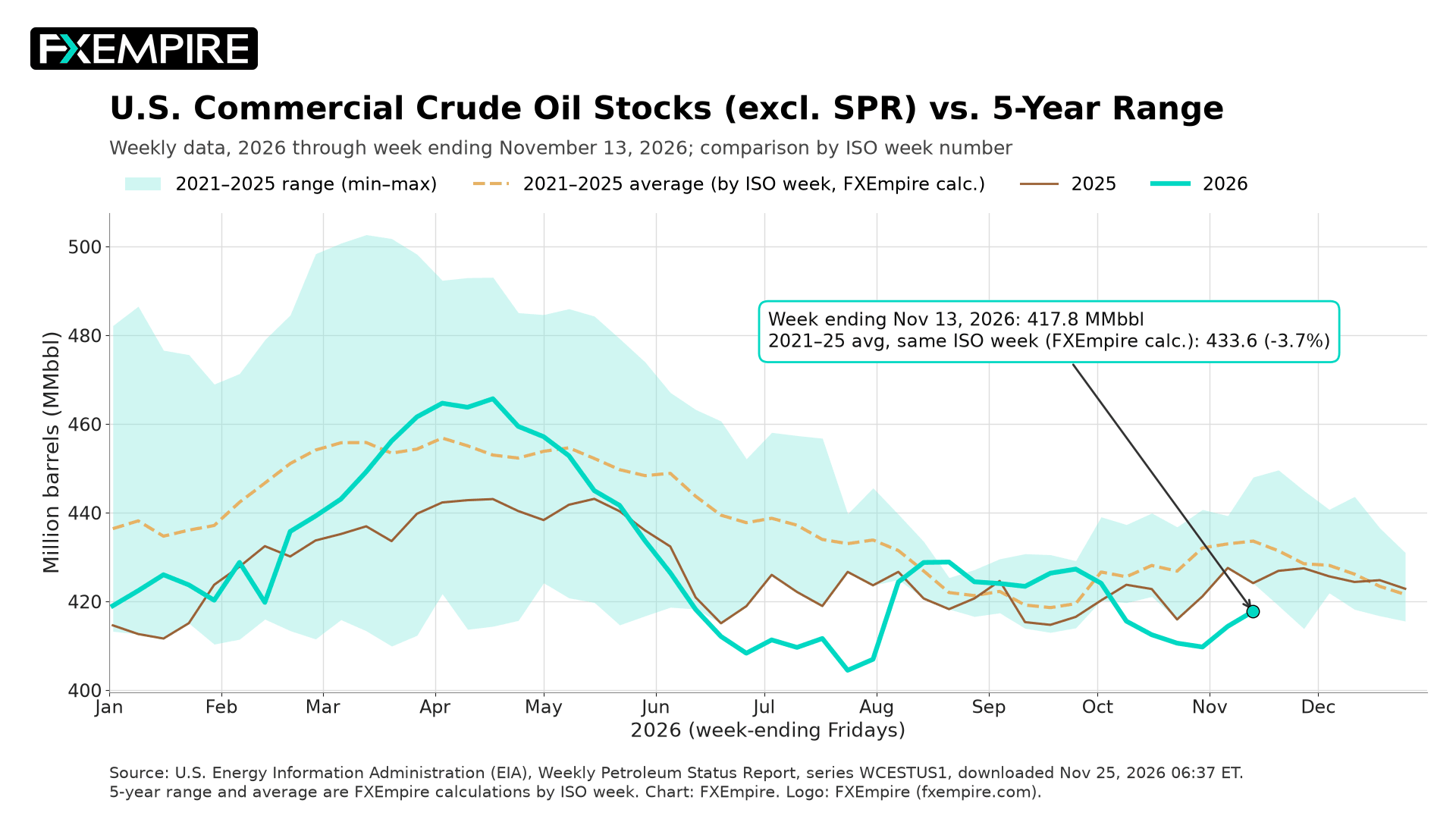
The latest U.S. petroleum balance shows a near-term counterweight to the tighter global narrative. Commercial crude stocks increased in the week ending November 13. The Energy Information Administration’s report, released November 18, put commercial inventories at 417.8 million barrels, up 3.4 million from the prior week and 6.4 million below the same week a year earlier. The rise followed a prior draw and leaves stocks close to year-ago levels rather than signaling a severe domestic shortage.
Supply Remains Abundant
Supply remained abundant. EIA estimated U.S. crude production at 14.03 million barrels per day for the week, a 19,000-barrel-per-day increase from the previous week. The 4-week average was 14.01 million barrels per day, 1.9% above the comparable period a year earlier. That production level gives the domestic market a substantial buffer unless refinery demand, exports, or an outage absorbs more barrels. Stable to rising output could replenish stocks when global balances are tight.
The interpretation for WTI is less about a single weekly build and more about the direction of the domestic balance. The 3.4 million-barrel build is large enough to challenge a bullish inventory story, but one weekly observation can be influenced by shipping, timing, imports, exports, and refinery runs. Commercial crude is the relevant measure for immediate refinery market availability. The Strategic Petroleum Reserve declined 3.2 million barrels to 276.4 million during the same week.
Fundamental Balance Somewhat Mixed
My view at the moment is that WTI’s immediate fundamental balance is somewhat mixed, with the domestic inventory build and high production limiting upside unless the next release shows a reversal. The bearish reading weakens if inventories draw while refinery activity or exports absorb supply. A fresh disruption, weather-related production loss, or sustained pickup in product demand could challenge the comfortable supply narrative.
The Chart
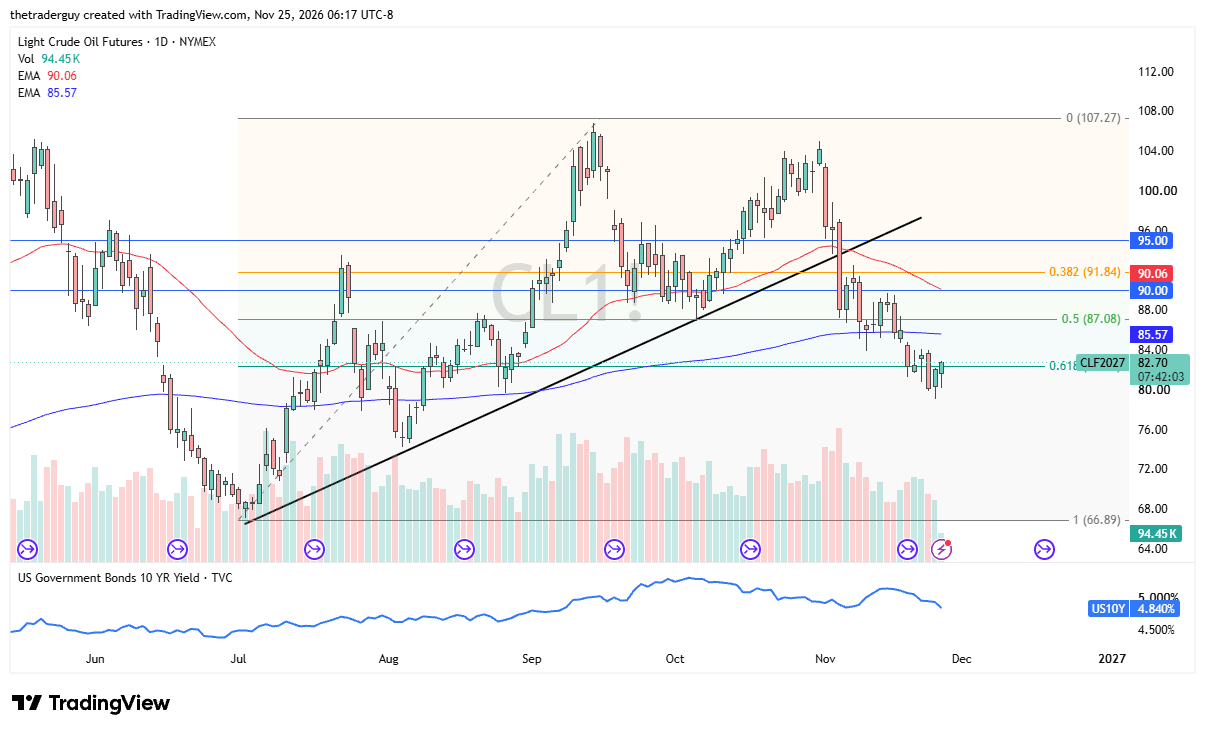
Looking at the chart, it does seem as if the light sweet crude oil market is trying to find some type of floor near the $80 level. As we have dipped towards that area and then bounced again, ultimately this short-term rally opens up the possibility for short-term traders to get involved. But it’s worth noting that tomorrow is Thanksgiving in the United States, and liquidity will be an issue.
Brent Oil Price Forecast
Every new Brent Oil analysis as it publishes, today's technical signal and key levels, live price — on one page.
See all Brent Oil forecastsBrent Crude Oil
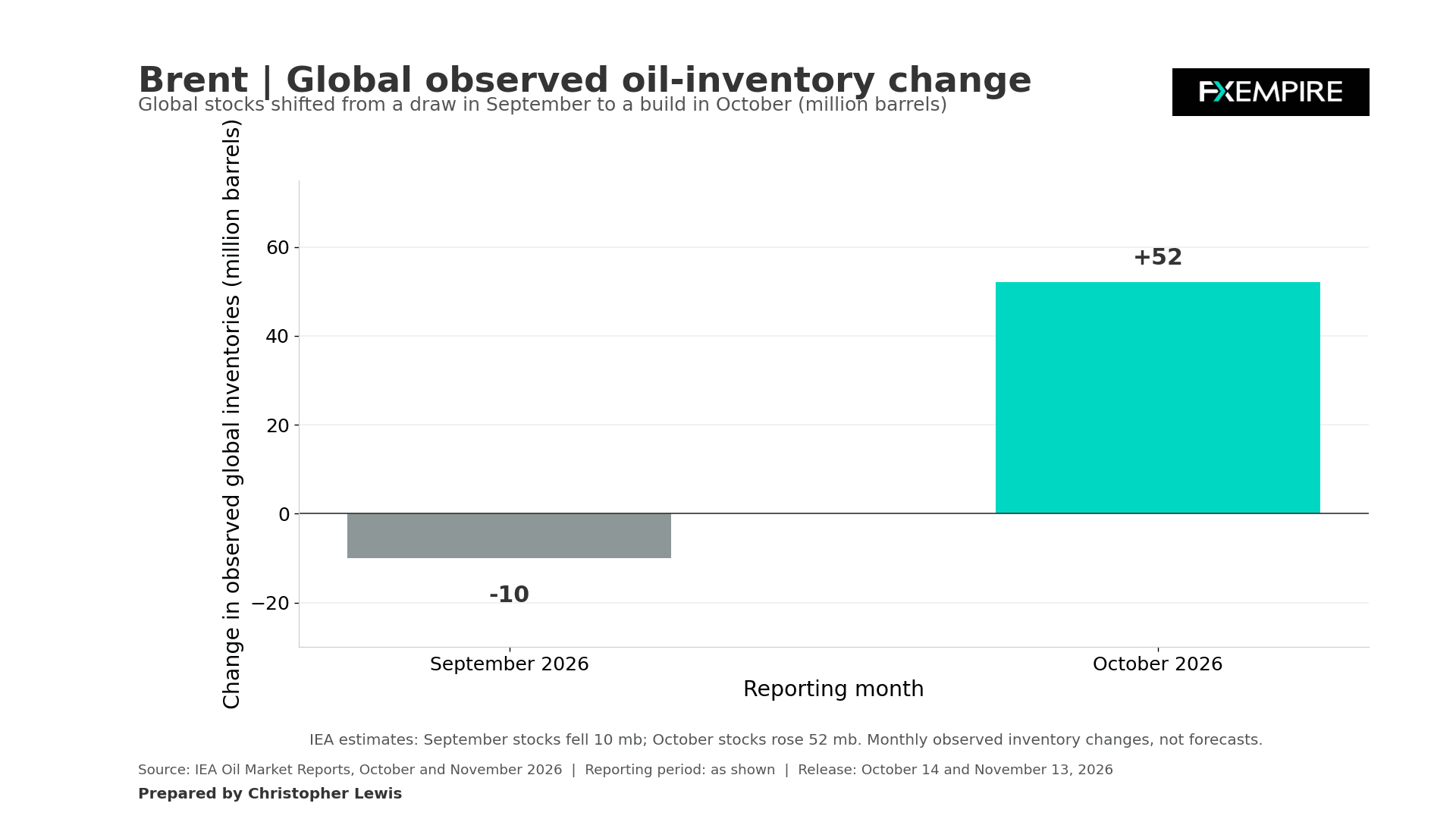
The Brent balance is recovering but remains exposed to transport risk globally. The IEA’s November report estimates October global supply at 105.4 million barrels per day, up 2.3 million from September, and observed inventories up 52 million barrels, the first build since June, as oil on water rose 86 million barrels. This is an observed monthly estimate, not a daily flow reading or the current price signal. The IEA says on-land stocks continue to fall and remain at their lowest level since 2016.
Demand Expected to Drop
Demand remains a problem for the bullish case. The IEA forecasts world oil demand to decline by 2.7 million barrels per day in 2026 to 102.3 million barrels per day before rebounding by 2 million barrels per day in 2027. In its assessment, the year-on-year contraction eases later this year as disruptions to fuel and feedstock supply chains normalize, but high prices and efficiency gains restrain transport fuel growth. This is a forecast, and its balance depends on how quickly Gulf exports recover and whether renewed attacks interrupt them again.
Watch Exports
For Brent, the most important upside risk is a renewed setback to exports, port operations, or tanker movements. The IEA describes attacks on shipping and energy infrastructure, elevated freight costs on some routes, and Gulf exports recovering despite those risks. It estimates Gulf oil exports, excluding Oman, at 18.4 million barrels per day in October, still 26% below pre-war levels. This leaves a large gap between current flows and normal activity or normal capacity.
The bearish counterpoint is that October’s supply increase was rapid. If those flows persist, floating barrels may be converted into delivered supply. My outlook is conditional, of course, as sustained export recovery and weak demand could reduce Brent’s scarcity premium, while another shipping interruption could quickly revive it.
Technical Outlook
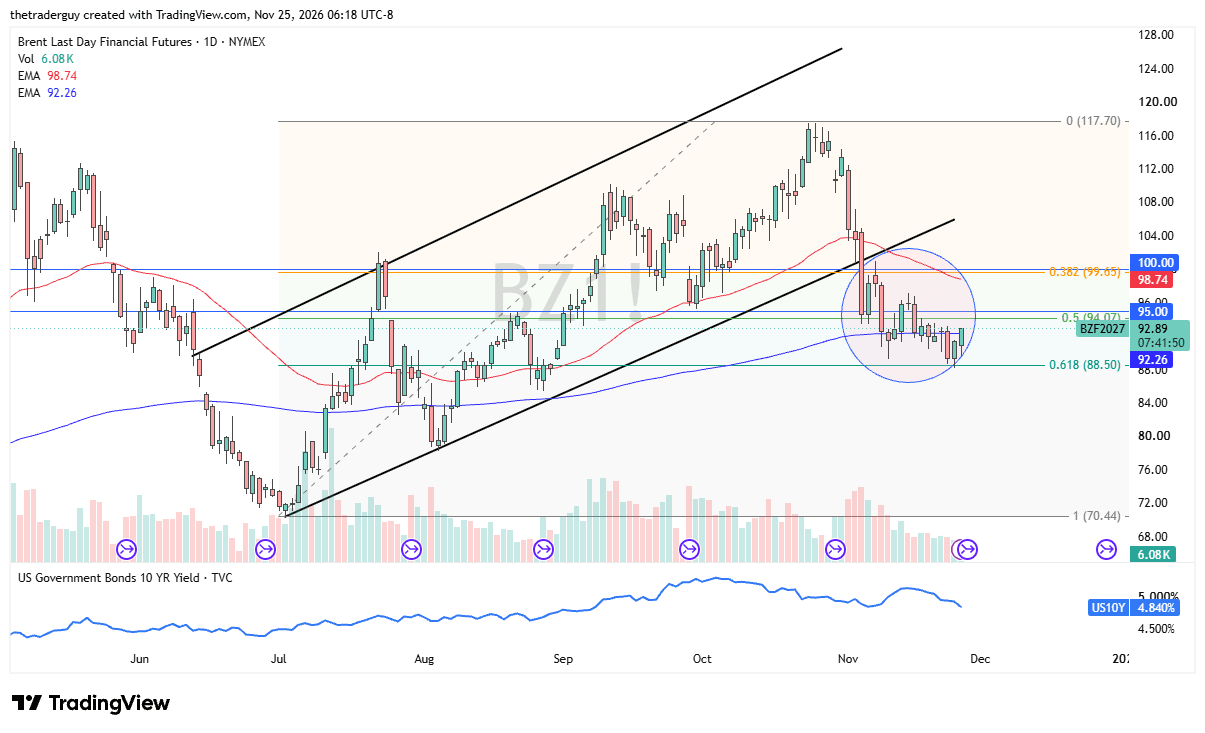
The next U.S. EIA weekly petroleum release is scheduled for 10:30 a.m. EST today. The market currently looks as if it continues to be very range-bound and continues to hang around the 200-day EMA itself. Ultimately, this is a market that remains neutral to slightly bullish in the short term. Longer term, it’s still looking for its direction.