


WTI Crude Oil
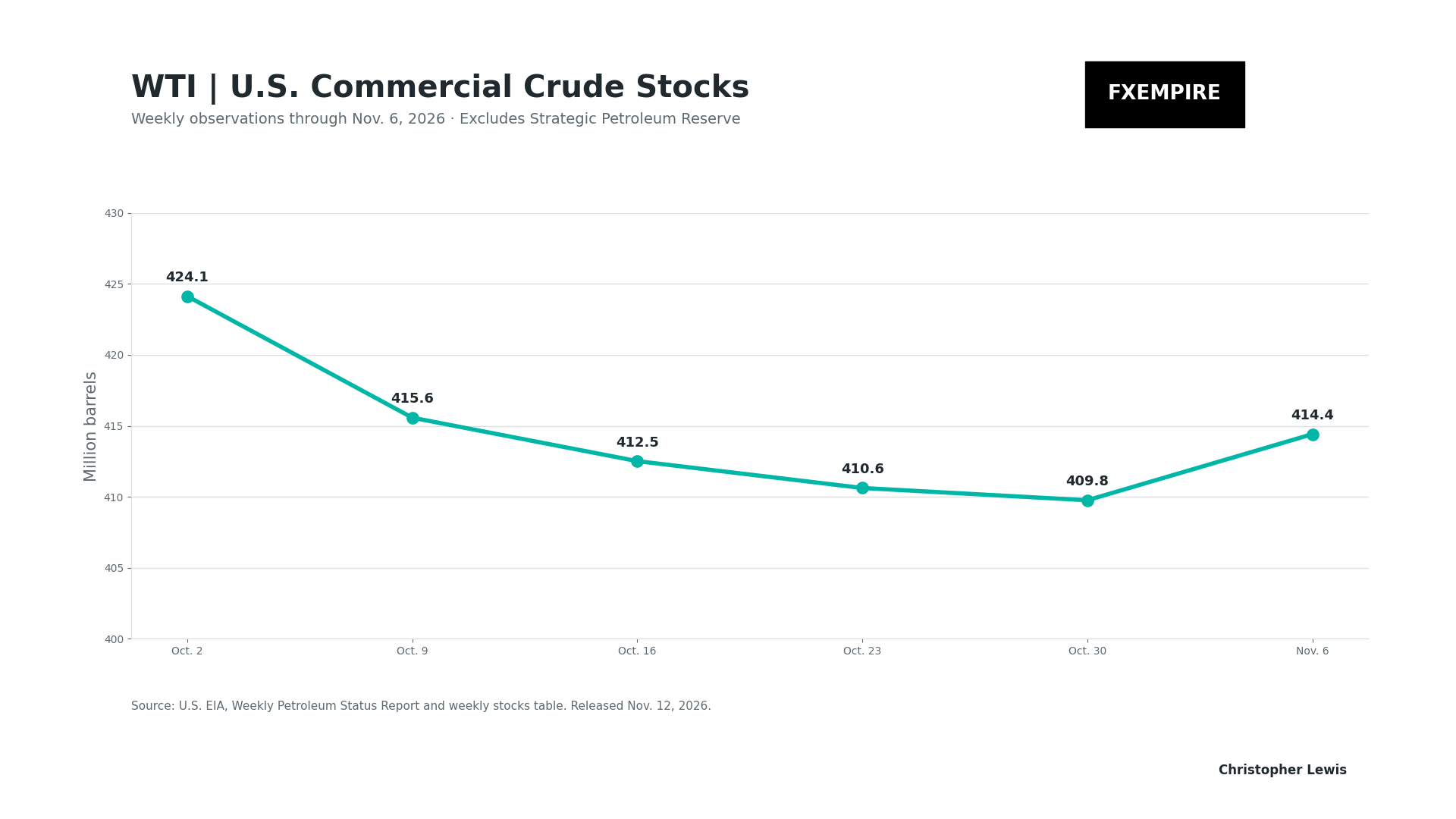
The latest inputs for WTI give a bit of a mixed signal. EIA’s weekly petroleum status report, released on November 12 for the week ending November 6, estimated commercial crude inventories at 414.4 million barrels, up 4.7 million barrels week over week. That reversed four consecutive weekly declines in the EIA series through October, from October 2 through October 30, but did not erase the prior month’s draw. The next report is scheduled for later today, so traders will be watching that closely.
Product Balances Matter
The product balances complicate the crude headline. Gasoline stocks rose 1.8 million barrels to 210.8 million, and distillate increased 4.1 million to 103.3 million. Distillate remained 7.6 million barrels below its year-earlier level. The simultaneous weekly increases indicated that supply did exceed reported product demand for that week, although EIA’s product supply is an implied demand measure, and one report cannot establish a trend.
Refiners were taking in more crude. Inputs averaged 17.04 million barrels per day, up 322,000 barrels per day, with utilization at 95.2%. Production is estimated at 14.013 million barrels per day, with imports at 6.698 million barrels per day and exports at 3.455 million barrels per day.
EIA November 10 Outlook
EIA’s November 10 outlook, finalized November 5, said commercial stocks fell below their five-year low in October and forecast record production averaging 14.3 million barrels per day next year. These figures are estimates and forecasts, not guaranteed numbers.
For WTI, the build is a short-term headwind if it repeats, particularly if product stocks rise again and refinery runs ease. The counterargument is that crude stocks have fallen for a month, refining demand was strong, and inventories remain below the levels seen earlier in October. Today’s release will decide whether the November 6 build was a one-week interruption or the start of accumulation.
Brent Oil Price Forecast
Every new Brent Oil analysis as it publishes, today's technical signal and key levels, live price — on one page.
See all Brent Oil forecastsCharts
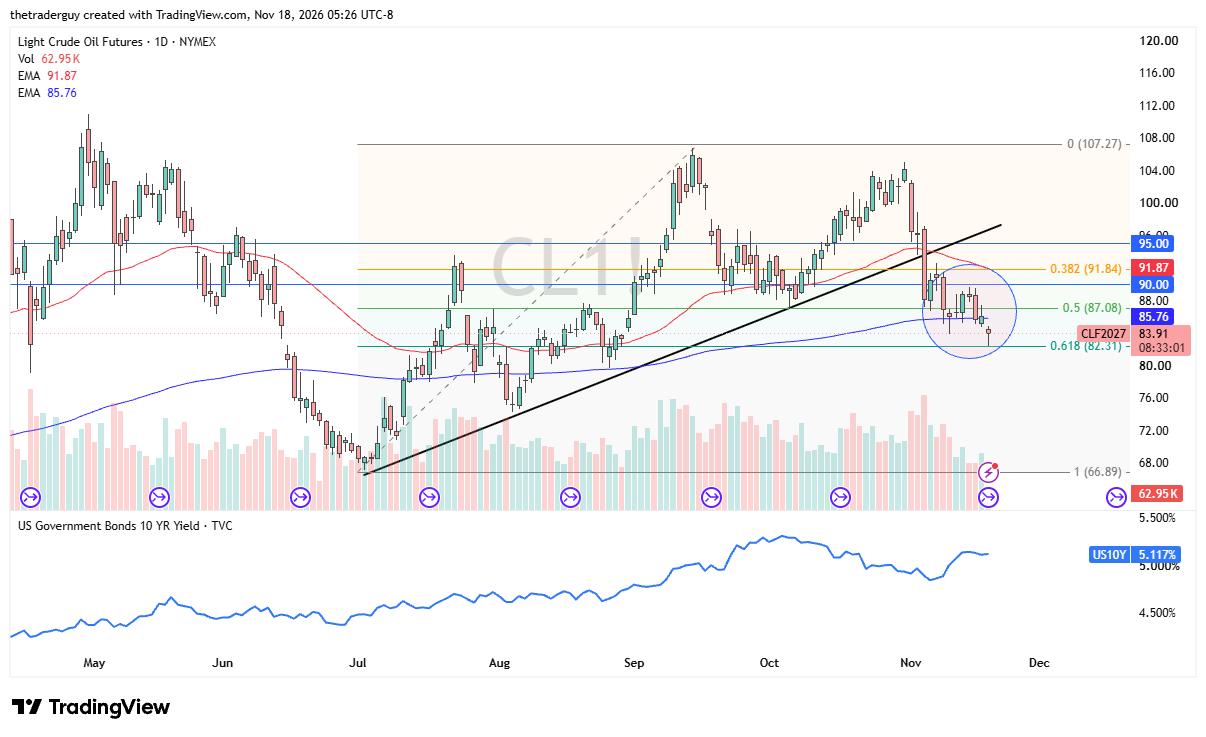
The technical analysis shows the market had gapped lower. It has bounced since the lows of the day, though, and now it looks like the market is paying more attention to the $80 level as a potential short-term support region.
Brent Crude Oil
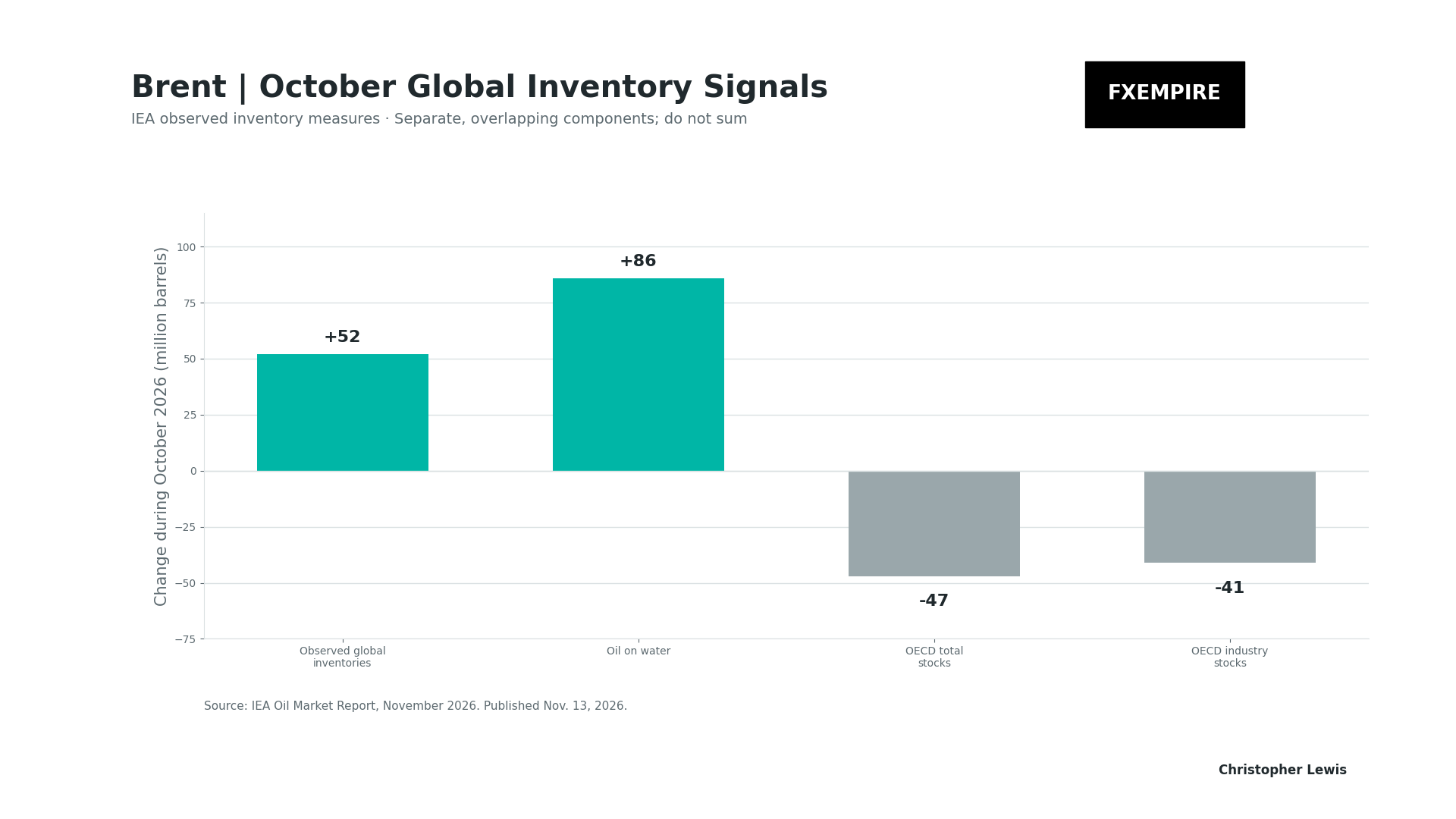
Brent’s international story centers, as per usual, on the location and accessibility of supply. In its November 13 Oil Market Report, the International Energy Agency estimated world oil supply rose 2.3 million barrels per day in October, to 105.4 million barrels per day, after rising 3 million barrels per day in September. It also estimated global inventories increased by 52 million barrels in October, the first monthly build since June. These are estimates of global flows and stocks, not final audited outcomes at this point.
This increase suggests that the market may be trying to rebalance after a long drawdown. The comparison keeps the signal from being simply bearish. Oil on water rose by 86 million barrels to its highest level since January, while on-land inventories remained at their lowest since 2016. OECD stocks fell by 47 million barrels, including a 41 million-barrel decline in industry stocks. More crude in transit can lift the global total without easing refinery constraints.
Supply Picture Remains in Focus
Immediately, routes, tanker availability, freight, and delivery timing remain major inputs into Brent’s effective supply picture. The IEA forecasts demand falling by 2.7 million barrels per day this year to 102.3 million barrels per day, then recovering by 2 million barrels per day next year. Supply is forecast to decline by 4.8 million barrels per day this year before rebounding by 6.6 million barrels per day next year. The balance points to a fourth-quarter surplus and a larger 2027 build if flows normalize.
Refining adds another near-term uncertainty. Global refinery runs fell by an estimated 1.3 million barrels per day in October to a seasonal low of 81.3 million barrels per day. The IEA forecasts a rebound to 84.7 million barrels per day in December, which would increase crude demand if achieved.
For Brent, a sustained recovery in exports and arrivals would reduce the scarcity premium. Another shipping disruption or continued declines in land-based stocks could preserve it.
Technically Speaking, We Are Still Neutral
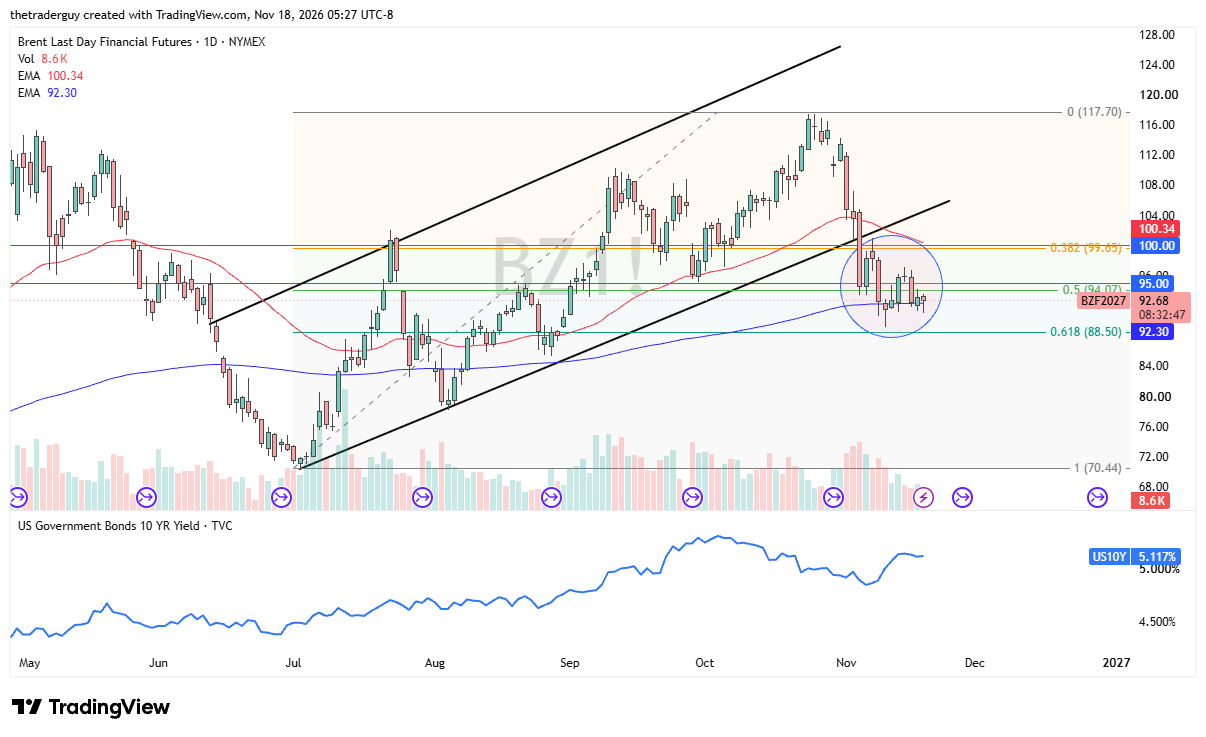
From a technical analysis standpoint, it’s worth noting that Brent initially fell to break down below the 200-day EMA, only to bounce and show signs of resiliency. It looks like we are still very much in a sideways market. This market, I believe, continues to be one that will be watching geopolitical headlines just as much as anything else. We look essentially stuck in the middle here, so I remain very neutral on this asset.