


WTI
This week has seen significant information delivered to the petroleum markets, with the petroleum report on Wednesday from the United States and Thursday’s stronger growth estimate. Together, they offer support for economic resilience and crude availability concerns in the United States, but they don’t necessarily establish a uniform tightening across finished fuels.
EIA Release
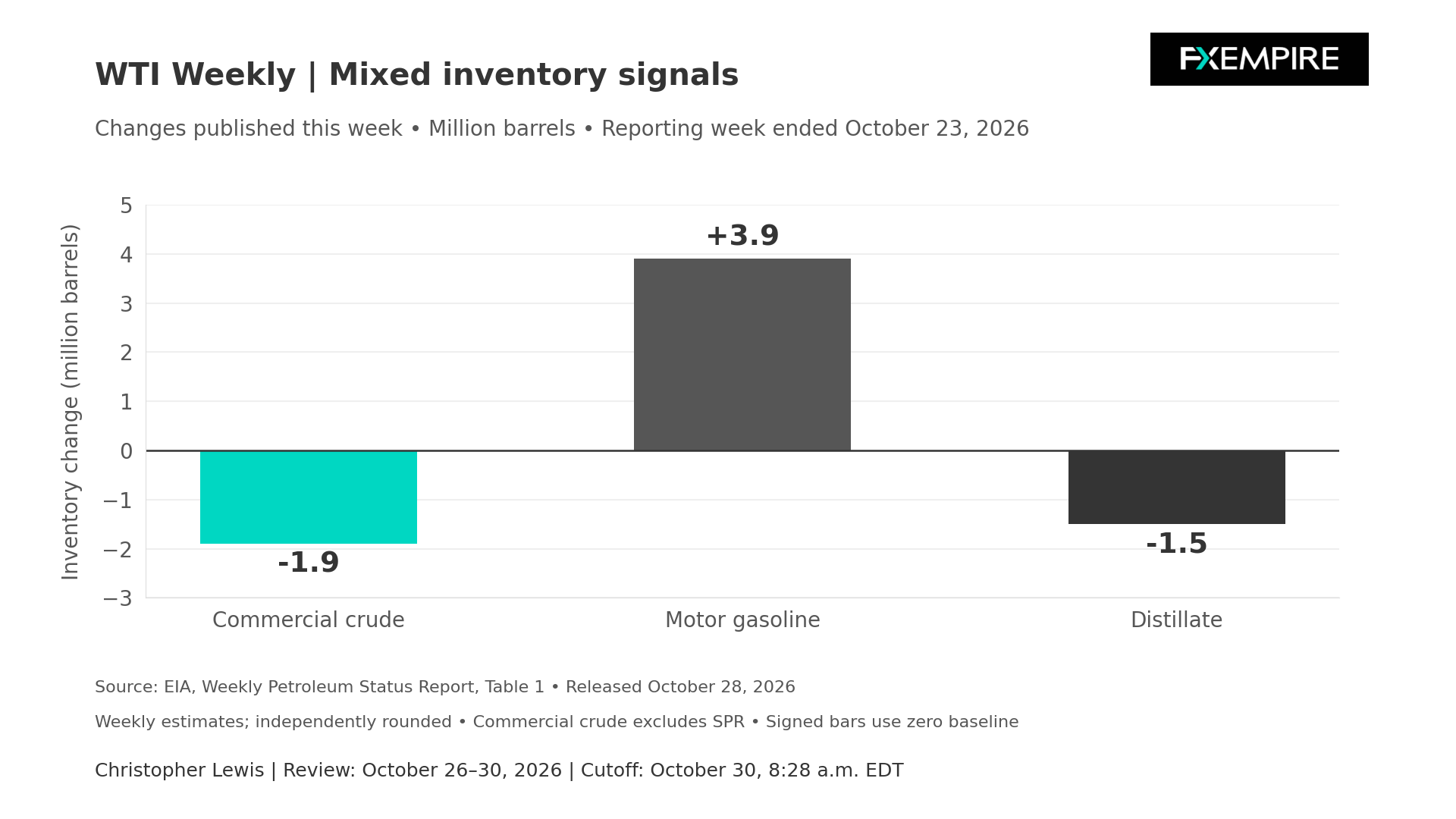
The EIA’s October 28 release covered the week ending October 23. Commercial crude inventories, excluding the Strategic Petroleum Reserve, declined 1.9 million barrels to 410.6 million. Gasoline stocks increased 3.9 million barrels, while distillates fell 1.5 million. My assessment now is the crude draw is constructive for pricing, but the gasoline build weakens a blanket claim of strengthening fuel demand. In fact, it could show the opposite. Distillates present a separate concern because smaller buffers can increase sensitivity to refinery interruptions.
Supply and Trade
Supply and trade also shifted a bit. Estimated production rose to 13.992 million barrels per day from 13.269 million, while crude exports increased to 4.85 million barrels per day from 3.442 million. Refinery crude inputs eased to 16.526 million barrels per day.
Advanced GDP Shows US Strong
Thursday’s advanced GDP estimate coming out of the United States put third-quarter real growth at 3.4% annualized versus 2.2% in the second quarter. This improves the overall demand picture for crude oil without measuring current gasoline or diesel consumption. Next week’s scheduled petroleum report is on Wednesday at 10:30 a.m. Eastern, and it could help test whether exports remain strong and whether product inventories confirm the crude signal. The Friday job report will also add demand and financing catalyst pressures.
Relatively Strong Technicals for WTI
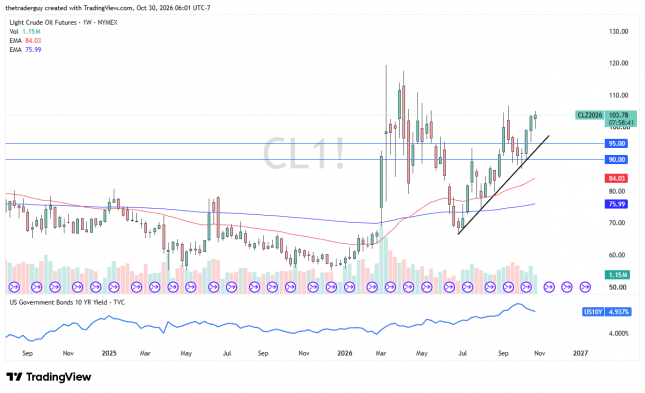
We saw buyers come back in and pick up dips. The $105 region continues to be a bit of a barrier, and that is something that may take some strength to get through. I believe there is more of a buy-the-dip attitude here.
Brent Oil Price Forecast
Every new Brent Oil analysis as it publishes, today's technical signal and key levels, live price — on one page.
See all Brent Oil forecastsBrent
Brent has also seen macroeconomics come into the forefront, as the international backdrop is still shaped by delivery and refining constraints. The Federal Reserve holding its target range at 3.75% to 4% also comes into play, as resilient growth can support consumption while persistent inflation keeps financing constrictions a fact of life.
International Market Balance
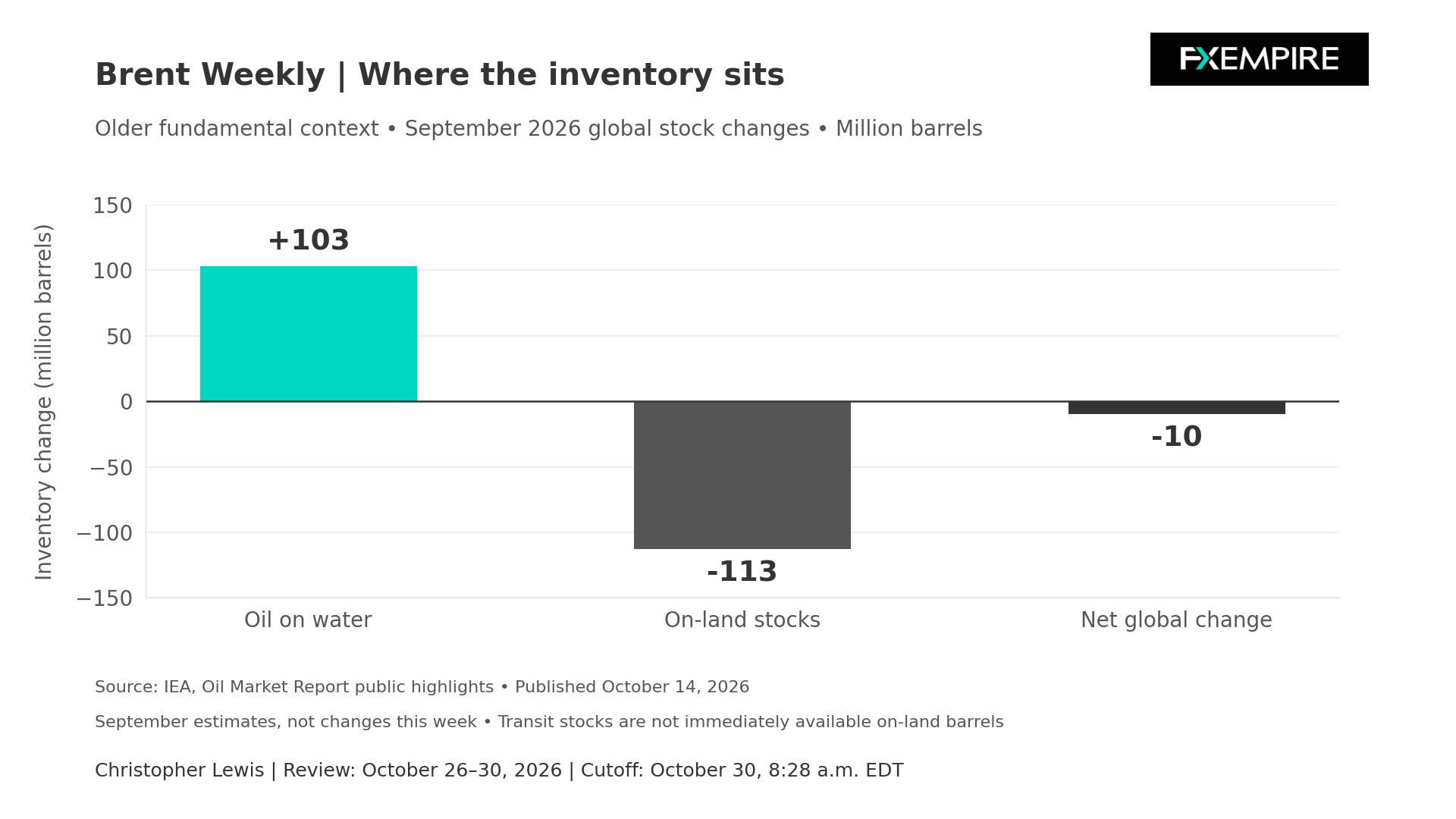
The clearest international balance evidence used here remains background-dated information. The IEA’s October 14 report estimated September global supply at 102.3 million barrels per day, up 2.5 million from August. It also reported a 113 million-barrel decline in on-land inventories, largely offset by a 103 million-barrel increase in oil on water. My interpretation of this is that the composition matters more than the small net change alone. Rising oil in transit can signal recovering shipments while leaving delays still intact for consumers. A refinery cannot always substitute a future arrival for an accessible barrel today.
Demand Slowing?
The IEA also projected a 2.5 million barrel-per-day year-over-year contraction in fourth-quarter demand alongside a deficit through year-end. These are forecasts and not necessarily written in stone, but they do give you an idea of the framework for testing later evidence.
Next week, delivery reliability and actual refinery processing are important physical tests. The recovery in arrivals could rebuild accessible stocks and possibly reduce the scarcity premium. Renewed interruption or weak refinery margins could frustrate that argument. BEA-scheduled September international trade data is due Wednesday, November 4, at 8:30 a.m. Eastern, ahead of the petroleum report in the United States. October’s U.S. employment report on Friday will obviously have an influence on the potential for demand as well.
Technical Outlook
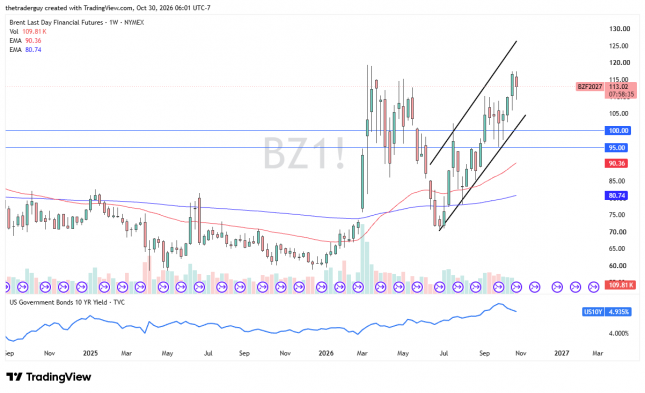
The Brent market has fallen a bit further during the week than the WTI market, but quite frankly, this is one that still has a premium to it. Short-term pullbacks continue to be buying opportunities from everything I see here, and I do not have any interest in shorting the oil markets. The question for Brent will be whether or not it can crack above that $120 level, which was the major ceiling in the market from the war.