
Bitcoin Bounces Off Support as Long-Term Buyers Return
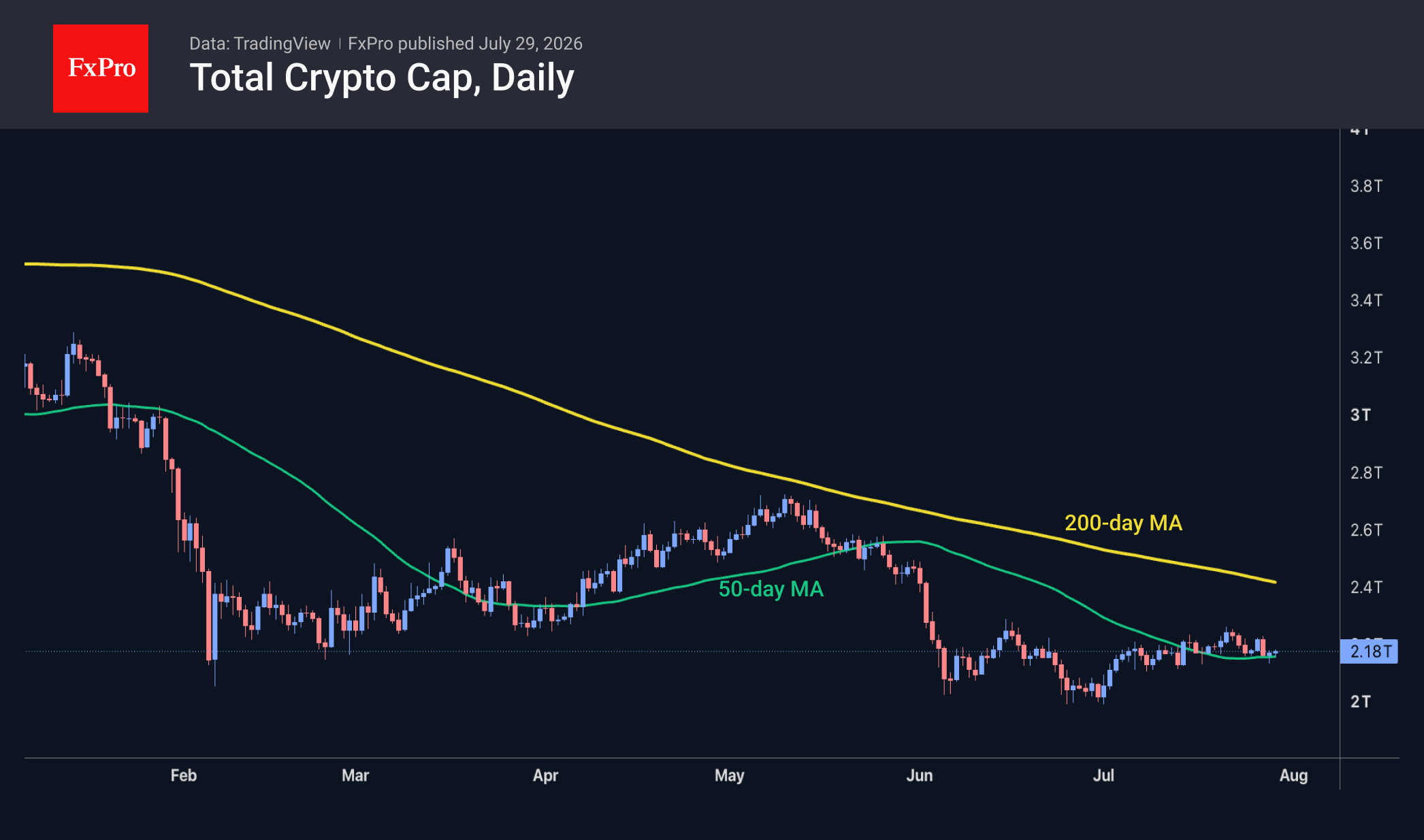
On Tuesday, the crypto market capitalisation fell towards $2.14T, a level at which it has repeatedly found support over the past three weeks. This time was no exception, leaving the market above its 50-day moving average – a significant sign of buyer strength, indicating a local shift in priorities. Since the beginning of the year, interest has shifted from cryptocurrencies to AI stocks.
Despite the Nasdaq-100 entering a technical correction, with a more than 10% decline from its peak, cryptocurrencies have remained resilient. The top performers among the most popular coins over the past 24 hours were Cardano (+4.8%), Uniswap (+3.1%), and XRP (+3%). The worst performers were Immutable (-5.3%), Official Trump (-4.6%) and Theta Network (-3.7%).
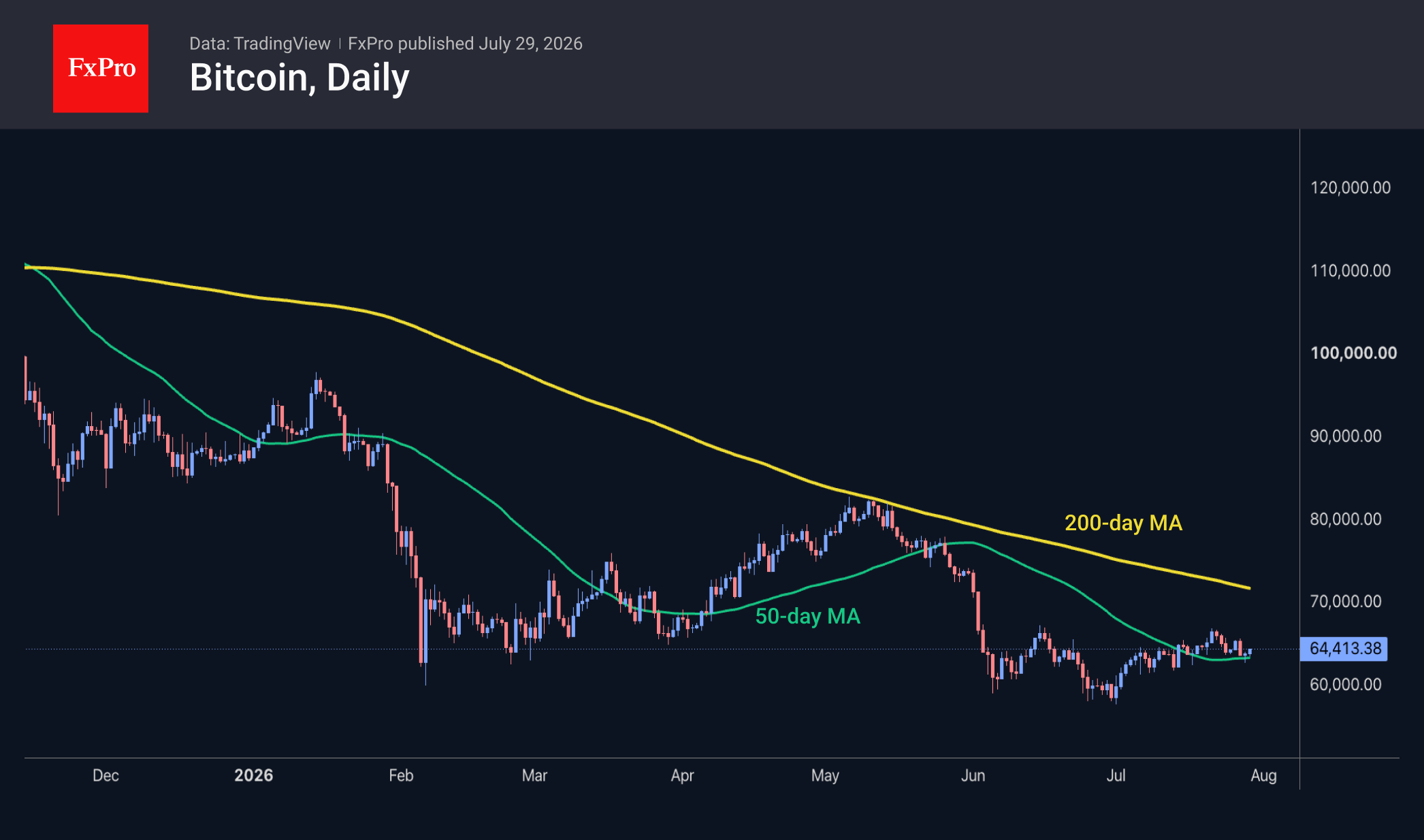
Bitcoin, as was the case a week earlier, dipped below $63K before attracting a fresh influx of buyers, recovering to $64.3K. Although the current support level is lower than it was in February–April, overall, market forces are on the bulls’ side in this area. Judging by the price action, the market is being swept up by large long-term investors who have not yet fulfilled their plans and are not overly concerned about the sell-off in the semiconductor sector.
It is even possible that this profit-taking is contributing to capital inflows. However, if and when the sell-off in equities turns into a broad flight from risk, cryptocurrencies will struggle to hold their ground. The risk is that this shift could be driven by fundamental factors, starting with today’s decision and commentary on the Fed’s key interest rate.

Crypto News
Strive, one of the top ten public companies holding Bitcoin reserves, has increased its cryptocurrency holdings to 20,000 BTC. Last week, the company purchased 79 BTC for $5.2 million at an average price of $65.7K per coin. Since May, Strive has added approximately 3,264 BTC to its portfolio.
CryptoQuant notes that inflows of USDC stablecoins into crypto exchanges have exceeded outflows for the first time in over two months. An increase in USDC inflows into the market is usually linked to activity by US investors. The USDC stablecoin has become the primary instrument for institutional investors. According to Visa, USDC accounted for around 70% of all transactions in the first half of 2026.
According to DeFiLlama, the total market capitalisation of stablecoins has fallen by more than $10 billion from its May peak to $310 billion. The outflow marked the largest monthly decline since the collapse of Terra in May 2022.
The New York Attorney General’s Office has criticised the CLARITY Act. The bill could weaken states’ powers to oversee the crypto market and investigate fraud by transferring regulation of the digital assets market to the Commodity Futures Trading Commission (CFTC).
The Zcash developers have rolled out the Ironwood update on the mainnet following the discovery of a critical vulnerability a month ago. The update fixes a serious bug that allowed fake ZEC coins to be created undetected.
Bitcoin Price Forecast
Every new Bitcoin analysis as it publishes, today's technical signal and key levels, live price — on one page.
See all Bitcoin forecastsThe FxPro Analyst Team