DAX Slides on Tariff Threats and China Stimulus Disappointment
On Friday, November 8, the DAX declined by 0.76%, partially reversing a 1.70% rally from the previous session, closing at 19,216. Market reaction to China’s disappointing stimulus measures and Trump’s tariff threats impacted demand for DAX-listed stocks.

Major Stock Movers: Auto Stocks Stumble
The auto sector took a big hit on Friday. BMW and Daimler Truck Holding slid by 3.21% and 3.99%, respectively. Fears of Trump tariffs on German autos and weak demand from China impacted buyer appetite for auto stocks. Mercedes Benz Group, Porsche, and Volkswagen also suffered heavy losses.
Bank stocks joined the broader market in negative territory, with Commerzbank and Deutsche Bank seeing losses of 2.88% and 1.43%, respectively. Concerns about Trump’s plans to deregulate US banks impacted demand for German bank stocks. If Trump deregulates the sector, highly regulated European banking stocks would be less competitive than their US peers.
China’s Conservative Stimulus Leaves Markets Unimpressed
On Friday, China’s Standing Committee National People’s Congress announced new policy measures to support its economy. However, Beijing held back on stimulus, aiming at boosting consumer demand, weighing on HK, Mainland China, and German-listed stocks.
Expert Views on China’s Stimulus Measures
Bob Elliot, Chief Investment Officer at Unlimited Funds, highlighted issues with China’s stimulus measures, stating,
DAX Price Forecast
Every new DAX analysis as it publishes, today's technical signal and key levels, live price — on one page.
See all DAX forecasts“Accept it, meaningful China stimulus isn’t coming any time soon. Chinese policymakers remain almost laughably focused on the wrong policies at the wrong size, with today’s debt swap announcement projected to save *0.08% of GDP* in financing costs annually.”
Elliot added,
“China has a deleveraging problem and policymakers remain focused on efforts that are focused on sentiment in asset markets and efforts to control local governments through debt swaps rather than significant restructuring of bad debts and fiscal stimulus to support consumption.”
Deflation Concerns Cast Shadow Over China’s Economy
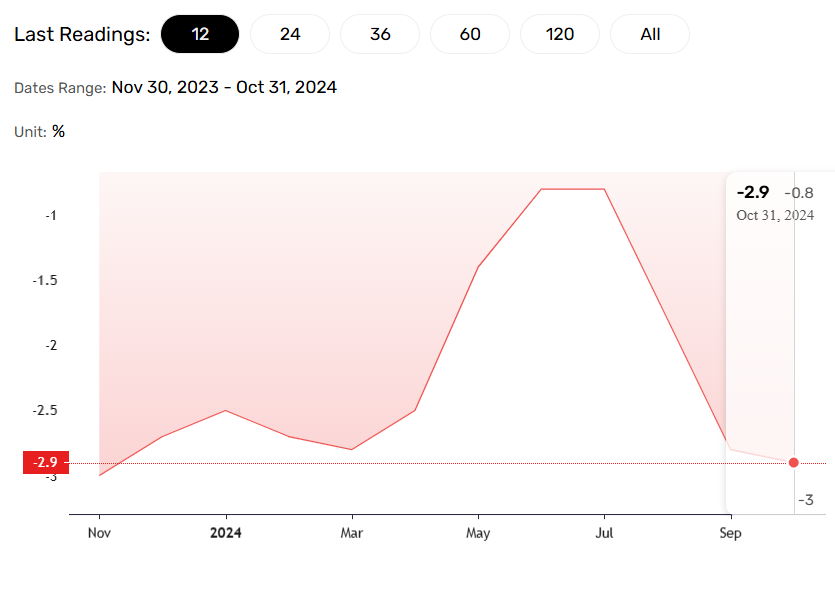
Economic data from China signaled increasing deflationary pressures. Consumer prices fell 0.3% month-on-month in October, while producer prices declined at a more marked rate. The pickup in deflationary pressures signaled weaker demand, raising concerns about China’s economic stability.
Michigan Consumer Sentiment Offers Modest Support
On Friday, November 8, the Michigan Consumer Sentiment Index climbed from 70.5 in October to 73.0 in November. Sentiment toward the outlook for personal finances and inflation suggests a positive economic outlook amid softer inflation, supporting demand for riskier assets.
US Equity Markets Advance on Trump Policy Plans
Investor sentiment toward Trump’s policy plans continued to support demand for US-listed stocks.
On Friday, November 8, US equity markets had a positive end to the week. The Dow and the S&P 500 rose by 0.59% and 0.38%, respectively, while the Nasdaq Composite Index gained 0.09%.
Focus Shifts to Fed Commentary and the US CPI Report
On Monday, November 11, investors should track FOMC member speeches following Thursday’s Fed rate cut. Support for a December Fed rate cut might boost demand for DAX-listed stocks as investors raise expectations of a soft US economic landing.
However, the threat of tariffs on EU goods would likely limit the upside as investors also consider potentially weaker demand from China.
Near-Term Outlook
In the near term, DAX trends will likely hinge on Fed policies, tariffs, and potential Chinese stimulus. Fed support for a December Fed rate cut and Beijing policy measures targeting consumer demand could boost the DAX. However, Trump’s potential tariffs on German goods remain a potential headwind.
Futures suggest a positive opening for Monday’s session. DAX futures gained 49 points, while the Nasdaq mini futures were up 42 points.
Investors should track President-elect Donald Trump-related news, central bank comments, and stimulus updates from Beijing. Stay updated with our latest news and analysis to manage risks effectively.
DAX Technical Indicators
Daily Chart
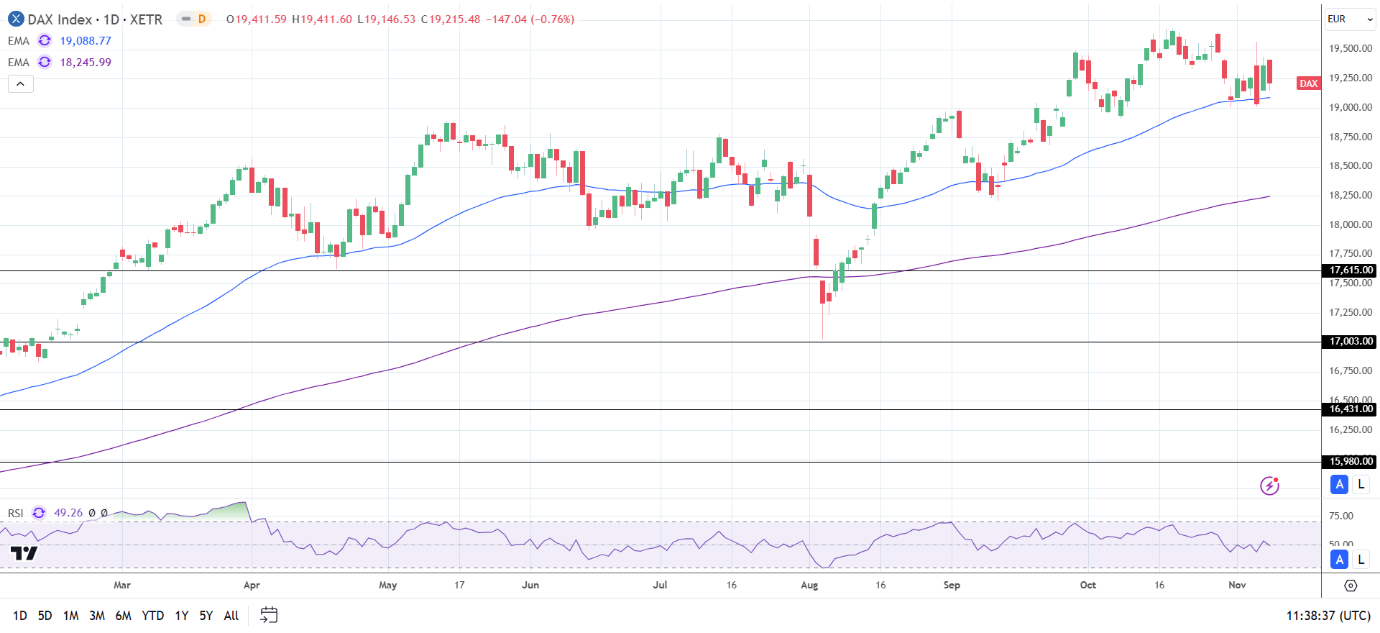
Despite Friday’s retreat, the DAX remains above the 50-day and 200-day EMAs, affirming bullish price signals.
A DAX return to 19,350 could signal a move toward Thursday’s high of 19,418. A breakout from 19.416 may bring the all-time high of 19,675 into play.
Central bank commentary and tariff-related news need consideration.
Conversely, a DAX break below the 50-day EMA and 19,000 could allow the bears to target the 18,750 level.
With the 14-day RSI at 49.26, the DAX might drop below 18,759 before signaling oversold conditions.