


DAX Slides – Hopes of Iran-Israel Ceasefire Slump
US President Trump reignited fears of an escalation in the Iran-Israel conflict, triggering demand for safe-haven assets. The DAX dropped 0.91% to 23,484 in early trading on Tuesday, June 17.
Trump’s comments raised fears that Israel could intensify attacks on Tehran. He warned:
“Iran should have signed the “deal” I told them to sign. What a shame, and waste of human life. Simply stated, IRAN CAN NOT HAVE A NUCLEAR WEAPON. I said it over and over again! Everyone should immediately evacuate Tehran!”
Iran had previously urged Oman, Qatar, and Saudi Arabia to call on the US to pressure Israel into a ceasefire. Attacks on Tehran could close the door to a swift end to the conflict. Rising threats of US involvement in the conflict have also weighed on risk appetite.
According to Polymarket, the chances of US military action against Iran before July sits at 67%, up from 38% on June 16.
Meanwhile, de-escalation in Middle East tensions and progress toward a US-Iran nuclear agreement would be pivotal for WTI crude oil price trends and risk sentiment.
Sector Performance
Auto and tech stocks contributed to the early losses as Middle East tensions simmered. Mercedes-Benz Group dropped 0.49%, with BMW, Porsche, and Volkswagen retreating.
SAP and Infineon Technologies declined by 0.93% and 1.22%, respectively.
DAX Price Forecast
Every new DAX analysis as it publishes, today's technical signal and key levels, live price — on one page.
See all DAX forecastsGerman Economic Sentiment in Focus
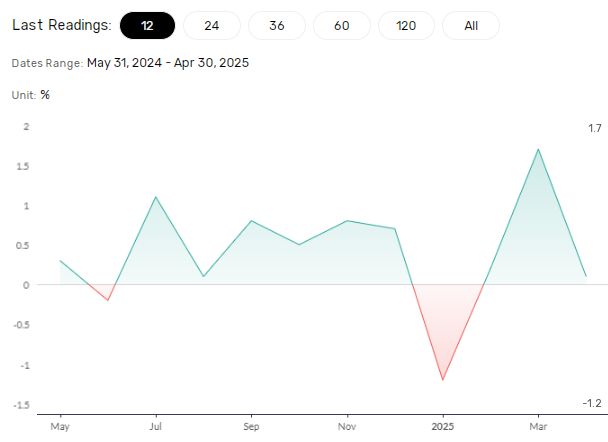
Early in Tuesday’s European session, economic sentiment figures will draw interest. Economists forecast the ZEW Economic Sentiment Index to jump from 25.2 in May to 35 in June. A sharper increase could lift demand for DAX-listed stocks, while a lower reading may dampen risk sentiment.
The data will give insights into analysts’ views on Germany’s economy. However, the numbers are likely to play second fiddle to Israel-Iran conflict-related news. US-EU trade developments will also be crucial to the DAX.
Wall Street Rebounds on Ceasefire Hopes
US markets recovered from the June 13 sell-off as investors reacted to Iran reaching out for a ceasefire. The Nasdaq Composite Index rallied 1.52%, while the Dow and S&P 500 posted gains of 0.75% and 0.94%, respectively.
Weaker-than-expected US economic data failed to pressure sentiment, as Iran-Israel war-related news drove risk appetite.
Focus Turns to US Data: Can Retail Sales Rescue the DAX?
Later in the session on June 17, US retail sales could influence the Fed rate path. Economists expect retail sales to slide 0.7% month-on-month in May after rising 0.1% in April.
Weakening consumer spending may dampen inflationary pressures, supporting a more dovish Fed stance. However, a slump in retail sales may rekindle fears of a US recession, given private consumption contributes over 60% to GDP. A pickup in recession risks could pressure risk assets, including the DAX, while upbeat spending numbers may lift the DAX.
Today’s figures will be crucial since the FOMC’s two-day meeting kicks off later in the session.
Near-Term Outlook
The DAX’s near-term outlook hinges on US retail sales, trade developments, Middle East news, and ECB policy signals.
- Bearish Scenario: Weaker US retail sales, rising trade tensions, escalation in the Iran-Israel war, or hawkish ECB rhetoric. Under these scenarios, the DAX could drop below 23,500, bringing 23,000 into view.
- Bullish Scenario: Easing geopolitical tensions, positive US data, and dovish ECB cues may lift the DAX above 24,000, potentially targeting 24,500.
DAX Technical Indicators
Daily Chart
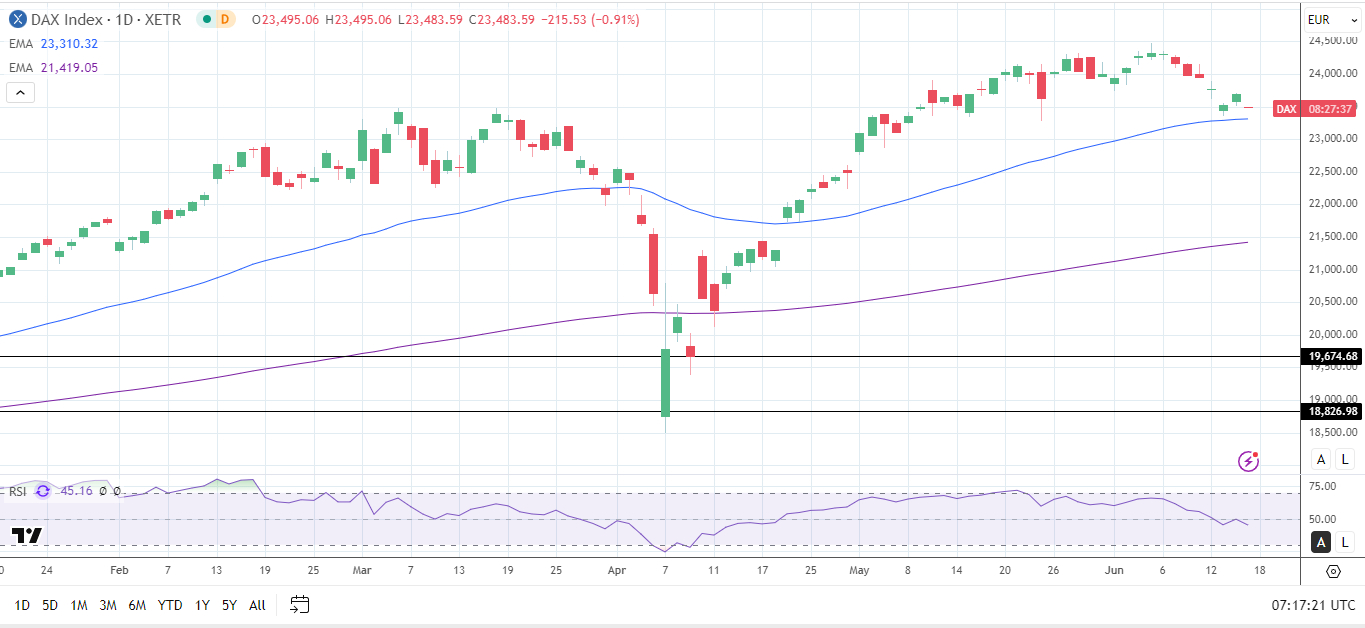
Despite Monday’s pullback, the DAX remains above the 50-day and 200-day Exponential Moving Averages (EMA), signaling underlying bullish momentum.
A breakout above 23,500 could bring 23,750 into play. A sustained move through 23,750 may pave the way to retesting the June 11 record high of 24,349.
On the downside, an extended drop below 23,500 may expose support at the 50-day EMA. Intense selling pressure could send the DAX toward 23,000.
The 14-day Relative Strength Index (RSI) at 45.16 indicates the DAX has room to drop to 23,000 before entering oversold conditions (RSI< 30).
Final Thoughts
Volatility will linger as markets assess Iran-Israel news, trade headlines, US data, and ECB chatter. Any fiscal policy-related updates from Berlin could further affect demand for DAX-listed stocks.
Traders should stay attuned to technical and fundamental drivers and consult our economic calendar.