
US stock futures were under pressure for a third consecutive day on Thursday, January 15. Another set of disappointing bank earnings led to profit-taking ahead of the highly anticipated AI-linked earnings.
Fading bets on a March Fed rate cut added to the negative mood as US economic data continued to underscore a robust US economy.
Meanwhile, concerns about a snap election in Japan and Prime Minister Sanae Takaichi’s fiscal stimulus plan continued to weigh on the yen, despite the USD/JPY pulling back from 159. Typically, higher USD/JPY levels fuel yen carry trades into US risk assets.
Nevertheless, optimism about AI-linked earnings, market bets on multiple Fed rate cuts in 2026, and a resilient US economy support a bullish medium-term outlook for US stock futures.
Below, I’ll outline the key market drivers, the medium-term outlook, and the key technical levels traders should watch.

USD/JPY Advances on Japanese Data as Intervention Risks Linger
The ongoing concerns about the snap election and spending plans remain headwinds for the yen. Meanwhile, Japanese economic data added to the negative sentiment.
On January 15, Japanese producer prices increased 2.4% year-on-year in December, down from 2.7% in November, weighing on the yen. USD/JPY climbed 0.04% to 158.497 in morning trading, well below the previous day’s high of 159.454.
Softer producer prices suggest weakening demand, supporting a less hawkish Bank of Japan rate path. A more dovish BoJ policy stance and Prime Minister Takaichi’s fiscal spending plans suggest continued yen weakness. Easing fears of a yen carry trade unwind support the bullish short- to medium-term price outlook.
However, the USD/JPY breakout above 157 has raised concerns about potential Japanese government yen interventions and the Bank of Japan raising interest rates, weighing on demand for risk assets. A more hawkish BoJ policy stance and narrower US-Japan rate differentials could trigger a yen carry trade unwind.
Dow Jones Price Forecast
Every new Dow Jones analysis as it publishes, today's technical signal and key levels, live price — on one page.
See all Dow Jones forecasts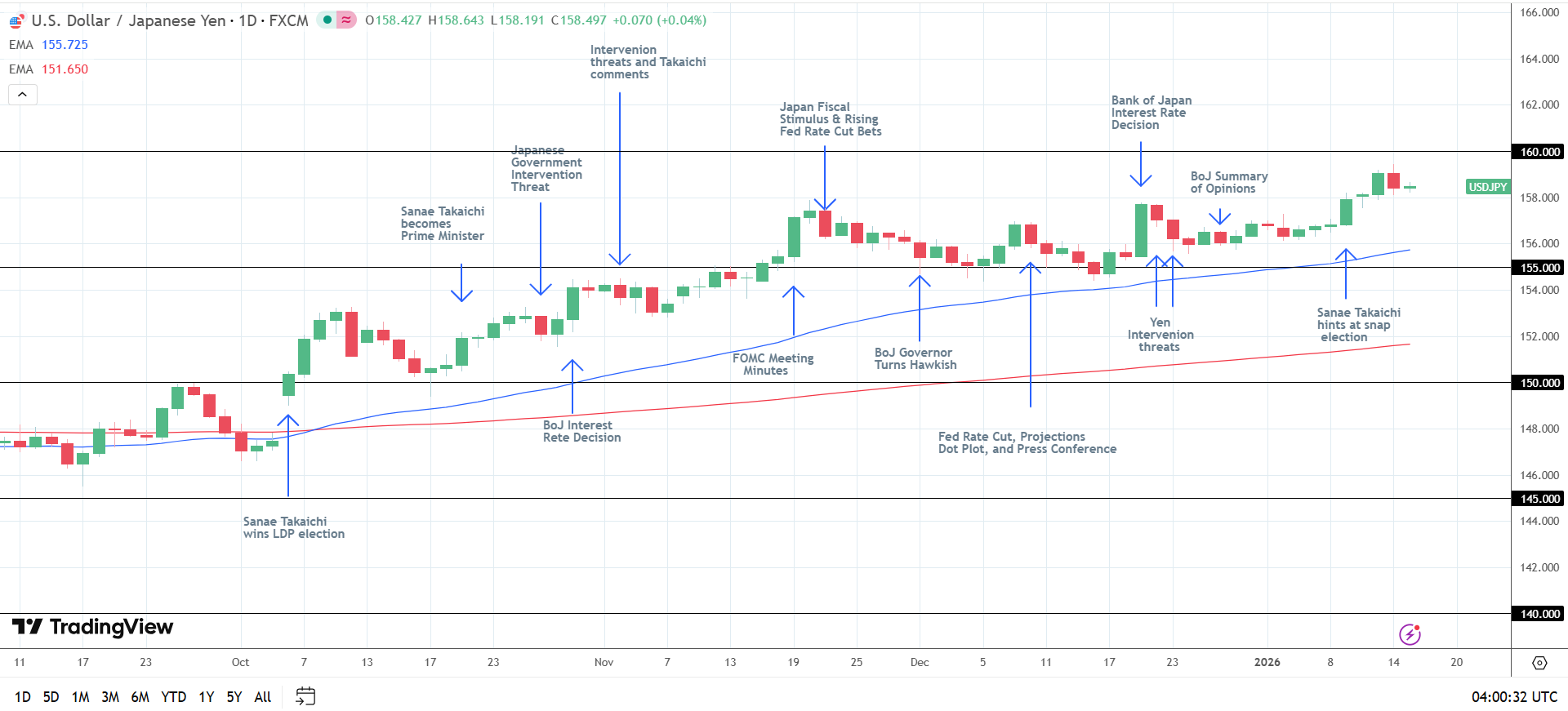
US Labor Market Data, the Fed, and Earnings in Focus
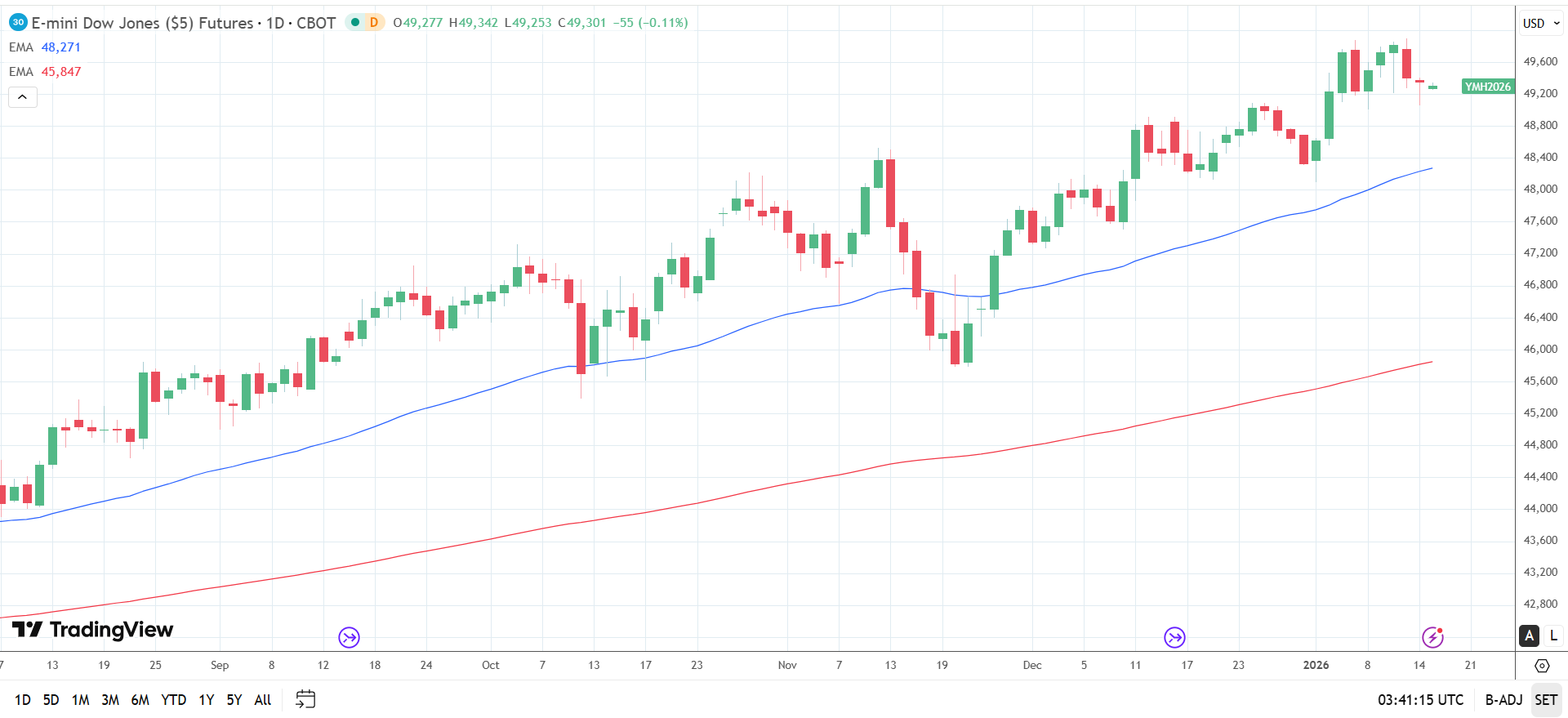
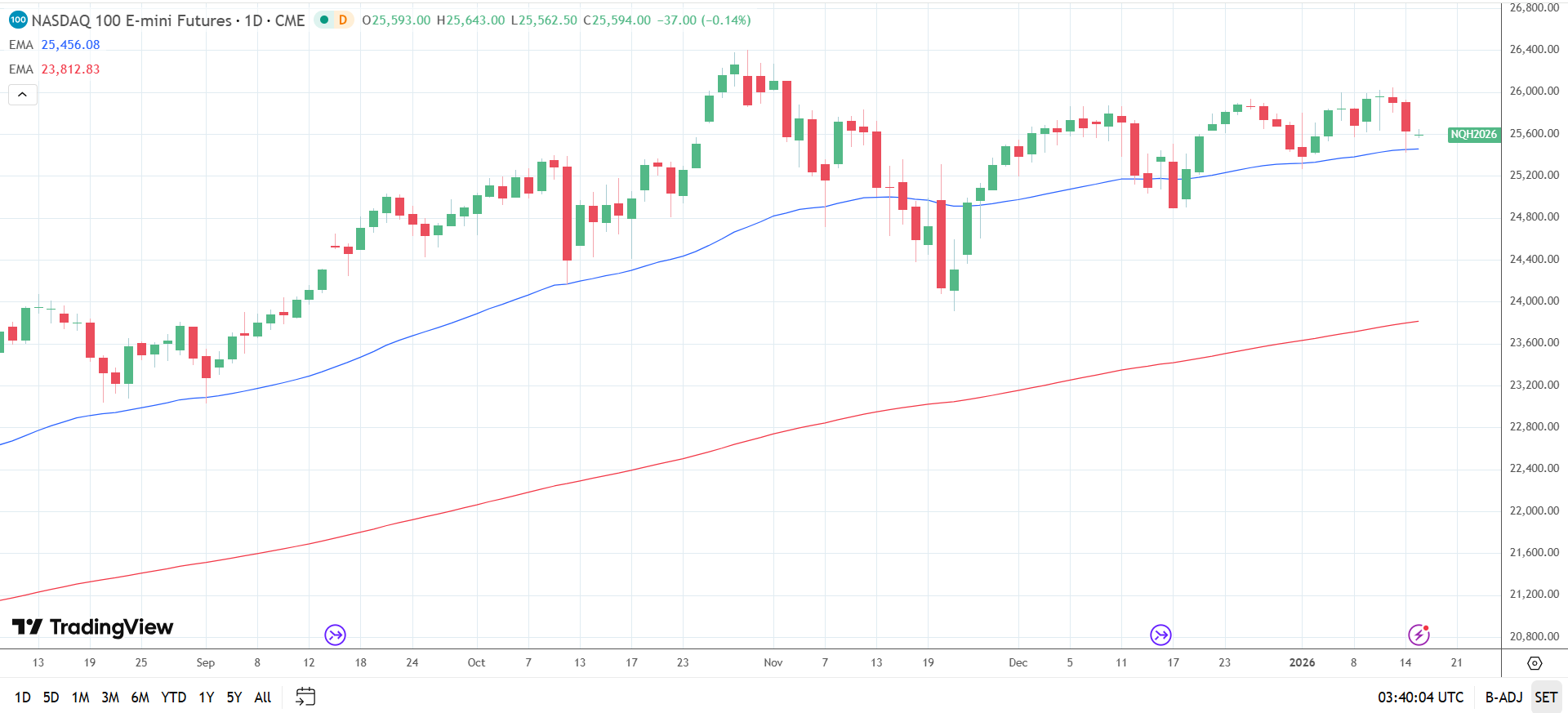
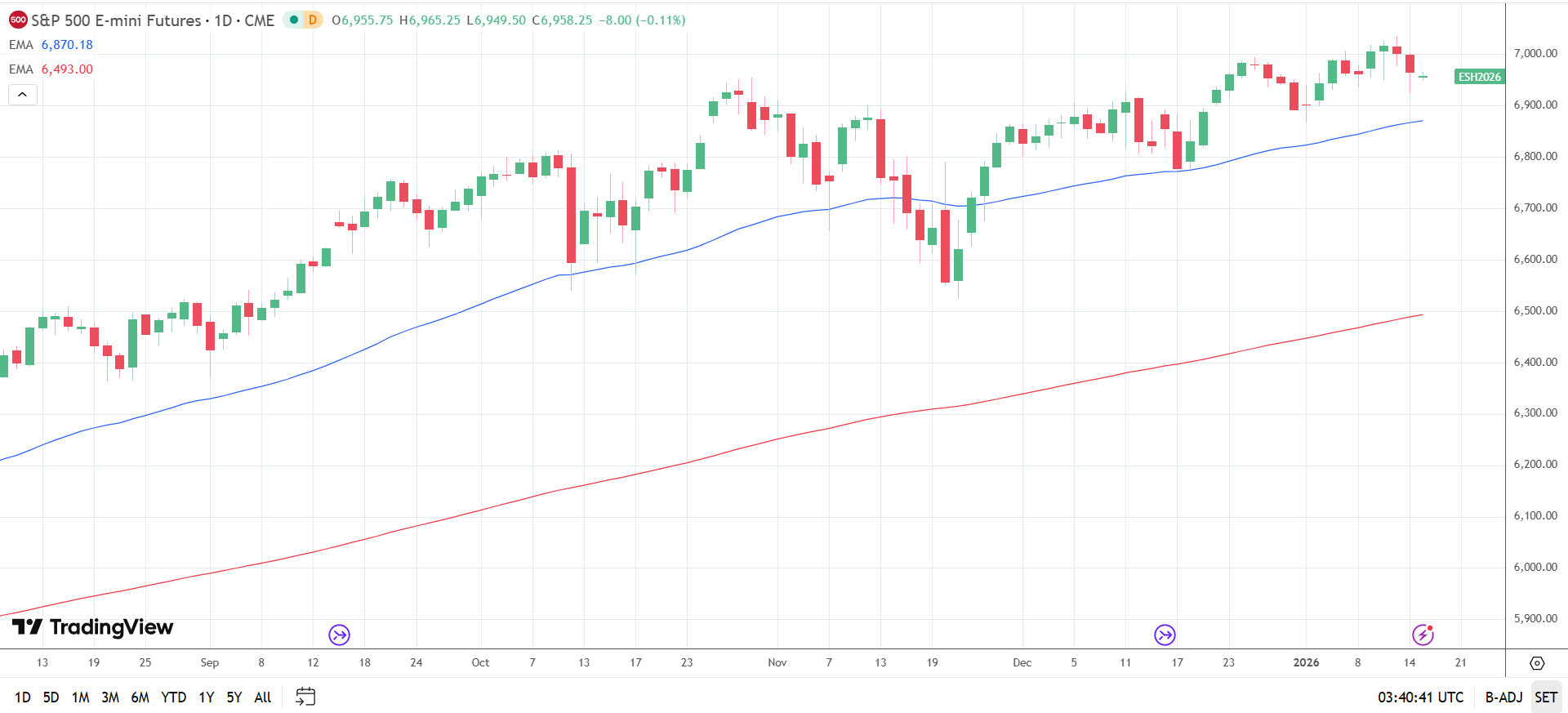
US futures fell during the Asian morning session on January 15. The Nasdaq 100 E-mini and the S&P 500 E-mini dropped 37 points and 8 points, respectively, while the Dow Jones E-mini declined 55 points.
Later Thursday, US jobless claims data will influence the Fed rate path. Economists expect initial jobless claims to increase from 208k in the week ending January 3 to 215k in the week ending January 10. A larger-than-expected increase in jobless claims would revive hopes for a March Fed rate cut, boosting demand for US equity futures.
Crucially, a more dovish Fed rate path would have a greater influence on US risk assets than the BoJ’s policy stance and a yen carry trade unwind. Typically, lower borrowing costs would raise earnings and equity valuations. Traders should also closely monitor Fed speeches for their views on the timing of rate cuts.
According to the CME FedWatch Tool, the chances of a March Fed rate cut have fallen from 43.2% on January 7 to 27.2% on January 15. Robust labor market data sank bets on a Q1 rate cut.
The current dynamics, including market optimism over AI-related corporate earnings and expectations for an H1 2026 Fed rate cut, support a cautiously bullish near-term and positive medium-term price outlook. However, corporate earnings will be key for the near-term projection. Morgan Stanley, Goldman Sachs, and BlackRock are set to release earnings today.
Key Technical Levels for Dow Jones, Nasdaq 100, and S&P 500
Despite the extended losses, the Dow Jones E-mini, the Nasdaq 100 E-mini, and the S&P 500 E-mini traded above their 50-day and 200-day EMAs. The EMAs indicated bullish momentum, aligning with positive fundamentals.
Near-term trends will hinge on corporate earnings, US economic indicators, and Fed rhetoric. Key levels to monitor include:
Dow Jones
- Resistance: the January 13 record high of 49,901, and then 50,000.
- Support: 49,000 followed by the 50-day EMA (48,271).
Nasdaq 100
- Resistance: 26,000 followed by the October 30 record high of 26,399.
- Support: the 50-day EMA (25,456) and then 24,500.
S&P 500
- Resistance: the January 13 high of 7,036, followed by 7,500.
- Support: the 50-day EMA (6,870) and then 6,500.
Bullish Medium-Term Outlook
In my opinion, the short-term price outlook remains cautiously bullish, supported by hopes for an H1 2026 Fed rate cut and upbeat AI-related corporate earnings. These fundamentals align with constructive technicals.
Furthermore, ongoing speculation about an incoming Fed Chair being willing to lower interest rates in a sticky inflation environment reinforces the constructive medium-term bias.
However, several scenarios would challenge the bullish medium-term outlook, including:
- The Bank of Japan declares a hawkish neutral interest rate (potentially 1.5%-2.5%), indicating a narrower US-Japan rate differential. Narrower rate differentials may trigger a yen carry trade unwind, derailing the short-term outlook.
- Upbeat US economic data and hawkish Fed chatter would reduce bets on a Fed rate cut.
- Corporate earnings and outlooks disappoint.
- Geopolitical tensions intensify.
- The US Supreme Court ruled tariffs to be unlawful, fueling market uncertainty and concerns over US debt.
Conclusion: Bullish Outlook Intact
In summary, a resilient US economy, a dovish Fed policy stance, upcoming AI-linked earnings, and a cautious BoJ reaffirm a cautiously positive short-term and a bullish medium-term outlook for US stock futures.
However, traders should closely monitor 10-year JGB yields, USD/JPY trends, and the Nikkei 225, given the effects of yen carry trades on market liquidity. Warnings of a yen intervention and hawkish BoJ rhetoric may fuel jitters about a yen carry trade unwind.
Key levels to watch include a USD/JPY drop below 150, 10-year JGB yields climbing to new highs, and a sharp Nikkei sell-off. These would be early signs of an unwind, weighing on buyer appetite for US risk assets.
Despite the expectations of BoJ rate hikes, US stock futures are likely to climb to new highs, with corporate earnings and the Fed being tailwinds.
Follow our live coverage and consult the economic calendar for real-time market updates.