Japanese wage growth accelerated in October, boosting bets on a December Bank of Japan rate hike on Monday, December 8. 10-year Japanese Government Bond (JGB) yields advanced to 1.953%, sending USD/JPY down 0.23% to 154.987 in early trading, leaving the Nikkei 225 in the red.
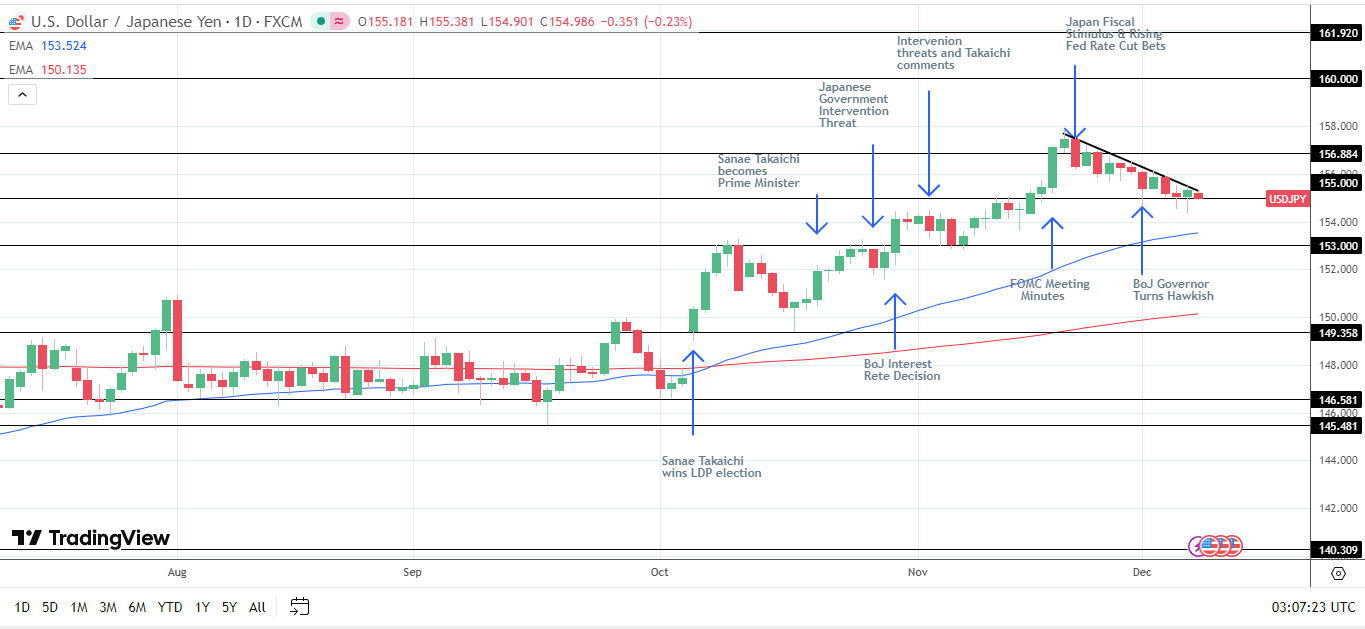
Expectations of a BoJ rate hike collide with bets on a December Fed rate cut, raising concerns about a yen carry trade unwind. While JGB yields near 1.95% have raised carry trade concerns, the 275-basis-point differential suggests limited systemic risk.
Last week’s softer US inflation data and resilient services sector activity supported a cautiously bullish short-term and bullish medium-term outlook for US equity futures.
Below, I’ll outline the key market drivers, the medium-term outlook, and the key technical levels traders should watch.

Japanese Wage Growth Accelerates as BoJ Decision Looms
Japanese average cash earnings rose 2.6% year-on-year (YoY) in October, up from 2.1% in September. Additionally, overtime pay increased from 1% YoY in September to 1.5% YoY in October, supporting a hawkish BoJ policy stance.
Typically, rising wages fuel consumer spending and demand-driven inflation, key considerations for BoJ policymakers. Furthermore, an upswing in spending would bolster the Japanese economy, given that private consumption accounts for around 55% of GDP.
Traders brushed aside a downward revision to third-quarter GDP numbers, weighed down by an unexpected drop in capital expenditures. Notably, an upward revision to private consumption to 0.2% quarter-on-quarter (QoQ) from 0.1% overshadowed the fall in capital expenditures.
However, 10-year JGB yields fell short of last week’s high of 1.971% and economists have downplayed the potential for market disruption, mirroring events in mid-2024. 10-year JGB yields have been rising since August 2025, so the shock factor is reduced. Furthermore, wide rate differentials continue to make yen-funded carry trades attractive, albeit less profitable.
A Fed rate cut and a BoJ rate hike are unlikely to materially change the narrative. Japanese rates would sit at 0.75% versus 3.5% in the US, still wide enough to drive demand for US assets, including US stock futures. Given these considerations, a BoJ rate hike is unlikely to affect risk appetite, leaving market focus on the Fed interest rate decision and forward guidance.
Dow Jones Price Forecast
Every new Dow Jones analysis as it publishes, today's technical signal and key levels, live price — on one page.
See all Dow Jones forecasts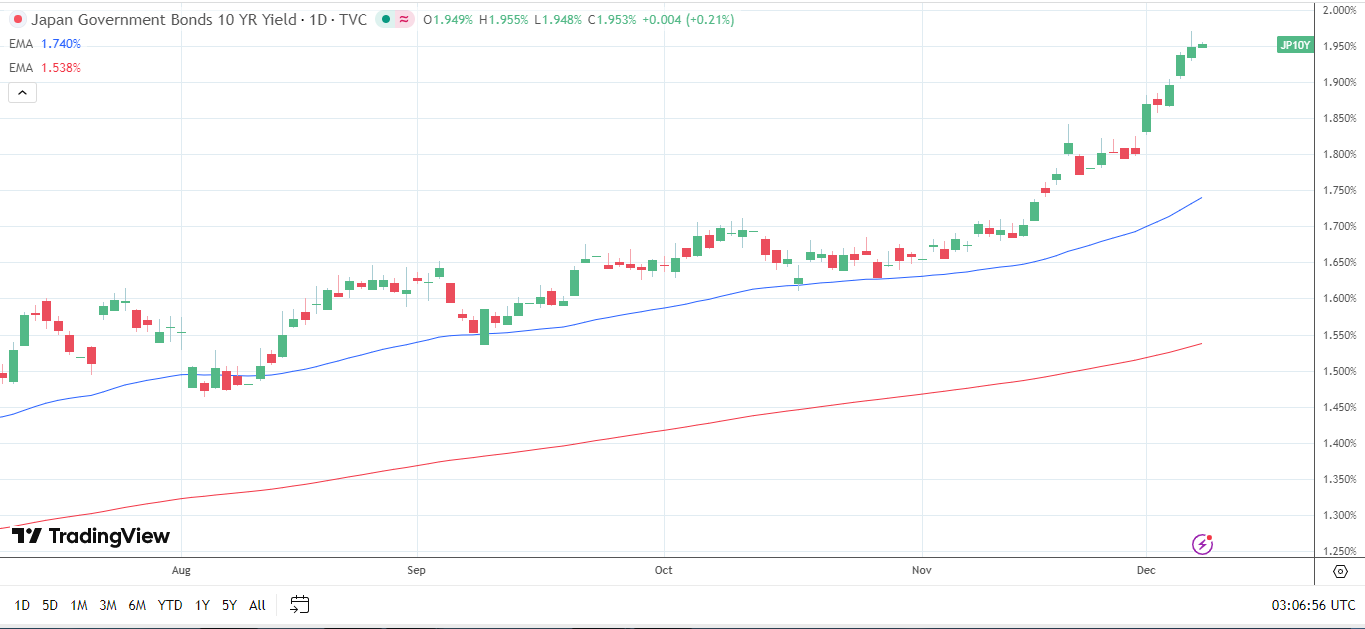
US Consumer Inflation Expectations in Focus
Futures posted gains during the Asian morning session. The Dow Jones E-mini rose 10 points, the Nasdaq 100 E-mini climbed 41 points, while the S&P 500 E-mini advanced 7 points.
Market bets on a December Fed rate cut boosted demand for US equity futures as US inflation softened in September.
Later on Monday, US Consumer Inflation Expectations will likely influence sentiment toward the Fed rate path. Economists forecast the New York Fed 1-Year Consumer Inflation Expectations to fall from 3.2% in October to 3.1% in November.
Softer inflation expectations may cement bets on a December Fed rate cut and raise expectations of further policy easing in Q1 2026. A more dovish Fed rate path would still keep the yield differential wide enough to bolster demand for US assets, supporting a bullish short- to medium-term outlook.
Key Technical Levels for Dow Jones, Nasdaq 100, and S&P 500
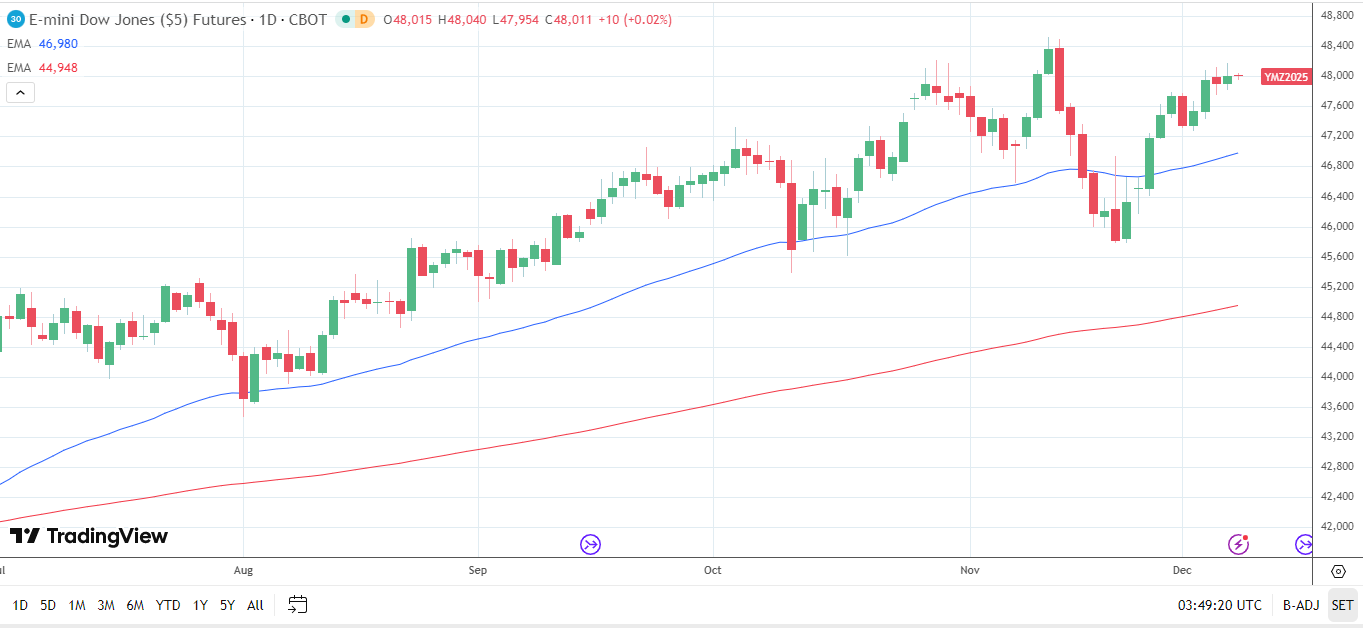
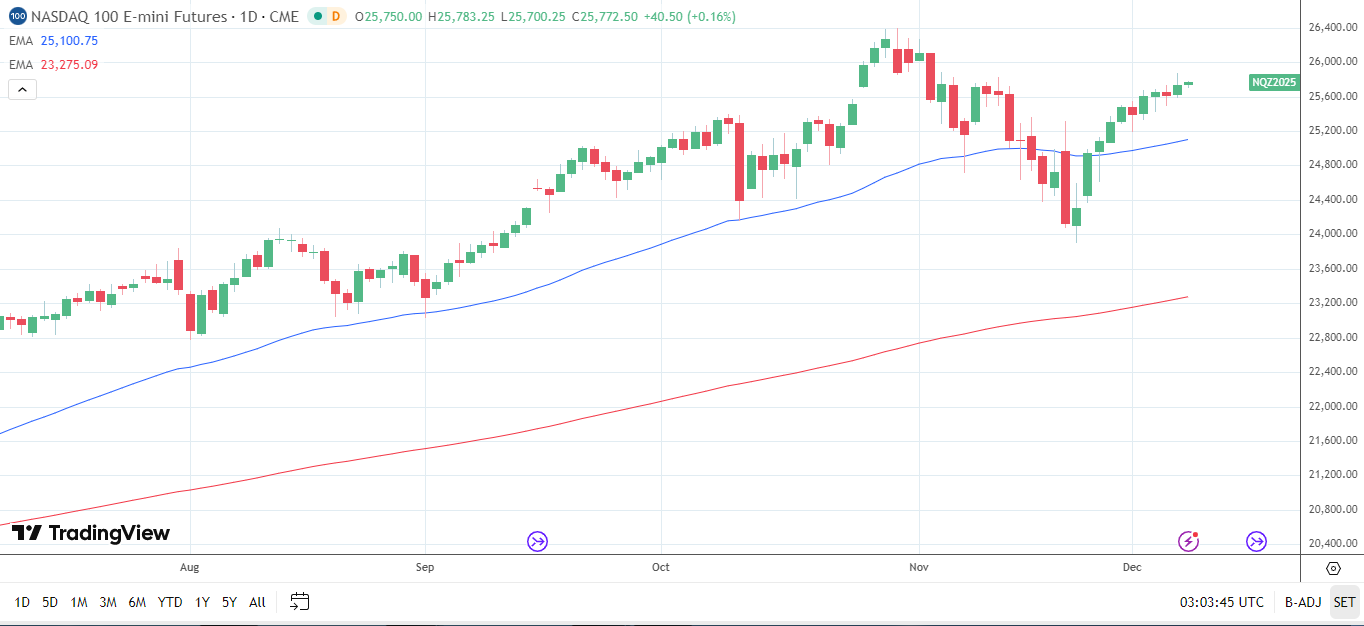
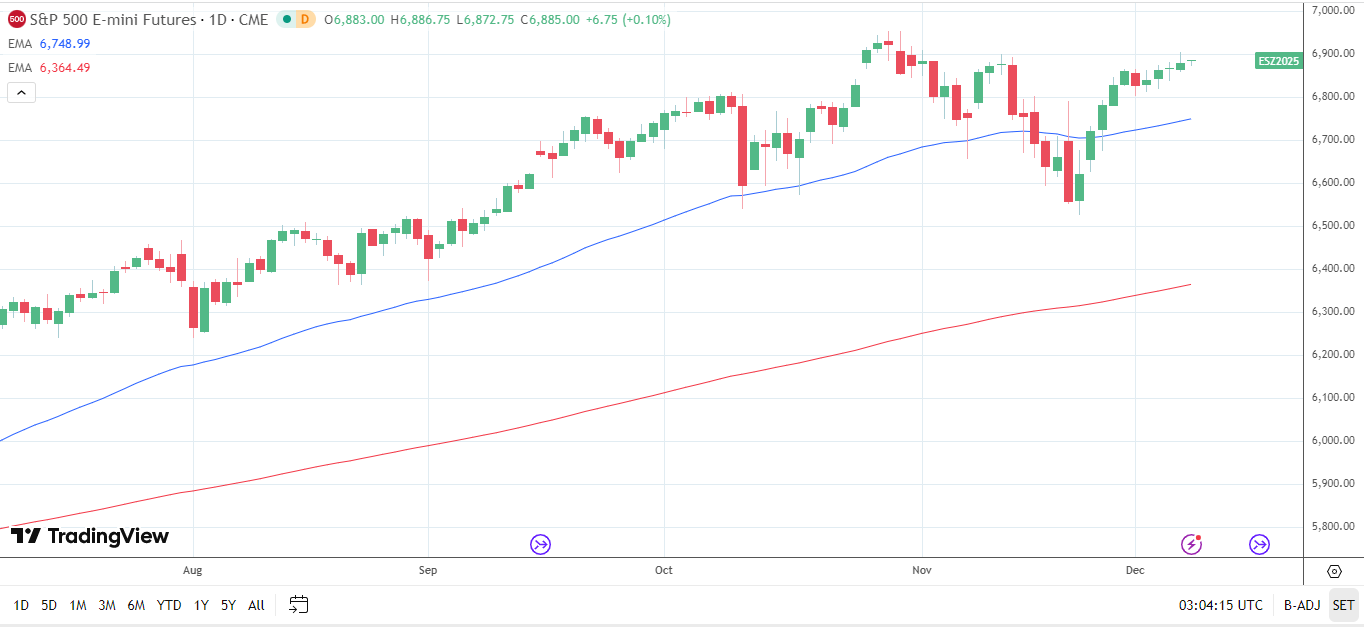
The Dow Jones E-mini, the Nasdaq 100 E-mini, and the S&P 500 E-mini remained above their 50-day and 200-day EMAs, signaling a bullish bias.
Near-term trends will hinge on BoJ comments, JGB yields, USD/JPY movements, US data, and the Fed rate decision and projections. Key levels to monitor include:
Dow Jones
- Resistance: 48,250 and then the November 12 record high of 48,528.
- Support: 47,750, 47,500, the 50-day EMA (46,980), 46,000, and then the November 21 low of 45,779.
Nasdaq 100
- Resistance: 26,000 and then the October 30 record high of 26,399.
- Support: 25,500, the 50-day EMA (25,101), 24,500, and then 24,000.
S&P 500
- Resistance: the October 30 record high of 6,954, and then 7,000.
- Support: the 50-day EMA (6,749), 6,500, and then 6,250.
The Fed to Dictate Short-Term and Medium-Term Outlook
In my view, the short- to medium-term outlook remains bullish. However, the Fed’s interest rate decision and economic projections will be key for US index futures.
A softer inflation outlook and higher unemployment, combined with a more dovish Fed rate trajectory, would likely lift demand for risk assets, bringing all-time highs into play.
However, several events could derail the bullish short- and medium-term outlooks, including:
- Bank of Japan signals a higher-than-expected neutral rate, multiple rate hikes, and cuts to JGB purchases.
- A hawkish Fed rate cut, with projections signaling sticky inflation, a resilient labor market, and one rate cut in 2026.
- BoJ QT and Fed QE announcements , and narrower-than-expected rate differentials.
Conclusion: Outlook Bullish
In summary, expectations of a Fed rate cut are likely to bolster demand for US equity futures. Nevertheless, traders should pay close attention to JGB yields, the USD/JPY, and the Nikkei 225 for sharp movements, which would increase the risk of a yen carry trade unwind.
Key levels would include a USD/JPY rise to 160 and 10-year JGBs at 2%, a key level to watch. Crucially, these levels would likely send the Nikkei 225 sharply lower, impacting the global equity markets.
10-year JGB yields may have eased back, but, yields remain elevated, keeping unwind risk alive ahead of the Fed and the BoJ’s interest rate decisions.
Follow our live coverage and consult the economic calendar for real-time market updates.