
US stock futures advanced on Thursday, January 22, extending their gains from the previous session as US-EU trade tensions eased.
Weaker Japanese exports added to the positive sentiment ahead of Friday’s highly anticipated Bank of Japan monetary policy decision. The yen weakened against the US dollar, and 10-year Japanese Government Bond (JGB) yields dropped in early trading, driving demand for risk assets.
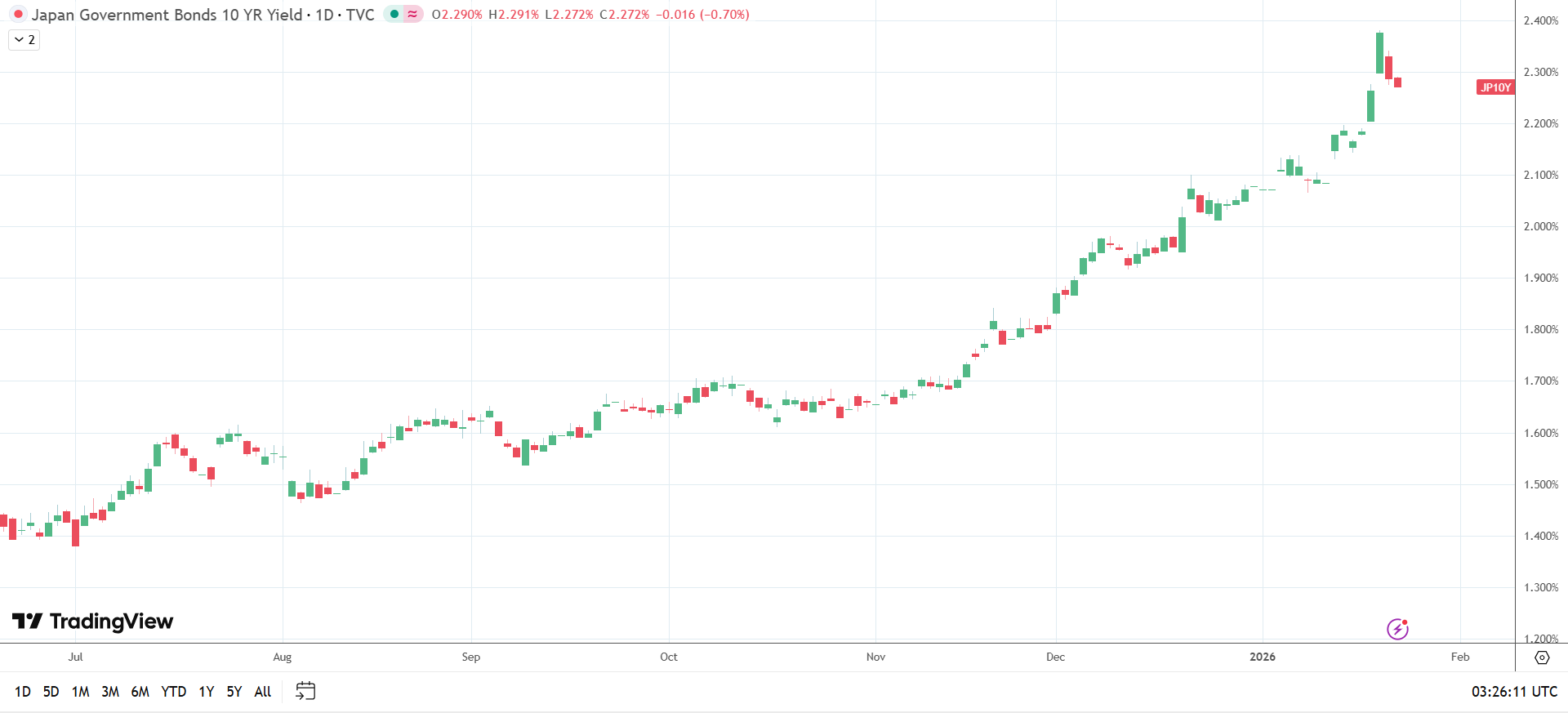
Easing geopolitical tensions, optimism toward US economic data, expectations of strong AI-linked earnings, and anticipation of multiple Fed rate cuts support a bullish medium-term outlook for US stock futures.
Below, I’ll outline the key market drivers, the medium-term outlook, and the key technical levels traders should watch.

Japanese Exports Slow, Challenging Bets on an April BoJ Rate Hike
The Japanese economy faced scrutiny on January 22 as markets looked ahead to Friday’s BoJ monetary policy decision. Exports increased 5.1% year-on-year in December, down from 6.1% in November, signaling weaker external demand. According to the Ministry of Finance, exports to the US fell 11.1% year-on-year in December after rising 8.8% in November, potentially cooling expectations of a near-term Bank of Japan rate hike.
Policymakers remain focused on the impact of US tariffs on demand. December’s drop in exports may give the BoJ doves a greater voice in this week’s monetary policy meeting. Notably, USD/JPY rose 0.12% to 158.431 in morning trading, fueling yen carry trades.
Dow Jones Price Forecast
Every new Dow Jones analysis as it publishes, today's technical signal and key levels, live price — on one page.
See all Dow Jones forecasts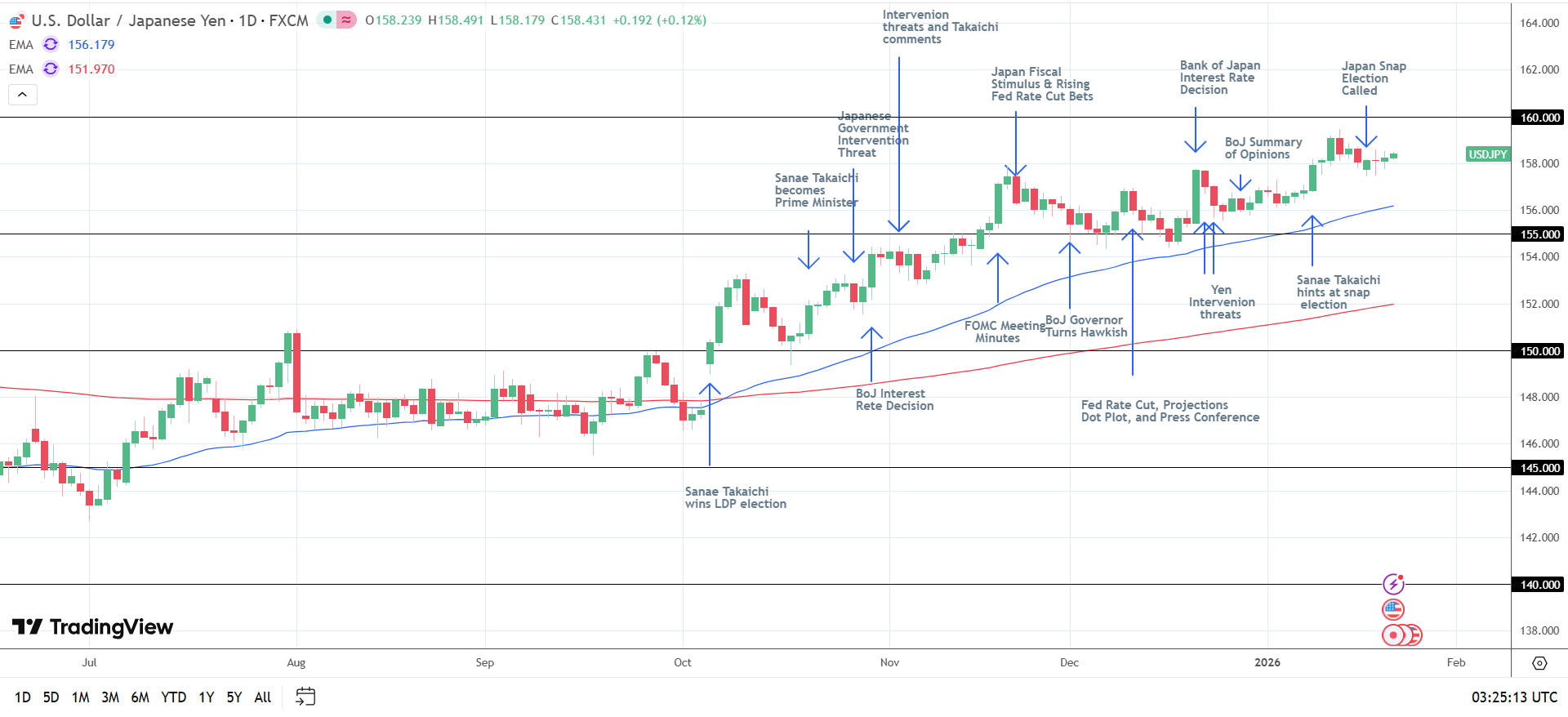
US Economic Data and Earnings in Focus
US futures advanced during the Asian morning session on January 22. The Dow Jones E-mini and the Nasdaq 100 E-mini climbed 111 points and 111 points, respectively, while the S&P 500 E-mini advanced 22 points.
Later Thursday, US labor market and inflation data will influence expectations of a June Fed rate cut.
Economists forecast initial jobless claims to increase from 198k (week ending January 10) to 212k (week ending January 17). Meanwhile, economists expect the Core PCE Price Index to rise 2.8% year-on-year in November, mirroring September’s trend.
As part of the Fed’s dual mandate, a cooling labor market and softer inflation would support a more dovish Fed rate path. A more dovish Fed policy stance would boost demand for US equity futures.
Other stats on Thursday include finalized US GDP numbers for Q4. Economists forecast the US economy to expand 4.3% quarter-on-quarter, accelerating from 3.3% growth in the third quarter. Strong US economic momentum and expectations of multiple Fed rate cuts in 2026 would be a boon for risk assets, reaffirming the positive short- to medium-term outlook for US stock futures.
This week, President Trump signaled stronger economic momentum and softer inflation. CN Wire reported:
“Trump: US inflation has been defeated, core inflation has been 1.5%, 4Q growth projected 5.4%. US economy is on pace to grow at double IMF projected rate.”
While the US economic indicators will influence sentiment, traders should closely monitor earnings, given expectations of strong Q4 results. Intel Corp. (INTC) is among the companies to announce results. Robust earnings and a positive outlook would add to the positive momentum for tech stocks.
Key Technical Levels for Dow Jones, Nasdaq 100, and S&P 500
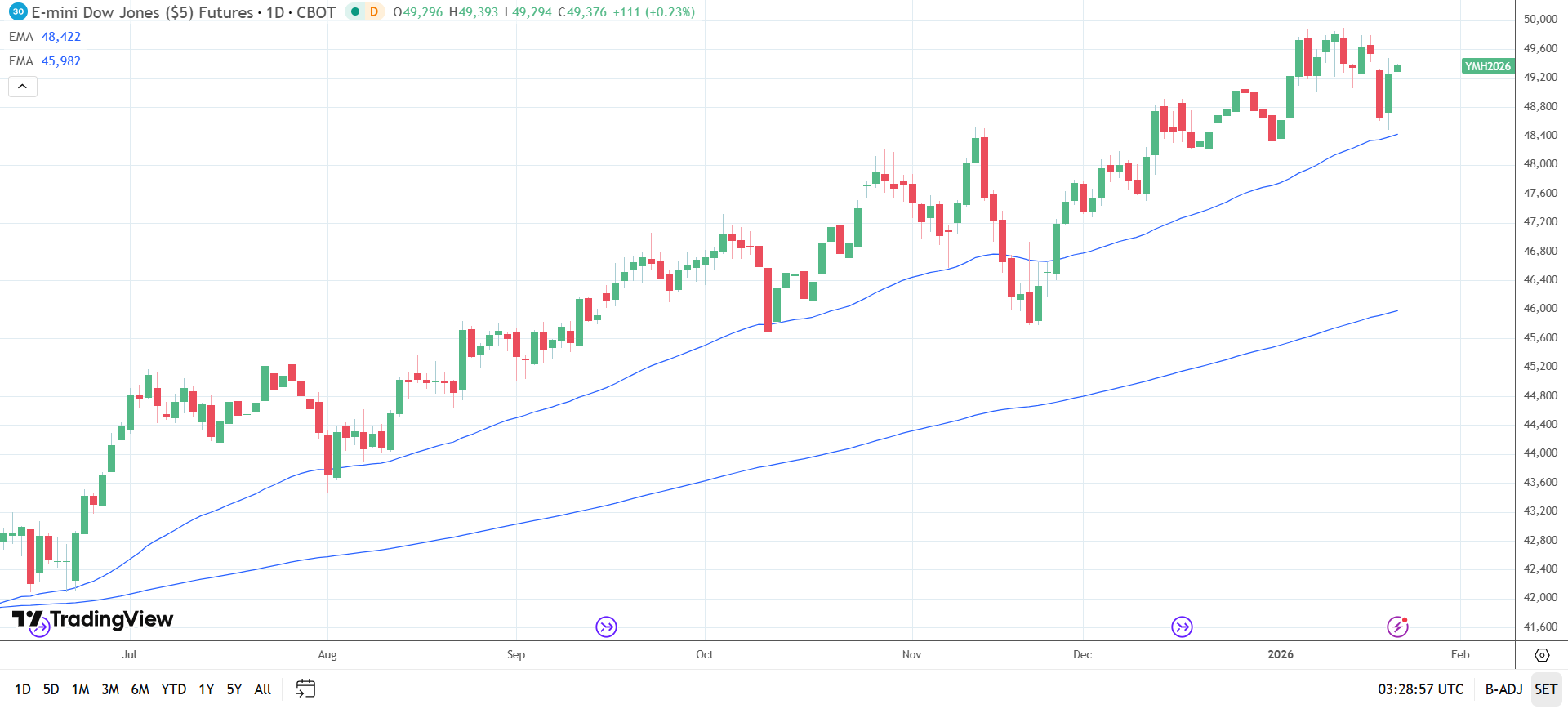
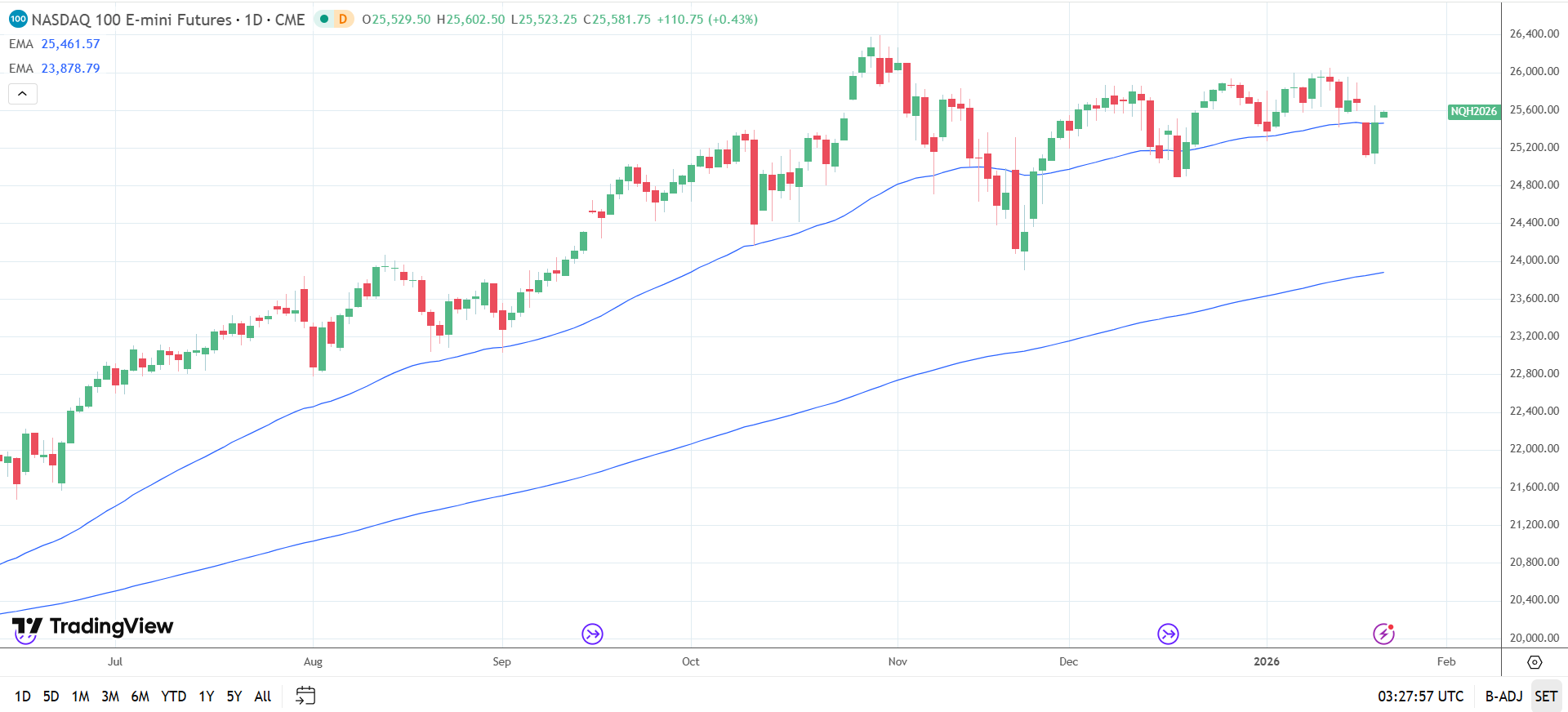
Following Wednesday’s rally and the morning gains, the Dow Jones E-mini, the Nasdaq 100 E-mini, and the S&P 500 E-mini traded above their 50-day and 200-day EMAs. The EMAs indicated a bullish bias, aligning with positive fundamentals.
Near-term trends will hinge on geopolitical developments, earnings, and US economic data. Key levels to monitor include:
Dow Jones
- Resistance: the January 13 record high of 49,901, and then 50,000.
- Support: 49,000 followed by the 50-day EMA (48,422).
Nasdaq 100
- Resistance: 26,000, followed by the October 30 record high of 26,399.
- Support: the 50-day EMA (25,462), 25,000, and then 24,500.
S&P 500
- Resistance: the January 13 high of 7,036, followed by 7,500.
- Support: the 50-day EMA (6,877) and then 6,500.
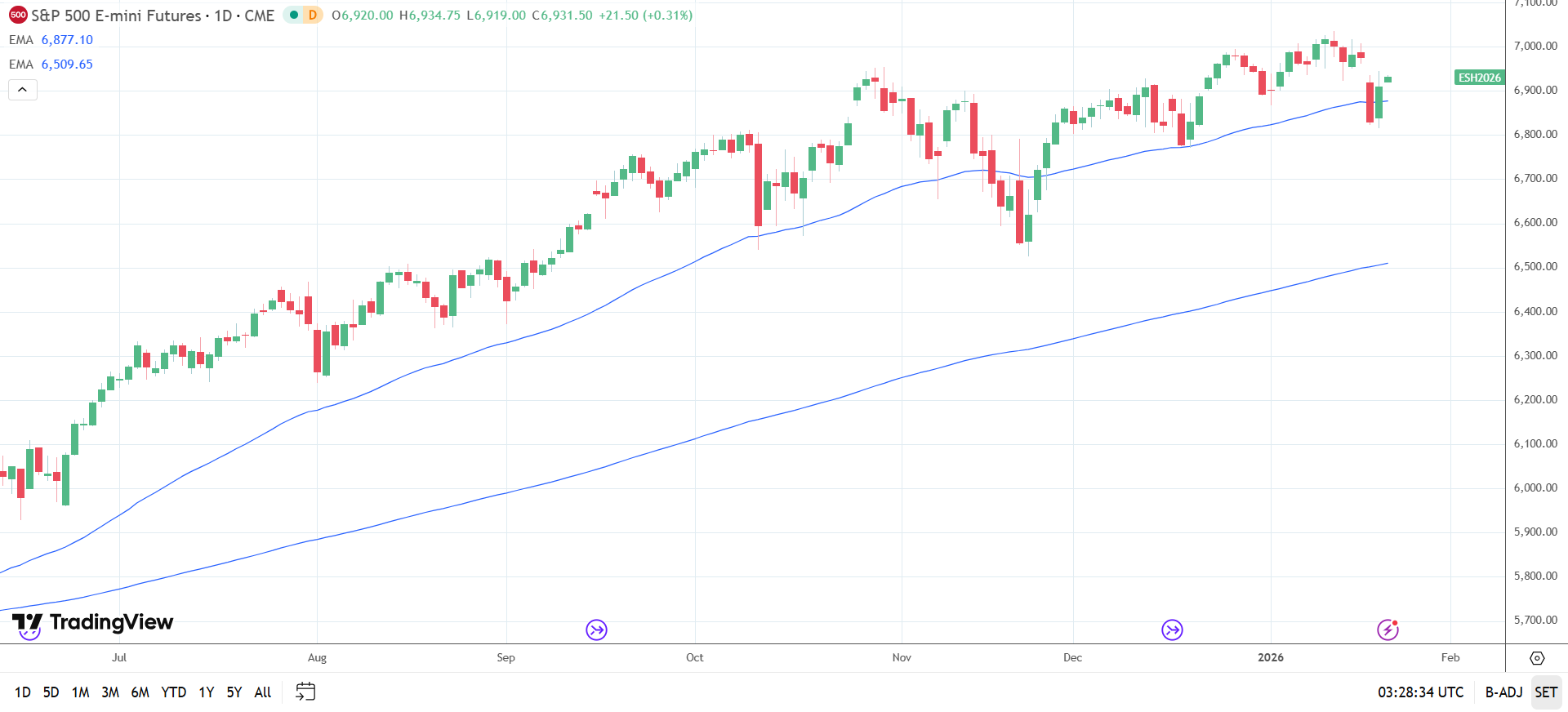
US Stock Futures Outlook: June Rate Cut Bets and Earnings Maintain Bullish Bias
In my opinion, the short-term price outlook remains bullish. Expectations of positive Q4 earnings and bets on an H1 2026 Fed rate cut reinforce the constructive bias. These fundamentals align with bullish technicals for US stock futures.
However, several factors would challenge the bullish medium-term outlook, including:
- Rising geopolitical tensions.
- The Bank of Japan declares a hawkish neutral interest rate (potentially 1.5%-2.5%). A narrower US-Japan rate differential may trigger a yen carry trade unwind, mirroring the events in mid-2024. A yen carry trade unwind would invalidate the short-term outlook.
- Strong US inflation and labor market data and hawkish Fed signals would temper bets on multiple Fed rate cuts.
- Corporate earnings and outlooks disappoint.
Conclusion: Bullish Bias Intact
In summary, a robust US economy, a dovish Fed policy stance, positive sentiment toward earnings, and a cautious BoJ support a bullish short- and medium-term outlook for US stock futures.
However, traders should monitor Bank of Japan rhetoric and Friday’s monetary policy decision. A hawkish monetary policy hold and hints of a higher neutral rate could fuel fears of a yen carry trade unwind.
Despite the prospects of BoJ rate hikes, US stock futures are likely to target new highs if US economic data raises bets on a June Fed rate cut. Looser Fed monetary policy would have a more lasting effect on stocks than a hawkish BoJ policy stance.
Follow our live coverage and consult the economic calendar for real-time market updates.