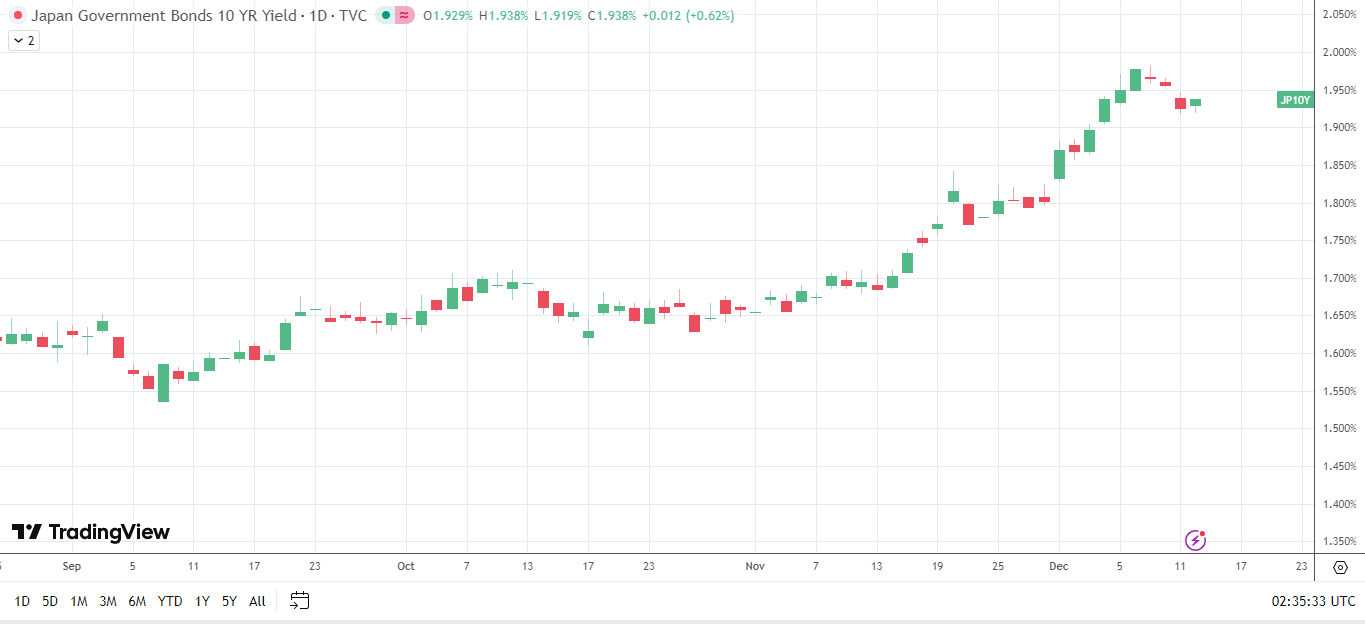
Japanese Government Bond (JGB) yields dropped for three consecutive sessions on Thursday, December 11, easing fears of a yen carry trade unwind. However, rising bets on a December Bank of Japan rate hike continue to cushion the downside on 10-year JGB yields.
Meanwhile, overnight US jobs data showed a spike in jobless claims, supporting a more dovish Fed policy stance. 10-year US Treasury yields dropped to a four-day low before stabilizing.
Falling 10-year Treasury and JGB yields bolstered demand for risk assets such as US stock futures. Furthermore, easing concerns over a yen carry trade unwind supports a bullish short- to medium-term outlook for US index futures.
Below, I’ll outline the key market drivers, the medium-term outlook, and the key technical levels traders should watch.

Former Bank of Japan Official Signals 1.5% Neutral Rate
Rising bets on a December BoJ rate hike collided with increasing speculation about the Bank’s neutral rate. The neutral rate is where monetary policy is neither restrictive nor accommodative.
For markets and yen carry trades, a neutral rate would influence expectations of the number of rate hikes in the BoJ’s policy tightening cycle.
A higher neutral rate would narrow US-Japan rate differentials more, making yen carry trades into assets less attractive. Conversely, a lower neutral rate would keep carry trades profitable, supporting the bullish short- to medium-term price outlook for US stock futures.
This week, former BoJ policymaker Hideo Hayakawa warned of multiple BoJ rate hikes and a 1.5% neutral rate. Bank of Japan Governor Kazuo Ueda previously stated that there was no consensus on the neutral rate, which remained in a wide range, between 1% and 2.5%. A 1.5% neutral rate would dampen interest in yen carry trades into US assets, but keep them profitable.
10-year JGB yield, USD/JPY, and Nikkei 225 trends suggest fading concerns about a yen carry trade unwind. The Nikkei 225 gained 0.89% in morning trading on Friday, December 12, while 10-year JGBs remained well below the December 9 high of 1.981% and USD/JPY edged 0.07% higher.
Dow Jones Price Forecast
Every new Dow Jones analysis as it publishes, today's technical signal and key levels, live price — on one page.
See all Dow Jones forecasts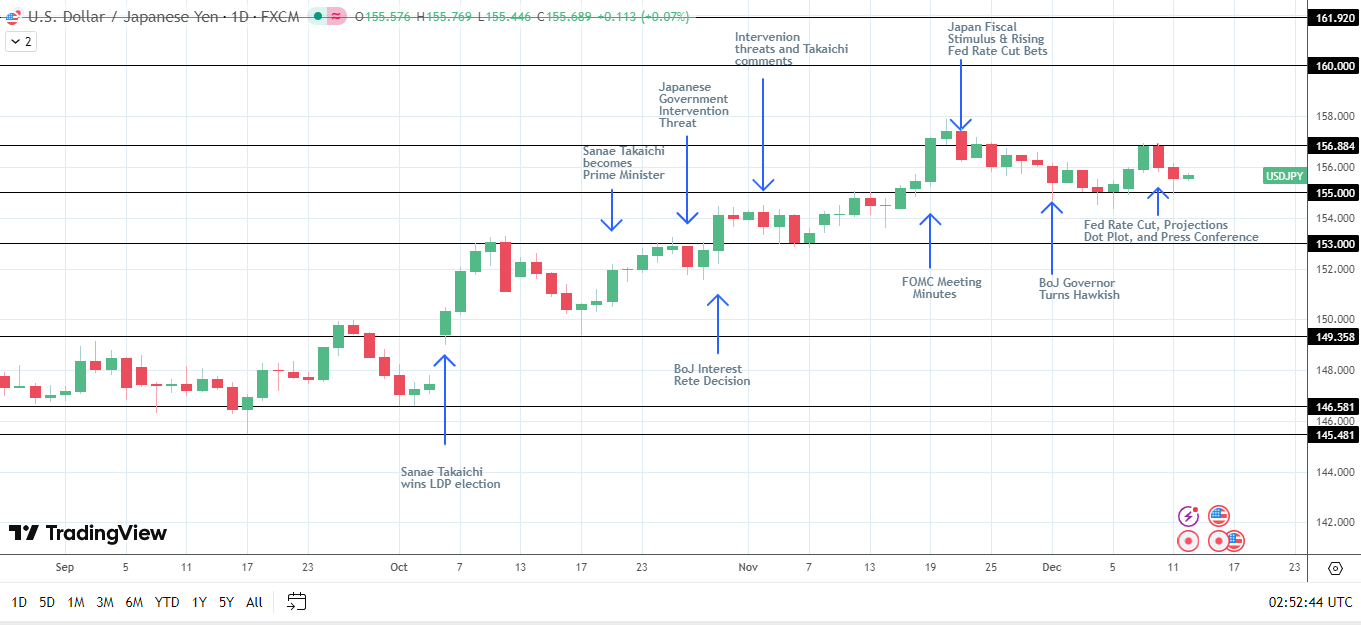
FOMC Members in Focus
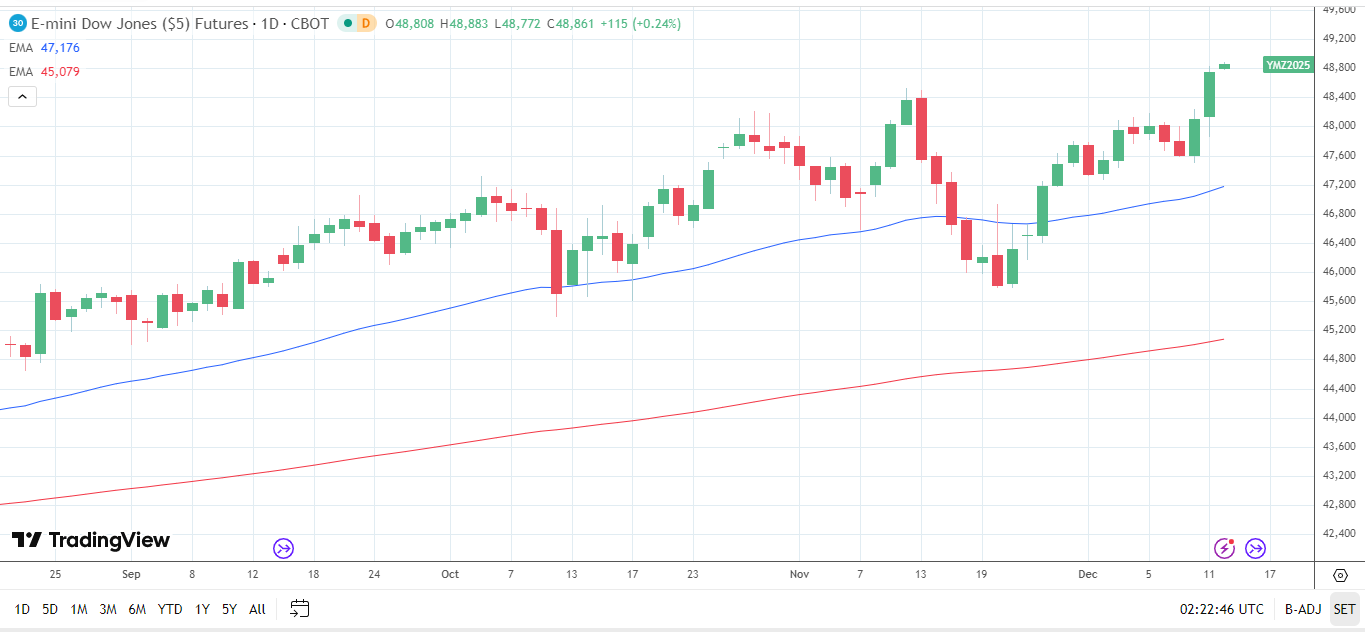
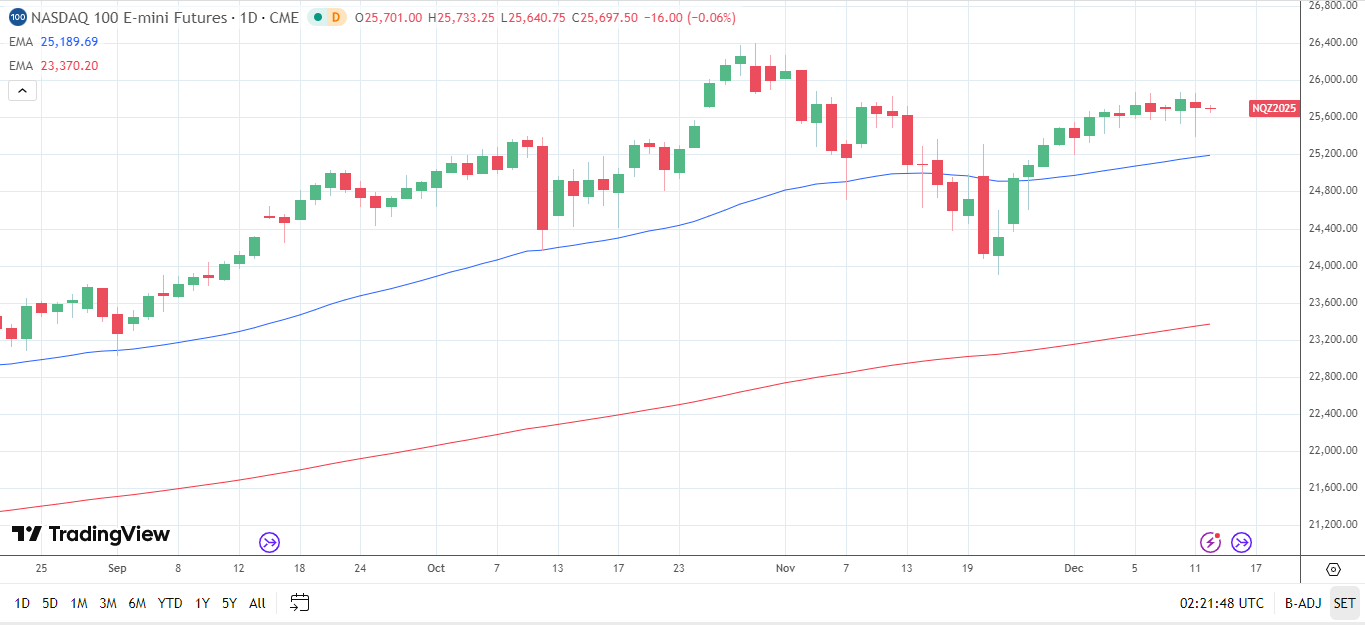
Futures had a mixed Asian morning session. The Dow Jones E-mini rose 115 points, and the S&P 500 E-mini gained 4 points. Meanwhile, the Nasdaq 100 E-mini dropped 16 points, weighed down by Oracle and Broadcom. Oracle tumbled 10.83% overnight as investors reacted to the company’s significant spending and weak forecasts, raising concerns about the timing of returns on investments.
Later on Friday, traders should monitor FOMC members’ speeches after Wednesday’s dot plot signaled a single 2026 Fed rate cut. Dovish Fed rhetoric would lift sentiment, supporting a bullish short- to medium-term outlook for US stock futures.
According to the CME FedWatch Tool, the chances of a March Fed rate cut increased from 42.2% on Wednesday, December 10, to 49.6% on December 11. Higher-than-expected US jobless claims raised bets on a March Fed rate cut, sending the Dow Jones E-mini futures to an all-time high.
Key Technical Levels for Dow Jones, Nasdaq 100, and S&P 500
Despite the mixed morning, the Dow Jones E-mini, the Nasdaq 100 E-mini, and the S&P 500 E-mini remained above their 50-day and 200-day EMAs, indicating a bullish bias.
Near-term trends will hinge on BoJ rhetoric, 10-year US Treasury and JGB yields, USD/JPY trends, and Fed commentary. Key levels to monitor include:
Dow Jones
- Resistance: December 12 record high of 48,883, and then 49,000.
- Support: 48,750, 48,000, 47,500, and then the 50-day EMA (47,176).
Nasdaq 100
- Resistance: 25,750, 26,000, and then the October 30 record high of 26,399.
- Support: 25,500, the 50-day EMA (25,190), 24,500, and then 24,000.
S&P 500
- Resistance: the October 30 record high of 6,954, and then 7,000.
- Support: the 50-day EMA (6,769), 6,500, and then 6,250.

Short-Term and Medium-Term Outlook Hinges on the Fed and BoJ
In my opinion, the short- to medium-term outlook remains bullish despite the Fed’s single 2026 rate cut and hawkish BoJ policy stance. Given easing concerns about a yen carry trade unwind, rate differentials will continue to influence the near-term trends.
Several scenarios could derail the bullish short- and medium-term outlooks, including:
- Bank of Japan signals a 2% neutral rate and multiple rate hikes.
- Hawkish Fed chatter, supporting one 2026 rate cut.
- Fed QE and BoJ QT collide, narrowing rate differentials sharply, potentially triggering a yen carry trade unwind.
Conclusion: Outlook Bullish
In summary, a more dovish Fed policy stance would boost demand for US equity futures. However, traders should continue monitoring BoJ signals, JGB yields, the USD/JPY, and the Nikkei 225 for potential yen carry trade unwind warning signals.
Key levels would include a USD/JPY drop to 150 and 10-year JGBs at 2%, an important level to watch. These sharp moves would likely trigger a Nikkei 225 sell-off, weighing on broader risk sentiment.
The latest pullback in 10-year JGB yields provided some market relief. Nevertheless, yields remain elevated, exposing US stock futures to unwind risk.
Follow our live coverage and consult the economic calendar for real-time market updates.