



The EUR/USD moved higher as European core yields backed up following solid inflation figures from France and a better than expected Chinese PMI manufacturing report. Overall inflation in the Eurozone was softer than expected which capped the upside in the EUR/USD currency pair.
Technicals
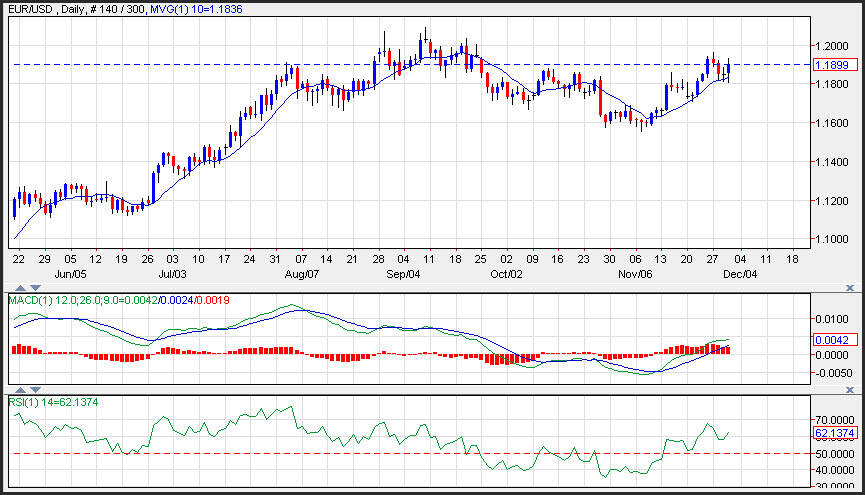
The EUR/USD currency pair moved higher bouncing off support near the 10-day moving average at 1.1836. Resistance is seen near the weekly highs at 1.1961. Momentum appears to be neutral as the MACD (moving average convergence divergence) histogram prints in the black with a flat trajectory which points to consolidation. The RSI (relative strength index) moved higher with price action reflecting accelerating positive momentum.
Spanish Q3 GDP Was in Line with Expectations
Spanish Q3 GDP was confirmed at 0.8% quarter over quarter, in line with the preliminary number, as expected. The annual rate stood at 3.1% year over year, an impressive testimony also to the success of Rajoy’s reform program, although while headline rates look very good also in a Eurozone wide comparison, the labor markets remain hampered especially by high youth unemployment rates and political troubles centering around Catalonia’s bid for independence suggest downside risks ahead.
Eurozone November Inflation Missed Expectations
Eurozone November HICP inflation rose to 1.5% year over year from 1.4% year over year in the previous month, less than expected and with core inflation holding at 0.9% year over year, rather than nudging higher to 1.0% year over year, as consensus suggested. National data had been mixed and while the German rate came in a tad higher than anticipated, French and Spanish numbers ahead of today’s Eurozone release came in below estimates, and with the breakdown showing that the uptick in the headline rate was largely due to a rebound in energy price inflation, which jumped to 4.7% year over year in November from 3.0% year over year.
French Inflation was Below Forecasts
French November HICP inflation rises to 1.3% year over year, with prices up 0.1% month over month. This is up from 1.1% year over year in the previous month, but below our forecast for a rise to 1.4% year over year, although the median was 1.2% year over year. The uptick still leaves headline rates at very low levels, despite a pickup in energy prices of 1.7% month over month. PPI inflation actually fell back in November to just 1.5% year over year and the data highlights the challenges for Draghi and Co as inflation rates stubbornly refuse to converge across the Eurozone.
German Retail Sales Slumped
German October retail sales slumped -1.2% month over month, with the annual rate plunging to -1.4% year over year form 4.1% year over year in the previous month. The three months trend rate fall back to -0.4%, the first negative reading since at least March. A very disappointing result, that casts a shadow over the outlook for consumption in Q4 and is at odds with ongoing improvement on labor markets and rising wage growth.
Eurozone Jobless Rate Dropped
Eurozone jobless rate dropped to 8.8% in October from 8.9% in the previous month. Further signs that the labor market is improving and with PMI readings suggesting ongoing job creation as companies run into capacity constraints the improving trend is likely to continue. Youth unemployment also declined, but at 18.6% across the Eurozone remains very high, with large differences across countries that reveal ongoing issues at structural level. More importantly, the ECB’s wider measures of underemployment have not come down to the same extent since the crisis, which explains, why wage growth has remained muted despite the improvement in headline numbers.
German Jobless Numbers Dropped
German November jobless numbers dropped -10K over the month, leaving the rate at a series low of 5.6%. Confidence data already suggested that job creation continued to expand this month and the labor market is looking increasingly tight, even if the ECB’s wider measures of underemployment have failed to come down to the same extent since the crisis, as official headline rates. Wage growth is likely to pick up in this environment, thus adding to signs that underlying inflation pressures are slowly starting to build.