In FX, the USD edged higher versus most of its peers in the first half of the European session yesterday, before pulling back during US trading to close flat. However, Fed officials made headlines yesterday, with Governor Michael Barr and San Francisco Fed President Mary Daly noting that AI-driven output may raise the Fed’s neutral rate. This, of course, will sit rather awkwardly alongside President Trump’s view – shared by his nominee for Fed Chair, Kevin Warsh – that AI will bolster the economy without stoking inflation or necessitating additional hiring. Time will tell.

RBNZ Stands Pat; NZD Lower on Dovish Repricing
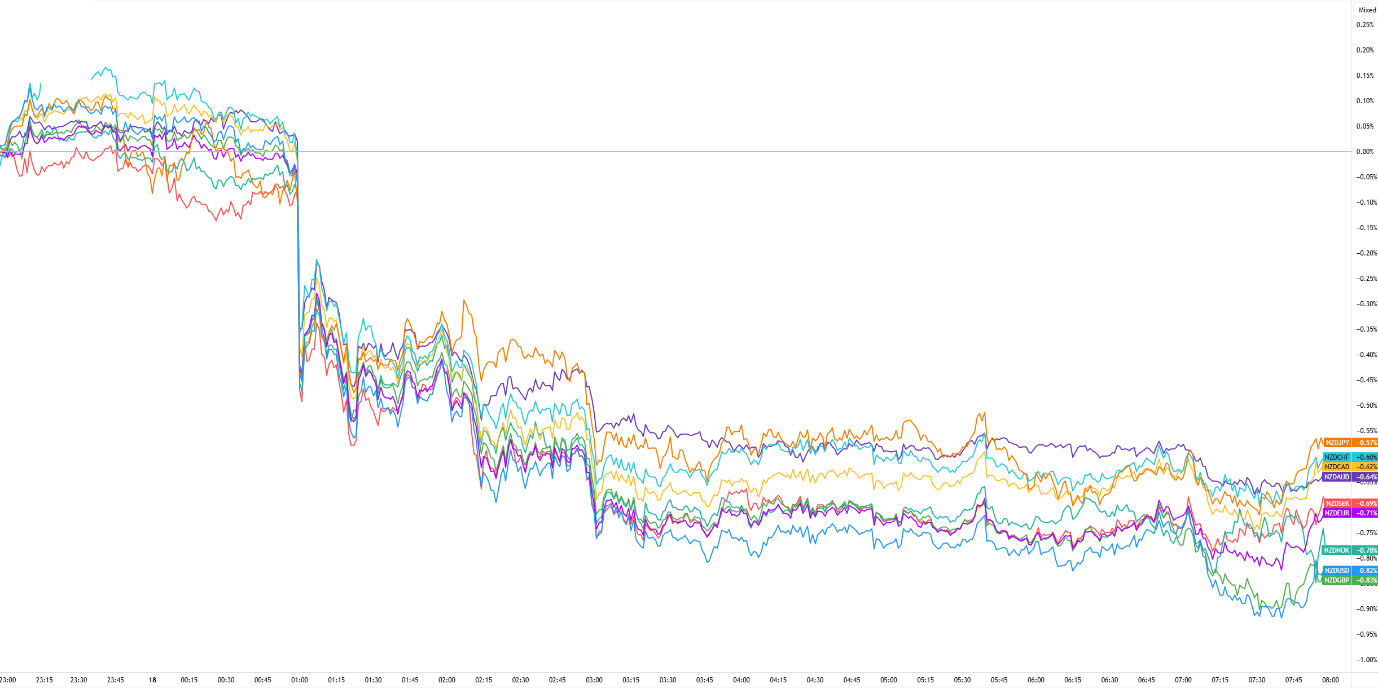
The NZD has had a difficult morning, with losses most pronounced against the USD and GBP (see chart below). The move lower followed the RBNZ’s decision to leave the official cash rate unchanged at 2.25%, in line with market expectations and on the heels of three consecutive cuts at the tail end of last year.
I think the primary reason for the NZD downside is the central bank’s projections showing a shallower tightening cycle ahead than markets had forecast. This has prompted a dovish repricing, with year-end hike expectations trimmed to around 25 bps from 38 bps just a day prior.
UK CPI Inflation ‘almost’ Seals the Deal for a BoE Rate Cut
Following softer UK December jobs data on Tuesday, investors priced in a 75% chance of a BoE rate cut next month, which took the shine off GBP. Earlier this morning, the January UK CPI inflation report was released and largely met market expectations.
Headline YY inflation eased to 3.0% from 3.4% in December, with the biggest drags coming from transport, as well as food and education. On the core front, inflation cooled only slightly to 3.1% from 3.2%, and services inflation remained sticky at 4.4% – slightly above expectations though below December’s print of 4.5%.
Dow Jones Price Forecast
Every new Dow Jones analysis as it publishes, today's technical signal and key levels, live price — on one page.
See all Dow Jones forecastsThe broader disinflation narrative remains intact, and indeed, further progress should follow as the price shocks of 2025 roll out of the annual comparison. This implies another leg lower should be seen soon, as more of those shocks are removed from the calculation.
I think the recent data pretty much seals the deal for a BoE rate cut next month – investors added to rate-cut bets this morning, now assigning an 86% probability (-22 bps). With that said, given that services came in higher than expected and remains elevated, I expect the MPC to echo a cautious meeting-by-meeting stance following the cut.
Day Ahead: Fed Minutes in Focus
Today’s calendar is anchored by the release of the January FOMC meeting minutes. As a reminder, the Fed voted 10-2 to hold the target rate at 3.50–3.75%, with Governors Christopher Waller and Stephen Miran dissenting in favour of a 25 bp cut.
The Fed, of course, finds itself in the unenviable position of balancing a ‘solid’ economic outlook against tariff-driven inflation, while defending its independence amid political pressure to ease policy rates. With money markets pricing in another pause at next month’s meeting, investors will be looking to the minutes for clues on how long the central bank may remain on hold. Any language suggesting a higher terminal rate or concerns about accelerating inflation could firm yields and underpin the USD.
Written by FP Markets Chief Market Analyst Aaron Hill