US stock futures came under a second morning of selling pressure during the Asian session on Wednesday, February 18. Rising US-Iran tensions weighed on sentiment amid ongoing concerns over AI -related spending, returns on investments, and disruption.
Meanwhile, Japanese trade data and a US-Japan trade deal sent the Nikkei 225 sharply higher as Japanese Government Bond (JGB) yields dropped toward 2026 lows.
Despite the morning pullback, lingering bets on an H1 2026 Fed rate cut and a robust US economy continue to support a medium-term outlook for US stock futures. Later on Wednesday, the FOMC Minutes will influence risk sentiment ahead of Friday’s crucial US economic data.
Below, I’ll outline the key market drivers, the medium-term outlook, and the technical levels traders should watch.

US-Iran Talks Fuel Geopolitical Tensions
The US and Iran held talks in Geneva on February 17. While Iran’s foreign minister stated that they made good progress, President Trump’s Truth Social Media continued to fuel concerns about a broader Middle East Conflict. Iran’s Supreme Leader Ayatollah Ali Khamenei reportedly threatened to sink US carriers in case of war. Significantly, the White House reportedly told Israel that nuclear talks were at a dead end, with Tehran unwilling to agree to President Trump’s demands.
Developments in the Middle East will be key to near-term demand for risk assets. An escalation and the threat of a broader Middle East conflict could challenge the bullish medium-term outlook for US stock futures.
Dow Jones Price Forecast
Every new Dow Jones analysis as it publishes, today's technical signal and key levels, live price — on one page.
See all Dow Jones forecastsUS and Japan Signed Trade Deal as Japanese Exports to the US Continue to Fall
While tensions in the Gulf will continue to affect sentiment, a US-Japan trade deal cushioned the downside for US stock futures. President Trump announced the deal, stating:
“Our MASSIVE Trade Deal with Japan has just launched! Japan is now officially, and financially, moving forward with the FIRST set of Investments under its $550 BILLION Dollar Commitment to invest in the United States of America — part of our Historic Trade Deal to REVITALIZE the American Industrial Base, create HUNDREDS OF THOUSANDS of GREAT American Jobs, and strengthen our National and Economic Security like never before.”
The announcement came ahead of January’s Japanese trade data, which showed exports surge 16.8% year-on-year, up from 5.1% in December. However, Japanese exports to the US dropped 5.0% after declining 11.1% in December despite overall exports rising. The trade deal highlighted President Trump’s push for foreign investment into the US, bullish for US stock futures.
FOMC Minutes in Focus
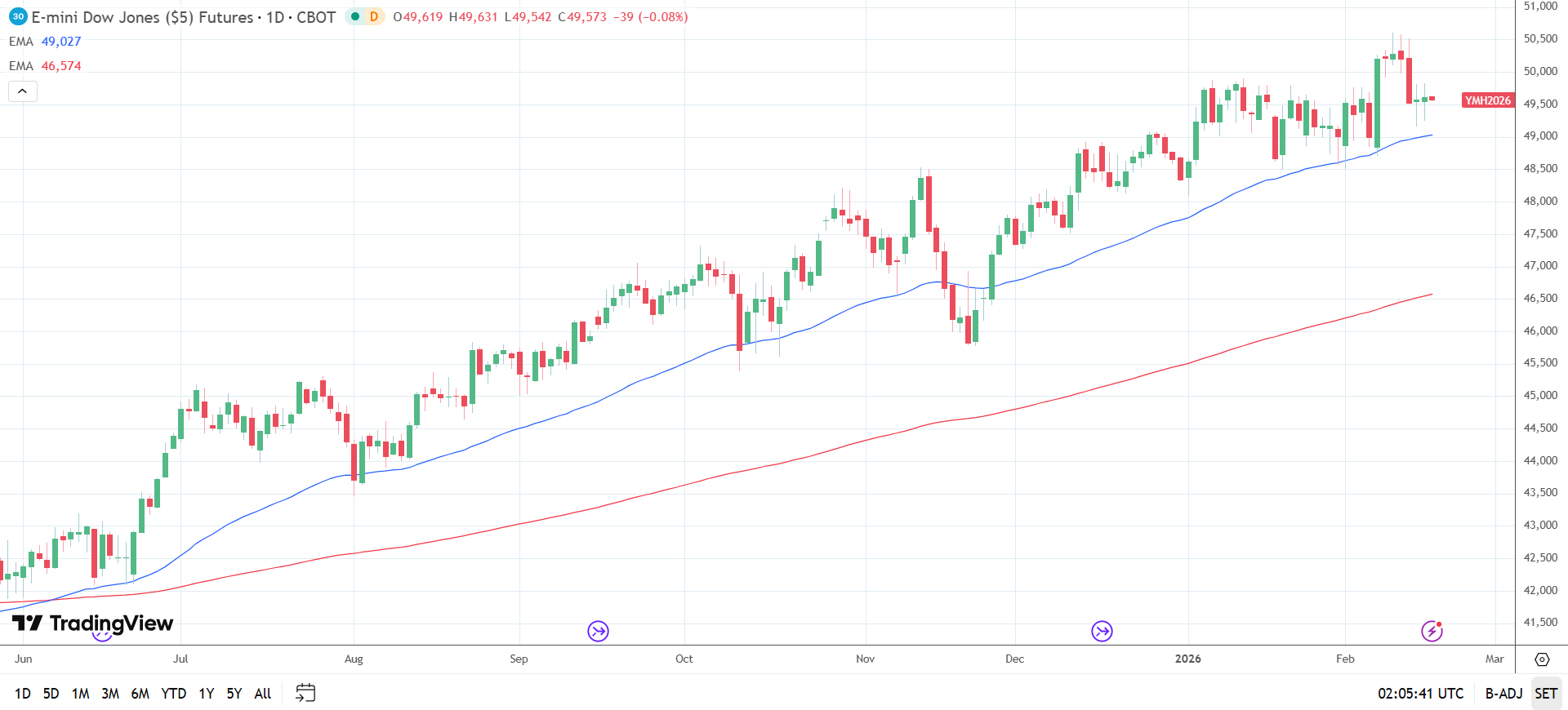
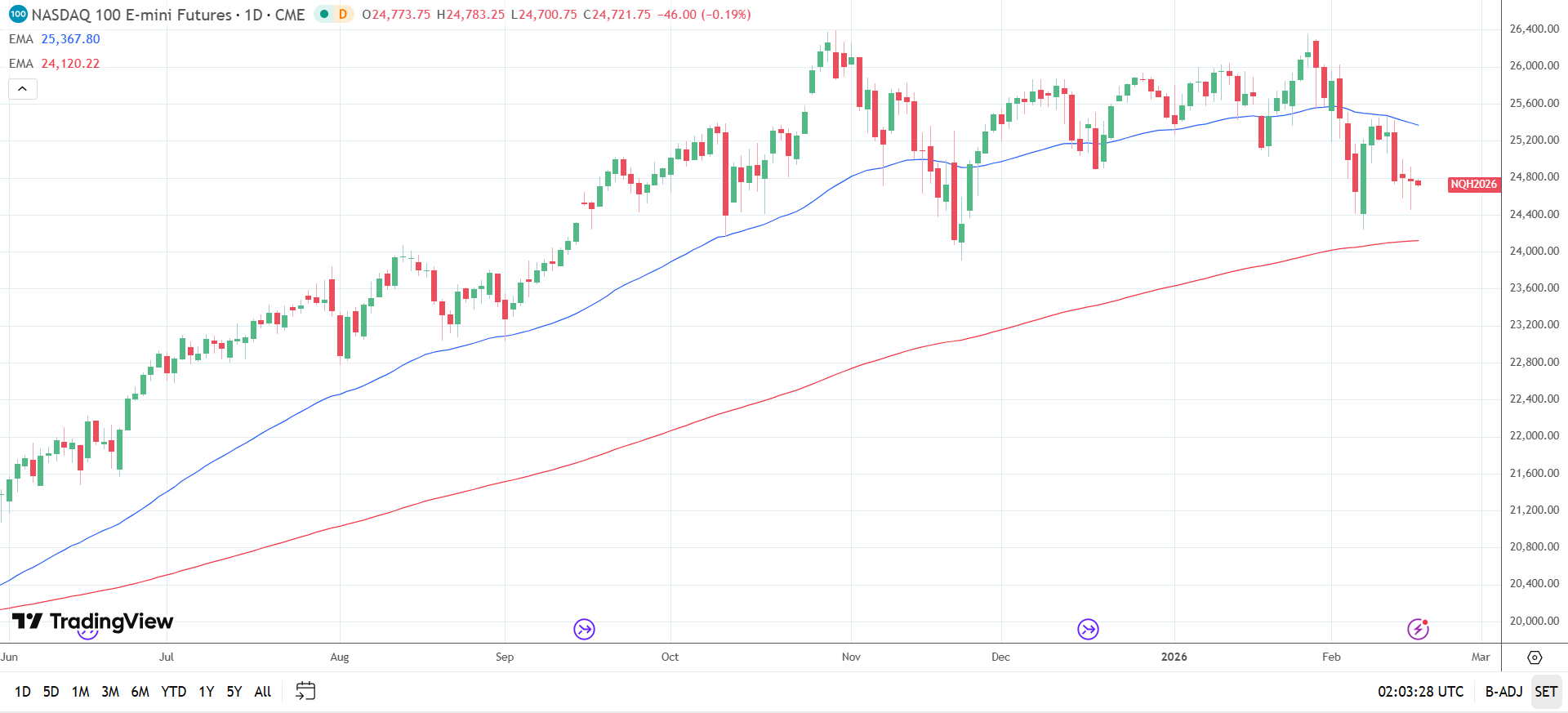
US futures posted modest losses during the Asian session on February 18. The Dow Jones E-mini fell 39 points, while the Nasdaq 100 E-mini and the S&P 500 E-mini dropped 46 points and 8 points, respectively.
Later in Wednesday’s session, the FOMC Meeting Minutes will face scrutiny after last week’s US jobs and CPI reports. Support for rate cuts in the event that inflation cools would boost demand for US index futures, given January’s cooler inflation numbers.
Last week’s stronger-than-expected US jobs report overshadowed softer inflation, tempering bets on a June Fed rate cut. Revived bets on a June cut would support expectations of multiple cuts in 2026. Lower borrowing costs can lift profits and stock valuations, bringing all-time highs into play.
According to the CME FedWatch Tool, the probability of a June Fed cut fell from 75.2% on February 10 to 63.6% on February 17.
Key Technical Levels for Dow Jones, Nasdaq 100, and S&P 500
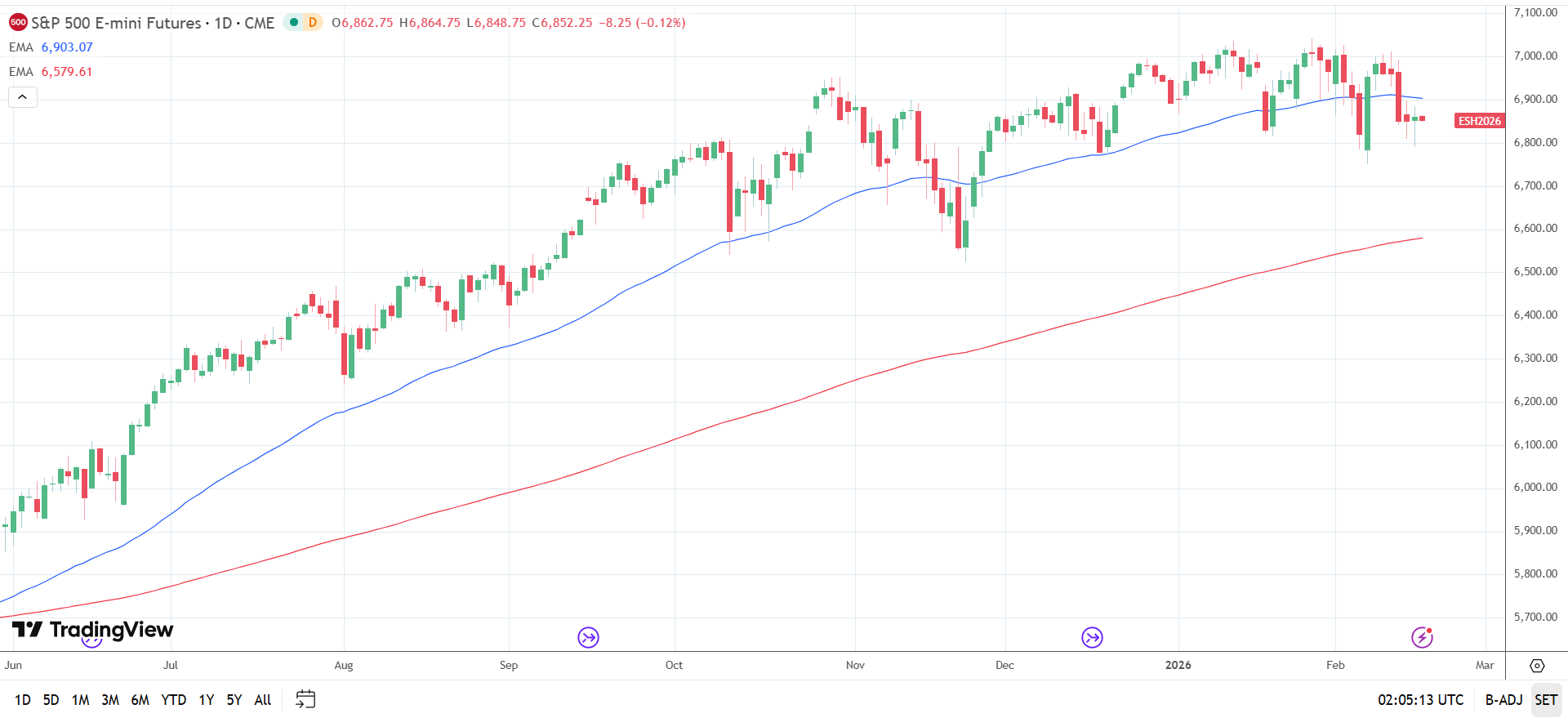
Following Wednesday morning’s losses, the Nasdaq 100 E-mini and the S&P 500 E-mini traded below their 50-day EMAs, while remaining above their 200-day EMAs. The EMA positions indicated a bearish near-term but bullish longer-term outlook. Meanwhile, the Dow Jones E-mini remained above its 50-day and 200-day EMAs, signaling a bullish bias that aligns with positive fundamentals.
Near-term trends will hinge on US economic indicators, central bank chatter, and geopolitical risks. Key levels to monitor include:
Dow Jones
- Resistance: 50,000, the February 10 record high of 50,611, and then 51,000.
- Support: the 50-day EMA (49,027), and then 48,500.
Nasdaq 100
- Resistance: 25,000, the 50-day EMA (25,368), and then the October 30 record high of 26,399.
- Support: 24,500 and then the 200-day EMA (24,120).
S&P 500
- Resistance: the 50-day EMA (6,903) and then the January 13 high of 7,036.
- Support: 6,750 and then the 200-day EMA (6,580).
Outlook: Fed Rate Cut Bets Affirm Bullish Sentiment
In my opinion, the short-term price outlook remains cautiously bullish. Meanwhile, bets on an H1 2026 Fed rate cut reinforce the bullish medium-term outlook. These positive fundamentals align with longer-term technicals for US stock futures.
However, several scenarios would likely unravel the bullish medium-term outlook, including:
- A US-Iran conflict.
- The Bank of Japan announces a higher-than-expected neutral interest rate (hawkish: potentially 1.5%-2.5%). Narrowing rate differentials could trigger a yen carry trade unwind as seen in mid-2024. Reduced liquidity would weigh on US risk assets. Such an event would invalidate the cautiously bullish short-term outlook.
- US economic data and the Fed cool rate cut bets.
Conclusion: Bullish Bias Remains Intact
In summary, ongoing expectations of multiple Fed rate cuts and a cautiously hawkish BoJ reinforce the medium-term outlook for US index futures. A surprise hawkish shift would likely weigh on US stock futures. Meanwhile, bets on multiple Fed rate cuts are likely to hinge on lower rates in H1 2026. This week’s Personal Income and Outlays Report and the Services PMI will be key for market trends.
Despite the ongoing risk of yen carry trade unwinds, US stock futures remain on target for new highs if the Fed fuels bets on a rate cut, countering any liquidity issues stemming from a yen carry trade unwind. However, the US-Iran situation remains a key uncertainty.
Follow our live coverage and consult the economic calendar for real-time market updates.