


USD/JPY briefly dropped below 153 this week despite softer-than-expected Japanese GDP numbers for Q4 2025. Notably, weaker-than-expected external demand left GDP growth short of forecasts, placing greater scrutiny on Japanese trade data, which was out in early trading on Wednesday, February 18.
Crucially, exports soared in January, reinforcing the Bank of Japan’s view that US tariff risks have abated. January’s numbers also signaled a sharp pickup in economic momentum, reviving expectations of an April BoJ rate hike.
Beyond the data, 10-year Japanese Government Bond (JGB) yields tumbled to their lowest level since January 12. Easing concerns that Prime Minister Sanae Takaichi’s fiscal spending would balloon Japan’s elevated debt-to-GDP ratio reduced risk premiums for holding JGBs.
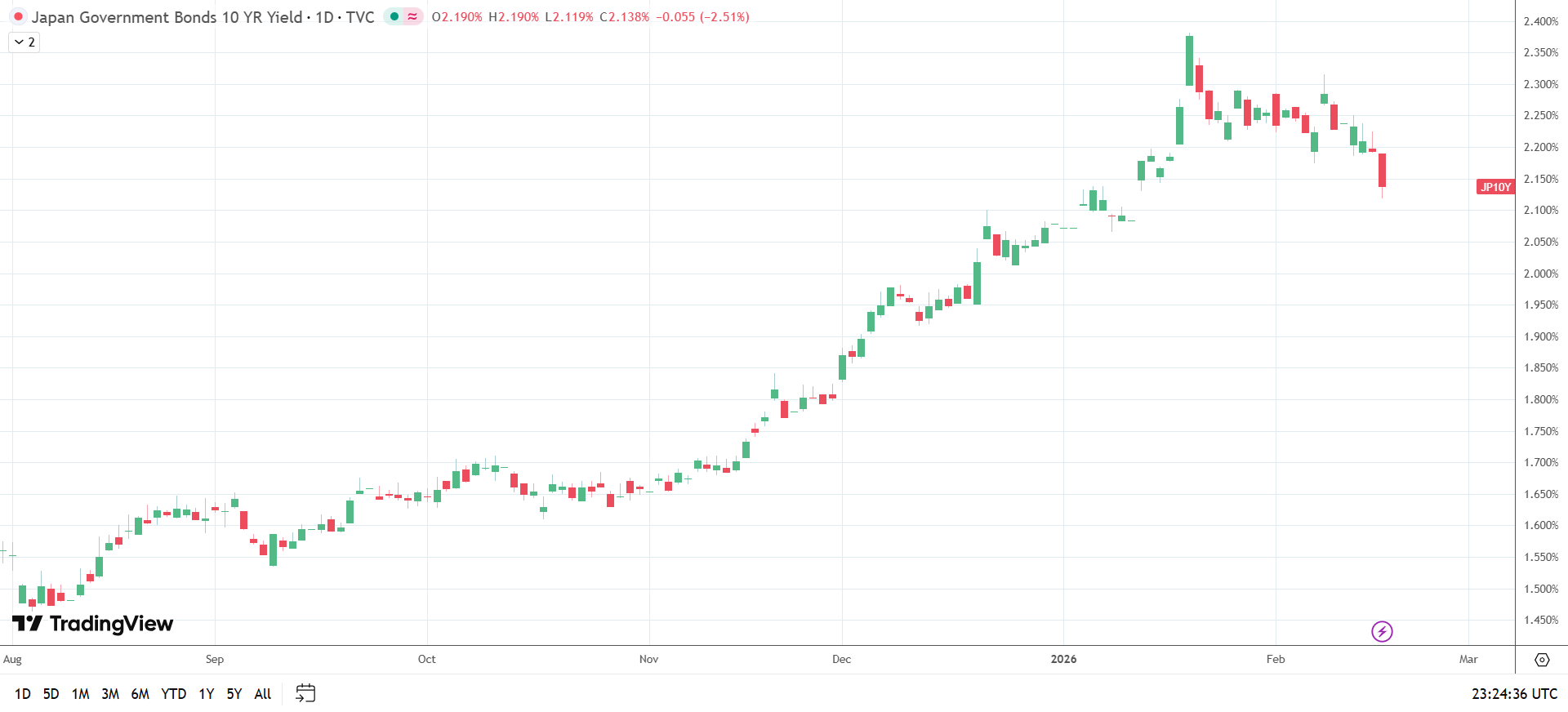
Expectations of an April BoJ rate hike and improved sentiment toward Prime Minister Takaichi’s fiscal spending plans support the bearish short- to medium-term outlook for USD/JPY.
Below, I’ll discuss the macro backdrop, near-term price catalysts, and technical levels traders should closely watch.
Japanese Exports Soar, Fueling BoJ Rate Hike Bets
On February 18, Japanese trade data raised expectations of an April BoJ rate hike, driving demand for the yen. Japanese exports surged 16.8% year-on-year (YoY) in January, up sharply from 5.1% in December. Meanwhile, imports fell 2.5% YoY, after rising 5.3% in December.
According to figures released by the Ministry of Finance:
- Exports to China rose 32.0% YoY in January after increasing just 5.5% in December.
- Exports to the US fell 5.0%, following an 11.1% decline in December.
Export trends with the US aligned with sentiment among BoJ policymakers that the effect of US tariffs on demand for Japanese goods had eased as the pace of contraction slowed.
Typically, increased demand for Japanese goods and services allows firms to raise prices, boosting profitability. Higher profits may lead to more employment and higher wages, a key focal point for the BoJ. Rising wages can lift consumer sentiment and spending, fueling demand-driven inflation. A higher inflation outlook would support a more hawkish BoJ rate path.
USD/JPY responded to the upswing in external demand, briefly climbing to a high of 153.217 before falling to a low of 153.091 early in the Wednesday session. The trade data reaffirmed the bearish short- to medium-term price outlook.
USD/JPY Price Forecast
Every new USD/JPY analysis as it publishes, today's technical signal and key levels, live price — on one page.
See all USD/JPY forecasts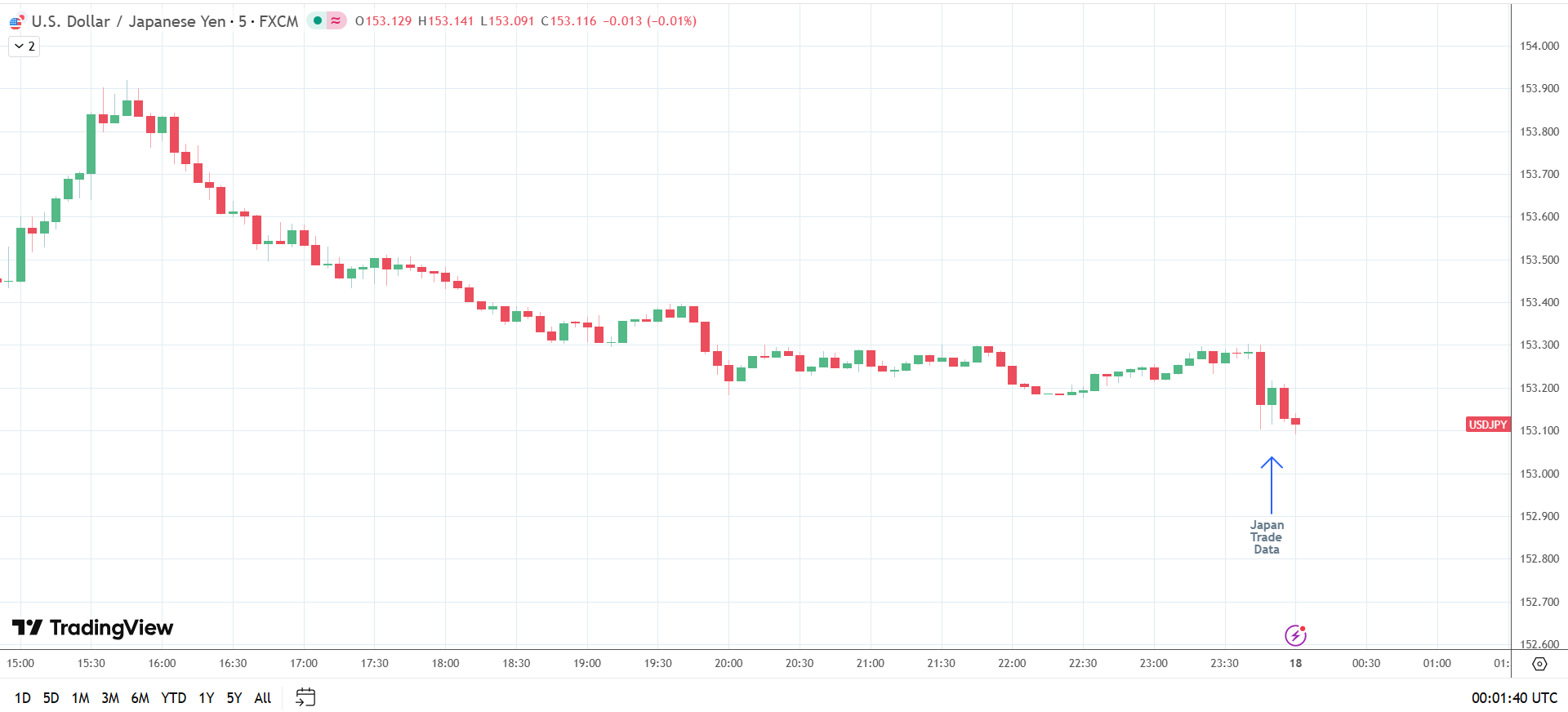
FOMC Minutes in Focus Amid Shifting Fed Rate Cut Bets
While Japanese trade data strengthened the yen, FOMC Minutes and Fed chatter will influence sentiment toward the Fed’s policy stance and US dollar demand. Following the hotter-than-expected US jobs report and the softer US CPI report, insights into where the Fed’s focus lies vis-à-vis cutting rates will be key.
Minutes underscoring concerns about elevated inflation over a resilient labor market would raise bets on a June Fed rate cut, given the softer CPI numbers after the FOMC meeting, weakening the US dollar. US headline inflation cooled from 2.7% in December to 2.4% in January, while core inflation eased from 2.6% to 2.5%.
Last week’s hotter-than-expected jobs report overshadowed the CPI report, cooling bets on a June Fed rate cut. According to the CME FedWatch Tool, the probability of a June cut fell from 75.2% on February 10 to 63.6% on February 17.
Market expectations of a dovish Fed rate path and the BoJ’s more hawkish policy stance would reaffirm the negative short- to medium-term outlook.
Technical Outlook: Key Levels to Watch
For USD/JPY price trends, traders should closely assess technical indicators, key economic data, government policies, and central bank rhetoric.
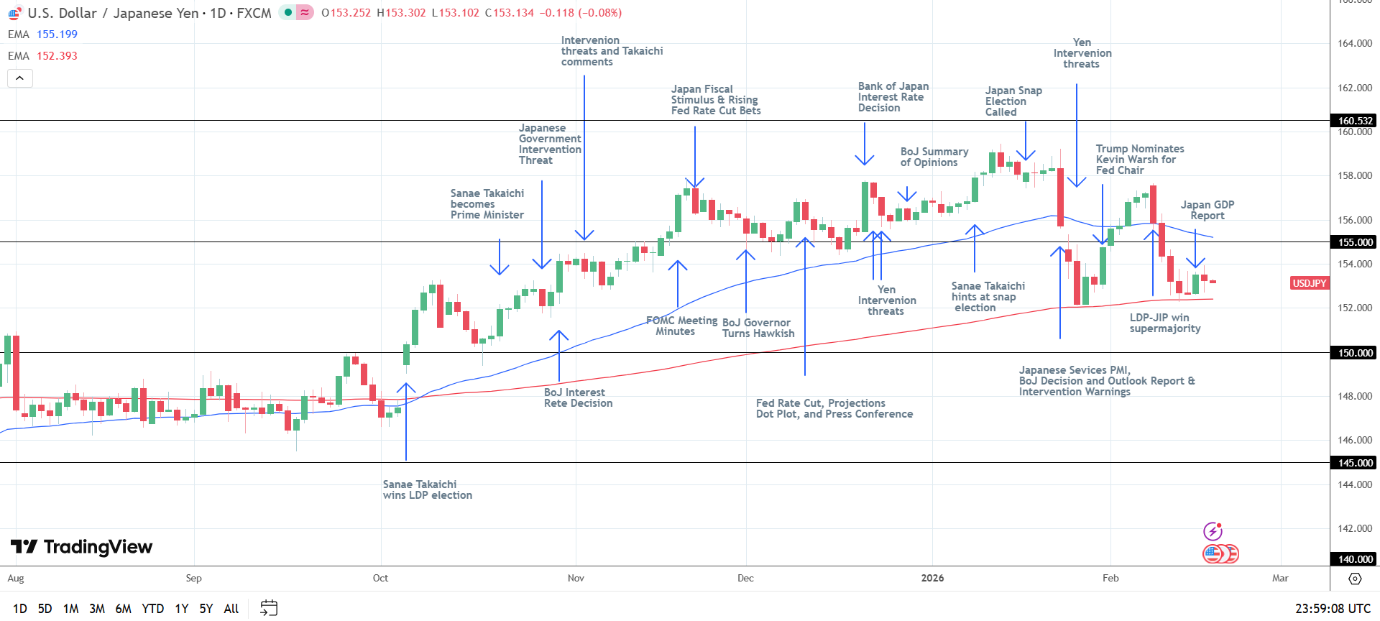
On the daily chart, USD/JPY remains below its 50-day Exponential Moving Average (EMA), but holds above the 200-day EMA. The EMA positions indicate a bearish near-term but bullish longer-term bias. Nevertheless, positive yen fundamentals align with the short-term technicals, signaling a bearish medium-term outlook.
A sustained drop below the 200-day EMA would indicate a bearish trend reversal, exposing the 150 support level. If breached, 145 would be the next key support level.
Significantly, a sustained fall through the EMAs would reaffirm the negative medium- to longer-term price outlook.
Positioning and Risk Outlook
In my view, bets on multiple BoJ rate hikes and expectations of Fed rate cuts support a negative price outlook. However, upside risks to the bearish outlook include:
- Dovish BoJ chatter and a lower neutral interest rate band (dovish: potentially 1%-1.25%), indicating fewer rate hikes to reach policy normalization.
- Stronger US economic data tempers bets on an H1 2026 Fed rate cut.
These events would send USD/JPY higher. However, yen intervention threats are likely to cap further upside near 160.
Read the full USD/JPY forecast, including chart setups and trade ideas.
Conclusion: The BoJ, Takaichi’s Fiscal Policies, and the Fed in Focus
In summary, USD/JPY trends hinge on Prime Minister Takaichi’s fiscal stimulus spending plans, the BoJ’s policy outlook, incoming US data, and the Fed’s policy stance.
Regarding monetary policy normalization, a hawkish BoJ neutral rate band (1.5%-2.5%) would signal multiple BoJ rate hikes. A higher normalization rate would likely strengthen the yen over the medium term. Meanwhile, multiple Fed rate cuts would also narrow US-Japan rate differentials in favor of the yen. Narrowing rate differentials would reinforce the bearish medium-term outlook for USD/JPY.
Looking beyond the medium term (1-3 months), a stronger yen and yen carry trade unwinds would likely push USD/JPY toward 140 over 6-12 months.
For more in-depth analysis, review today’s USD/JPY trading setups in our latest reports and consult the economic calendar.