
Dollar Surges as Markets Reconsider the Fed’s Rate Cut Path
The U.S. Dollar Index is trading higher against a basket of major currencies on Tuesday as investors awaited minutes from the Fed’s last meeting on January 28-29, and key economic data later in the week.

Last Week’s Economic Data Finally Sinks In
We could be looking at the true reaction to last week’s economic data that included the January Non-Farm Payrolls and January consumer inflation data. The initial reaction to the numbers was kind of muted in my opinion, while today’s price surge reflects the true reaction. Some traders classified last week as rough for the Fed because the jobs and inflation numbers did not support the notion of three rate cuts in 2026. That forecast was a full cut off by my metrics.
Hedge Funds Abandon Their Dollar Short Bets
According to Bloomberg, hedge funds cut back on bearish bets against the dollar today. Bets placed before the year began have not been supported by the economic data, especially when it comes to inflation. Currently, money markets are pricing in only about 61 basis points of rate cuts by the end of the year. This is down from about 75 basis points.
Powell Was Right: Inflation Is Back in the Driver’s Seat
Last month in his post-Fed meeting press conference, Fed Chairman Jerome Powell hinted that policymakers are less concerned about the labor market, and that inflation is the focus now. Last week’s numbers may have proven his point with the U.S. adding more jobs than expected and consumer inflation meeting expectations. However, the issue remains: inflation is no longer accelerating, but it is still above the mandated 2% target.
Wednesday’s Minutes Won’t Tell Us Much We Don’t Already Know
So while we’ll get to see the January minutes on Wednesday, what are they really going to tell us that we haven’t seen in the numbers? This shifts the emphasis to the Fed’s March meeting and a whole new set of dot metrics to study.
EUR/USD Price Forecast
Every new EUR/USD analysis as it publishes, today's technical signal and key levels, live price — on one page.
See all EUR/USD forecastsThe Technical Picture: Downtrend Still Intact
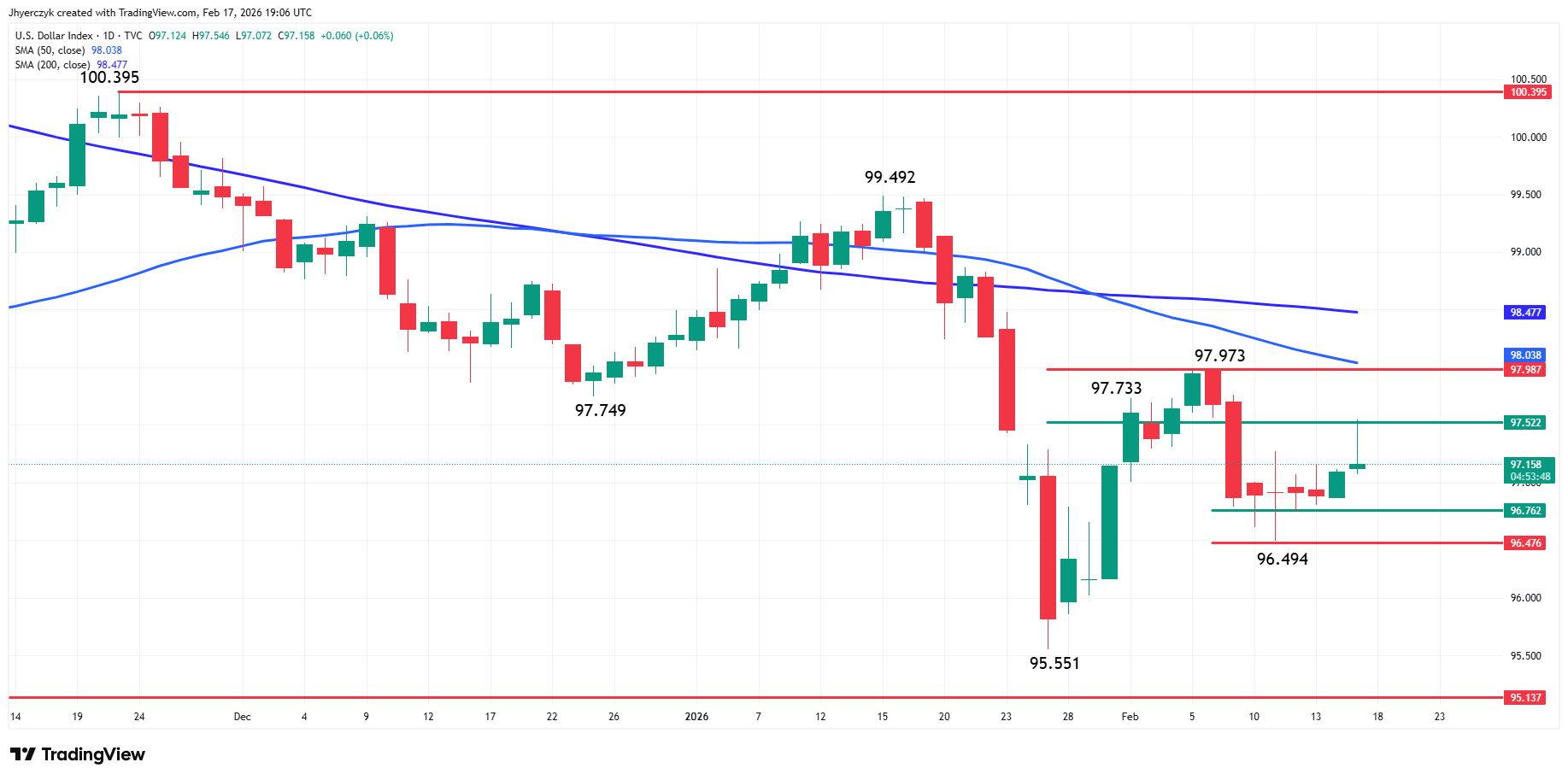
Technically, the main trend is down according to the main swing chart and the important moving averages.
A Wall of Resistance Stands Between Bulls and 100.00
The swing chart indicates the main trend will change to up when buyers take out the last swing top at 97.973. This is pretty close to the 50-day moving average at 98.039, making this potential resistance area a key zone to watch. The 200-day moving average follows at 98.478. Additional resistance that stopped the rally today is the 50% level at 97.522.
Key Support Zone Has Already Been Tested Once
The nearest support is a retracement zone at 96.762 to 96.476. This zone stopped the selling at 96.494 on February 11.
Could a Counter-Trend Rally Be Forming?
A secondary higher bottom may be forming at 96.494, which is giving me a counter-trend upside bias, but unless the index can break through the huge wall of resistance from 97.987 to 98.478, it’s going to be a challenge to break this area. If buyers can somehow get to the other side of this zone, 100.00 will hit the radar.
Otherwise, prices could settle into a range as long as Fed uncertainty prevails.