
U.S. Dollar Index Tests The 97.50 Level
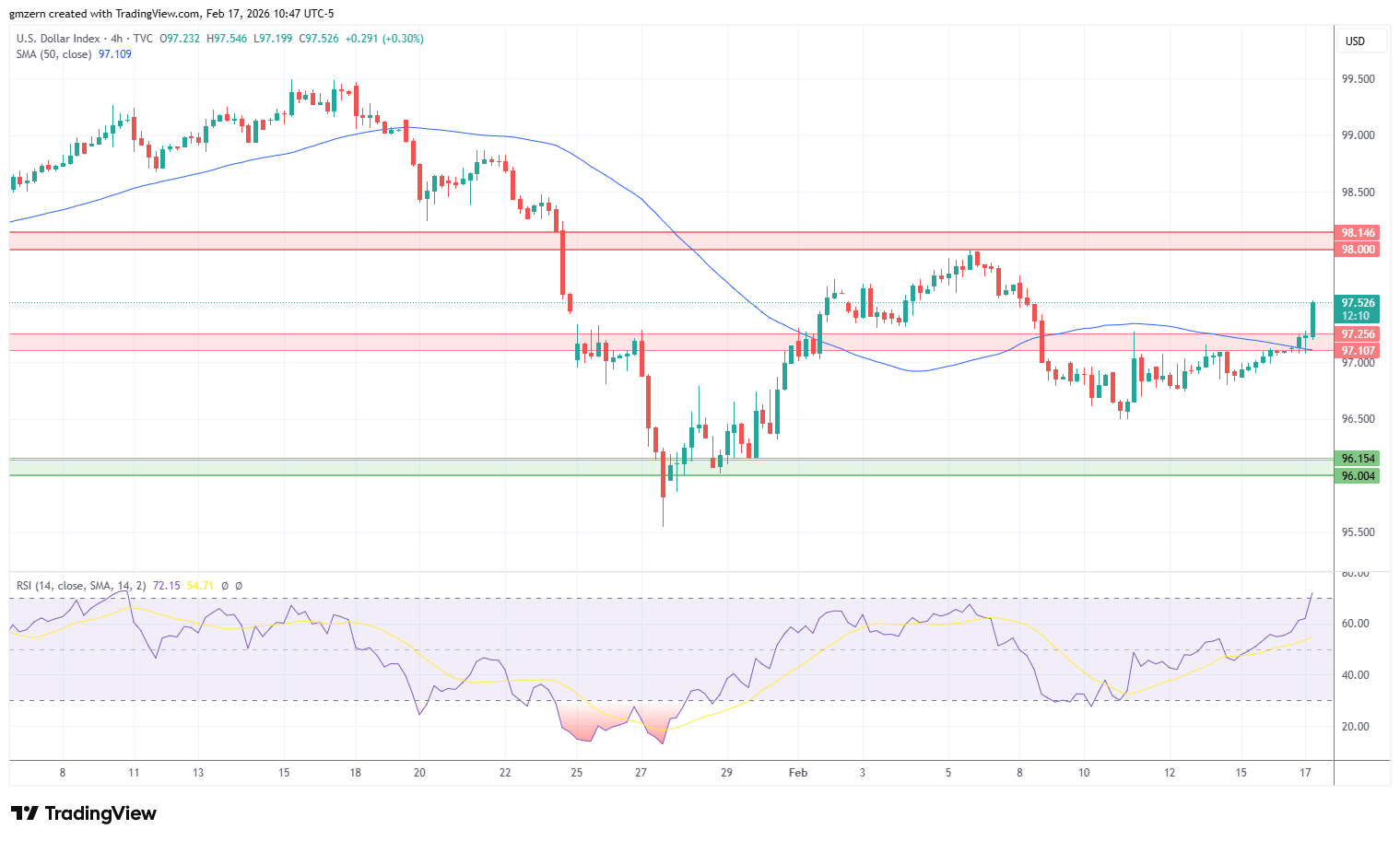
U.S. Dollar Index gains ground despite the weaker-than-expected NAHB Housing Market Index report. The report indicated that NAHB Housing Market Index declined from 37 in January to 36 in February, compared to analyst forecast of 38.
Today, traders also had a chance to take a look at the NY Empire State Manufacturing Index report for February. The report showed that NY Empire State Manufacturing Index pulled back from 7.70 to 7.10, compared to analyst consensus of 7.0.
Treasury yields were mixed in today’s trading session. The yield of 2-year Treasuries climbed towards the 3.43% level, while the yield of 10-year Treasuries pulled back towards 4.04%.
U.S. Dollar Index moved above the resistance at 97.10 – 97.25 and is trying to settle above the 97.50 level. In case this attempt is successful, U.S. Dollar Index will head towards the next resistance level, which is located in the 98.00 – 98.15 range.

EUR/USD Tests New Lows As Euro Area Economic Sentiment Index Misses Estimates
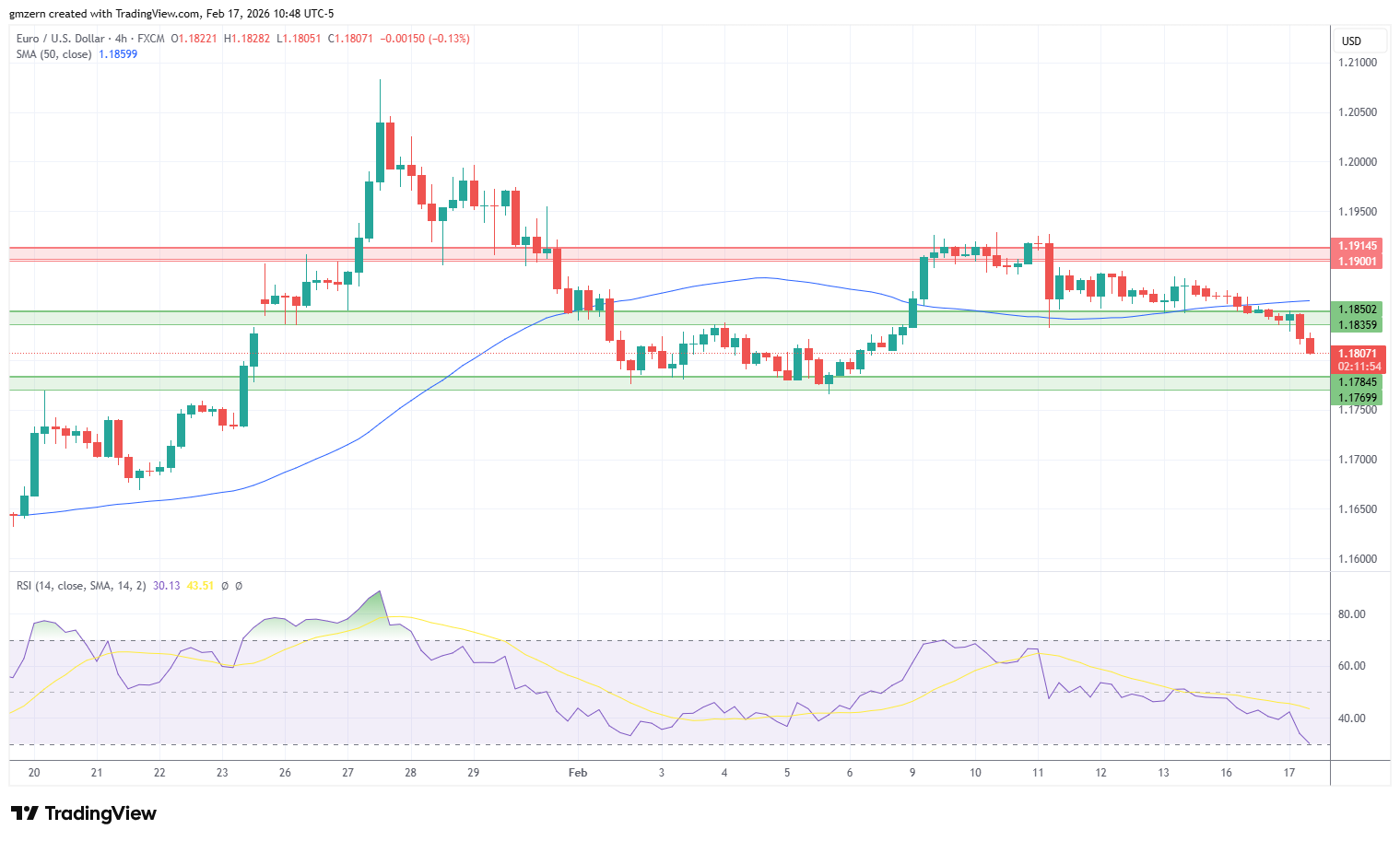
EUR/USD is under pressure as traders focus on the weak Euro Area Economic Sentiment Index report. The report showed that Euro Area Economic Sentiment index decreased from 40.8 in January to 39.4 in February, compared to analyst forecast of 45.2.
EUR/USD managed to settle below the support level at 1.1815 – 1.1830 and is trying to settle below the 1.1800 level. If EUR/USD manages to settle below the 1.1800 level, it will move towards the support at 1.1770 – 1.1785.
EUR/USD Price Forecast
Every new EUR/USD analysis as it publishes, today's technical signal and key levels, live price — on one page.
See all EUR/USD forecastsGBP/USD Is Under Pressure As UK Unemployment Rate Rises To 5.2%
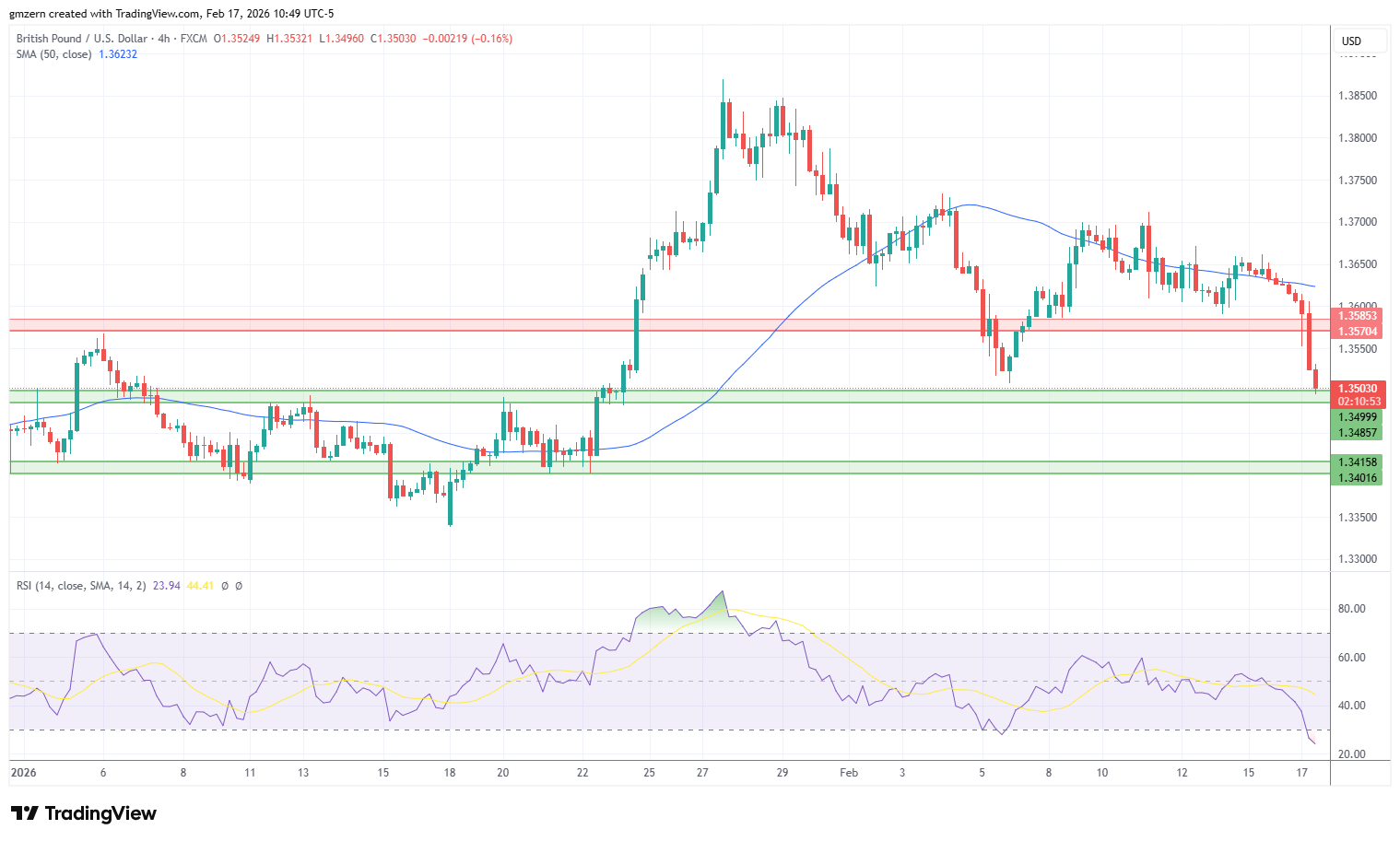
GBP/USD is losing ground as traders focus on the disappointing UK Unemployment Rate report. The report indicated that UK Unemployment Rate increased from 5.1% in November to 5.2% in December, while analysts expected that it would remain unchanged.
Rising Unemployment Rate highlights the weakness of the UK economy. GBP/USD is moving lower as traders bet that BoE will be forced to cut rates to provide additional support to the economy.
Currently, GBP/USD is trying to settle below the support at 1.3485 – 1.3500. If GBP/USD pulls back below the 1.3500 level, it will move towards the next support at 1.3400 – 1.3415.
USD/CAD Gains Ground As Canada’s Inflation Rate Drops To 2.3%
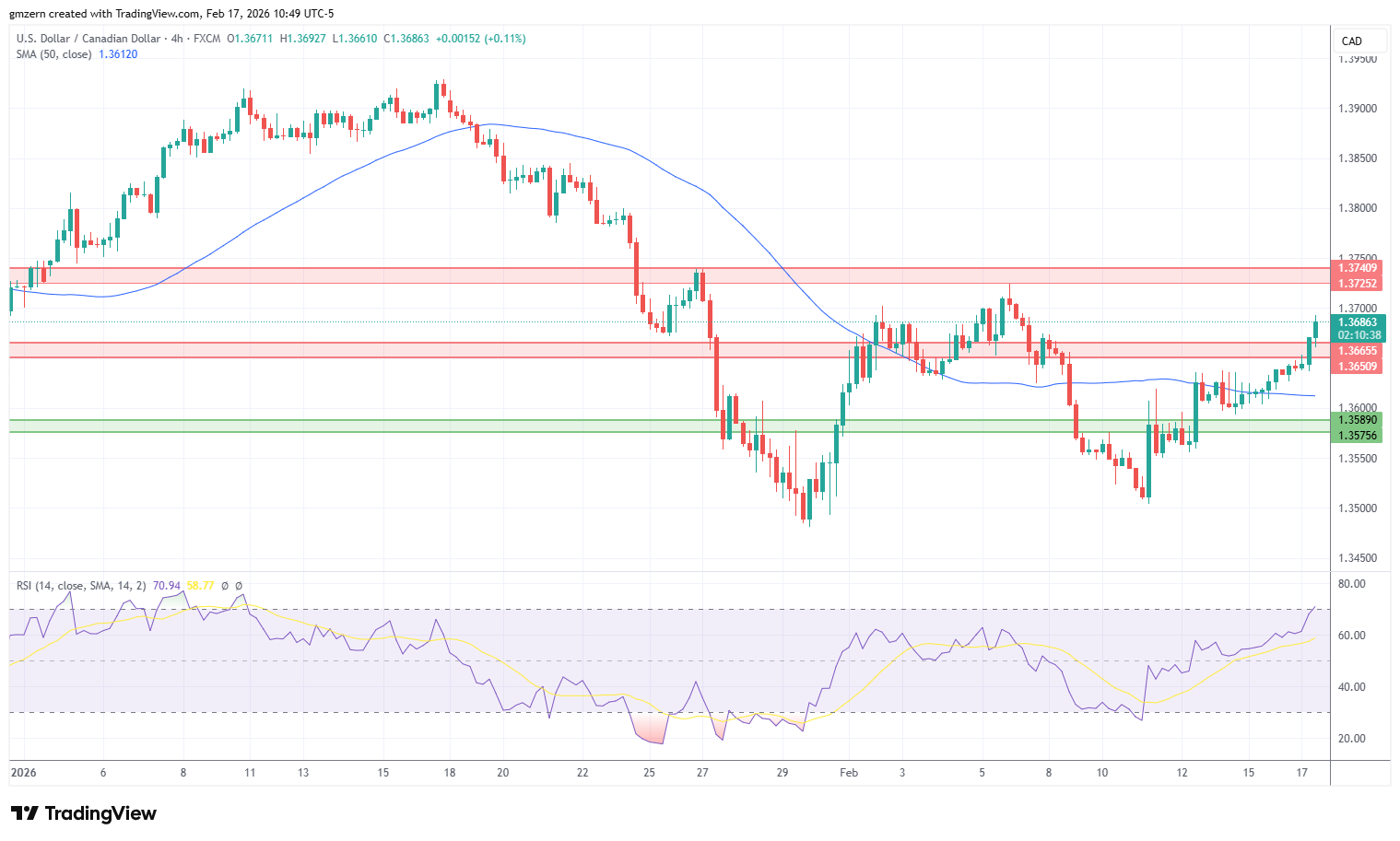
USD/CAD is moving higher as traders react to inflation data from Canada. Inflation Rate declined from 2.4% in December to 2.3% in January, compared to analyst consensus of 2.4%. Core inflation Rate decreased from 2.8% to 2.6%, while analysts expected that it would remain unchanged.
The strong pullback in commodity markets put additional pressure on the Canadian dollar. Other commodity-related currencies were also moving lower in today’s trading session
USD/CAD is trying to settle above the resistance at 1.3650 – 1.3665. In case this attempt is successful, USD/CAD will head towards the next resistance level, which is located in the 1.3725 – 1.3740 range.
USD/JPY Attempts To Settle Above The 154.00 Level
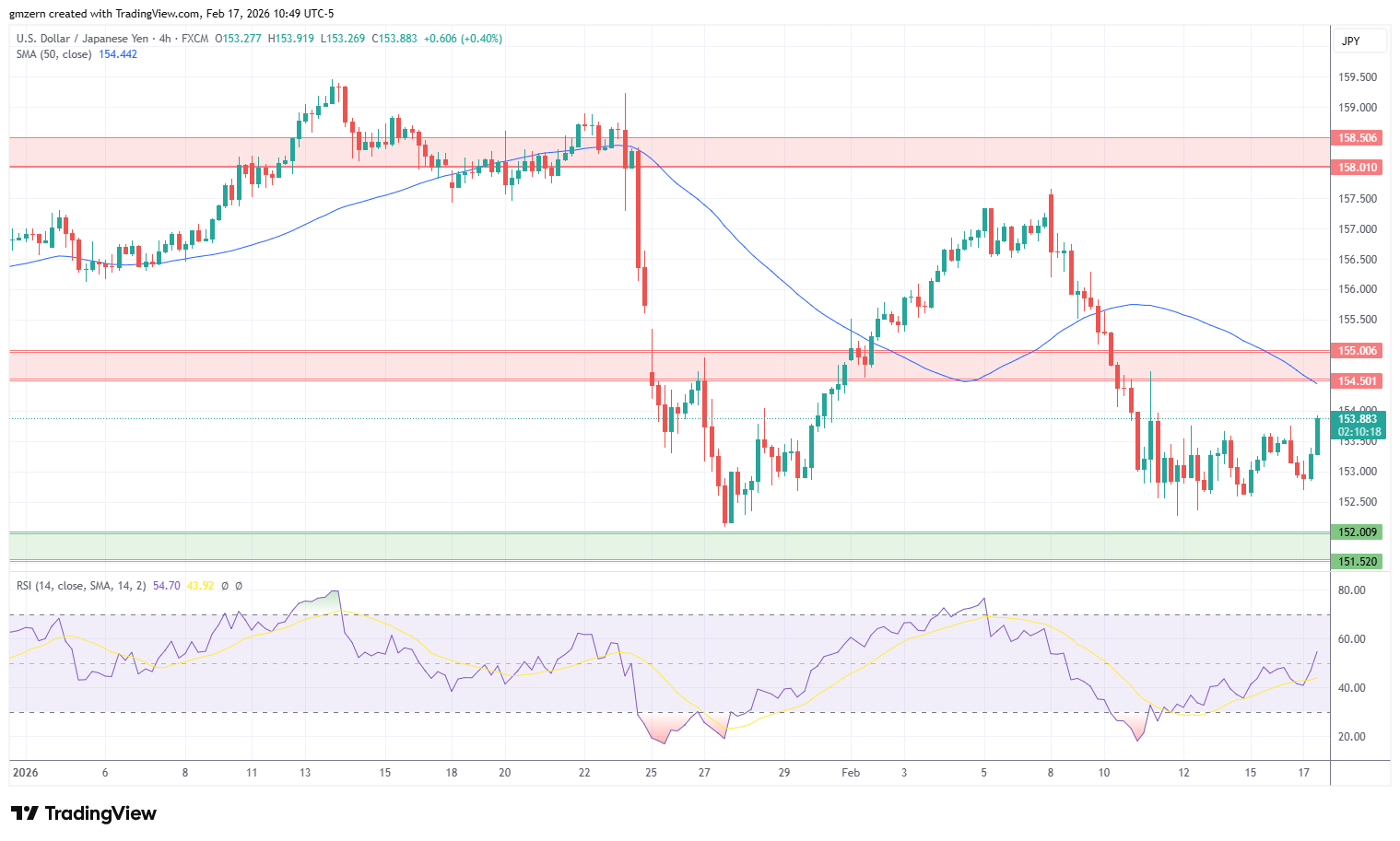
USD/JPY is trying to gain upside momentum as traders focus on general strength of the American currency.
From the technical point of view, USD/JPY attempts to rebound after the strong pullback from the 157.50 level. Short-covering may provide additional support to USD/JPY in the upcoming trading sessions.
USD/JPY found support near the 152.50 level and is trying to climb above 154.00. A move above 154.00 will push USD/JPY towards the nearest resistance at 154.50 – 155.00.
On the support side, USD/JPY needs to settle below the support level at 151.50 – 152.00 to have a chance to gain sustainable downside momentum in the near term.
If you’d like to know more about how to trade forex, please visit our educational area.