


Gold kicks off the week with less demanding real-yield backdrop pressures than it faced earlier last week, although the inflation evidence still argues against assuming rapid monetary policy easing. Treasury’s October 30 curve put the 5-year real yield at 2.25% and the 10-year yield at 2.6%. On October 26, they were 2.37% and 2.66%, respectively.
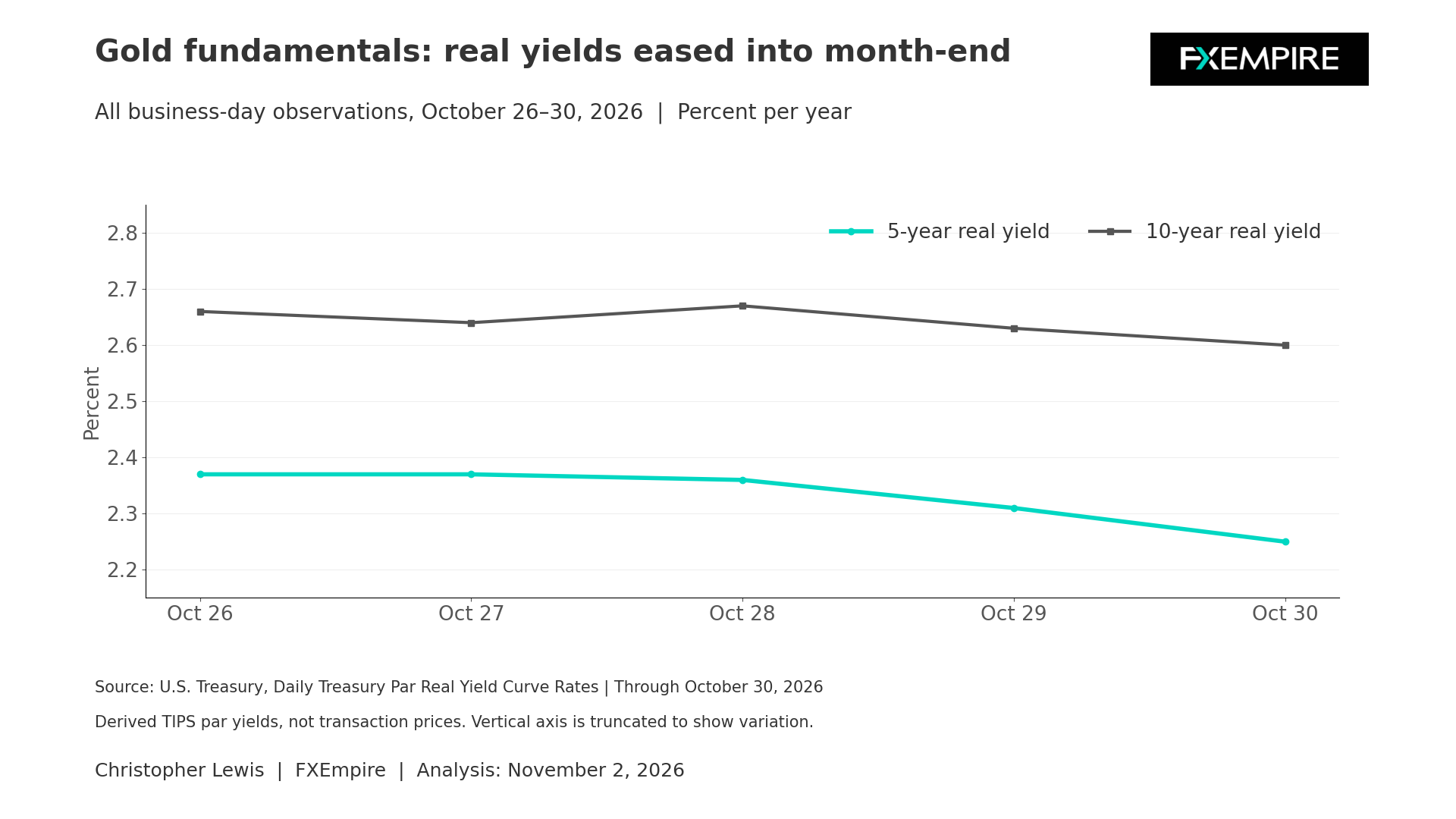
The difference is significant and straightforward. A lower inflation-adjusted return on government bonds can reduce the opportunity cost of holding gold, which, of course, pays no interest. That can improve gold’s relative appeal, but it does not establish that yields have caused any particular move. It is just one piece of the puzzle.
Labor and Costs
Friday’s labor cost release offers another piece of the picture. The BLS reported that civilian compensation increased 0.8% in the third quarter, seasonally adjusted, versus 0.9% in the preceding quarter. The 12-month increase was 3.4%, unchanged from June. The quarterly moderation is relevant, but the annual comparison gives less evidence of a decisive new slowdown in those costs.
In the gold market, this helps avoid an overly simple inflation story being used for analysis. Moderating labor costs could eventually make a restrictive monetary policy stance easier to relax, yet a single quarter does not establish a trend. Of course, we can only read so much into a short-term look. The Federal Reserve will be looking for some type of longer-term trajectory.
Federal Reserve
Speaking of the Federal Reserve, it maintained its target range at 3.75% to 4% on October 28. Two dissenters preferred a quarter-point increase in rates. The decision supplies no basis for treating a future reduction as settled policy. It just shows that some of the voters are starting to think of inflation as becoming even more of a problem.
PCE Price Index, the Fed’s Favorite Inflation Number
The BEA’s October 29 release reinforced the uncertainty. September’s PCE price index increased 0.5% month over month and 3.6% year over year. Excluding food and energy, the increases were 0.3% and 3.1%. These are September readings that were published last Thursday. They are neither a fresh inflation release nor a substitute for October data.
Gold Price Forecast
Every new Gold analysis as it publishes, today's technical signal and key levels, live price — on one page.
See all Gold forecastsThe combination matters more than either headline allows. Slower compensation growth and lower real yields can support the monetary case for gold, while persistent consumer inflation can constrain how far investors should extrapolate that support. An inflation hedge can attract interest even when yields rise, but higher real returns can make competing assets a little more attractive.
Growth data will add another factor in fundamental analysis. The BEA’s advance estimate showed third-quarter real GDP rising at a 3.4% annualized rate, compared with 2.2% in the second quarter. Resilient activity may sustain borrowing demand and reduce the urgency for easier policy. On the other hand, evidence of a fairly abrupt slowdown would change that assessment.
Very Busy Calendar This Week
The official calendar provides several tests. This week, we will see job openings on Tuesday at 10:00 a.m. Eastern Standard Time. Preliminary third-quarter productivity and costs follow on Thursday at 8:30 a.m. The October employment report is scheduled for Friday, November 6, at 8:30 a.m. Eastern Standard Time.
As these data points are released, they will add more to the Federal Reserve outlook puzzle. Productivity deserves attention alongside compensation. Stronger output per hour can ease unit labor-cost pressure without requiring wages to collapse. Friday’s employment report can then test whether labor demand is cooling or remaining somewhat resilient.
The implications for gold depend on how these releases change the expected path of real interest rates, rather than whether a single number sounds superficially bullish or bearish. The constructive scenario is continued easing in real yields supported by softer inflation pressure and an orderly labor-market slowdown. The challenge would be renewed yield increases following resilient employment or sticky costs.
Technical Analysis Setup
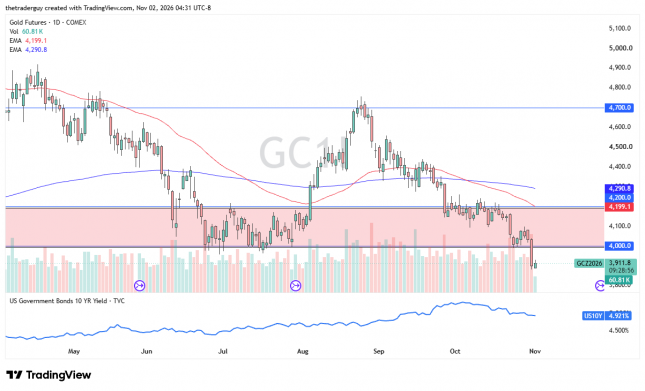
The technical analysis for gold looks rather anemic, as we collapsed on Friday. Although we have bounced slightly during the day here on Monday early, it has also seen a bit of a pushback. At this point in time, gold looks very much like a market that is going to favor fading the rallies until we close well above the $4,000 level.