


Gold Prices Under Pressure as Traders Await Fed Decision
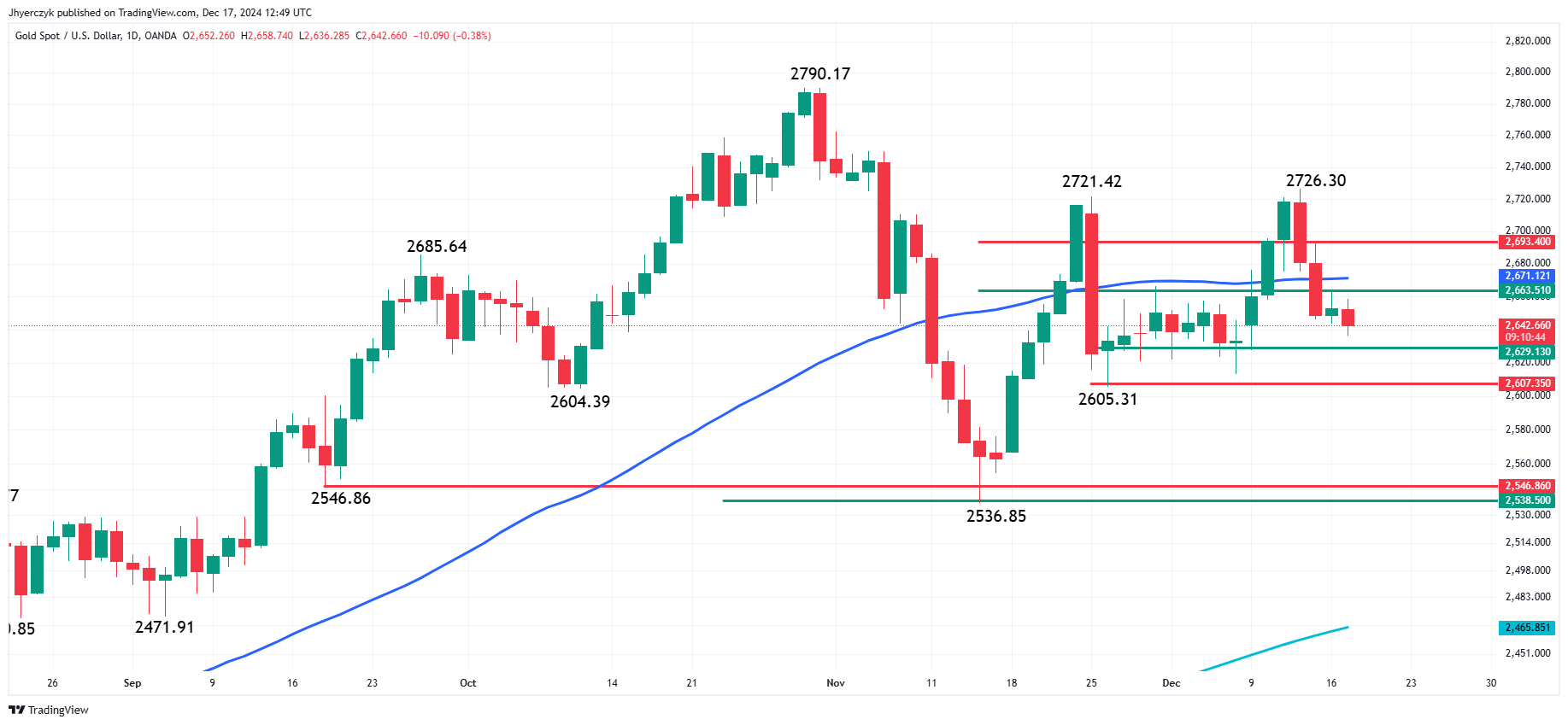
Gold prices moved lower on Tuesday as bearish sentiment intensified following a break below the 50-day moving average of $2,671.12. The precious metal now trades between two key retracement zones, with resistance at $2,663.51 to $2,693.40 and support at $2,629.13 to $2,607.35. Traders are focused on the Federal Reserve’s policy meeting, which may provide insights into rate cuts for 2024 and beyond.
At 13:07 GMT, XAU/USD is trading $2646.58, down $6.18 or -0.23%.

Is the Federal Reserve Set to Maintain a Cautious Approach?
Gold’s decline was driven by a stronger U.S. dollar and rising Treasury yields as investors await the Fed’s rate decision. Market sentiment suggests a 25-basis-point cut on Wednesday, with the CME FedWatch tool showing a 97% probability. However, expectations for additional easing in January remain muted, with odds at just 17%.
Analysts believe a hawkish tone from the Fed could keep gold under pressure. If policymakers signal a pause in rate cuts, gold could drift lower, where the 50-day moving average may act as resistance. Traders are also closely watching U.S. GDP and inflation data later in the week for further direction.
How Are Treasury Yields and Dollar Strength Weighing on Gold?
Treasury yields climbed as investors prepared for the Fed’s decision and key economic data. The benchmark 10-year yield rose to 4.434%, while the 2-year Treasury yield reached 4.281%. Higher yields increase the opportunity cost of holding gold, a non-yielding asset, limiting its appeal.
The U.S. dollar index also held firm, supported by strong economic indicators. The Atlanta Fed’s GDP projection for Q4 stands at 3.3%, while solid U.S. services-sector data suggests persistent inflation pressures. The combination of rising yields and dollar strength continues to challenge gold’s upside momentum.
Gold Price Forecast
Every new Gold analysis as it publishes, today's technical signal and key levels, live price — on one page.
See all Gold forecastsWill Geopolitics and Imports Impact Gold Demand?
India’s gold imports, a significant factor in global demand, are expected to slow sharply in December following record purchases in November. This decline could cap gold’s near-term price gains. Additionally, geopolitical uncertainties, including potential U.S. policy changes under the incoming Trump administration, add caution to the market outlook.
Gold Market Outlook
Gold’s short-term outlook remains bearish unless the Fed delivers a dovish surprise. If policymakers signal a cautious approach to rate cuts for 2025 and beyond, gold could test support near $2,600. A break below this level may accelerate selling pressure.
However, any signs of economic weakness, lower Treasury yields, or a softer dollar later in the week could provide a lift, sending gold back toward resistance at $2,663 to $2,693. Traders will look for guidance in Fed Chair Jerome Powell’s commentary and key U.S. economic data releases to gauge gold’s next move.
More Information in our Economic Calendar.


