


The backdrop for gold on Friday is a contest between protection against inflation and the return available from interest-bearing assets such as bonds. The data available to us does not provide a simple argument that higher inflation must mean higher gold. The policy response and the real yield investors can earn elsewhere remain central to that argument.
Real Yields
The Federal Reserve’s October 22 H.15 release reported a 10-year inflation-indexed Treasury yield of 2.76% for October 21. It had been 2.80% on October 19. The corresponding nominal 10-year yield was 5.13%, while the 2-year nominal yield stood at 2.81%. The small retreat in real yield does offer some marginal relief to gold’s opportunity cost, but it does not establish that we have an easing trend.
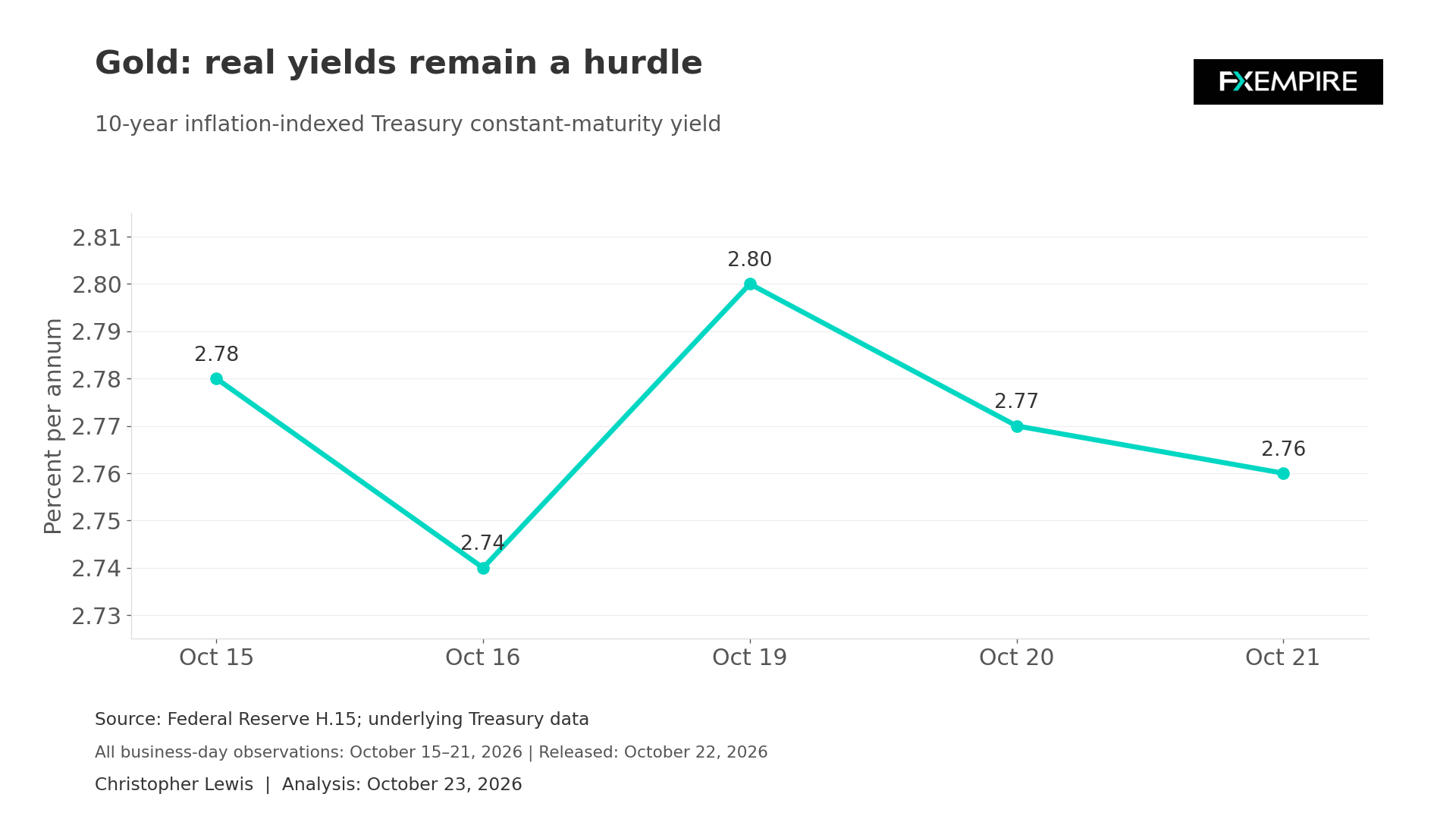
A positive real yield means that investors have an alternative that offers a return linked to purchasing power, whereas physical gold produces no income. It is important to separate the direction of yields from their level. A few basis points of relief can help sentiment without transforming the overall trend. On the other hand, gold can withstand elevated yields when buyers place greater value on diversification or protection against adverse conditions.
Uncomfortable Inflation Is Still a Factor
The inflation backdrop remains fairly uncomfortable, as the BLS reported on October 14 that September CPI rose 0.6% month-over-month and 3.7% year-over-year. Core CPI increased 0.3% on the month and 2.6% year-over-year. Gasoline rose 9.1% during September and accounted for more than half the headline monthly increase.
For the gold market, this will create a bit of a competition. Energy-led inflation can increase interest in preserving purchasing power, but at the same time, persistent price pressures encourage tighter monetary policy, making cash and bonds a bit more competitive. The question will be whether inflation concerns rise faster than the expected policy response, or whether investors become more confident that policy moves will contain them.
Gold Price Forecast
Every new Gold analysis as it publishes, today's technical signal and key levels, live price — on one page.
See all Gold forecastsOn September 16, the Federal Reserve raised its target range by a quarter percentage point to a range of 3.75% to 4.0%. The statement accompanying the decision described inflation as elevated, and emphasizing restoring price stability was a key takeaway. The next FOMC meeting is October 27 and 28, but the FedWatch tool suggests that traders do not believe that an interest rate hike is coming at this meeting.
Gold needs more than an inflation headline to establish a convincing monetary tailwind. A sustained decline in real yields would be one major helper for gold prices. Another would be stronger demand for protection that outweighs the income that something like a bond offers. While the next meeting, more likely than not, does not have a rate hike attached to it, the statement will become crucial, as will the press conference afterwards. It will be about the messaging and not as much about the actual move.
The strongest conclusion at the moment is that inflation concerns do remain relevant, but the interest rate hurdle has not completely disappeared. The recent real-yield decline is worth monitoring for continuation rather than treating it as a massive turning point.
Technical Analysis
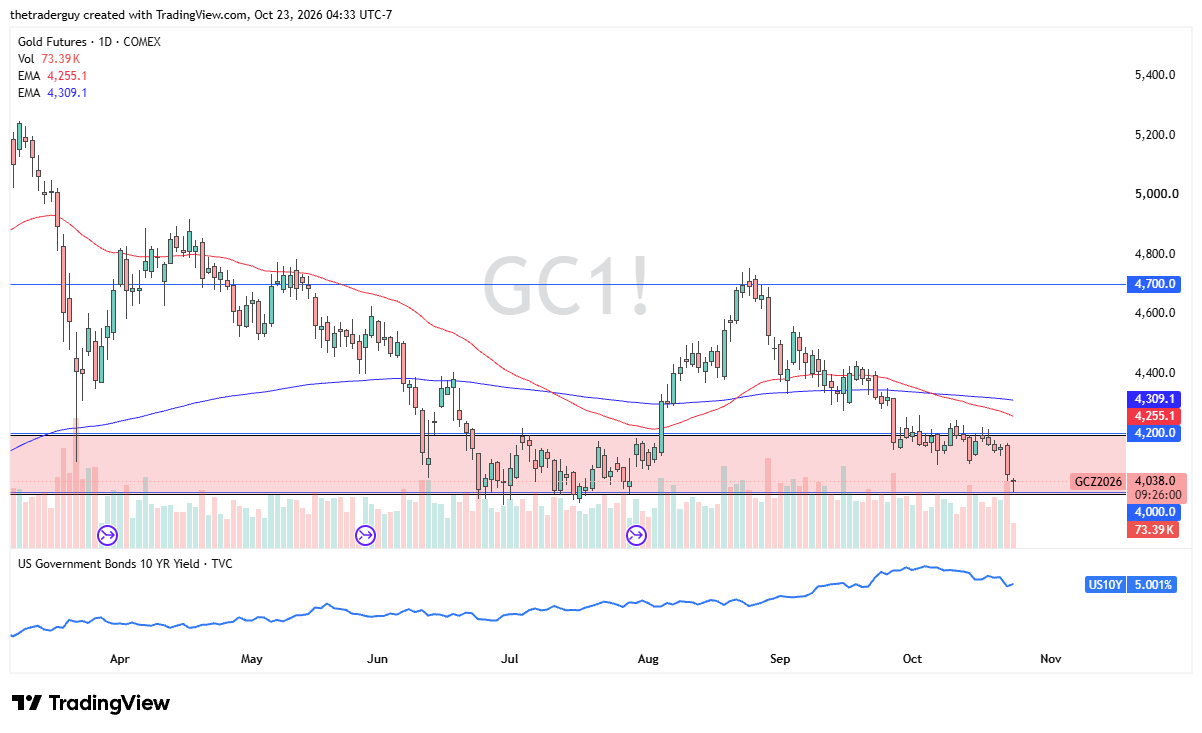
We did just touch the $4,000 area, the bottom of a larger demand zone between $4,000 and $4,200 that I have been watching for some time. If we were to break significantly below $4,000, that would be a shot across the bow for the bullish traders to deal with.
However, a bounce from here does make a certain amount of sense, and a bit of consolidation heading into the weekend, perhaps even some bullish pressure, would make a certain amount of sense. However, establishing an uptrend at the moment seems a bit far-fetched.