Gold (XAU) prices are consolidating below record highs after surging 64% year-to-date, while Bitcoin (BTC) prices are showing weakness below $100,000. In my view, this sharp divergence sets the stage for a continued rotation into safe-haven assets as macro and geopolitical risks intensify. This article outlines the key macro drivers, technical structures, and gold-to-Bitcoin ratio signals that highlight why gold is outperforming and may continue to lead through early 2026.

Gold Approaches All-Time High as Rate Cuts Loom
Gold prices exhibit strong bullish momentum and continue to consolidate near record levels, trading above $4,300. This positive price action reflects growing investor demand for safe-haven assets amid macro uncertainty. Additionally, the U.S. dollar is consolidating near a two-month low, further supporting gold. The combination of falling interest rates and dollar weakness has driven a 64% year-to-date rally in gold.
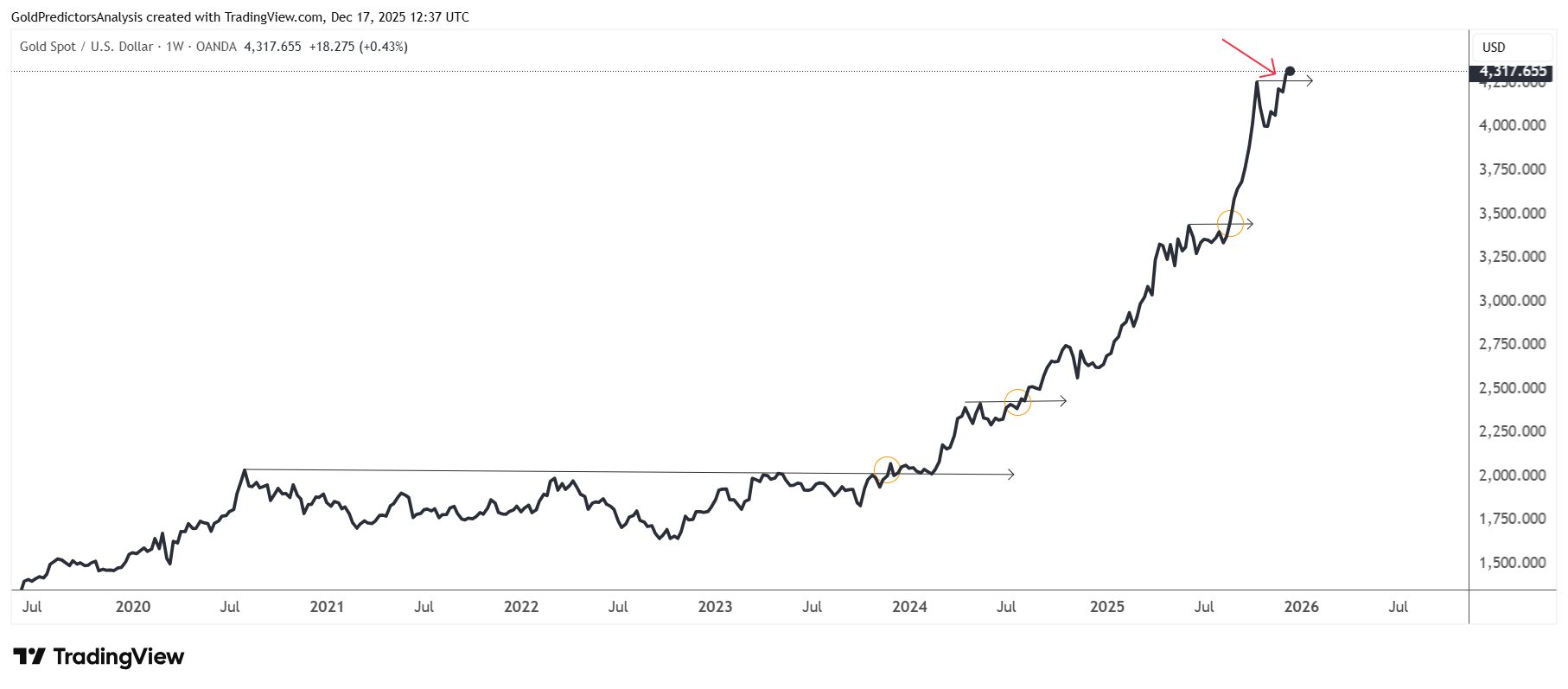
Moreover, central banks and institutions are playing a significant role. Gold-backed ETF holdings have increased substantially in 2025, reflecting growing demand for the metal. The chart below shows that gold has recorded its highest weekly close, although the all-time high remains at $4,380.
This highest weekly close aligns with previous breakouts in 2024 and 2025. It suggests that a breakout above $4,380 is likely and could pave the way toward the $5,000 level.
Gold Price Forecast
Every new Gold analysis as it publishes, today's technical signal and key levels, live price — on one page.
See all Gold forecastsBitcoin Breakdown Signals Loss of Momentum Amid Macro Stress
On the other hand, Bitcoin remains under pressure after reaching a record high of $126,000. The price is now consolidating below the $100,000 level and shows signs of continued weakness. The chart below highlights a clear divergence between Bitcoin and gold since October 2025. While gold has gained strong momentum, Bitcoin has trended lower, reflecting a shift in market sentiment.
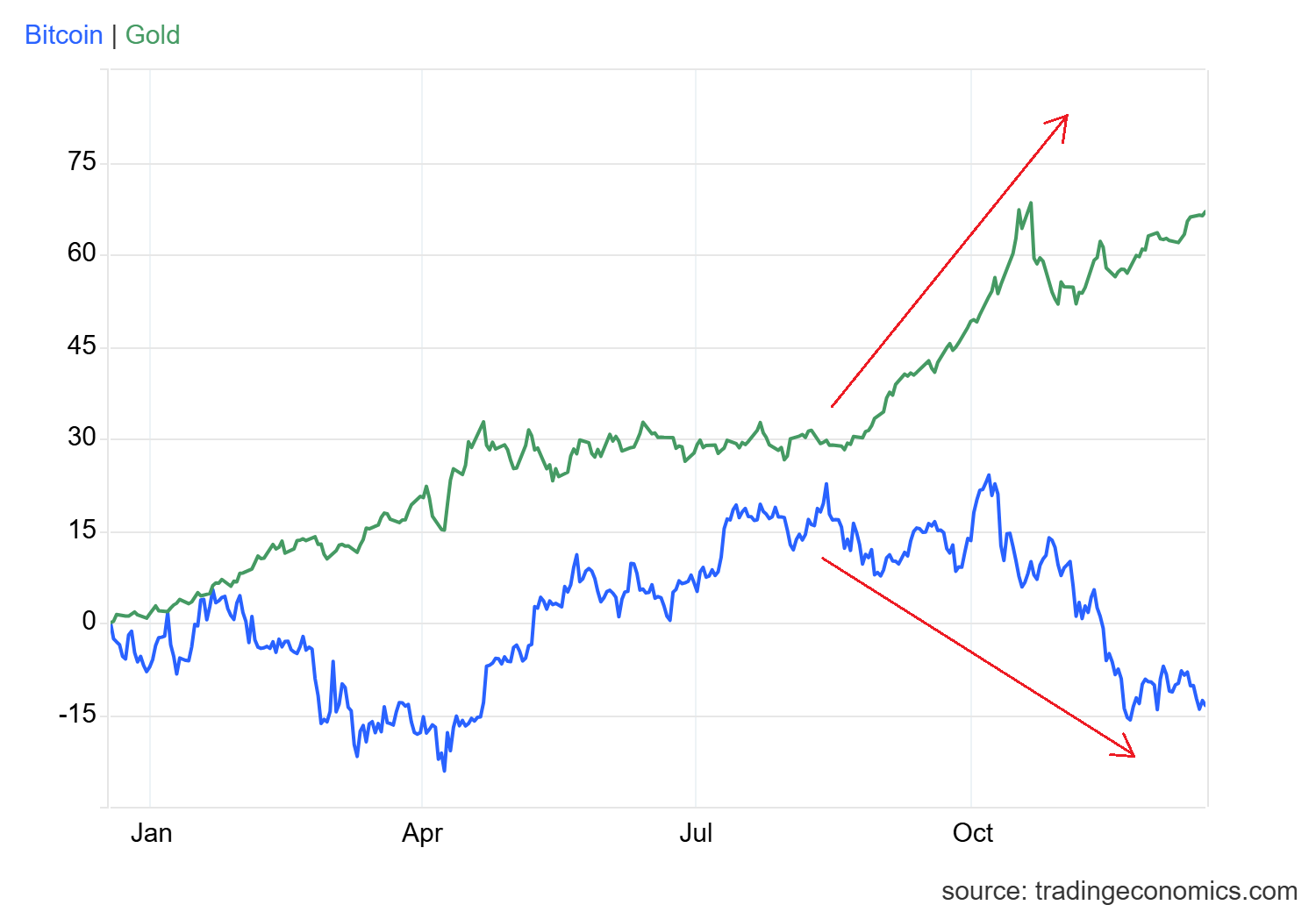
This divergence suggests that investors are shifting away from speculative assets and reallocating toward traditional safe havens. A breakdown in Bitcoin below the $85,000 level would confirm this bearish structure. As a result, gold prices could gain further momentum and break above the key resistance at $4,380. The inverse relationship between the two assets reinforces the view that gold is currently the preferred store of value in times of macro uncertainty.
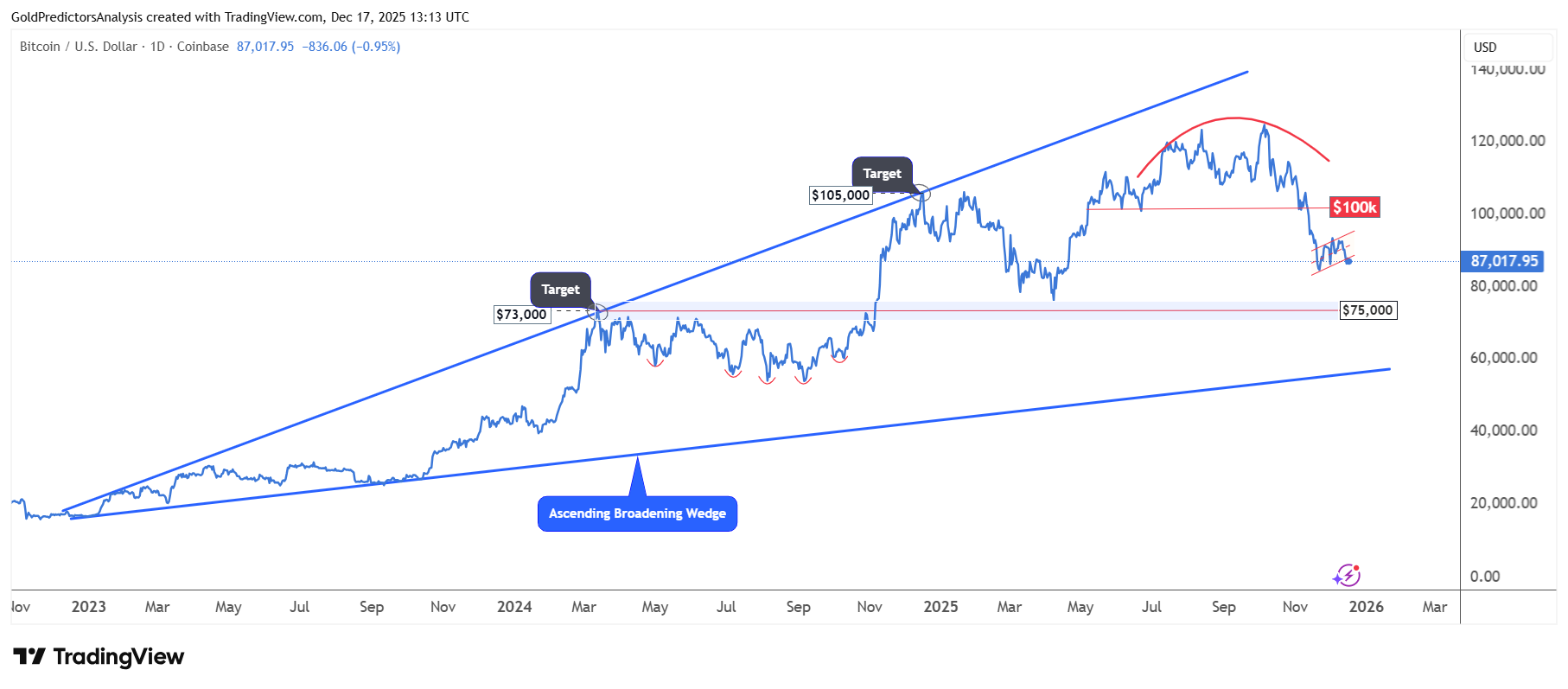
From a technical perspective, Bitcoin prices are turning lower after forming a rounding top pattern within an ascending broadening wedge. Moreover, a bear flag pattern has emerged within this structure, indicating a bearish continuation. A breakdown from the bear flag would signal a sustained drop toward the $75,000 level.
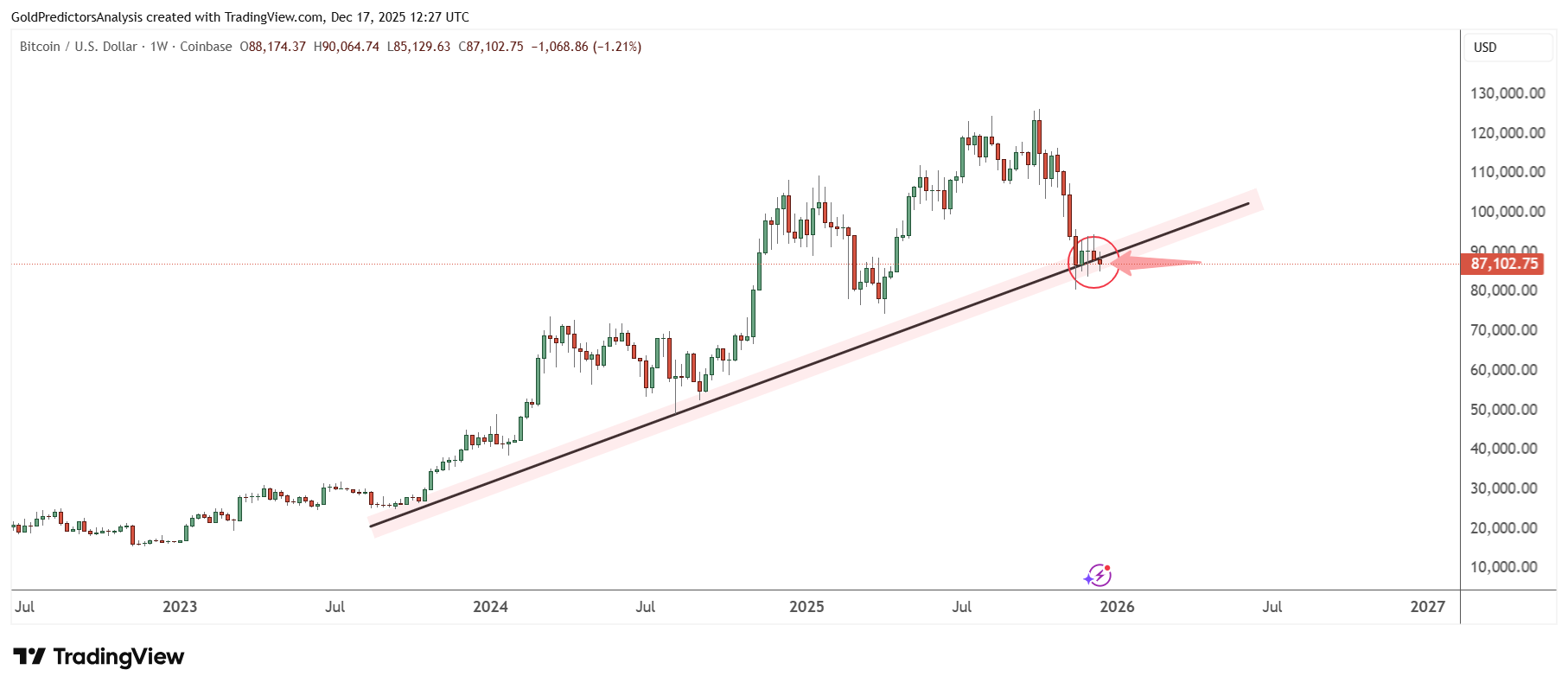
Meanwhile, the weekly chart highlights the significance of the current price zone. This is especially important as Bitcoin is showing weakness near the rising trendline. A decisive break below the $85,000 support level would confirm continued downside pressure, opening the path toward $75,000 and potentially lower levels.
Gold-to-Bitcoin Ratio Signals Turning Point
The divergence between the two assets is also visible in the gold-to-Bitcoin ratio. The ratio has broken out of the descending channel, confirming a rising trend in favor of gold. The monthly close of the ratio in November was strong, and the ratio is now breaking the pivotal 0.05 level. This breakout in the ratio is further confirmed by the bear flag pattern in the Bitcoin market, as discussed above.
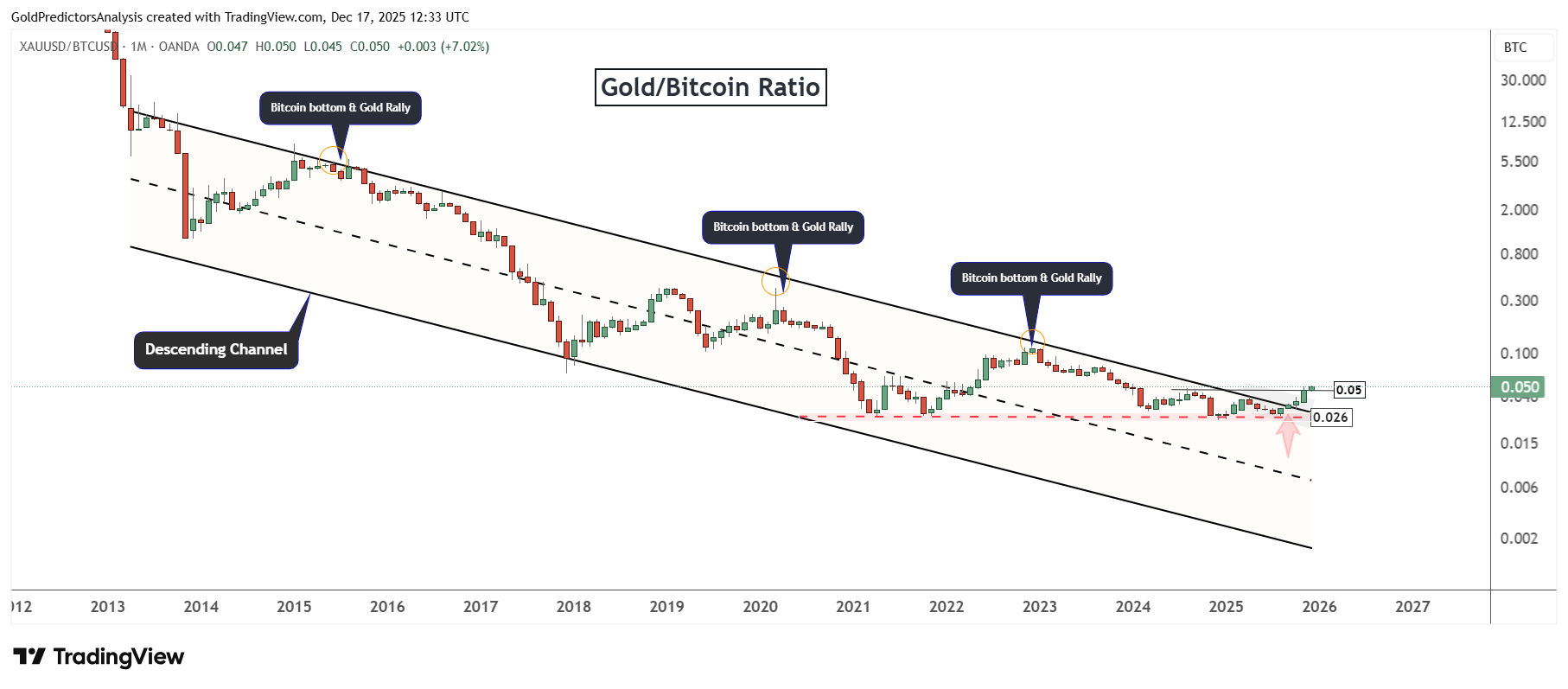
The ratio provides a broader view of investor preferences during macroeconomic stress. If the trend persists, gold is likely to continue outperforming in early 2026.
Macro Drivers Favor Gold as Bitcoin Faces Risk-Off Headwinds
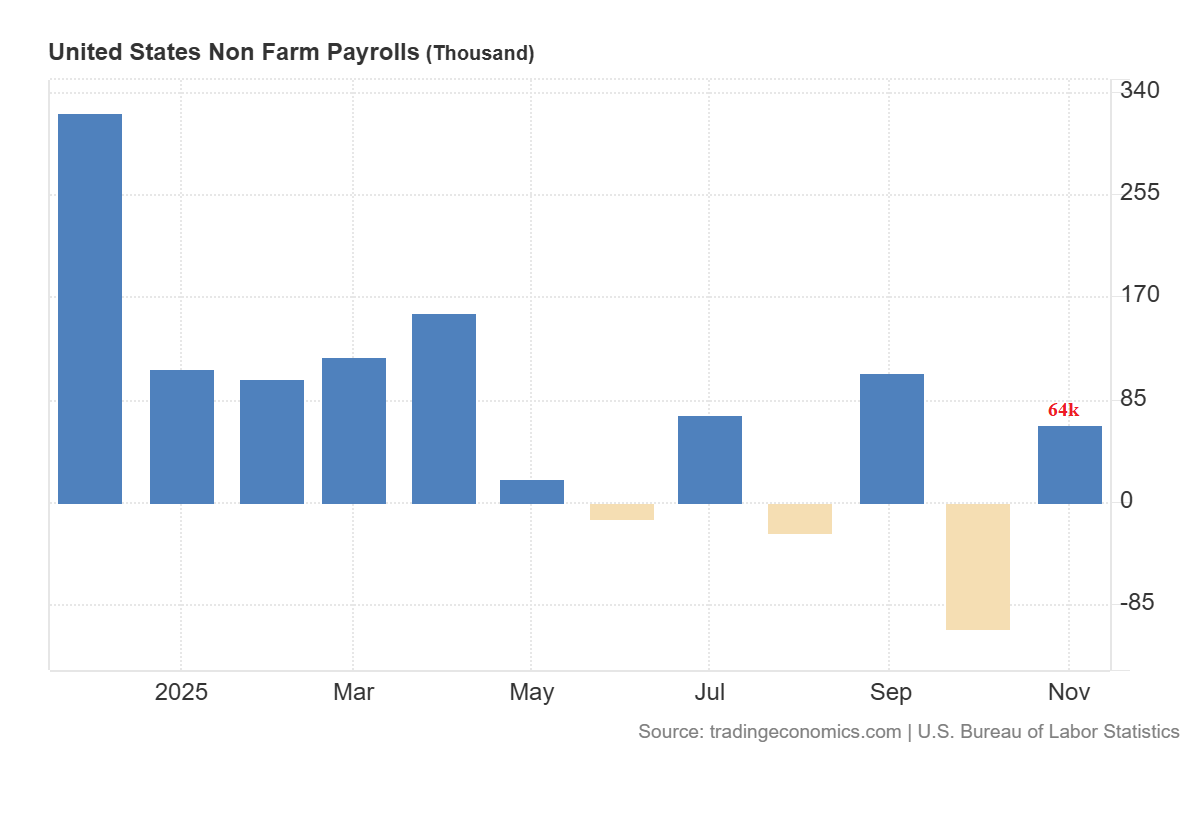
Recent labor market data from the U.S. Bureau of Labor Statistics (BLS) points to a cooling economy. The U.S. added 64,000 jobs in November, slightly above expectations, but this follows a steep loss of 105,000 jobs in October due to the government shutdown.
Moreover, the unemployment rate increased to 4.6%, the highest level since September 2021, and revisions lowered payrolls by 33,000 over the prior two months.
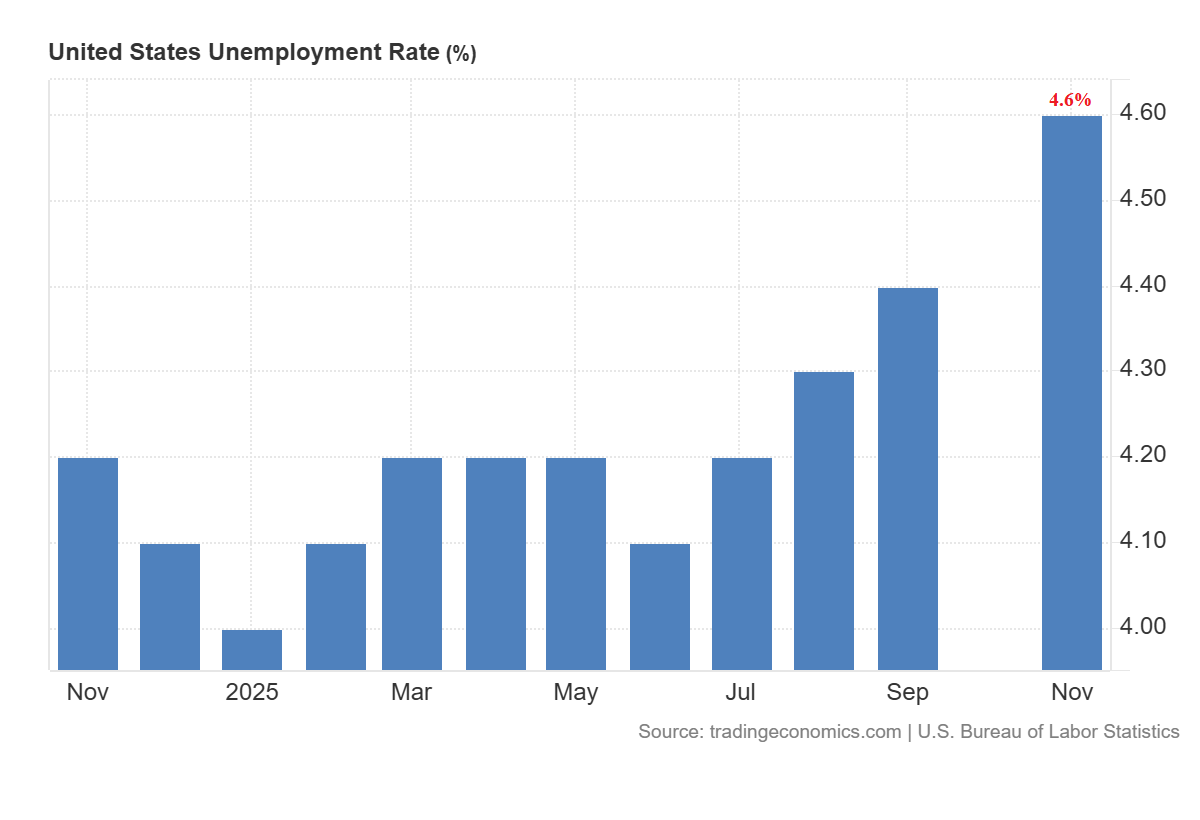
These trends suggest that job creation is slowing. Wage growth is also easing, and unemployment is rising. Fed Chair Jerome Powell warned that job gains since April may have been overstated by as much as 60,000. This aligns with the broader view that the labor market is softening. As a result, markets now price in two rate cuts for 2026, with a growing chance of another cut as early as January.
This macro backdrop strengthens gold’s appeal. As the Fed shifts toward easing, the opportunity cost of holding gold falls. A weaker labor market also increases demand for defensive assets, reinforcing capital flows into gold-backed ETFs and physical bullion. On the other hand, Bitcoin behaves like a risk asset, making it vulnerable during economic slowdowns.
Moreover, the geopolitical tensions are also resurfacing. Hopes for progress in the Russia-Ukraine peace talks have faded. This followed reports that President Donald Trump ordered a blockade of sanctioned oil tankers entering and leaving Venezuela. This escalation adds to global uncertainty, further boosting demand for gold as a safe haven.
However, these catalysts are less supportive for Bitcoin. Therefore, liquidity concerns, tightening regulations, and risk-off sentiment may weigh on crypto markets in the near term.
Bottom Line: Gold Leads as Bitcoin Struggles
In my view, the divergence between gold and Bitcoin is likely to widen further in the early part of 2026. Gold remains supported by softening labor market data and growing geopolitical tension. These factors favor continued strength toward the $5,000 level. As rate cut expectations build and the U.S. dollar weakens, the macro backdrop increasingly supports safe-haven flows into gold.
On the other hand, Bitcoin continues to show vulnerability. The breakdown in the Bitcoin chart and its underperformance relative to gold highlight a shift in investor preference away from risk assets. As long as Bitcoin remains below the key level of $100,000, the trend favors further downside toward $75,000.
The broader picture reinforces a bullish view for gold over the next 6 to 12 months. A decisive weekly close above $4,380 would confirm a breakout toward the $5,000 target.