Central banks are accelerating their accumulation of gold (XAU) reserves. In October 2025, central banks added 53 tonnes, marking the most significant monthly increase of the year, according to the World Gold Council. By the end of October, total net purchases reached 254 tonnes.
This makes 2025 the fourth strongest year for central bank gold buying this century. This wave of accumulation underscores how policymakers view gold as a strategic hedge against currency risk. It also highlights its role during periods of political uncertainty and financial instability.
Poland added 16 tonnes, raising its reserves to a record 531 tonnes. Brazil also purchased 16 tonnes, while Uzbekistan, Indonesia, Turkey, the Czech Republic, and the Kyrgyz Republic increased their holdings. In addition, countries with more volatile economies, such as Ghana and Kazakhstan, continued to accumulate gold.
A recent survey indicates that 95% of central banks expect their gold reserves to increase again next year. This broad-based demand reinforces gold’s role as a core reserve asset during times of global uncertainty.

Gold vs. Bitcoin: Diverging Trends in the New Market Cycle
Gold and Bitcoin (BTC) now sit at a significant crossroads. Gold benefits from central‑bank demand, geopolitical stress, and easing expectations from major central banks. However, Bitcoin benefits from risk appetite, institutional flows, and the search for high‑beta exposure. The two assets often diverge. However, the current environment indicates a clear trend in which precious metals are strengthening. At the same time, the momentum of cryptocurrencies is losing pace.
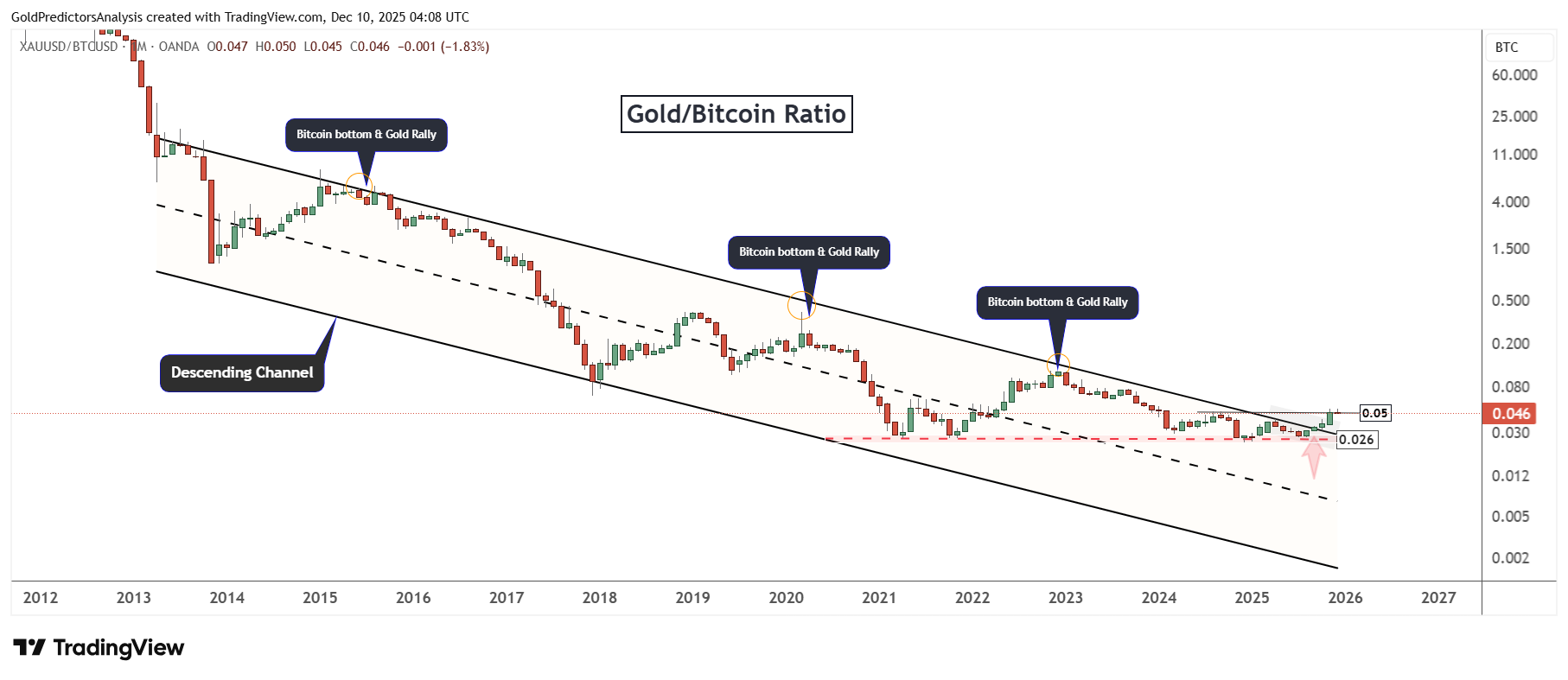
The gold-to-bitcoin ratio has already broken higher. This ratio tracks how many bitcoins one ounce of gold can buy. The chart below shows a confirmed breakout from the descending channel, signalling a major shift toward hard assets with lower volatility. This shift occurs when markets price in softer economic growth, rising political risks, and unstable liquidity conditions.
Gold Price Forecast
Every new Gold analysis as it publishes, today's technical signal and key levels, live price — on one page.
See all Gold forecastsBitcoin Technical Outlook: Breakdown Threatens Long-Term Trend
As shown in the chart below, Bitcoin has formed a rounding top within an ascending broadening wedge pattern near the $120,000 level. Subsequently, the price has broken below the key support at $100,000 and continues to move lower.
At the same time, strong support remains at the $75,000 level, and a break below this price zone will likely trigger a deeper correction. Conversely, a break back above $100,000 is needed to resume the upward trend in Bitcoin.
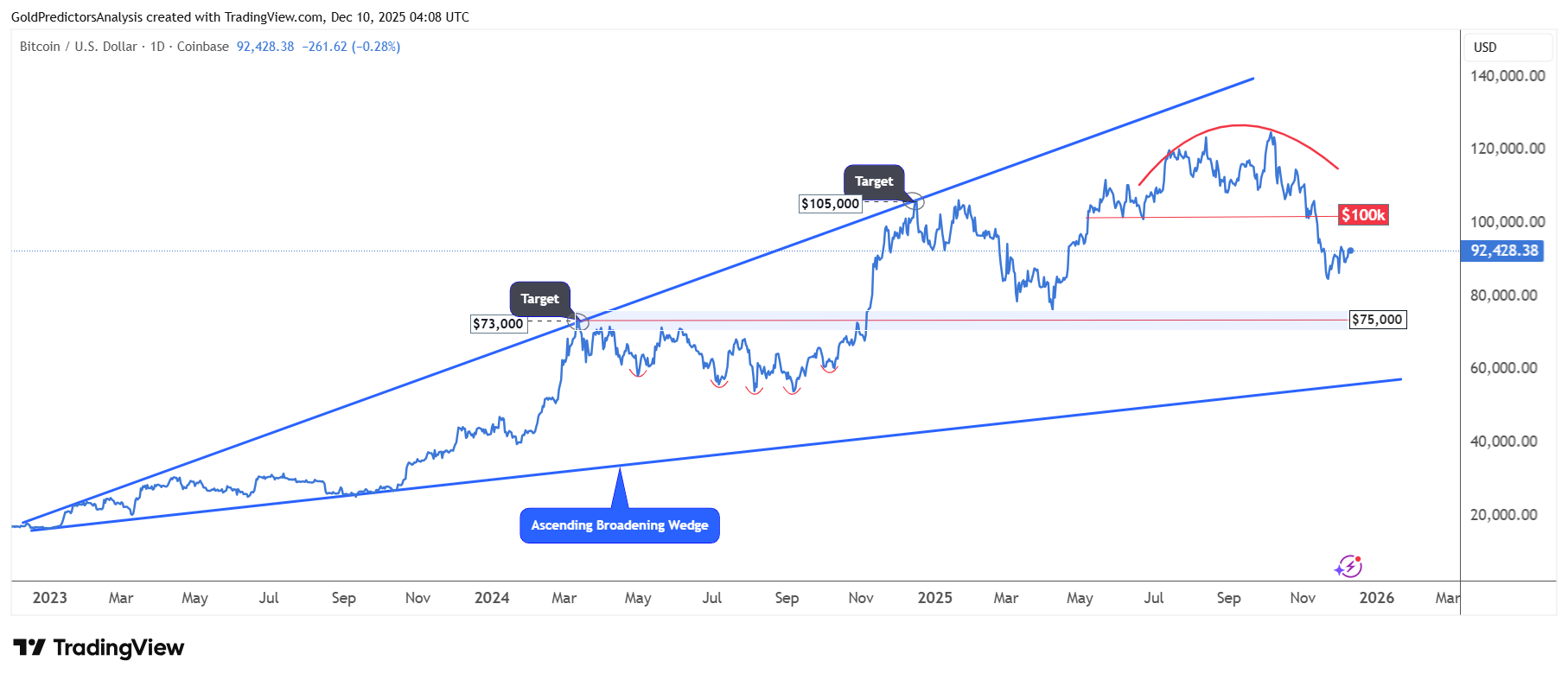
Overall, the weakness in Bitcoin is aligned with macro conditions. Specifically, the uncertainty surrounding the U.S. dollar and the Fed’s cautious messaging puts pressure on high-beta assets. As a result, if liquidity tightens, Bitcoin may face sustained headwinds.
Gold Technical Setup Remains Bullish as $5,000 Comes Into View
Gold continues to consolidate within a broad bullish structure. In particular, central bank accumulation and falling real yields support the long-term trend. Moreover, the chart below indicates that the price is trading within a strong uptrend, forming an ascending channel pattern, and appears to continue moving higher.
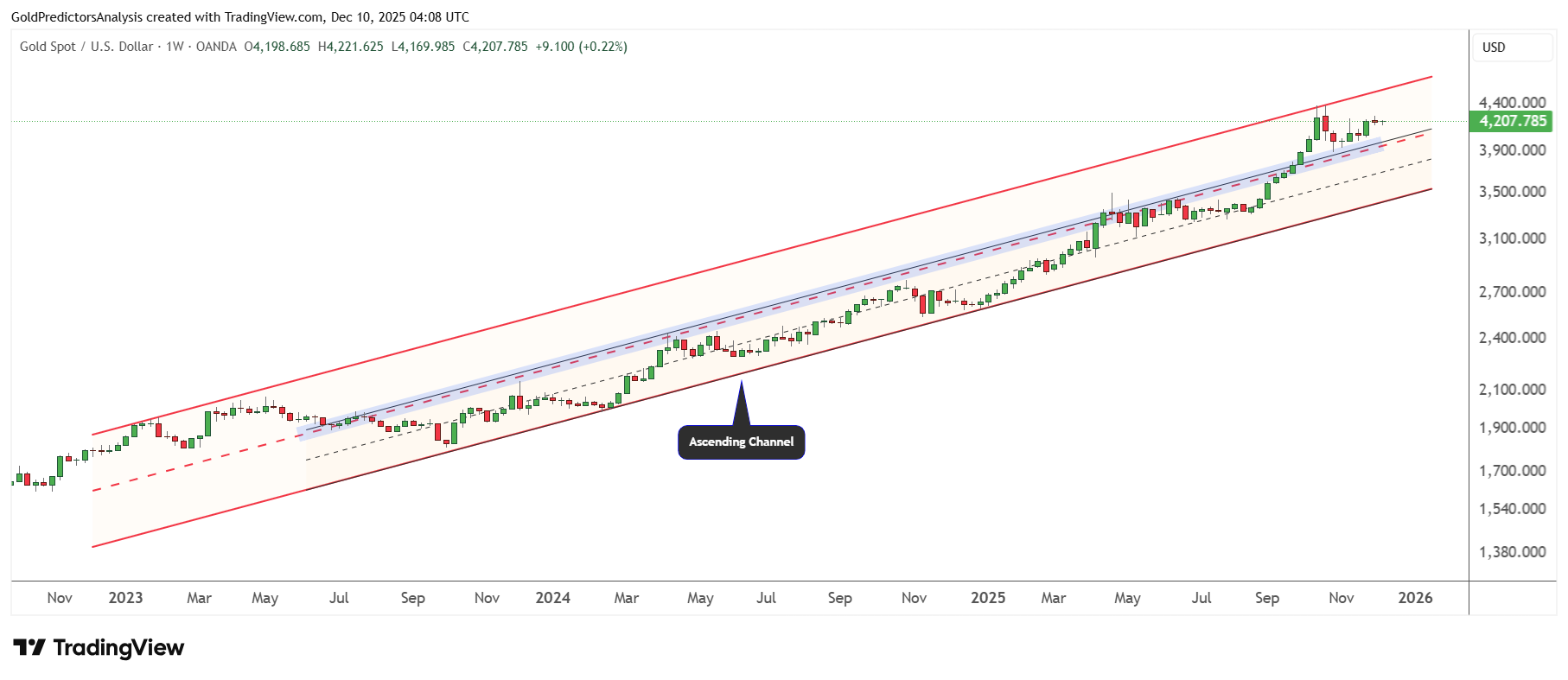
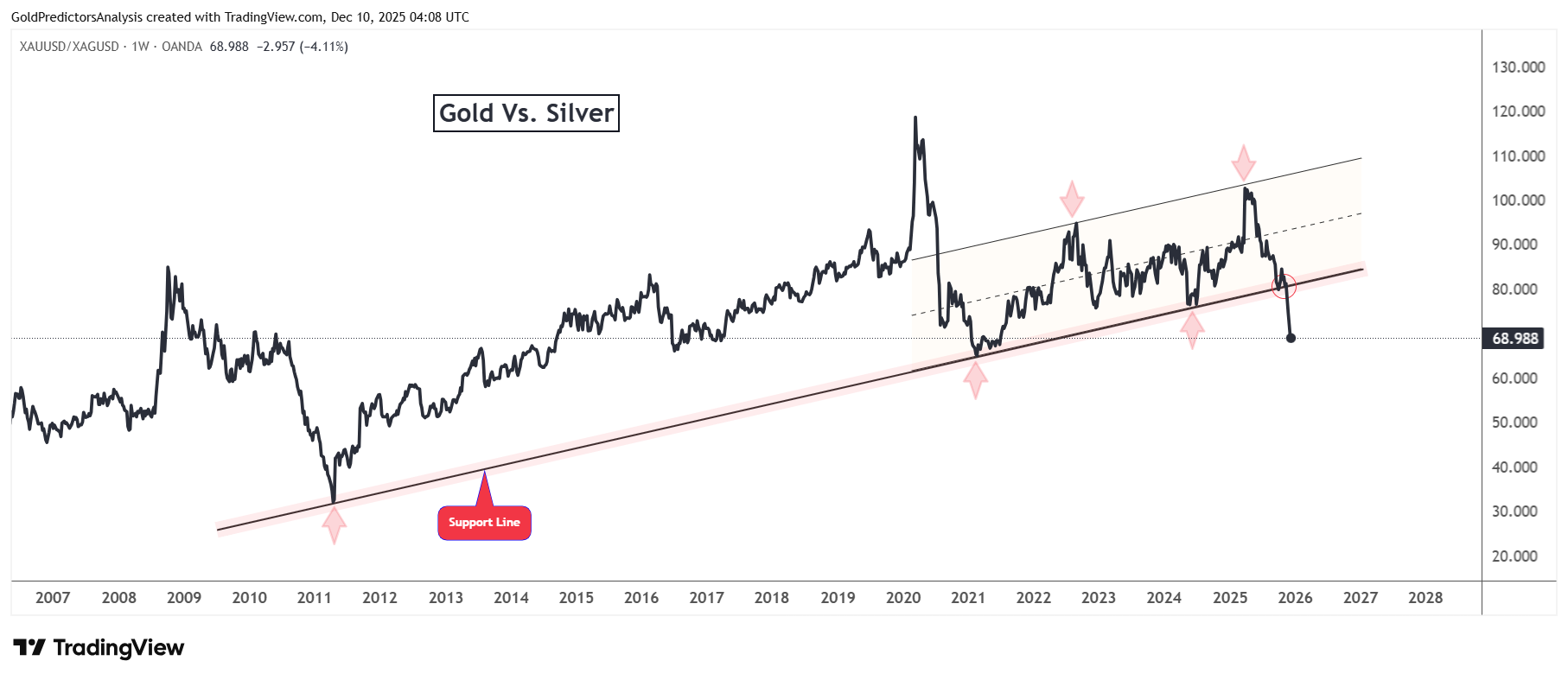
A decisive move above $4,380 resistance will likely unlock a rally toward the $5,000 zone. Moreover, the gold-to-silver ratio has broken below a key support level, signalling another bullish move for the metal space. When silver leads, gold tends to follow. This ratio has already broken its long-term support, indicating a significant shift toward precious‑metal outperformance.
Silver Breakout Reshapes the Outlook for Gold and Bitcoin
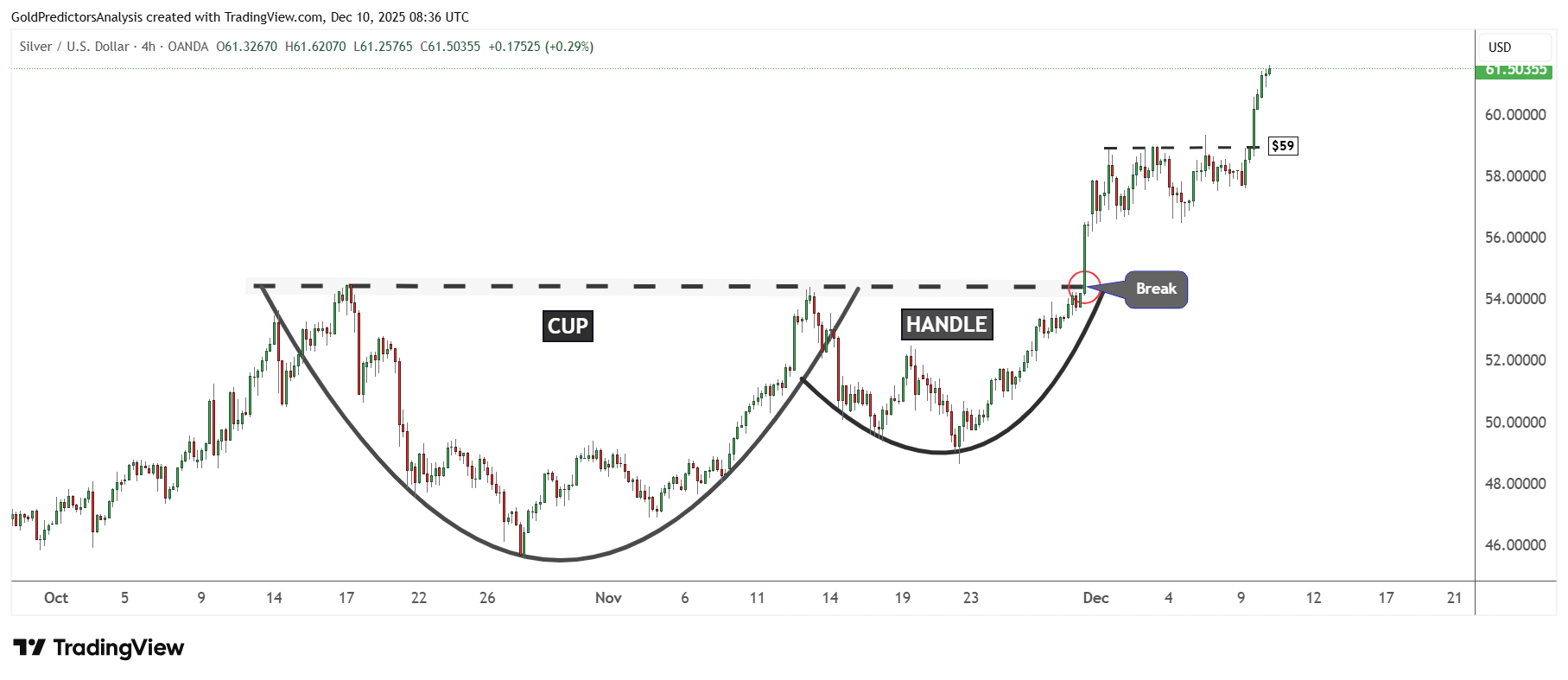
Silver (XAG) is now the strongest performer among monetary metals. The break above $59, along with the formation of a bullish structure, signals the start of a new long-term trend.
The confirmed cup‑and‑handle breakout above $54 was the first clue. The new highs confirm that industrial demand and monetary demand are aligning.
This breakout affects both gold and Bitcoin:
- For gold and silver, leadership historically precedes explosive upside moves. A falling gold-to-silver ratio is a classic early-cycle signal for strong precious‑metal rallies.
- For Bitcoin, silver’s outperformance suggests a rotation away from speculative assets toward real-asset hedges. When silver breaks out, Bitcoin often underperforms due to differences in liquidity and risk premiums.
Silver-to-Bitcoin Ratio Breakout Signals Capital Rotation
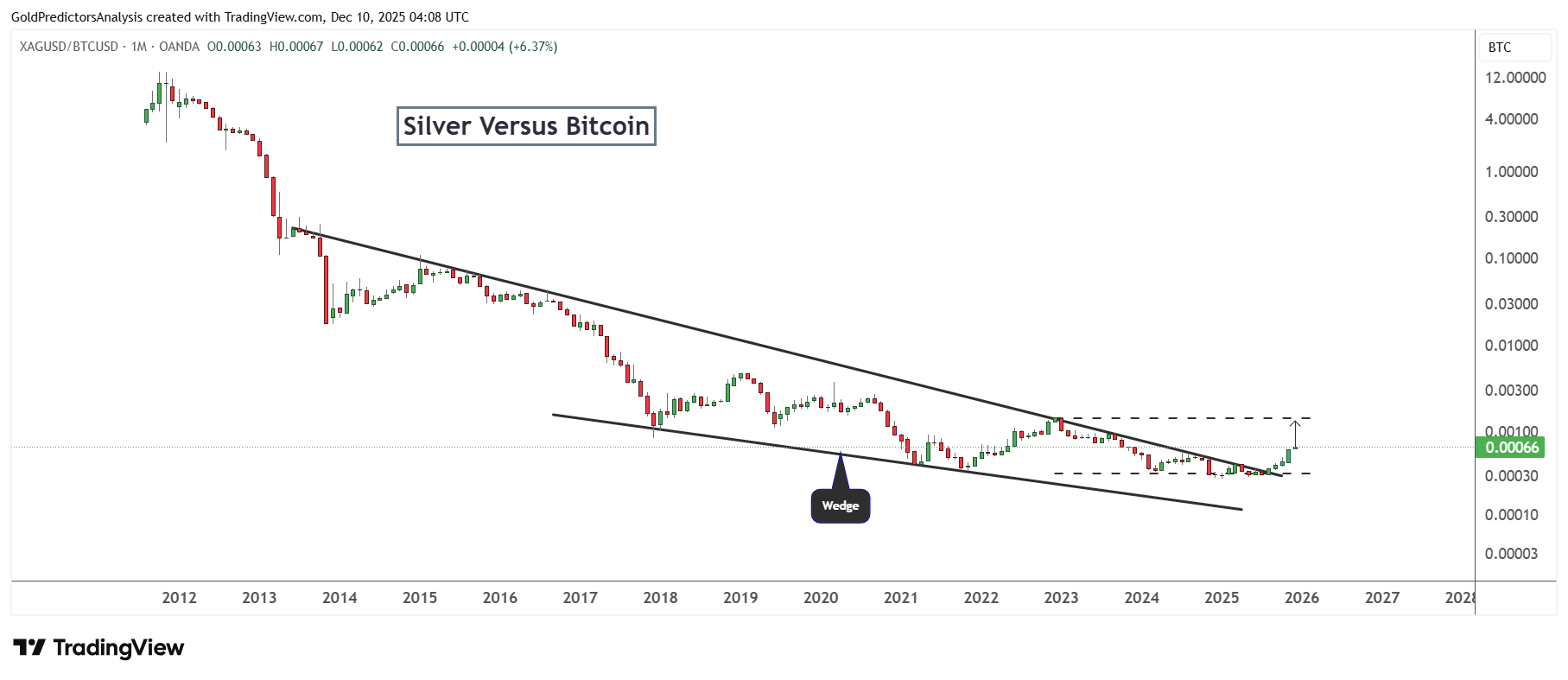
The chart below shows that the silver-to-bitcoin ratio highlights a strong breakout from the wedge pattern. Notably, this breakout is a rare and powerful signal, indicating that capital is shifting away from crypto into tangible assets tied to real economic demand.
Silver outperforming Bitcoin reflects major macro re-pricing:
- The increase in geopolitical risk.
- The return of inflation uncertainty.
- The liquidity tightening
- The increase in industrial‑metal demand
This breakout in the ratio suggests that the next cycle may belong to precious metals, rather than digital assets.
Why Silver Now Leads Gold—and Gold Leads Bitcoin
Silver’s breakout is now the key determining factor. The metal is acting as the “alpha” in the hard‑asset group. Gold benefits from central‑bank buying and safe-haven flows.
Silver benefits from both monetary demand and industrial expansion, especially in solar, EV, and battery supply chains. When silver leads gold and gold leads Bitcoin, the entire market narrative shifts toward real assets.
Conclusion: Silver Leads, Gold Follows, Bitcoin Lags
Gold, silver, and Bitcoin each respond to different macro forces. But today’s environment shows a clear hierarchy:
Silver leads → Gold follows → Bitcoin lags.
Central‑bank demand, geopolitical uncertainty, and ratio breakouts all point toward a new cycle where precious metals outperform digital assets. Silver’s record highs strengthen that case. Bitcoin may still offer volatility and opportunity, but the structural momentum now favours gold and silver.