
Gold Price Holds Near Record High as XAUUSD Tracks Holiday Flows
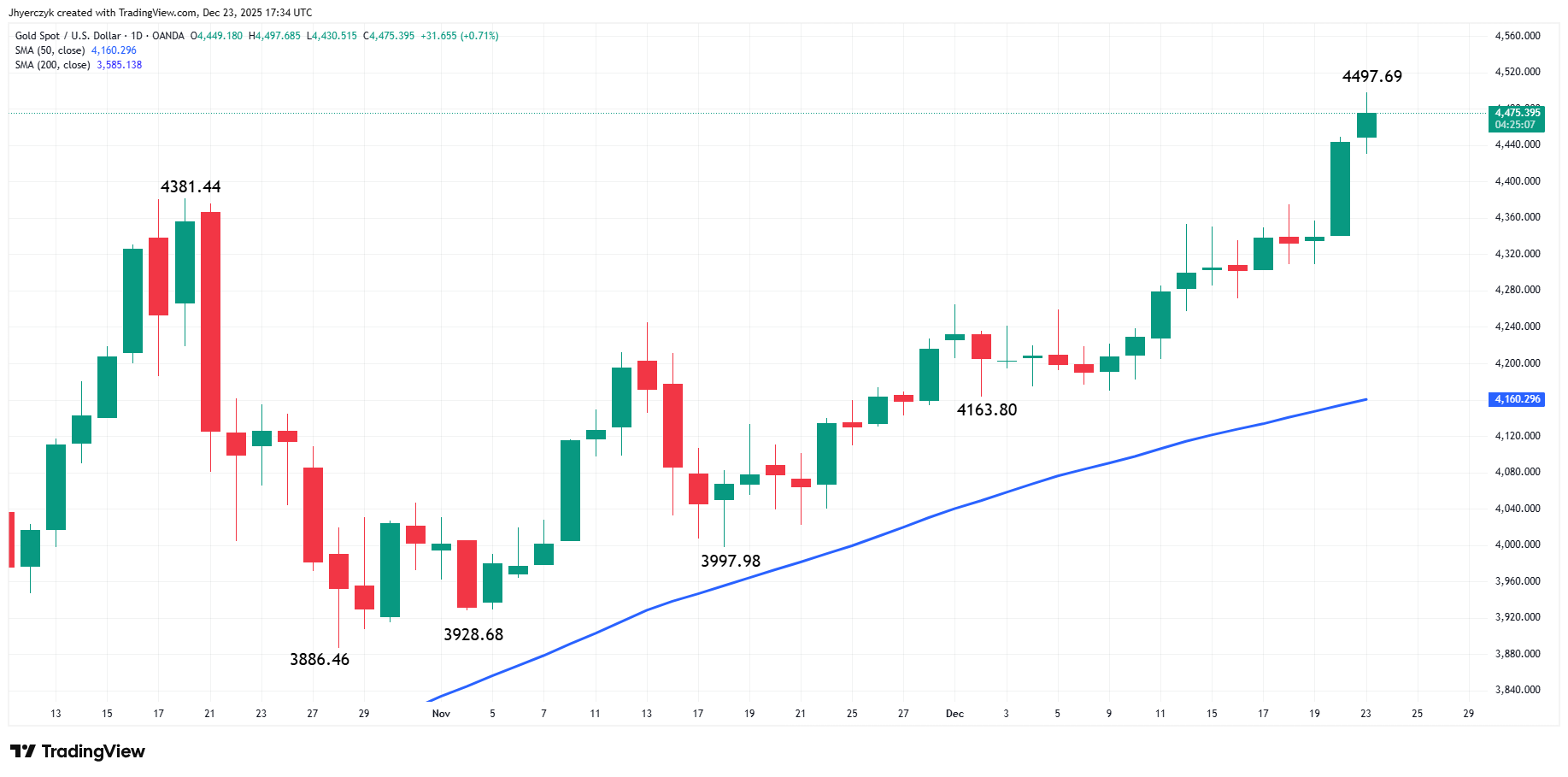
Spot Gold is pushing higher at the mid-session, trading around $4475.00 and sitting just under Tuesday’s new record high at $4497.69. With gold at all-time highs and no actual resistance above, traders are focused on the risk of a daily closing price reversal top. That puts the emphasis on the previous close at $4443.74. A finish below that level would signal pre-holiday profit-taking rather than a shift in trend.
At 17:54 GMT, XAUUSD is trading $4471.26, up $27.52 or +0.62%.

Gold Market Supported by Dollar Softness, Fed Outlook and Geopolitical Tension
Gold continues to benefit from a weaker U.S. dollar, expectations for a more dovish Federal Reserve stance in 2026, and steady central bank appetite. Analysts highlight that fading confidence in the greenback, geopolitical risk, and sustained investment inflows remain central to the year’s 70% surge in bullion. Fresh tension surrounding Venezuela — following President Trump’s order to “blockade” sanctioned oil tankers and his refusal to rule out war — has reinforced safe-haven demand into year-end.
Silver Extends Record Run While Platinum and Palladium Break Higher
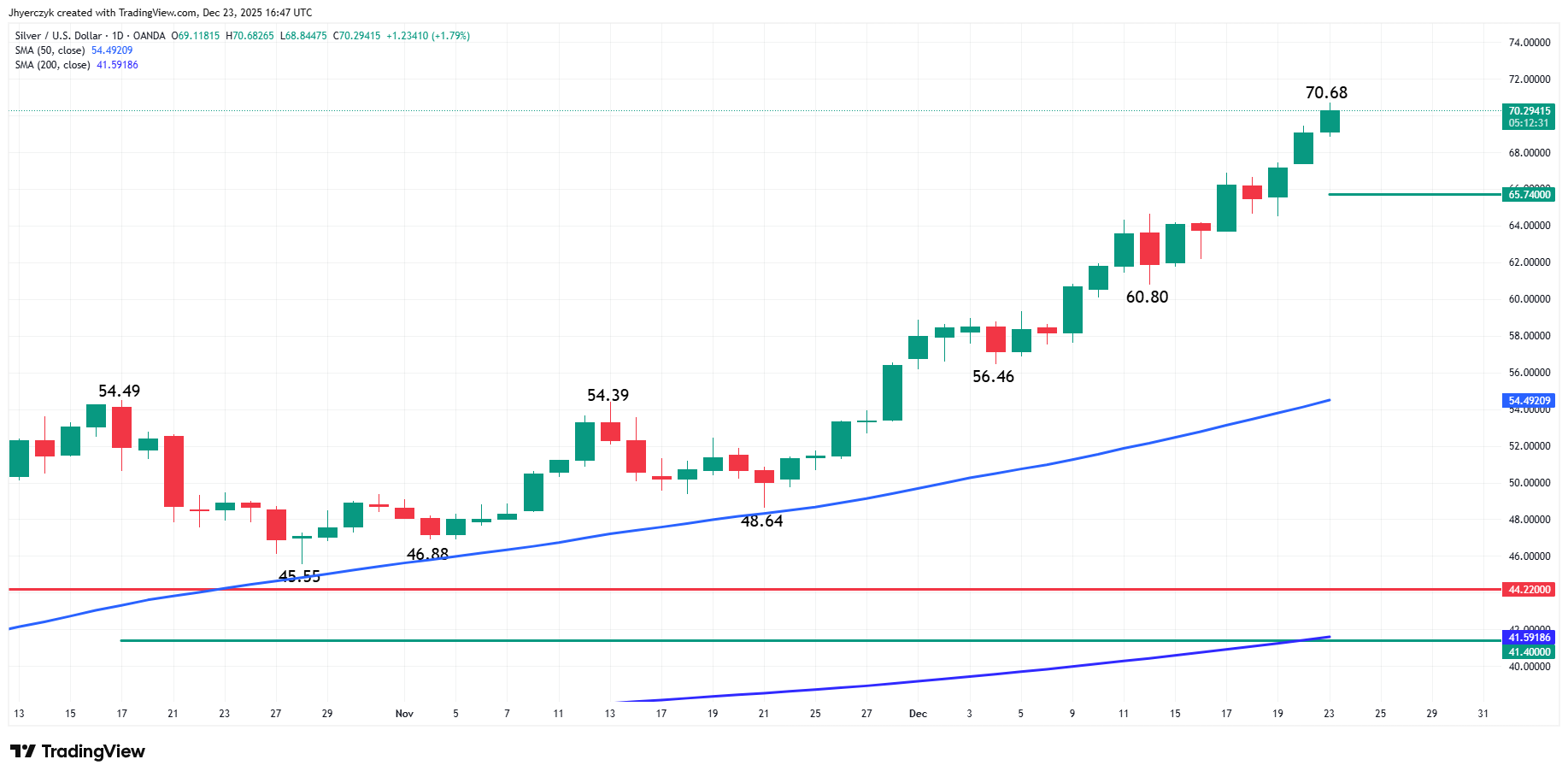
Silver printed a new all-time high at $69.98 before easing slightly to $69.61, extending an extraordinary 141% year-to-date rise driven by supply deficits, industrial consumption, and heavy investment buying. Analysts at Pepperstone note that both gold and silver continue to attract aggressive interest, with traders treating the $4,500 area in gold and the $70 mark in silver as reference points rather than barriers.
Platinum jumped 3% to $2,183.63, its highest level in over 17 years, while palladium climbed 3.2% to $1,815.76, following strength across the broader precious metals sector.
Treasury Market Steady After Strong GDP Print
The 10-year Treasury yield is holding near 4.175%, with the 2-year at 3.54% and the 30-year around 4.835%. The Commerce Department reported Q3 GDP at 4.3%, well above estimates, though the data is considered stale due to the rescheduled release. Strong consumer spending helped drive the figure, while analysts point to inventory depletion as a sign of slower momentum heading into 2026. This week’s 5-year and 7-year note auctions will offer a clearer read on investor appetite for U.S. debt heading into year-end.
Gold Price Forecast
Every new Gold analysis as it publishes, today's technical signal and key levels, live price — on one page.
See all Gold forecastsDollar Weakens as Traders Price 2026 Cuts
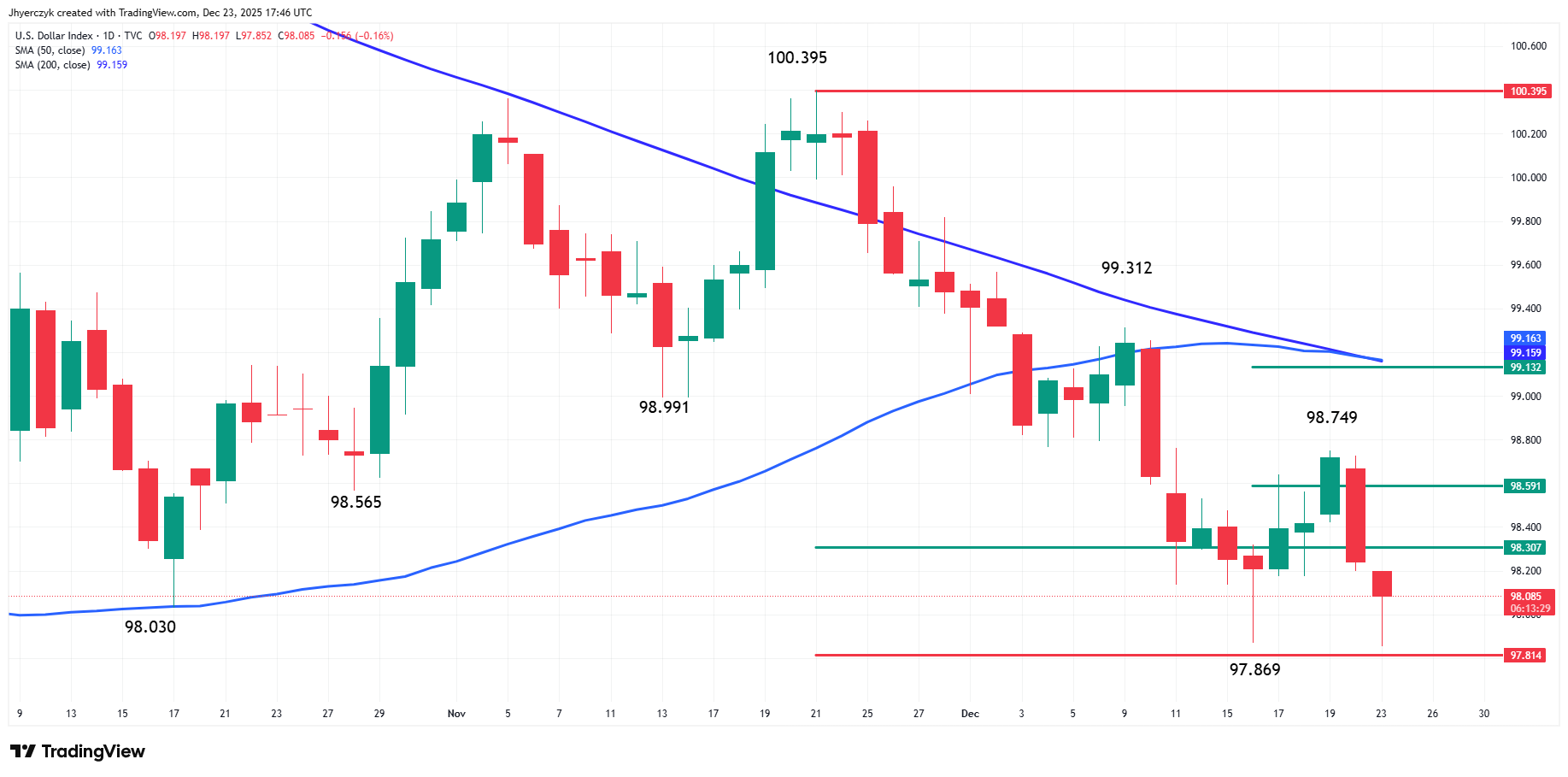
The dollar index slipped to 98.07, its lowest since early October, as markets expect two rate cuts next year and see June as the likely start of Fed easing. Consumer confidence cooled to 89.1 versus a 91.0 forecast, reinforcing pressure on the currency. Yen intervention risk also remains in play after Japan signaled readiness to act.
Gold Price Forecast: Bias Remains Bullish
As long as XAUUSD holds above $4443.74, dip-buying should persist into the holidays, keeping the short-term outlook tilted higher with no evidence yet of trend exhaustion.
More Information in our Economic Calendar.