


US Markets Tumble As Recession Fears Grow
US equity markets tumbled on Monday, March 10, as concerns about a potential tariff-driven recession gained momentum. President Trump fueled recession fears after acknowledging risks during a March 9 interview.
The Nasdaq Composite Index tumbled 4%, while the Dow and the S&P 500 fell 2.08% and 2.70%, respectively. Recession fears, a potential US government shutdown, and escalating trade tensions triggered the sell-off.
In the bond markets, 10-year US Treasury yields slid to 4.2% before ending the session at 4.219%, reflecting demand for safe-haven assets.
Japan GDP and Household Spending and JGB Yields
The risk-off sentiment extended into the Asian session on Tuesday, March 11, but Japanese economic data complicated the picture.
Household spending tumbled 4.5% month-on-month in January, following a 2.3% rise in December. The contraction could dampen demand-driven inflationary pressures, lowering bets on a near-term Bank of Japan rate hike.

Downward revisions to Q4 GDP growth numbers also tempered BoJ rate hike bets. Notably, private consumption stagnated in Q4 2024, down from a preliminary 0.1% rise.
Despite the weaker data, JGB yields remained elevated, impacting market risk sentiment. Rising JGB yields narrowed the US-Japan interest rate differential, driving Japanese Yen demand. A stronger Yen raises the risk of another Yen Carry Trade Unwind, adding to market risk aversion.
The Kobeissi Letter, a leading capital markets commentary, stated:
“Japan’s 20-Year Government Bond Yield rises to its highest level since 2008.”
The upswing in JGB yields drove the USD/JPY pair to a low of 146.537 before stabilizing around 147.
Dow Jones Price Forecast
Every new Dow Jones analysis as it publishes, today's technical signal and key levels, live price — on one page.
See all Dow Jones forecastsHang Seng Index Drops as Tariff Uncertainty Lingers

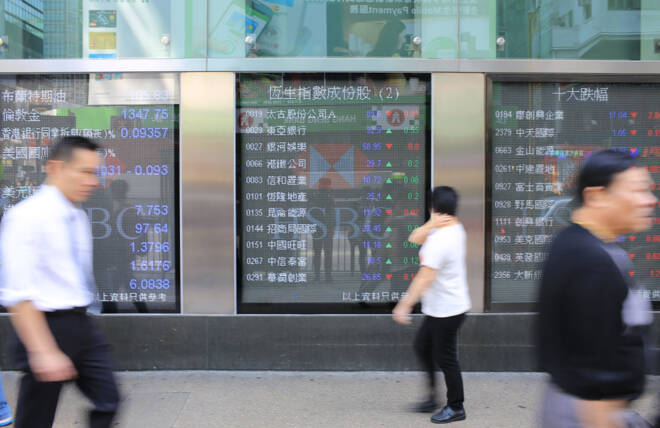
In Asia, the Hang Seng Index declined by 0.47% on Tuesday morning. Uncertainty about the US economy and tariffs overshadowed optimism surrounding Beijing’s stimulus goals and China’s economic outlook.
Real estate stocks took a hit, with the Hang Seng Mainland Properties Index sliding 1.32%. The Hang Seng Technology Index slipped by 0.37%.
Meanwhile, auto stocks stood out from the pack, with NIO Inc. (9866) soaring 8.8%, while Li Auto (2015) gained 0.81%.
Mainland China’s equity markets also posted modest losses. The CSI 300 and Shanghai Composite Index dropped 0.69% and 0.65%, respectively.
Nikkei Index Tumbles as Strong Yen Pressures Stocks

Meanwhile, the Nikkei Index tumbled 1.74% on Tuesday morning, pressured by higher JGB yields and a stronger Japanese Yen. A stronger Japanese Yen could impact demand for Japanese goods and overseas earnings.
Notable decliners included Softbank Group (9984) and Tokyo Electron (8035), which slid by 3.87% and 2.21%, respectively. Sony Corp. (6758) fell 2.89%.
ASX 200 Tracks Wall Street Sell-Off

Australia’s ASX 200 Index declined by 0.87% on Tuesday morning, falling to its lowest since August 13. While oil, mining, and banking stocks showed resilience, declines in gold and tech stocks weighed on the ASX 200.
- Gold: Northern Star Resources (NST) slid by 2.26% after gold prices fell 0.73% on March 10.
- Tech Sector: The S&P/ASX All Technology Index tracked Nasdaq losses from Monday, tumbling 4.14%.
Outlook: Key Risks and Opportunities
Looking ahead, global markets remain sensitive to a mix of economic risks and policy shifts:
- US-China Trade Tensions: A key factor influencing Asian markets.
- US CPI Data: A crucial signal for Fed rate cut expectations.
- China’s Stimulus Measures: Beijing’s policy response could help stabilize markets amid deflation risks.
- Central bank guidance: Investors will closely watch monetary policy signals from global policymakers.
Despite the prevailing risks, China’s stimulus efforts could serve as a counterbalance to economic uncertainty.
Stay informed on market shifts with expert insights and analysis here—make smarter investment decisions.