



US Markets Advance on Jobs Data, Powell’s Comments
US jobs data and Fed Chair Powell’s reassuring comments on the economy sent US equity markets higher on March 7, with investors targeting risk assets. The Fed Chair downplayed concerns about the US economy and signaled the Fed was in no rush to cut rates.
The Nasdaq Composite Index climbed 0.70%, while the Dow and the S&P 500 rose 0.52% and 0.55%, respectively.
US Jobs Report Boosts Fed Rate Cut Bets
The crucial US Jobs Report on March 7 supported hopes for a June Fed rate cut. Key stats included:
- Nonfarm payrolls rose 151k, below a consensus 170k rise.
- The unemployment rate increased to 4.1% in February, up from 4.0% in January.
- Average hourly earnings rose 0.3% month-on-month in February, down from 0.4% in January.
A cooling labor market and slower wage growth could curb consumer spending and ease demand-driven inflation. US private consumption accounts for over 60% of GDP.
Friday’s gains in US markets fueled optimism in Asian trading on Monday.
China Deflationary Pressures Resurface
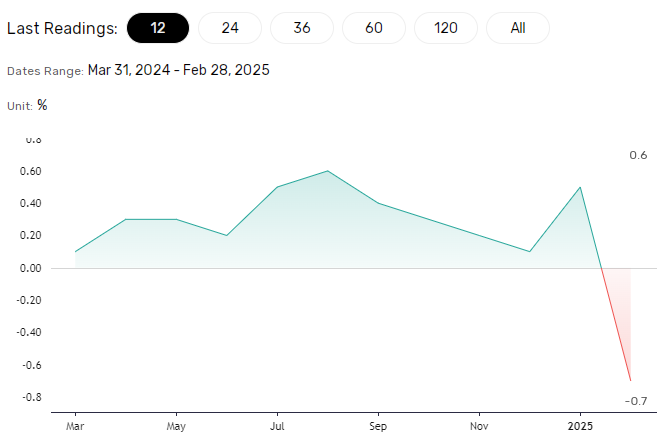
China’s consumer prices fell 0.7% year-on-year in February, reversing a 0.5% rise in January. While some economists see this as a sign of deflation, others attribute it to seasonal factors.
Wall Street Journal Chief China Correspondent Lingling Wei reacted to the inflation numbers, stating:
“China has entered a deflationary cycle. Its current ‘stimulus plan – which is much less about supporting households than about helping factories reduce excessive inventories – will make it worse.”
However, Brian Tycancgo, editor and analyst at Stansberry Research, commented:
“No. China has not entered a deflationary cycle. Impact of post-CNY discounting is immense and weighs heavily on CPI. Property market is recovering. The stock market is the best it’s been in 3-4 years. There’s plenty of liquidity in the system and it just needs a further boost of confidence to translate into a healthy, sustained rise in aggregate prices.”
Despite differing opinions, February’s data underscored the need for additional stimulus measures to boost domestic demand amid intensifying US-China trade tensions.
Hang Seng Index Slides on US Tariffs, China CPI Concerns
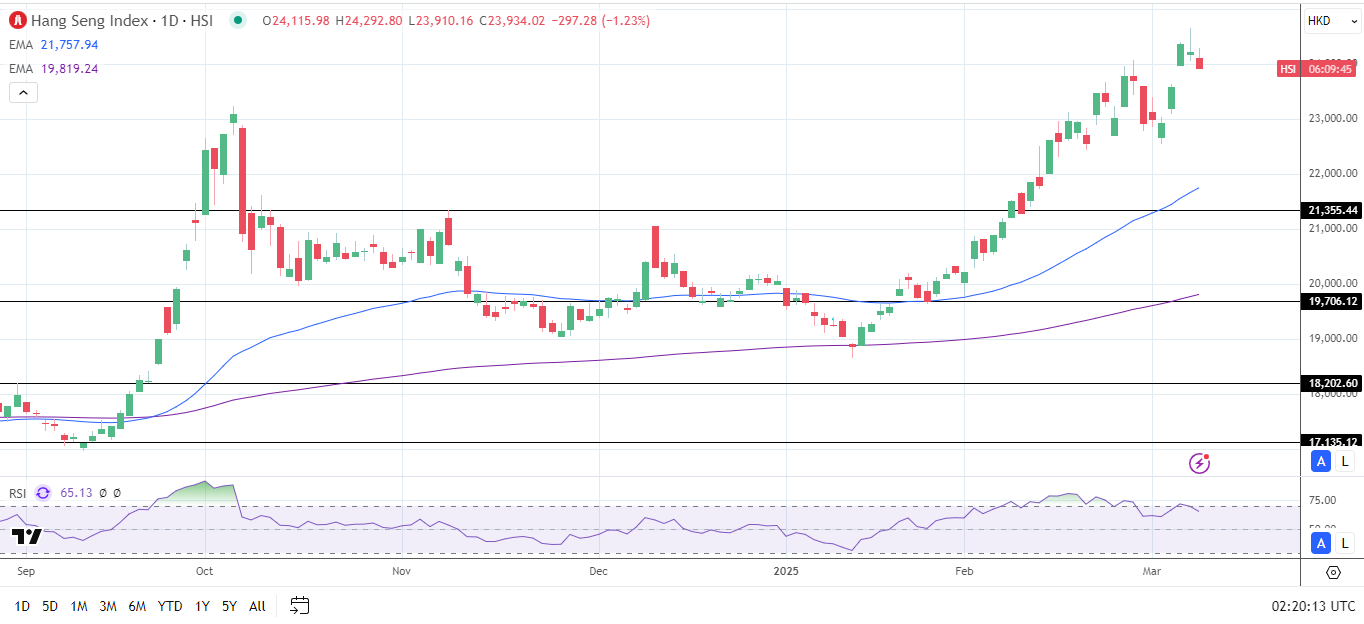
In Asia, the Hang Seng Index slid by 1.23% on Monday morning. US tariff policies, rising risks of a US recession, and China’s CPI data impacted demand for Hong Kong and Mainland China-listed stocks. On Sunday, President Trump added to the recession noise, saying he couldn’t discount the chances of tariffs triggering a US recession.
Real estate and tech stocks contributed to the morning losses. The Hang Seng Mainland Properties Index dropped 0.70%, while the Hang Seng Tech Index fell 1.46%. Tech giants Alibaba (9988) and JD.com (9618) slid by 2.93% and 3.35%, respectively, with Tencent (0700) down 1.97%.
Mainland China’s equity markets also opened the week lower. The CSI 300 and Shanghai Composite Index fell 0.60% and 0.38%, respectively. However, the losses were relatively modest, supported by Beijing’s policy pledges and focus on the tech sector.
Nikkei Index Steadies After Friday’s Sell-Off
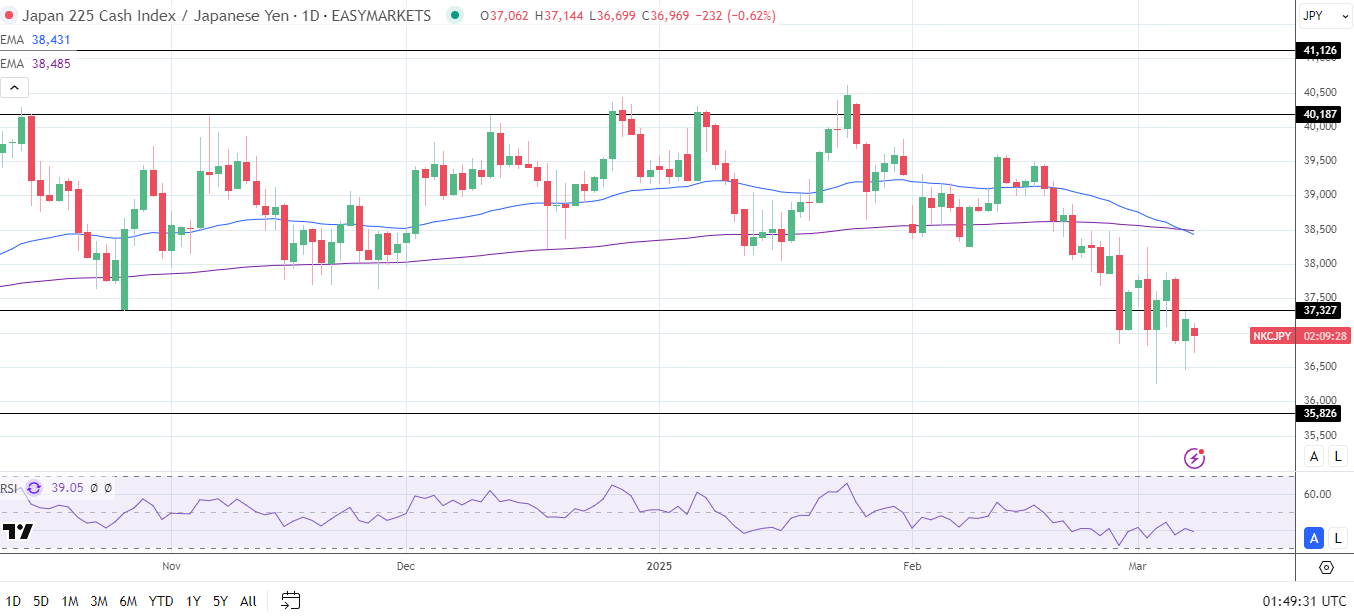
Meanwhile, the Nikkei Index edged 0.05% higher on Monday morning after Friday’s pullback. Fed Chair Powell’s reassurances on the US economy and the US Jobs Report countered the effects of a Stronger Japanese Yen and trade uncertainty. The USD/JPY pair dropped 0.33% to 147.536, testing demand for export-oriented stocks. A stronger Japanese Yen could impact demand for Japanese goods and overseas earnings.
Notable decliners included Sony Corp. (6758), down 1.88%, with Nissan Motor Corp. (7201) slipping 0.02%. However, tech stocks offset the losses, with Softbank Group (9984) advancing by 0.82%.
ASX 200 Steadied After Losing Streak
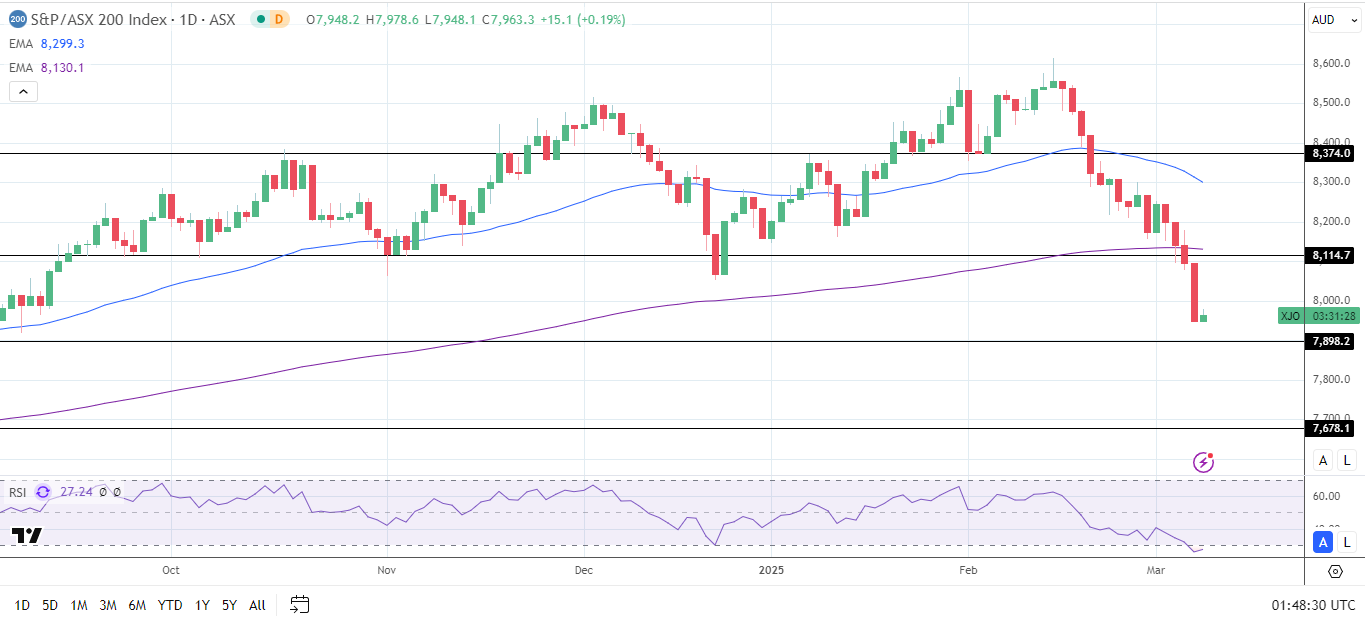
Australia’s ASX 200 Index stabilized after a four-day losing streak, rising 0.19% on Monday morning. Mining, oil, and tech stocks contributed to the morning gains.
- Mining: BHP Group Ltd. (BHP) and Rio Tinto Ltd. (RIO) advanced by 0.89% and 2.40%, respectively. After a nine-day losing streak, iron ore spot prices have steadied in recent sessions, boosting demand for mining stocks.
- Oil Stocks: Woodside Energy Group Ltd. (WDS) rallied 2.07% after oil prices trended higher on Friday.
- Tech Sector: The S&P/ASX All Technology Index tracked Nasdaq gains from Friday, rising 0.50%.
Outlook: Key Risks and Opportunities
Looking ahead, market sentiment hinges on:
- US-China trade tensions: A potential drag on Asian markets.
- US CPI data: A crucial indicator for Fed rate expectations.
- China’s stimulus measures. Key to stabilizing markets amid deflation concerns.
- Central bank guidance: Investors will monitor policymakers’ next moves.
Asian markets remain vulnerable to escalating US-China trade frictions, but Beijing’s stimulus could cushion downside risks.
Stay informed on market shifts with expert insights and analysis here—get informed and make smarter investment decisions.