


Advertisement
Advertisement
Hard Assets Are Entering Their Next Explosive Phase – Are You Positioned?
By:
Live PriceBrent Oil
$107.790
-1.15%
It’s official: Commodities and Hard Assets have become the best-performing asset class of 2026.
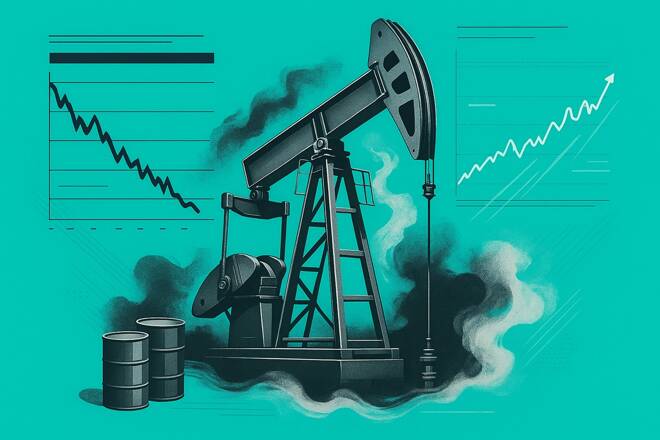
In a year defined by persistent inflation, geopolitical conflict, rising sovereign debt and intensifying supply disruption, capital is rotating aggressively into the one area governments cannot print and central banks cannot manufacture: scarce physical assets.
From Oil, Natural Gas and refined fuels to Copper, Tin and Aluminium and Coffee, Sugar, Cocoa, Wheat and Soybeans, the message is clear: the world is repricing the raw materials it needs to function.
“What we are seeing is not a temporary spike in one isolated corner of the market,” says Lars Hansen, Head of Research at The Gold & Silver Club. “This is a broad-based Hard Asset repricing driven by inflation, scarcity, geopolitical fragmentation and resurgent physical demand. Commodities are no longer an alternative trade. They have become the dominant macro trade of 2026.”
The Scoreboard Leaves Little Room for Debate
Measured from their 2026 lows, the breadth of the rally is difficult to ignore.
European Natural Gas has surged 204%, Heating Oil 149% and Diesel 136%. Gasoline has more than doubled, Jet Fuel has climbed 98%, while WTI and Brent Crude Oil have advanced 85% and 82%, respectively.
Agriculture is being repriced just as aggressively. Cocoa has roughly doubled from its 2026 low, Rice has gained 66%, Wheat 45%, Cotton 41%, Sugar 35% and Corn 32%. Soybeans are up more than 20%, while Arabica Coffee has surged 71% this year.
Tin, Zinc and Copper have rallied roughly 28–32% from their 2026 lows, while Aluminium is around 14% above its trough.
The significance is not any single percentage. It is the number of strategically important Commodities rising together.
These are the raw materials that power economies, feed populations and underpin global industry.
“This is no longer a narrow Commodity rally,” Hansen says. “It is a broad-based repricing of scarcity across the global Hard Asset complex.”
Energy Is at The Heart of the Repricing
If one sector captures the urgency, it is Energy.
Brent and WTI are trading firmly above psychologically important levels, while refined fuels have surged as pressure builds across the global energy system.
The geopolitical backdrop is becoming more dangerous. Saudi Arabia’s East-West pipeline has been shut following recent attacks, putting around 4 million barrels per day of exports at risk. The Bab el-Mandeb Strait faces growing disruption risk, while the Strait of Hormuz is operating at only a fraction of its pre-war capacity.
Even allowing for overlap between routes, the scale of threatened supply is enormous.
“This is what a supply shock looks like,” Hansen says. “What is at stake is not simply higher Oil prices, but the potential for a sustained inflationary impulse across the global economy.”
When crude and refined fuels rise sharply, the shock spreads through transport, logistics, aviation, manufacturing, food production and consumer prices.
Energy becomes the inflation transmission mechanism.
Metals Are Confirming the Regime Shift
The Metals complex is reinforcing the same message.
Copper is at or near all-time highs in many currencies amid tight supply and surging electrification demand. Tin is a standout performer, while Aluminium benefits from power-related constraints and stronger industrial demand.
The artificial-intelligence boom may appear digital, but its infrastructure is deeply physical. Data centres, semiconductors, transmission systems, cooling, construction and grid expansion require vast quantities of hard inputs.
“The AI revolution is adding a structural layer of demand on top of an already strained supply picture,” Hansen says. “Copper, Tin and Aluminium are not just cyclical trades. They are becoming strategic assets in a world being rebuilt around power, electrification and industrial resilience.”
Shipping Is Screaming That the Squeeze Is Real
Shipping offers another striking confirmation.
The Breakwave Tanker Shipping ETF (BWET) is up an astonishing 5,155% in the last nine months.
That is not a normal market move. It reflects tighter shipping availability, rising freight rates, longer rerouting times and a market increasingly willing to pay a premium to secure transport capacity.
“BWET’s move is a powerful signal,” Hansen says. “This is not only a price story. It is a logistics, supply-chain and market-access story. In Commodity bull markets, control of transport can become almost as important as control of production.”
The Biggest Risk May Be Hesitation
Commodities are not simply performing well in 2026. They are leading because the world is being forced to pay more for what it cannot function without: energy, power, metals, food, transportation and strategic supply.
That is why the greatest risk may no longer be volatility.
It may be hesitation.
In every major Commodity bull market, waiting for perfect confirmation can be the most expensive decision. By the time the broader market fully recognizes the shift, the most asymmetric opportunities have already begun to disappear.
The Hard Asset trade is no longer emerging. It is accelerating.
If the next phase unfolds as physical markets, supply constraints and capital flows increasingly suggest, the greater risk may be being underexposed rather than being early.
Every generational bull market creates a window before the move becomes obvious, crowded and significantly more expensive.
That window is open now.
The question is no longer whether Hard Assets are outperforming.
The question is whether you are positioned to capitalize on what could become one of the greatest financial shifts of our lifetime.
Where are prices heading next? Watch The Commodity Report now, for my latest price forecasts and predictions:
About the Author
Phil Carrcontributor
Phil Carr is co-founder and the Head of Trading at The Gold & Silver Club, an international Commodities Trading, Research and Data-Intelligence firm.


