



Bitcoin (BTC) may have already put in its local bottom.
A week after dropping to $80,600, its lowest level since April 2025, Bitcoin has rebounded more than 11.5%, regaining the $90,000 area and stabilizing price action.
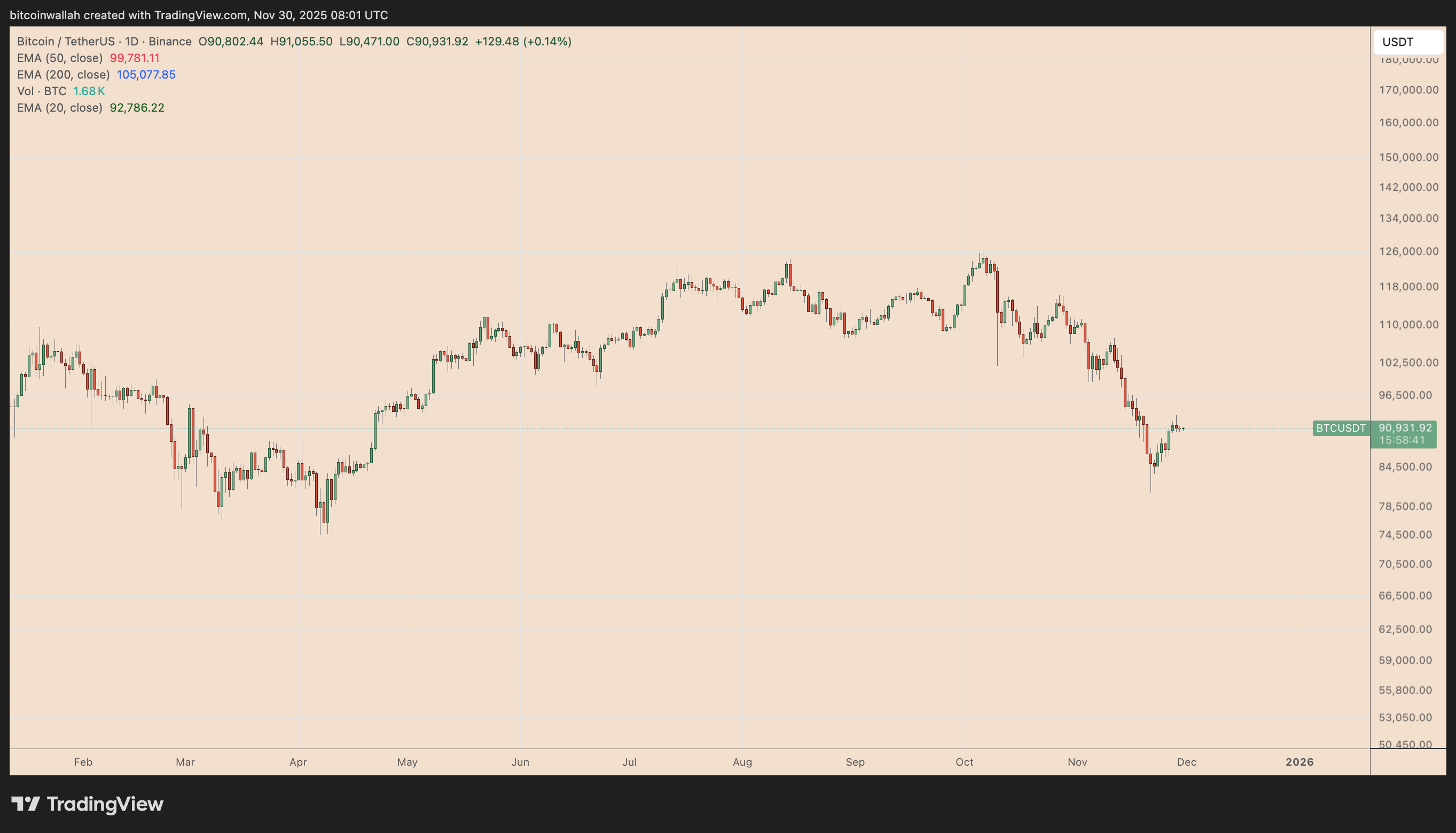
The speed and structure of the recovery are prompting some analysts to argue that the recent sell-off flushed out weak hands, rather than marking the start of a deeper downtrend.
Among them is Kyle Chassé, who points to derivatives positioning as the clearest evidence that the downside may be exhausted.
Bitcoin’s Funding Rates Reset Boosts The ‘Bottom Out’ Narrative
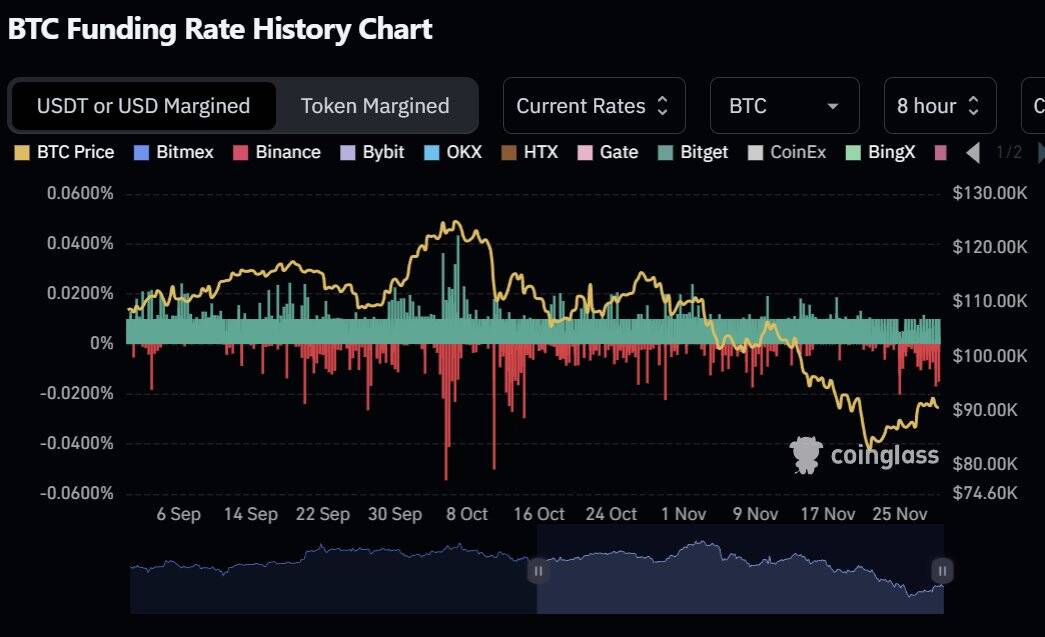
On Nov. 24, Bitcoin perpetual futures funding flipped negative, dropping to around −0.0033%, according to data from CoinGlass. It was the first sustained negative reading in over a month.
Negative funding means short sellers are paying a premium to maintain bearish positions, typically a sign that downside conviction is overcrowded. Historically, these conditions tend to appear near local bottoms, when fear peaks and sellers rush in late.
Chassé described the setup plainly: traders panicked, shorted the lows, and effectively paid stronger market participants to absorb their positions.
Just days later, funding rates have reset back to roughly 0.0023%, indicating that excess leverage has been flushed while price holds higher. For many professionals, the normalization of the bounce matters more than the bounce itself.
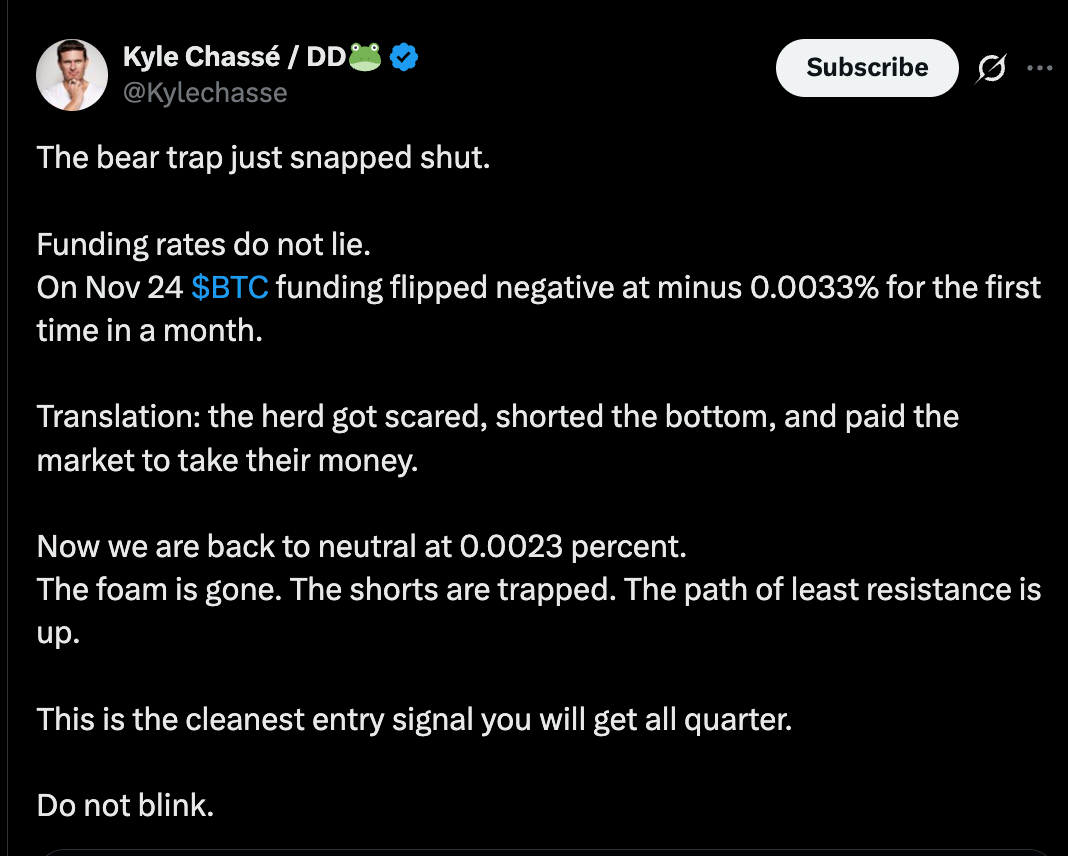
Markets tend to trend most efficiently when derivatives positioning is neutral, not euphoric. In that sense, the “foam” has already been removed.
The funding reset suggests that the recent rebound wasn’t driven solely by a short squeeze, but by an actual rebalancing of risk. Sellers are no longer pressing aggressively, while buyers are no longer using leverage to chase.
Bitcoin Price Forecast
Every new Bitcoin analysis as it publishes, today's technical signal and key levels, live price — on one page.
See all Bitcoin forecasts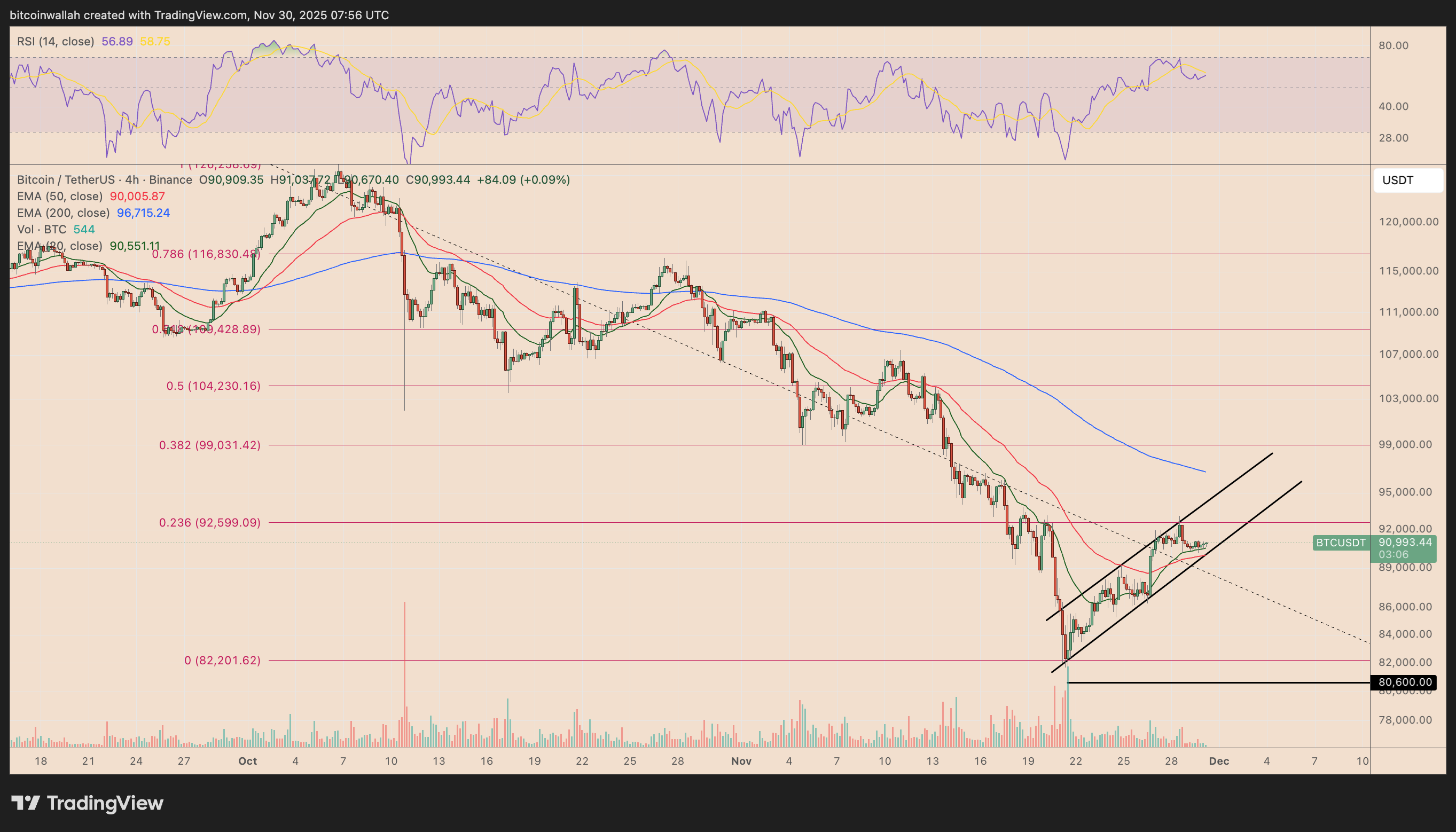
Momentum indicators, including RSI, rebounded from oversold levels without reaching extreme readings, suggesting recovery rather than exhaustion. Volume also spiked near the $80,600 low, a pattern commonly associated with capitulation rather than continuation.
As of Nov. 30, Bitcoin was eyeing a recovery rally toward $92,600. A break above the said resistance level could push the price further toward the 200-4H EMA (the blue wave) at around $96,660, with potential of wick formations toward the $99,000-100,000 area.