USD/JPY rebounded on a hawkish Fed, yet a packed Japanese data calendar and a looming BoJ rate decision leave the pair exposed to heightened volatility. The pair snapped a two-week losing streak in the week ending Friday, December 12, gaining 0.30% to close at 155.799.
The Fed’s dot plot and expectations of sticky inflation and a resilient labor market overshadowed strong Japanese wage growth and bets on a December BoJ rate hike.
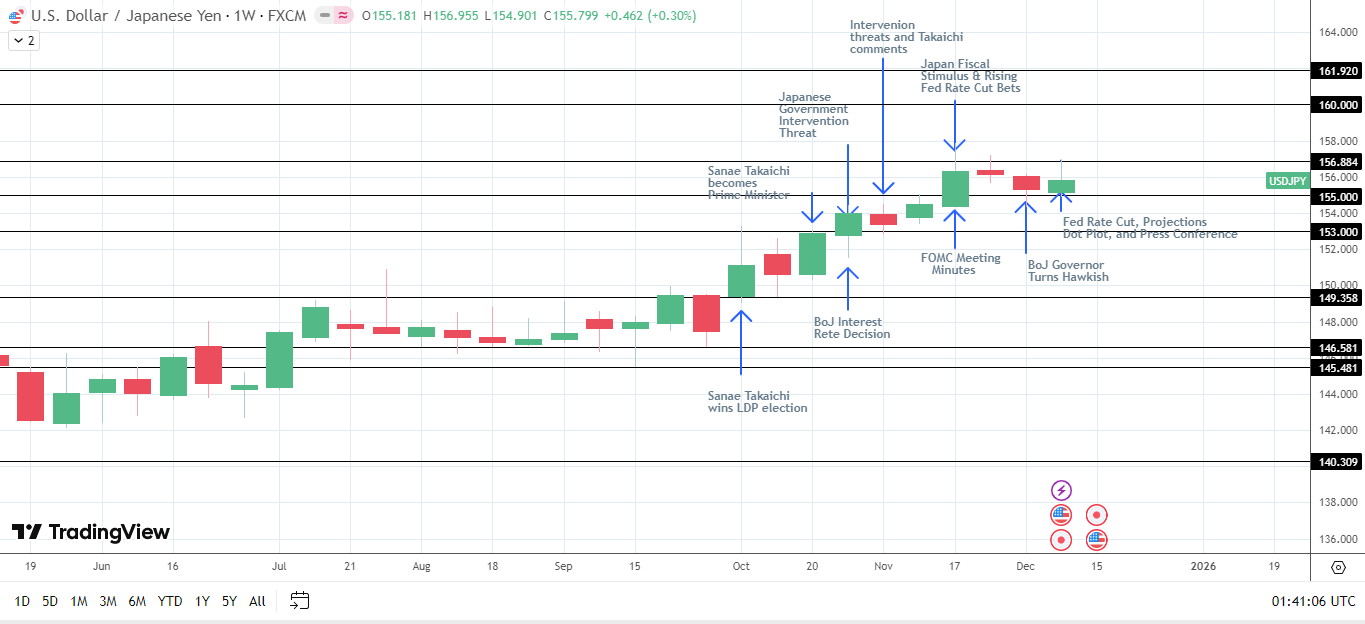
Despite the USD/JPY pullback, the BoJ rate hike, and the prospect of further hikes in 2026, support a bearish short- to medium-term outlook for USD/JPY.
Below, we examine the upcoming economic calendar, the medium-term catalysts (4-8 weeks), and the technical levels traders should watch.

Key Japanese Economic Indicators to Watch
In the week ahead, several Japanese economic indicators will influence sentiment toward the BoJ rate path. Key economic reports include Q4 Tankan survey, Services PMI, trade, and inflation data, ahead of the all-important BoJ monetary policy decision.
The Japanese economic reports and the BoJ’s monetary policy decision set the stage for a volatile week for USD/JPY. Notably, forecasts support a short- to medium-term bearish outlook for the pair.
USD/JPY Price Forecast
Every new USD/JPY analysis as it publishes, today's technical signal and key levels, live price — on one page.
See all USD/JPY forecastsTankan Surveys to Signal Sentiment toward US Tariffs
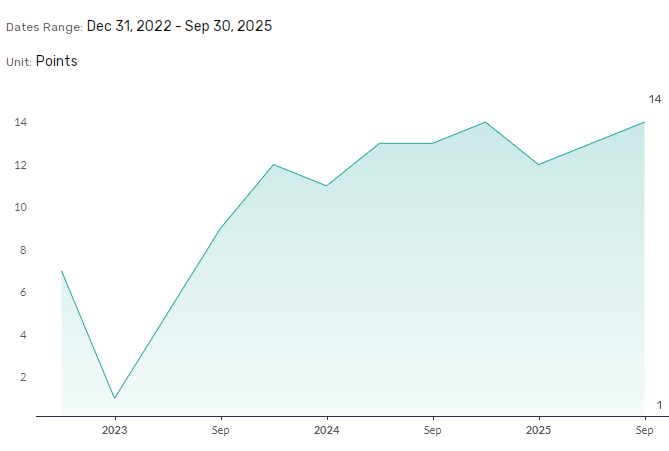
On Monday, December 15, the BoJ’s Tankan surveys will come under scrutiny. The Tankan Large Manufacturers Index is likely to be the key focal point, given the BoJ’s ongoing assessment of the effects of US tariffs on the Japanese economy.
Economists expect the Tankan Large Manufacturers Index to increase from 14 in Q3 to 15 in Q4. A higher reading would reflect an upswing in sentiment across larger manufacturers.
Improving sentiment would also signal increased business investment and higher wages, a focal point for the BoJ. Rising wages may boost household spending, fueling demand-driven inflation and lifting economic momentum. Private consumption accounts for roughly 55% of Japan’s GDP.
BoJ Governor Kazuo Ueda recently hinted at an imminent rate hike, citing wage growth and subsiding US tariff risks. A higher Tankan Large Manufacturers Index reading would align with Governor Ueda’s views, supporting a more hawkish BoJ policy stance and a stronger yen.
Japan’s Services Sector in the Spotlight
On Tuesday, December 16, preliminary private sector PMI data will be in focus. The S&P Global Services PMI will be the focal point, given that services account for around 70% of the GDP. Economists forecast the S&P Global Services PMI to drop from 53.2 in November to 51.6 in December.
While slower services sector activity may signal a loss of economic momentum, holding above the 50 neutral level will be key. Furthermore, traders should focus on the employment and prices sub-components. A tighter labor market, higher wage growth (input prices), and hotter inflation (output prices) would signal a more hawkish BoJ rate path.
Will Trade Data Greenlight a December Rate Hike?
On Wednesday, December 17, Japanese trade data will provide insights into the effect of US tariffs on demand. Economists predict exports to rise 4.8% year-on-year (YoY) in November, up from 3.6% in October. Imports are expected to rise 2.5% YoY in November, up from 0.7% in October.
A sharp pickup in external demand and robust imports would support Governor Ueda’s view that US tariff risks have diminished. Given Japan’s trade-to-GDP ratio is roughly 45%, improving trade terms would boost the economy and demand for the yen.
For context, external demand fell 0.2% quarter-on-quarter in Q3, contributing to a 0.6% economic contraction. However, the US reduced tariffs on Japanese goods from 25% to 15% in Q3, boosting external demand early in Q4.
Japanese National Inflation in Focus Pre-BoJ Policy Decision
On Friday, December 19, national inflation figures will draw interest ahead of the BoJ’s monetary policy decision. Economists forecast the so-called core-core annual inflation rate to remain at 3.1% in November. Steady or rising core-core inflation would boost expectations of a more hawkish BoJ monetary policy outlook.
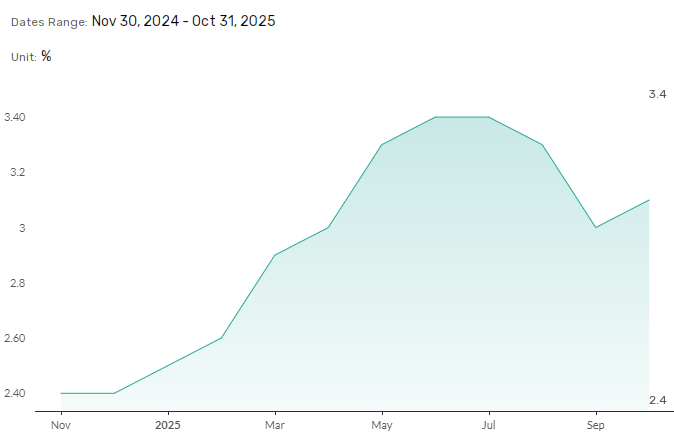
These forecasts align with the BoJ rate hike bets and a bearish short- to medium-term outlook for USD/JPY. However, the BoJ monetary policy decision and Governor Ueda’s press conference will be the main event of the week on Friday, December 19.
Will the BoJ Announce a Neutral Rate and 2026 Rate Hikes?
Shortly after the inflation report, the BoJ will announce its final monetary policy decision of 2025. Economists expect the BoJ to raise interest rates by 25 basis points to 0.75%.
Barring a surprise hold, the market focus will be on the BoJ’s forward guidance and hints on a neutral interest rate. A 1.5% – 2% neutral rate would point to multiple BoJ rate hikes, triggering a surge in yen demand, sending USD/JPY toward key support levels. A neutral interest rate is where monetary policy is neither accommodative nor restrictive, referred to as policy normalization by the BoJ.
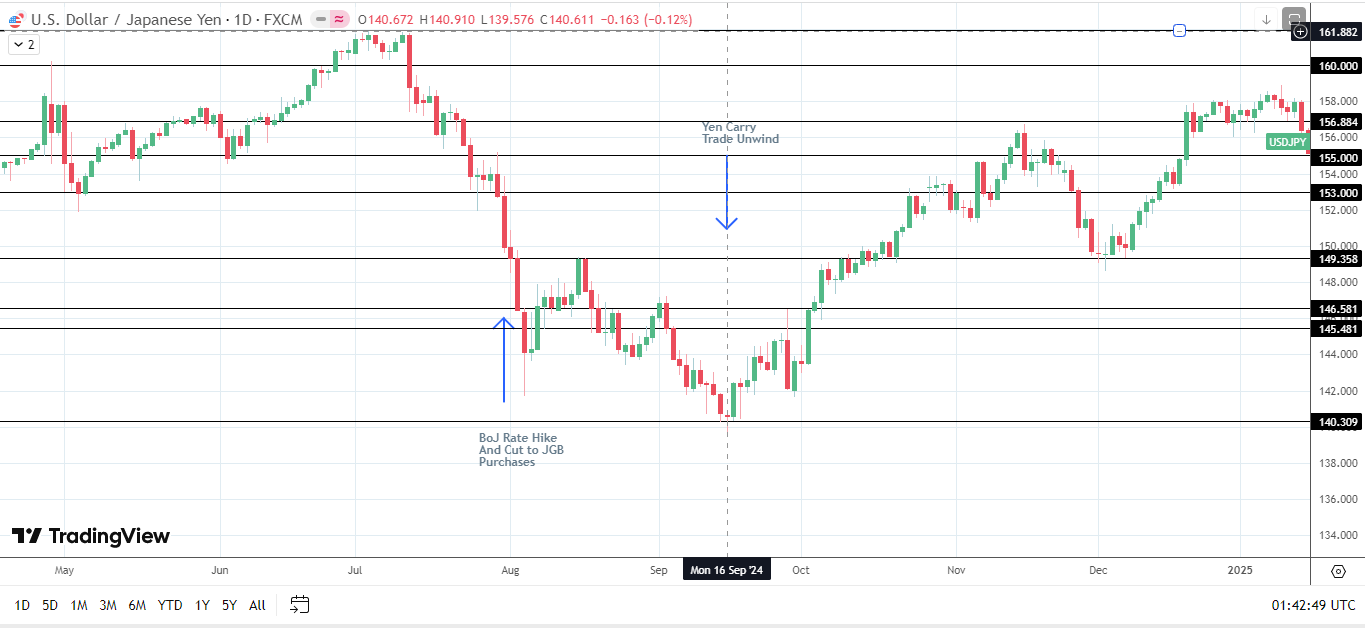
Crucially, a higher neutral rate and sharply higher Japanese Government Bond (JGB) yields and a stronger yen could trigger a yen carry trade unwind. An unwind would send USD/JPY lower, mirroring price trends in mid-2024, when the BoJ cut JGB purchases and raised rates.
Follow our real-time updates to stay ahead of USD/JPY market developments.
US Economic Calendar: The Fed Takes Center Stage
As markets await the BoJ’s monetary policy decision, US economic data will likely shift sentiment toward the Fed rate path. Three reports are likely to be the focal point for the markets alongside Fed chatter.
Key data releases for the week ahead include:
- Average hourly earnings (December 16). Forecast: 3.8% YoY in October vs. 3.8% in September.
- US unemployment rate (December 16). Forecast: 4.4% in October vs. 4.4% in September.
- Nonfarm payrolls (December 16). Forecast: 55k vs. 119k.
- S&P Global Services PMI (December 16). Forecast: 53.0 in December vs. 54.1 in November.
- Annual inflation rate (December 17). Forecast: 3.2% in November vs. 3.0% in September. (There was no October CPI Report because of the US government shutdown).
Rising inflation, a resilient US labor market, and a modest drop in the Services PMI would support the Fed’s one rate cut forecast for 2026. Fading bets on a Q1 2026 Fed rate cut would strengthen the US dollar, sending USD/JPY higher.
According to the CME FedWatch Tool, the probability of a March 2026 Fed rate cut stood at 49.5% on December 12, up from 46.5% on December 5. Shifts in the chances of a March cut will be key for US dollar demand. FOMC members’ reactions to the US economic data will also influence sentiment toward the Fed rate path.
Market View: Medium-Term Yen Strength
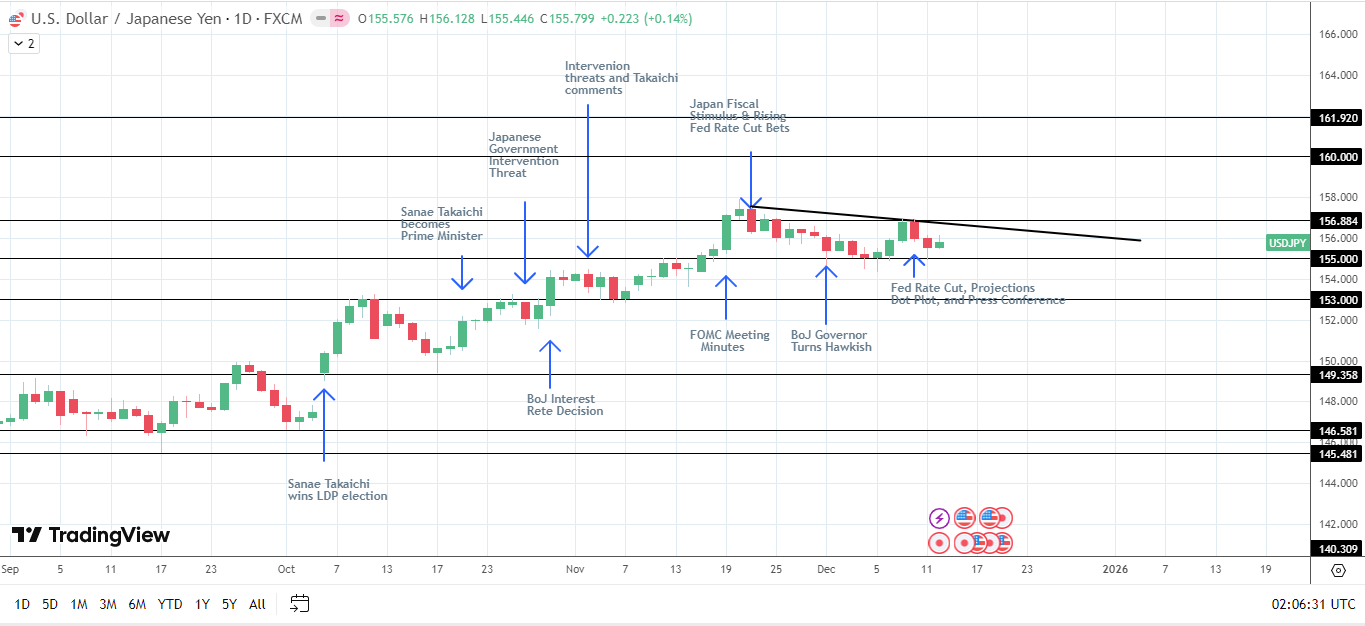
In my opinion, USD/JPY would likely drop toward 150 on a BoJ rate hike and expectations of a Q1 2026 Fed rate cut. A dovish Fed policy stance and a hawkish BoJ would support the bearish medium-term outlook. A break below 150 would support the medium-term (4-8 weeks) to longer-term (8-16 weeks) 140-130 range.
Counter-Trend Risks: What Could Push USD/JPY Toward 160?
Upside risks include:
- Strong US jobs and inflation data.
- Hawkish Fed rhetoric.
- Weaker Japanese economic data.
- Dovish BoJ rate hike.
Despite the upside risks, yen intervention warnings would likely cap the upside around 160. Given the upside risks, a rise above the 157.893 November 20 high would invalidate the medium-term bearish structure.
For context, yen intervention threats and the risk of the Japanese government intervening capped USD/JPY at 157.893 in November.
Financial Analysis
Technical Outlook: Bearish Momentum Building
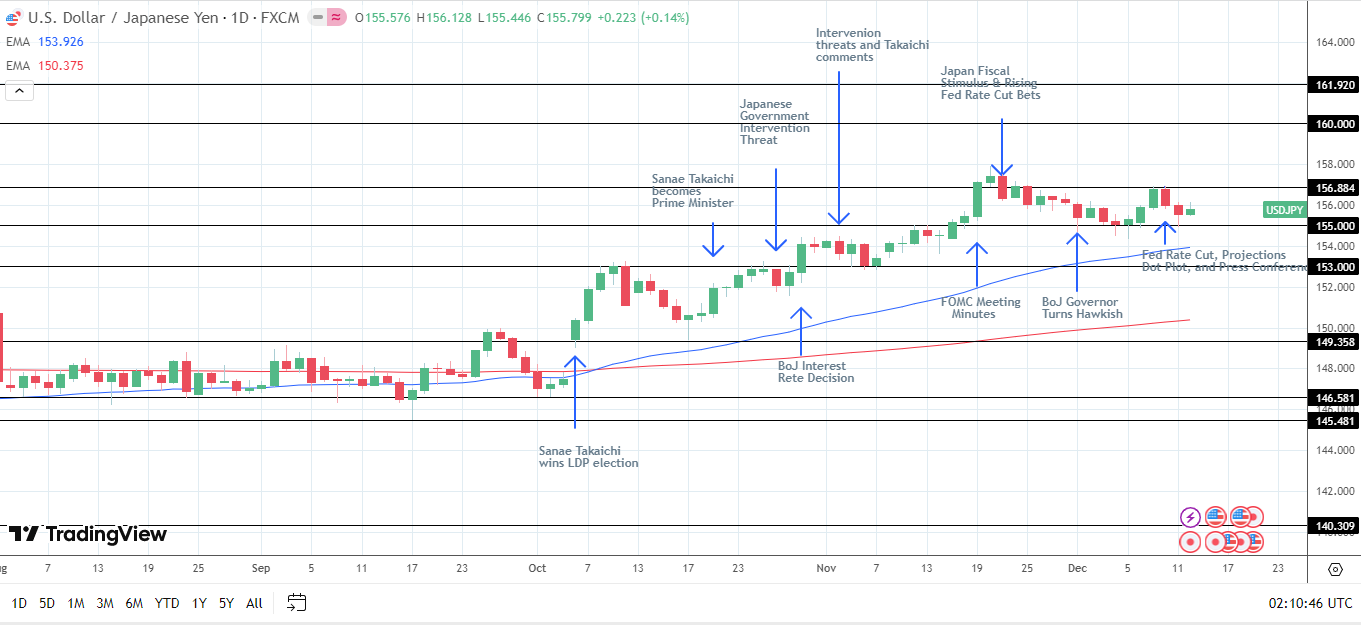
On the daily chart, USD/JPY remained above the 50- and 200-day Exponential Moving Averages (EMAs), signaling a bullish bias. However, fundamentals are beginning to diverge sharply from the technical trend.
A drop below the 155 support level would expose the 50-day EMA. If breached, 153 would be the next support level. A sustained fall below 153 would bring the 200-day EMA and the 150 support level into play. Importantly, a break below the 50-day EMA would signal a near-term bearish trend reversal, supporting the bearish short- to medium-term outlook.
Key Takeaways
The USD/JPY pair has gained 5.41% in the fourth quarter, taking H1 2025 gains to 8.21%. A hawkish BoJ rate hike would indicate a narrowing rate differential, supporting a bearish short- to medium-term outlook for USD/JPY.
Yen carry trade unwind risks and the prospect of further policy divergence set up a bearish outlook.
Key levels will include 155, 150, and 140 on the downside, and 160 on the upside.
Consult our economic calendar for historical and upcoming data.