
Following our initial analysis (Micron Technology: The Stakes for Wednesday’s Earnings Report (Part 1)), which covered the importance of Wednesday’s earnings report, examined how Micron is riding the AI wave, and detailed the company’s strategic investments and technological leadership, we now turn to the critical risks and key metrics investors must be aware of before investing in the Micron Technology.

The Cyclical Shadow: Understanding the Risks
Still, important risks could temper the bullish narrative surrounding Micron’s prospects.
The memory semiconductor industry remains profoundly cyclical, characterized by boom-bust patterns driven by capacity additions, demand fluctuations, and the commodity nature of memory chips. While the current upcycle appears robust thanks to AI-related demand, history shows that periods of tight supply and elevated pricing inevitably attract capacity expansion that eventually leads to oversupply and price collapses. Micron itself experienced severe losses in fiscal 2023, with adjusted net margin hitting negative 56.3% in the second quarter as DRAM prices plummeted amid overcapacity.
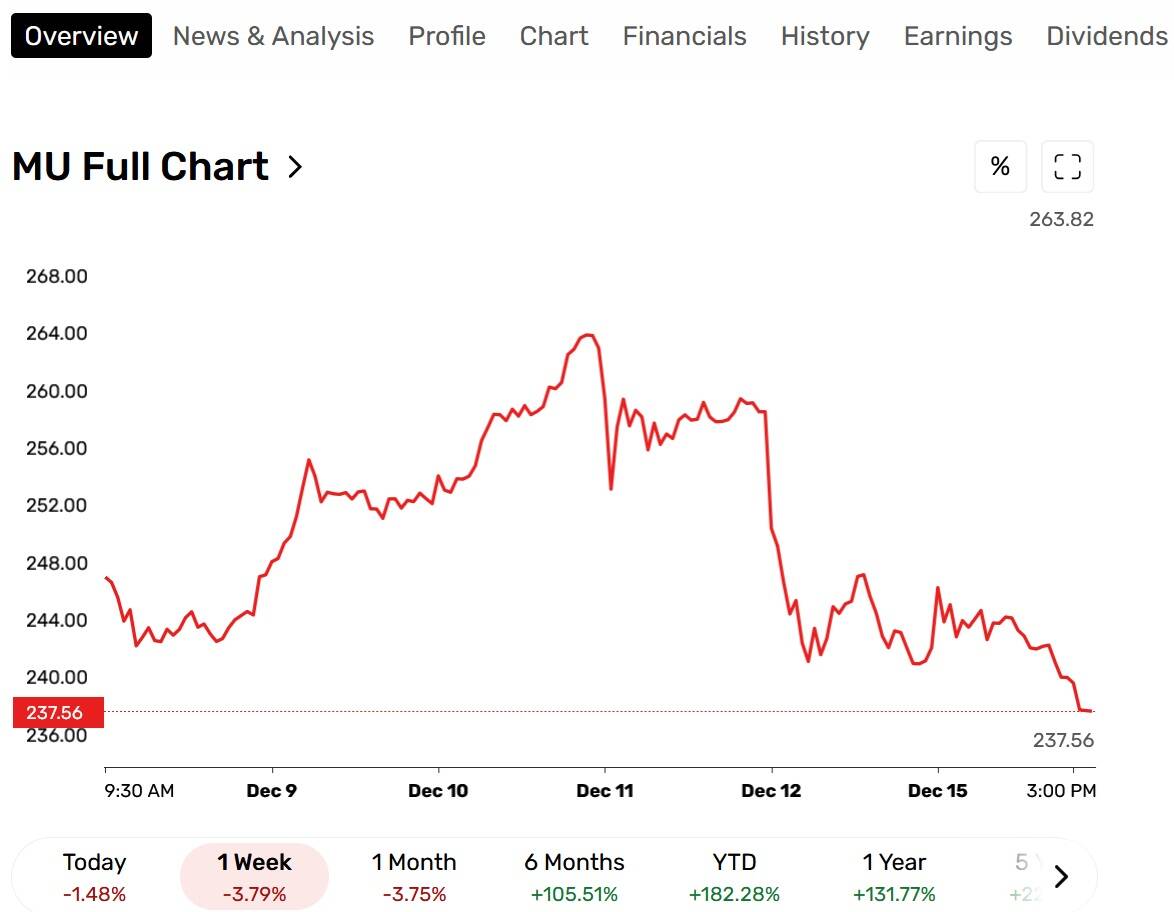
The company’s valuation reflects optimistic assumptions about sustained demand growth and pricing discipline across the industry. Trading at approximately 31 times trailing earnings, Micron’s multiple appears elevated relative to historical norms, though supporters argue this is distorted by the company’s recent emergence from a severe downturn. The forward price-to-earnings ratio of roughly 14 based on fiscal 2026 estimates suggests the stock is reasonably valued if the company can deliver on projections, but any shortfall would likely trigger significant multiple compression.
Competition from South Korean giants Samsung and SK Hynix represents another persistent threat. SK Hynix has established itself as the undisputed leader in HBM with over 60% market share and maintains the position as Nvidia’s primary supplier, having qualified its HBM3E products for the critical Blackwell platform. Samsung, despite recent struggles in HBM qualification, possesses enormous scale advantages, deep financial resources, and is investing aggressively to regain momentum.
Both Korean competitors operate at larger scale than Micron in total memory production, providing cost advantages and greater flexibility to weather industry downturns. The race to develop and mass-produce next-generation HBM4 memory, expected to launch in 2026, will prove crucial in determining market share dynamics. Micron has begun shipping HBM4 samples rated at up to 11 gigabits per second and is collaborating with foundry partners on future HBM4E variants, but success requires not only technical achievement but also securing qualification from key customers like Nvidia amid intense competition.
Geopolitical tensions, particularly regarding China relations and potential trade restrictions could disrupt supply chains or limit market access. The broader macroeconomic environment presents additional considerations. Concerns about an AI spending slowdown or “bubble” have periodically roiled technology stocks in recent months, with some market participants questioning whether current infrastructure investment levels are sustainable. While hyperscale cloud providers have continued expanding data center capacity, any deceleration in their capital expenditure plans would directly impact memory demand.
Micron’s aggressive capital spending program, with estimates of $4.5 billion for the fiscal first quarter alone, creates execution risk as the company must successfully bring multiple new fabs online while maintaining yield and cost competitiveness. The multi-year timeline from groundbreaking to volume production means these investments will generate returns only if demand remains strong years into the future. Memory oversupply concerns persist despite currently tight market conditions, as substantial capacity additions from all major manufacturers are scheduled to come online through 2027.
What Traders Must Watch on December 17
Several major investment banks have raised price targets ahead of the report, with Morgan Stanley boosting its target to a Street-high $338 and reiterating its view that Micron represents the best AI investment opportunity. Deutsche Bank increased its target from $200 to $280, HSBC initiated coverage with a Buy rating and $330 target, UBS maintains a Buy rating with a $275 target, and Citi raised his target to $300 from $275 while expecting a significant beat and raise.
For the upcoming earnings report, traders and investors should focus on several key metrics and management commentary topics:
- Average selling prices for DRAM and NAND will indicate whether pricing momentum continues or shows signs of peaking.
- Inventory levels provide crucial forward-looking insight into supply-demand balance, with rising inventories potentially signaling weakening demand or oversupply pressures.
- HBM revenue growth and market share gains will be critical to assess whether Micron can maintain its upward trajectory against SK Hynix and Samsung.
- Gross margin progression will reveal whether cost structure improvements and pricing power are sustainable or beginning to compress.
- Management’s guidance for the fiscal second quarter will set expectations for the remainder of the year and could significantly impact the stock regardless of Q1 results.
- Commentary on capital expenditure plans and capacity expansion timing will help investors gauge the company’s confidence in long-term demand.
- Updates on customer qualification status for HBM3E and HBM4 products, particularly with Nvidia and other AI chip manufacturers, will be closely scrutinized.
Bottom Line
Ultimately, Micron represents a high-risk, high-reward investment proposition. For investors with conviction that artificial intelligence will continue driving exponential growth in memory demand, that industry supply discipline will prevent catastrophic oversupply, and that Micron can successfully execute its capacity expansion plans while competing effectively against better-capitalized Korean rivals, the current valuation may prove attractive given projected earnings growth. The company’s position as the sole American memory manufacturer at scale provides certain strategic advantages, including preferential treatment under CHIPS Act funding and reduced geopolitical risk for customers seeking supply chain diversification.
However, investors must also recognize the real possibility of a cyclical downturn, competitive share losses, or an AI spending slowdown that would dramatically impact results. The Wednesday earnings report will provide crucial data points to assess which scenario appears more likely, but given the stock’s tripling year-to-date and elevated expectations embedded in current prices, even solid results may disappoint if they fail to exceed consensus estimates by a meaningful margin. Those considering positions should weigh their risk tolerance carefully and recognize that Micron’s business model inherently involves accepting cyclical volatility in exchange for participation in secular technology growth trends.
Sources: Wall Street Journal, Reuters, CNBC, SeekingAlph, Micron Technology, Nasdaq, TradingView, Yahoo Finance, CounterPointResearch