



Market Overview
WTI crude traded near $57.70 per barrel, hovering close to a two-month low as oversupply concerns continued to weigh on prices. Still, broader geopolitical tensions injected fresh uncertainty into the energy outlook.
Ongoing security risks around key production, storage, and shipping hubs have raised fears of supply disruptions, even as global inventories remain elevated. Activity near major export routes and infrastructure has kept risk premiums modestly supported, limiting downside momentum.
For natural gas, similar dynamics are in play, with prices sensitive to regional instability and seasonal demand shifts. Overall, energy markets remain caught between ample supply and geopolitical risks that could quickly tighten balances.
Natural Gas Price Forecast
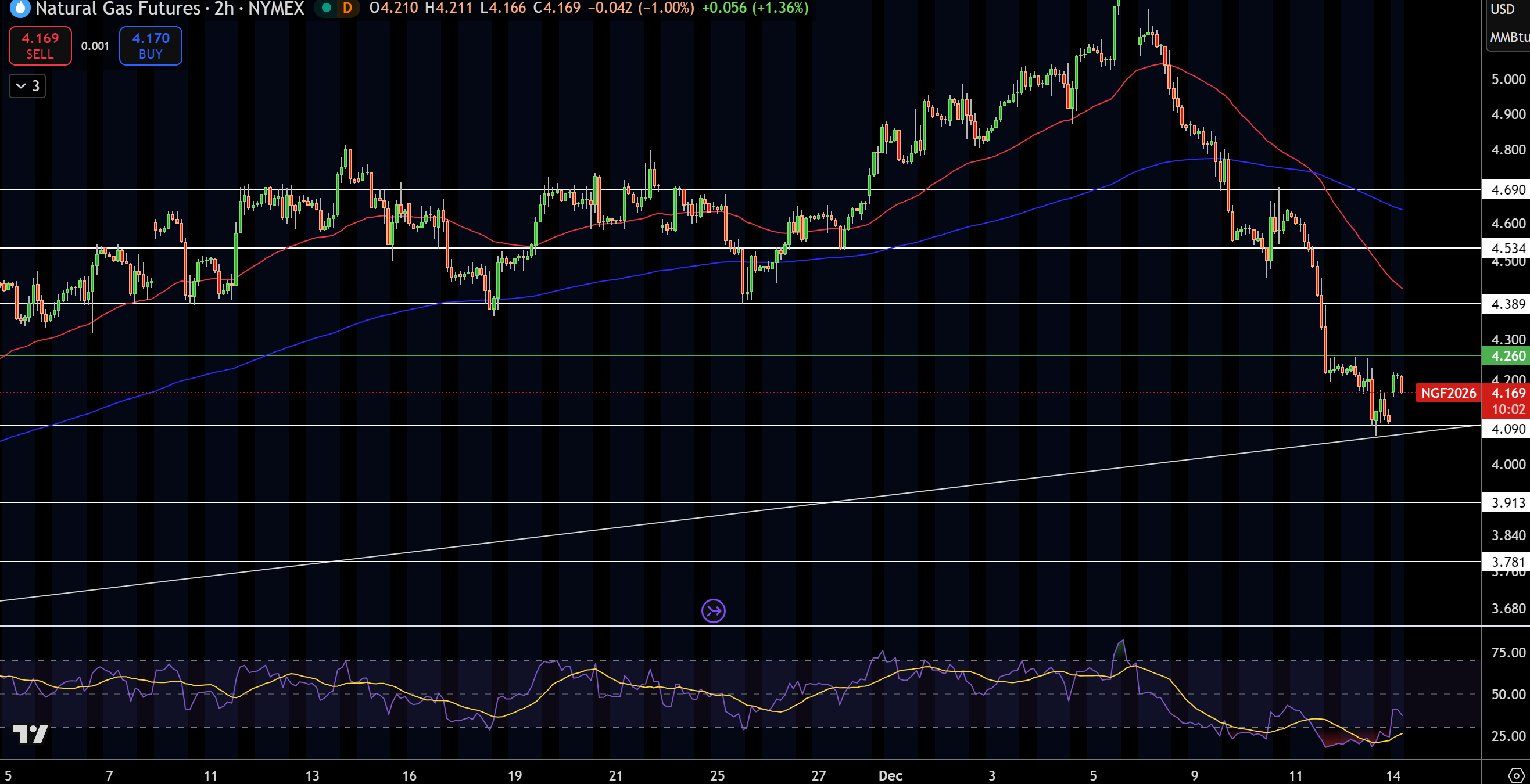
Natural gas futures are trading near $4.19 on the 4-hour chart after a sharp pullback from the $4.90 area. Recent candlesticks show long bearish bodies followed by smaller consolidation candles, indicating selling pressure has slowed but not fully reversed. Price is testing a key trendline support near $4.10, which aligns with a prior consolidation zone.
The broader structure remains corrective after breaking below the 50-EMA around $4.45, with price also slipping under the 100-EMA near $4.53, shifting short-term control to sellers. Immediate support sits at $4.10, followed by $3.91. A break lower could expose $3.78.
On the upside, resistance stands at $4.30, then $4.38. RSI is near 30, signaling oversold conditions, which may allow short-term stabilization before the next directional move.
WTI Oil Price Forecast
Natural Gas Price Forecast
Every new Natural Gas analysis as it publishes, today's technical signal and key levels, live price — on one page.
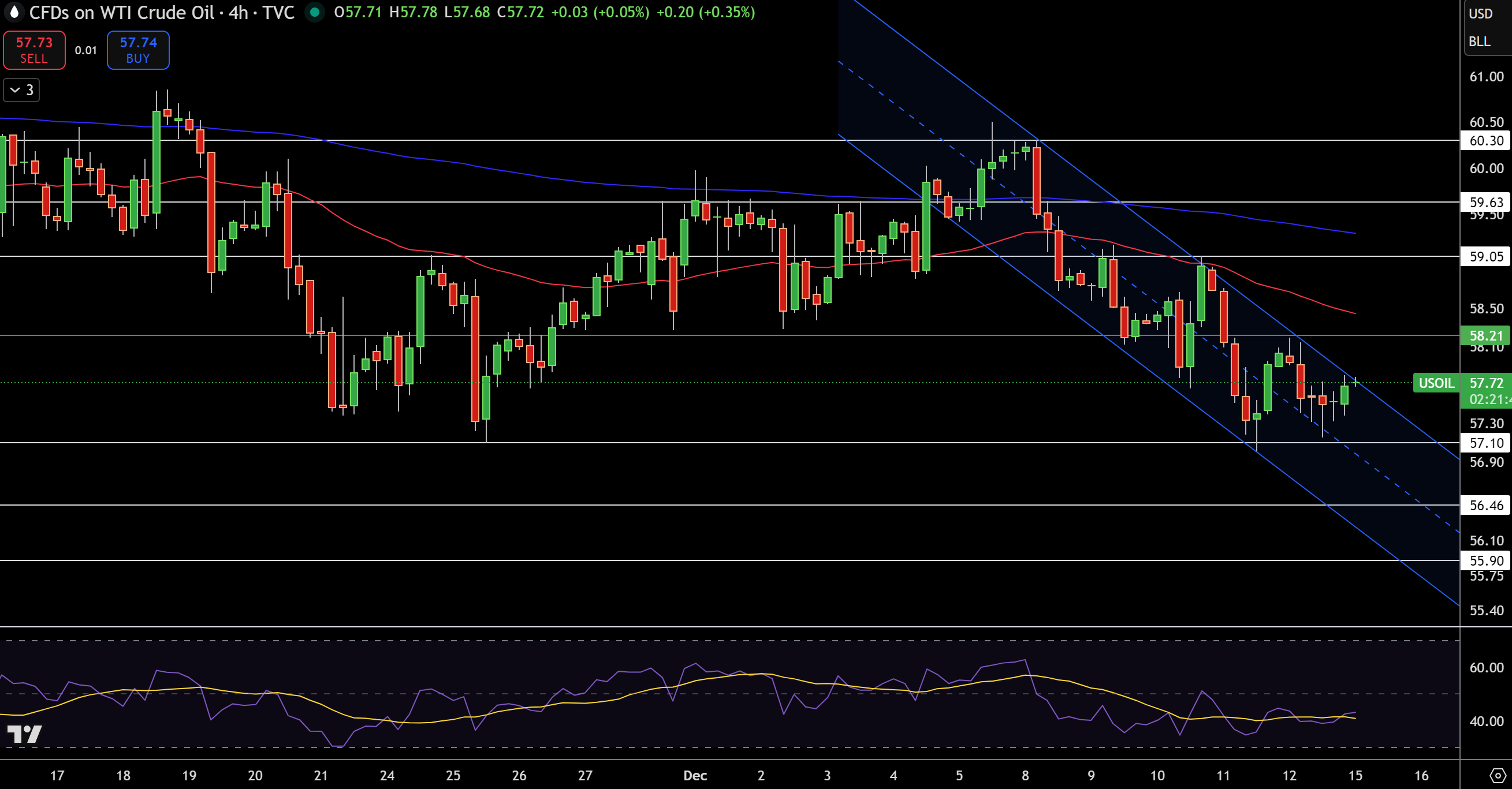
See all Natural Gas forecastsWTI crude oil is trading near $57.70 on the 4-hour chart after stabilizing inside a clearly defined descending channel. Recent candlesticks show smaller bodies with mixed wicks, pointing to short-term indecision rather than strong selling pressure. Price is holding just above $57.30 support, which has acted as a short-term floor multiple times this month.
The broader structure remains bearish, with price capped below the 50-EMA near $58.50 and the 100-EMA around $59.60. The descending trendline continues to limit upside attempts, keeping rallies contained. A break below $57.30 would expose $56.45, aligned with the channel base and a prior horizontal level.
On the upside, resistance sits at $58.20, then $59.05. RSI is near 45, reflecting weak momentum without oversold conditions, suggesting range-bound trade within the channel.
Brent Oil Price Forecast
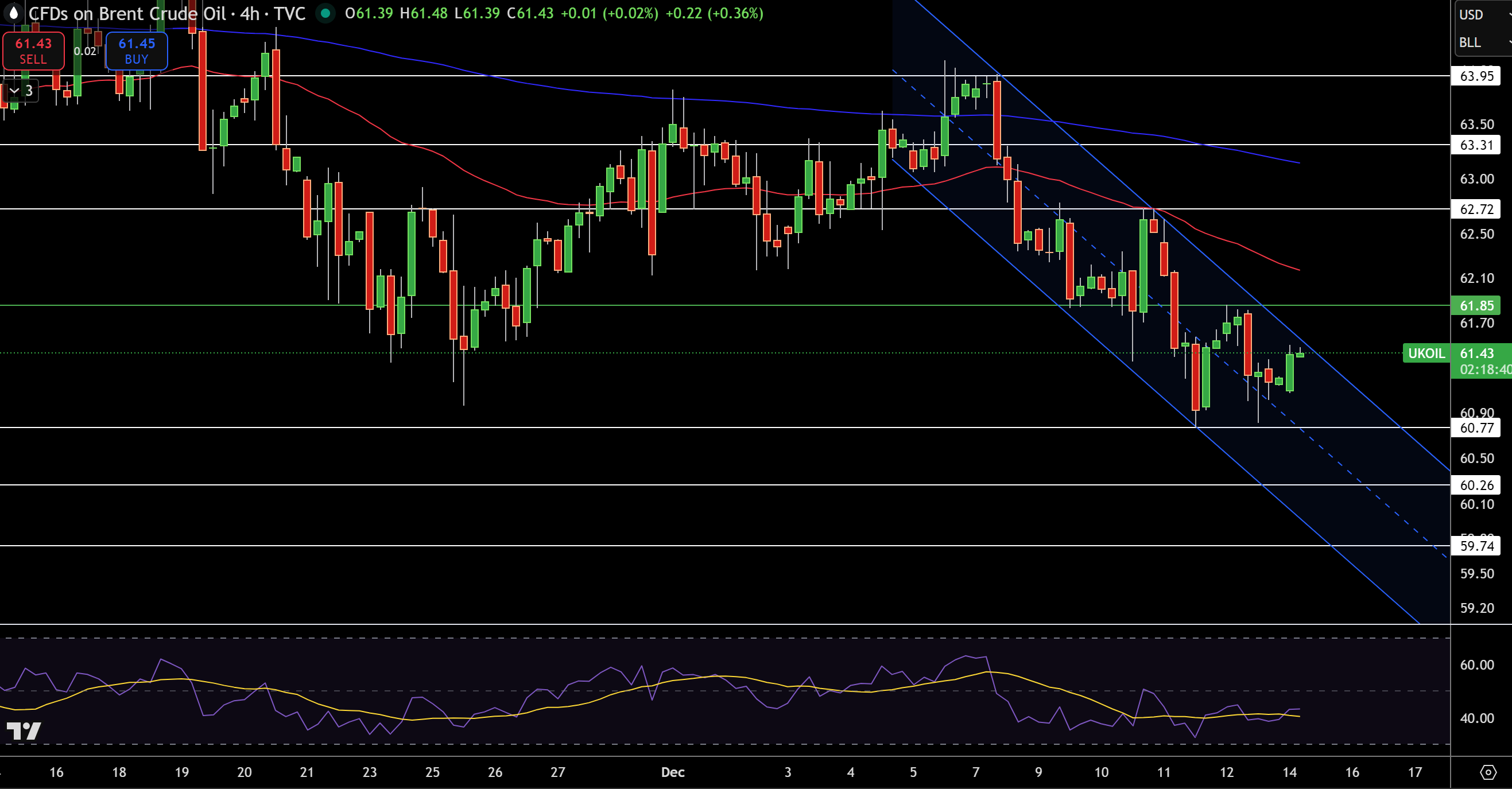
Brent crude is trading near $61.40 on the 4-hour chart, holding within a well-defined descending channel that has guided price lower since early December. Recent candlesticks show modest rebounds with long lower wicks, suggesting buyers are defending dips rather than chasing breakouts.
Price remains capped below the 50-EMA around $62.10 and the 100-EMA near $63.30, keeping the broader bias tilted lower.
Immediate support sits at $60.75, followed by $60.25, which aligns with the lower channel boundary. A clear break below this area would expose $59.75. On the upside, resistance is seen at $61.85, then $62.70, where prior support and the channel top converge. RSI is near 45, pointing to weak momentum without oversold conditions, favoring consolidation within the channel.