
Natural Gas Edges Higher as Cold Weather Sets the Tone
Natural gas futures are firming up again on Friday, with the January contract eyeing a potential breakout toward the $5.341 level. The move comes as colder-than-normal weather forecasts tighten the near-term outlook, injecting volatility back into a market that had already been heating up this week. Traders now face a classic setup: buy into strength or wait for a pullback. Either way, risk is on the table.
At 13:17 GMT, January Natural Gas Futures are trading $5.225, up $0.162 or +3.20%.

Is the Cold Snap Enough to Sustain the Rally?
Prices climbed 1.36% on Thursday, recovering from early session losses to hit their highest level in nearly three years. The driver? Fresh forecasts from Atmospheric G2 showing sub-normal temperatures across the eastern U.S. from December 9–13. That’s pushing expectations for stronger heating demand, a key seasonal tailwind. Traders have seen this pattern before — winter risk premium creeping in fast, and positioning tends to follow.
Still, not all the data was bullish. The EIA reported a storage draw of just 12 bcf for the week ending November 28, well below expectations for an 18 bcf drop. The five-year average draw for this week is 43 bcf. That’s a miss, and it shows inventories remain comfortable — now 5.1% above the five-year average, even if they’re slightly below last year’s levels. Bottom line: storage isn’t screaming scarcity.
Strong Demand, But Supply Isn’t Backing Off
On the production front, dry gas output hit 111.5 bcf/day on Thursday, up more than 6% from a year ago. And despite the cold snap, supply hasn’t flinched. In fact, active rigs climbed to 130 last week, a 2.25-year high. That supply confidence might cap upside in the near term unless weather turns severe.
Demand is holding up. Thursday’s lower-48 consumption hit 118.1 bcf/day — a 12% jump year-over-year. Meanwhile, LNG flows ticked down slightly to 17.7 bcf/day, but that’s still a historically strong level. Power burn is also supportive: U.S. electricity output rose 2.1% y/y last week, with a 3% gain over the trailing 12 months. Traders are watching for whether this demand can keep pace with elevated production — or if another storage miss cools the rally.
Natural Gas Price Forecast
Every new Natural Gas analysis as it publishes, today's technical signal and key levels, live price — on one page.
See all Natural Gas forecastsCan Prices Push Through Resistance — or Will the Dip Get Bought?
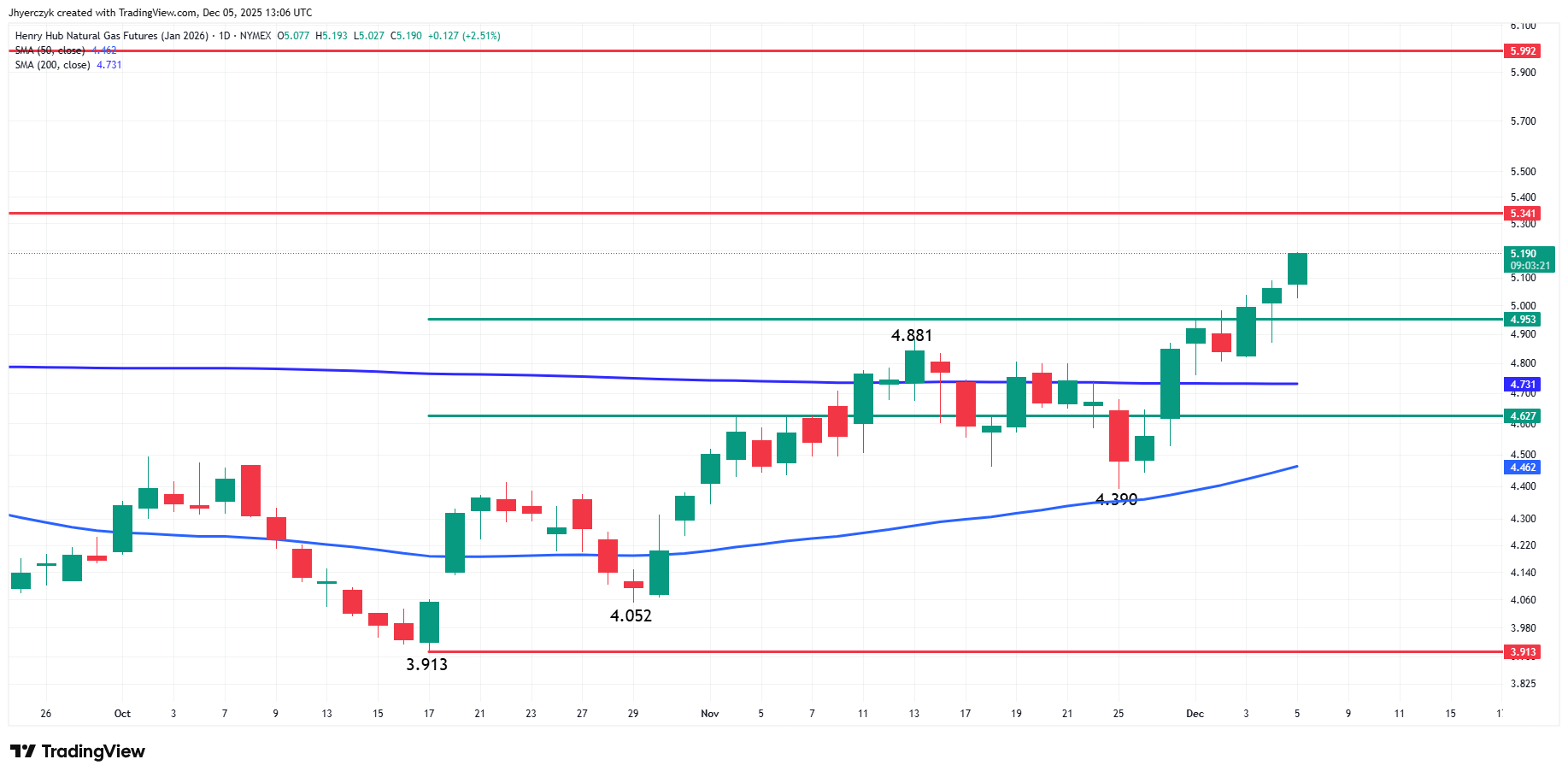
The technicals are lining up. Resistance sits at $5.341, and price action is flirting with that breakout zone. If bulls punch through, we could see another leg higher — but it’s not a sure thing. On the downside, key support comes in at $4.953, with the 200-day moving average just below at $4.731. That dip zone could attract buyers if the rally stalls or if weather models shift.
Short-Term Outlook: Bullish, With a Weather-Driven Caveat
The market remains bullish short-term, but this is a weather trade — and weather trades cut both ways. If cold holds, momentum likely continues. But any moderation in the forecast, or another soft EIA print, could open the door for profit-taking. Traders should stay nimble. This isn’t a time to get complacent.
More Information in our Economic Calendar.