
Warm Weather Outlook and Long Liquidation Weigh on Nat-Gas Futures
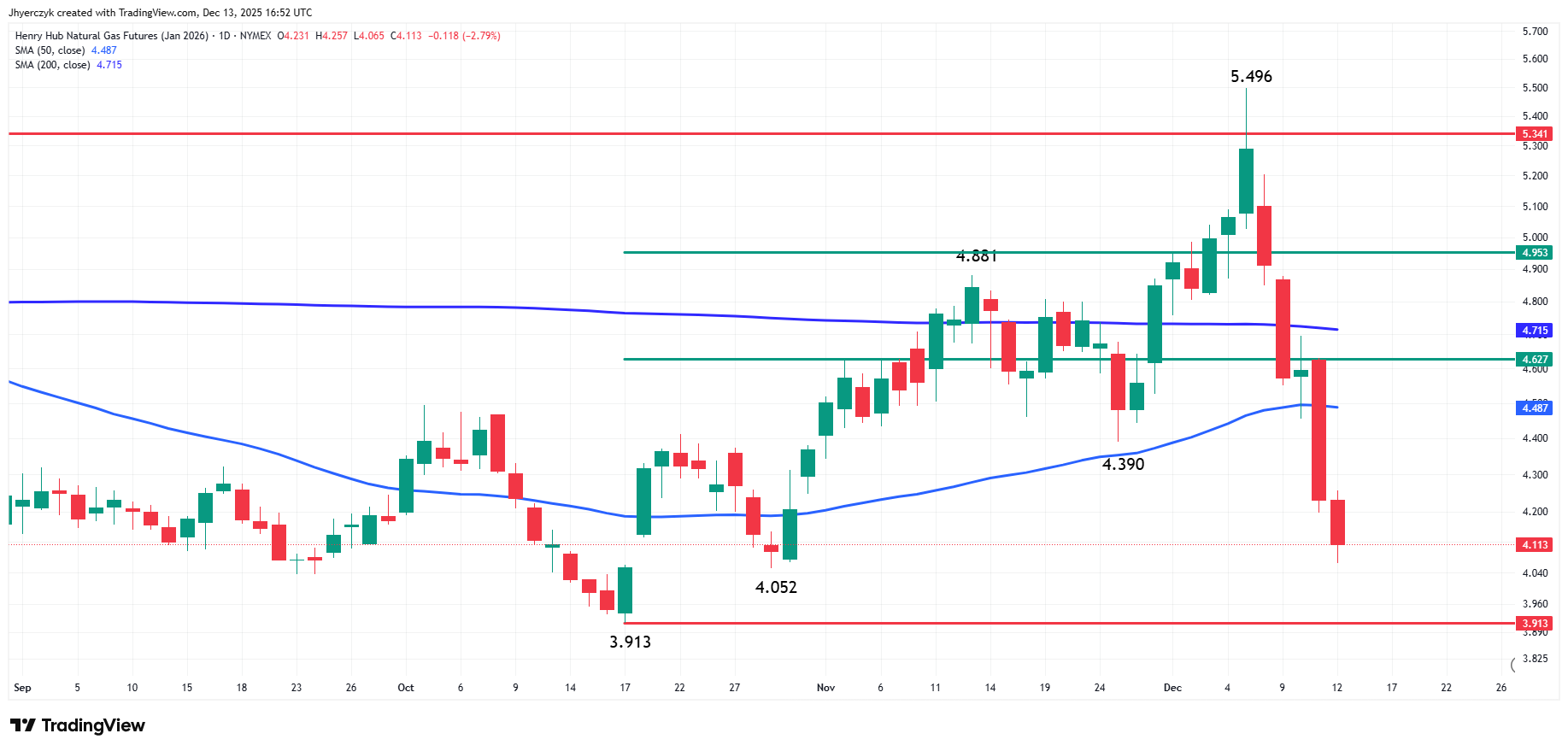
Henry Hub January 2026 natural gas futures extended their decline on Friday, falling 2.79% to settle at $4.112—bringing the contract within striking distance of the October 29 low at $4.052. The sharp pullback has now wiped out the entire November rally, as traders unwind long positions built on expectations of a colder winter. With above-normal temperature forecasts cutting into heating demand, downside momentum has reasserted control.
This week’s selling has been driven by long liquidation after the market broke decisively below both the 50-day and 200-day moving averages, triggering stop-outs. Many longs entered on bets of a technical bounce or abrupt cold snap, but continued mild outlooks have emboldened shorts. With support near $4.052 nearly tested, eyes are on the next target at $3.913 if warmth persists.

Are milder forecasts reducing winter heating demand expectations?
Yes. Atmospheric G2 projects widespread warmth across the western, central, and southern U.S. between December 17–26. That shift has quickly unwound last week’s rally to a nearly three-year high. Lower-48 gas demand on Friday was estimated at 110.6 bcf/day, down 3.4% year-over-year, showing the direct impact of weaker weather-driven consumption.
Is production strength reinforcing bearish sentiment?
Strongly. U.S. dry gas production hit 112.5 bcf/day on Friday, up 7.1% from a year ago, according to BNEF. The EIA also raised its 2025 production forecast to 107.74 bcf/day. While the active rig count slipped by 2 to 127, it remains just below a 2.25-year high. Robust supply in the face of weak demand continues to pressure prices lower.
Can a bullish storage draw offer near-term price support?
Limited. The EIA reported a -177 bcf draw for the week ending December 5—larger than both consensus and the five-year average—but inventories remain 2.8% above seasonal norms and flat year-over-year. European storage sits at 71% capacity, well below its five-year average of 81%, but LNG flows to U.S. terminals fell 3% week-over-week to 18.1 bcf/day.
Short-Term Outlook: Is further downside likely?
Bearish. With warmer forecasts extending through late December and long liquidation still in play, sellers remain in control. While some technical indicators may be signaling oversold conditions—raising the risk of a short-covering rally—any bounce must be evaluated carefully.
Natural Gas Price Forecast
Every new Natural Gas analysis as it publishes, today's technical signal and key levels, live price — on one page.
See all Natural Gas forecastsTraders need to distinguish between technical retracements and rallies tied to a meaningful bullish shift in the weather outlook. Continued guessing will be punished, as fundamentals will ultimately prevail. Unless forecasts turn colder or prices find firm support near $3.913, the downside bias remains intact.
More Information in our Economic Calendar.