Oil prices dropped as peace talks between Russia and Ukraine progressed, reducing geopolitical risk premiums. U.S. officials proposed NATO-style guarantees for Ukraine, raising hopes of a deal that could ease sanctions and restore some Russian crude flows. This prospect pulled prices lower as traders priced in improved future supply.
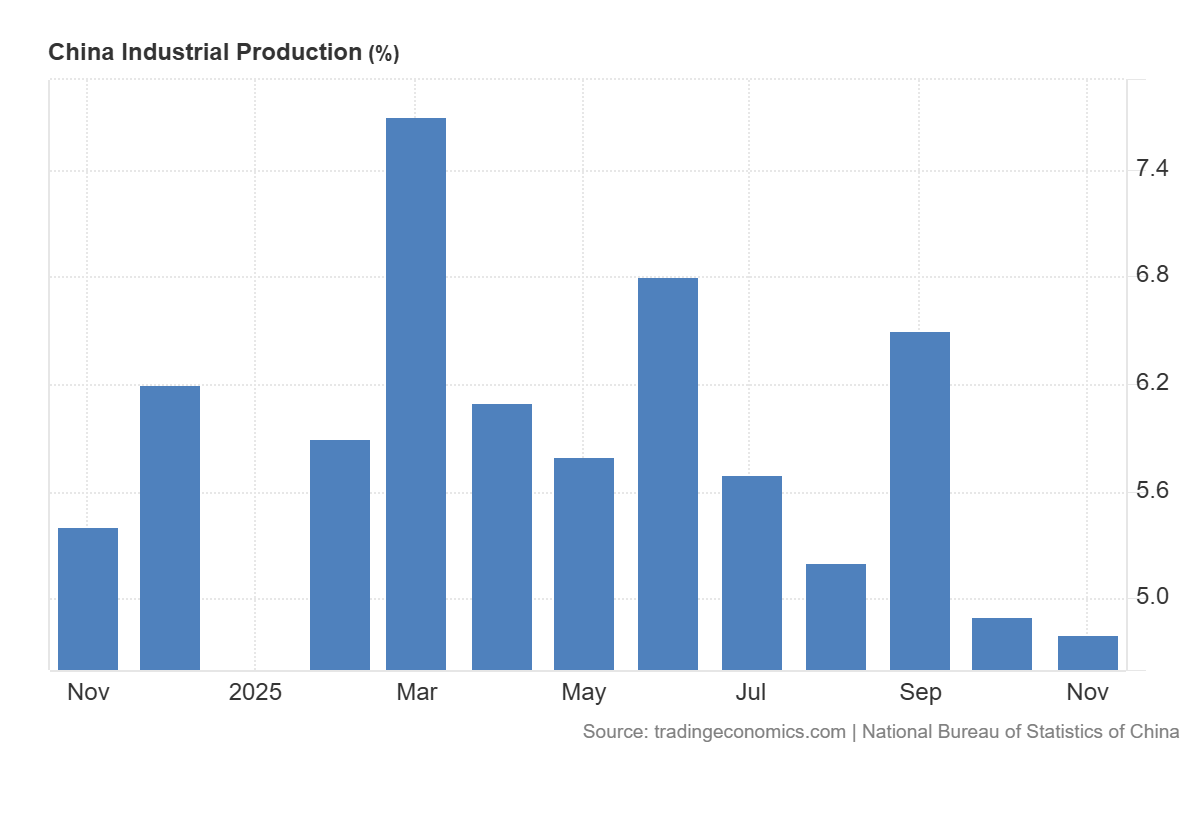
At the same time, disappointing economic data from China added to downside pressure. Industrial output slowed to a 15-month low, and retail sales growth hit its weakest in nearly three years. The chart below shows that China’s industrial production grew by 4.8% year-on-year in November 2025, slightly easing from a 4.9% increase in the previous month. These signals raised doubts about global oil demand in 2026, especially from the world’s largest importer.
The easing of geopolitical tensions and weak economic data from China created a bearish setup for crude oil. WTI crude (CL) and Brent crude (BCO) dropped about 0.6% in early trading, reflecting increased caution among traders. Unless new supply disruptions or stronger demand signals emerge, oil is likely to struggle to regain upward momentum in the near term.
WTI Crude Oil (CL) Technical Analysis
WTI Oil Daily Chart – Bearish Pressure
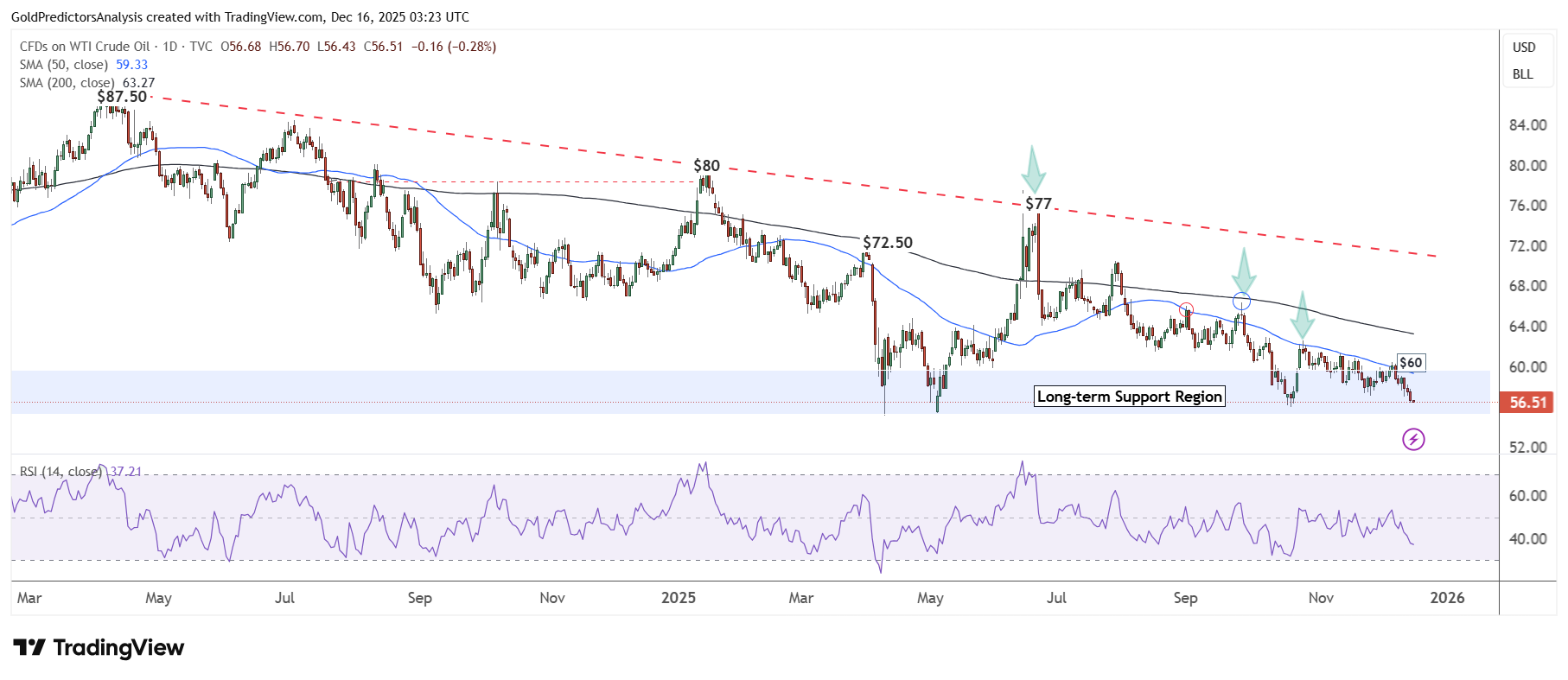
The daily chart for WTI crude oil indicates that the price has entered the long-term support region, located between the $55 and $60 area. Strong bearish pressure within this zone increases the possibility of a breakdown below the $55 level. A confirmed move below $55 would open the door for a sharp decline in WTI prices.
Natural Gas Price Forecast
Every new Natural Gas analysis as it publishes, today's technical signal and key levels, live price — on one page.
See all Natural Gas forecastsWTI Oil 4-Hour Chart – Negative Trend
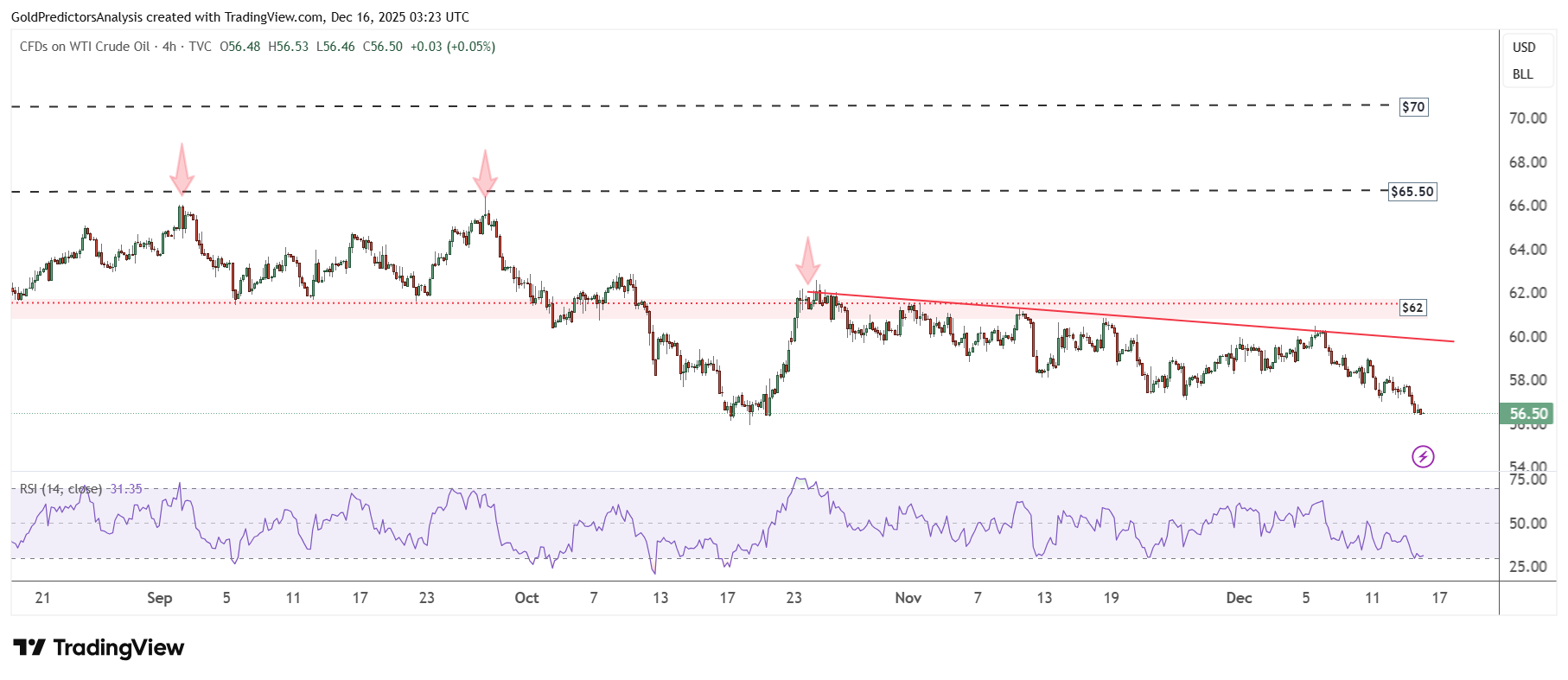
This bearish pressure is also visible on the 4-hour chart below. The price is consolidating below the red trendline and moving closer to the long-term support level near $55. The RSI has reached the 30 level, which signals increasing downside risk in the short term.
However, this weakness could also trigger a technical rebound from the $54–$55 zone back toward the $58 area. The broader outlook for oil remains bearish as long as prices stay below the $62 level.
Natural Gas (NG) Technical Analysis
Natural Gas Daily Chart – Bullish Momentum
The daily chart for natural gas (NG) shows that the price is breaking below the key $4.00 support level, increasing short-term uncertainty. A confirmed drop below this area raises the likelihood of a further decline toward the $3.00–$3.50 region. However, as long as natural gas holds above the $2.50–$2.60 zone, the broader outlook remains bullish.
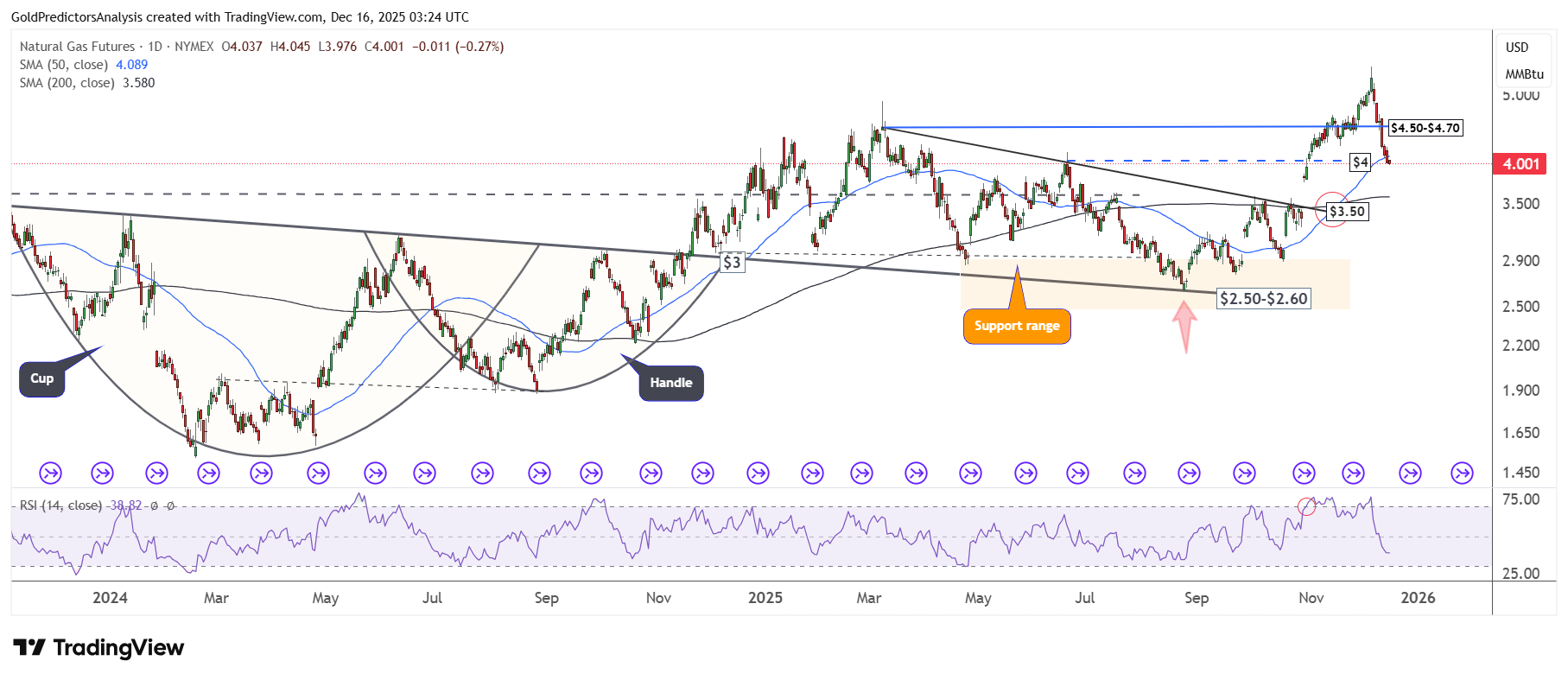
The chart also reveals strong volatility, which continues to shape price behaviour. Despite the recent weakness, natural gas still trades above its 200-day SMA, currently around $3.50. This level acts as a key technical support that may help stabilise prices.
Overall, the current setup suggests short-term downside risk within a longer-term bullish structure. Traders should closely watch the $3.50 level, as a break below it may weaken the bullish case.
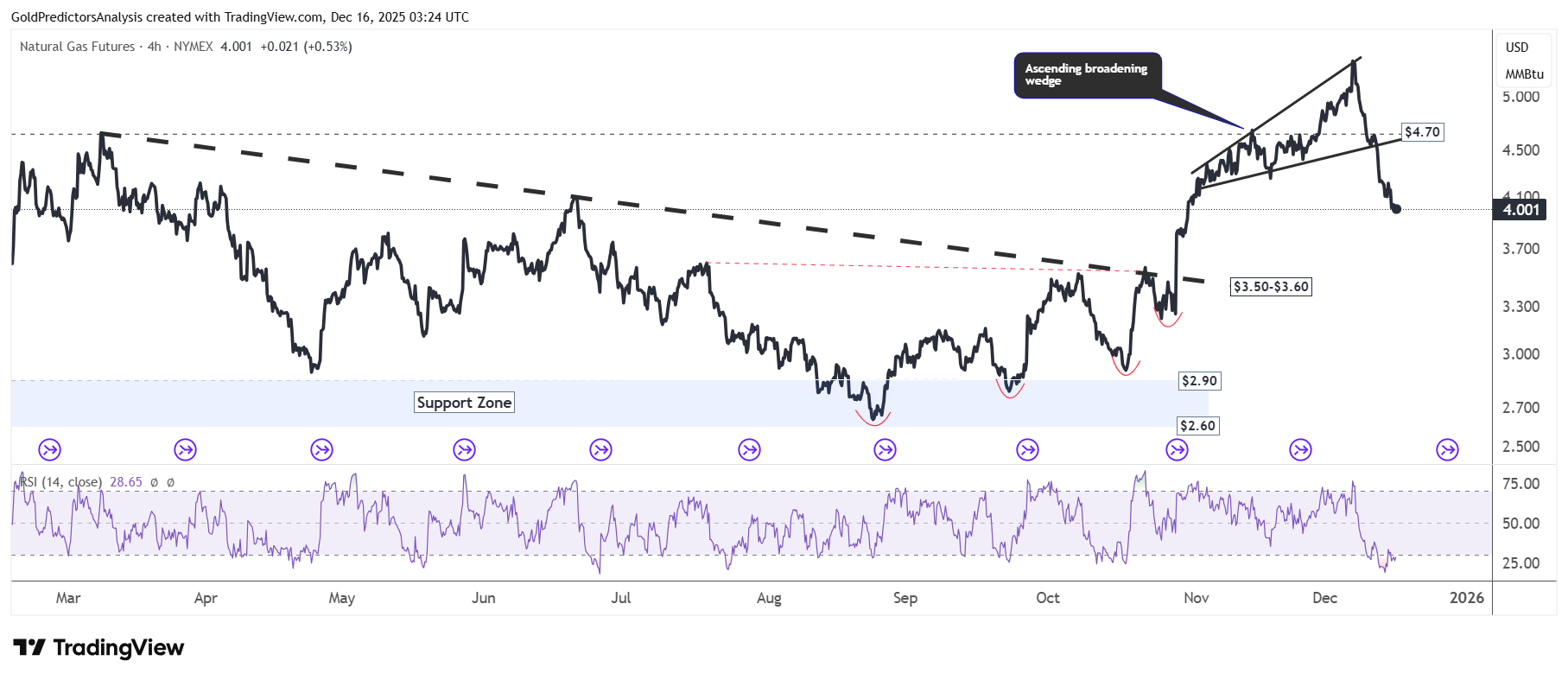
Natural Gas 4-Hour Chart – Positive Trend
The 4-hour chart for natural gas shows that the price has broken below the ascending broadening wedge pattern and is approaching the $4.00 support level. A break below this zone could trigger a drop toward the $3.50–$3.60 region. The formation of bottoming patterns in the long-term support area between $2.60 and $2.90 indicates a potential basing structure.
US Dollar Index (DXY) Technical Analysis
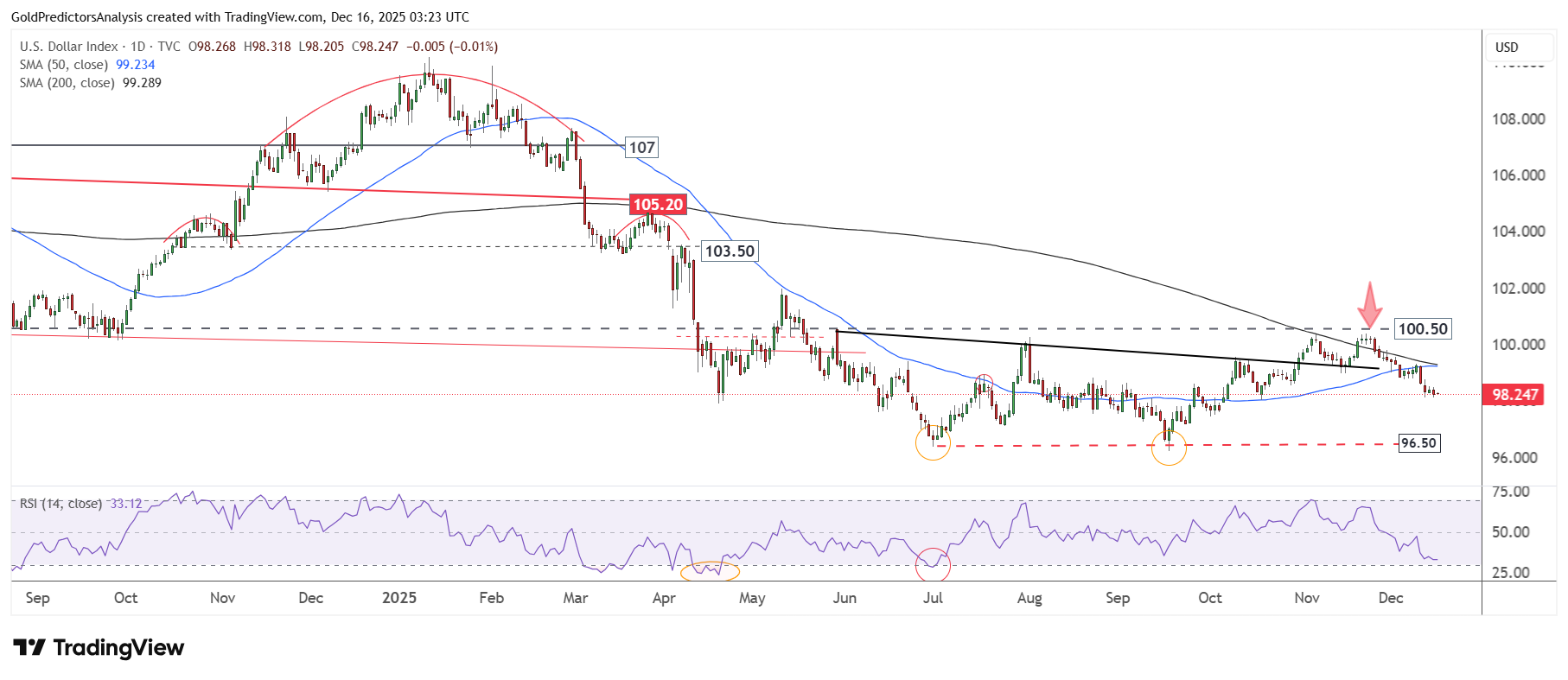
US Dollar Daily Chart – Bearish Trend
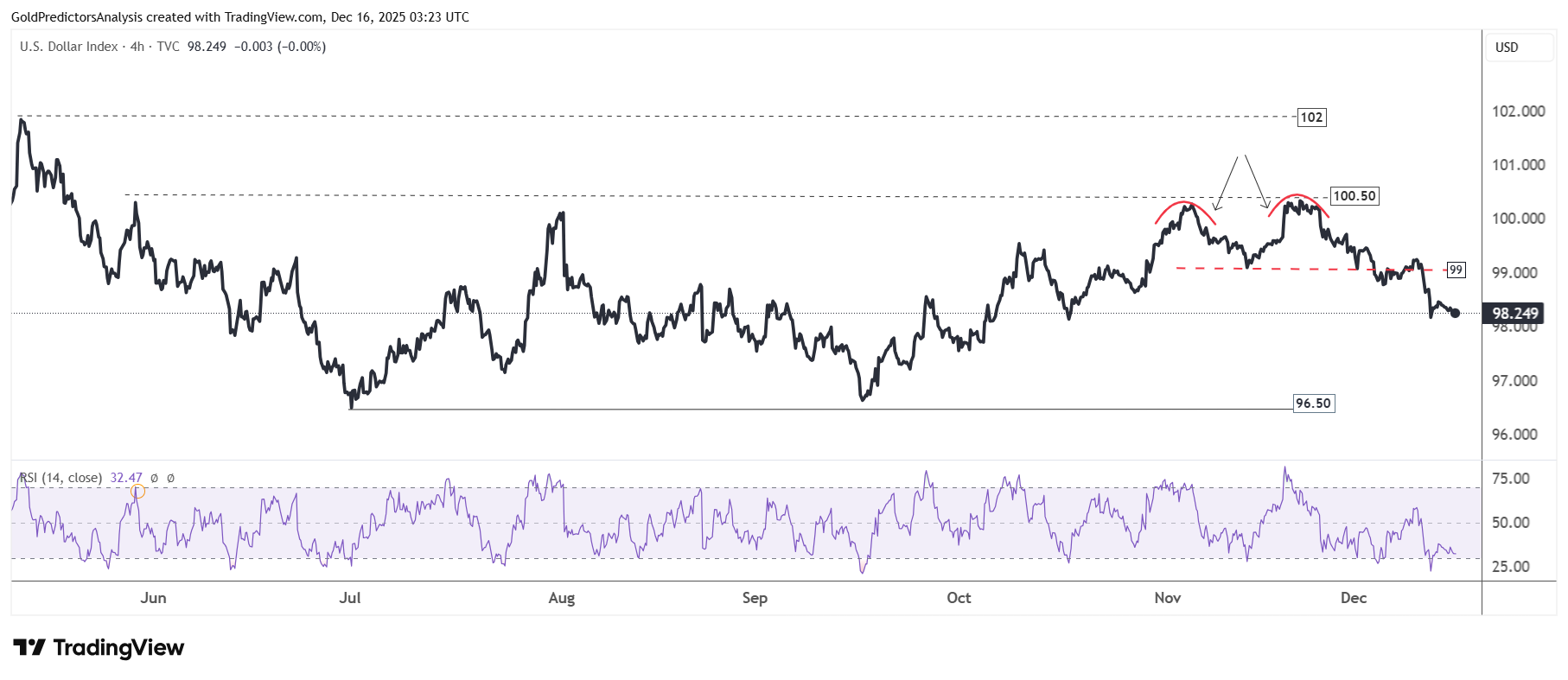
The daily chart for the U.S. Dollar Index shows continued bearish pressure, with the index trading below the 100.50 level. A sustained drop below the 99.00 level would confirm a bearish trend. A break below 98.00 could trigger a sharper decline toward the 96.50 area. If the index falls below 96.50, it may accelerate downside momentum toward the 90.00 level.
US Dollar 4-Hour Chart – Negative Price Action
The 4-hour chart for the U.S. Dollar Index shows that the index formed a double top pattern at the 100.50 resistance level, triggering a strong decline. This pattern suggests that the index is likely to continue moving toward the 96.50 level in the short term.