



Futures Hold Firm Above Key Retracement Levels
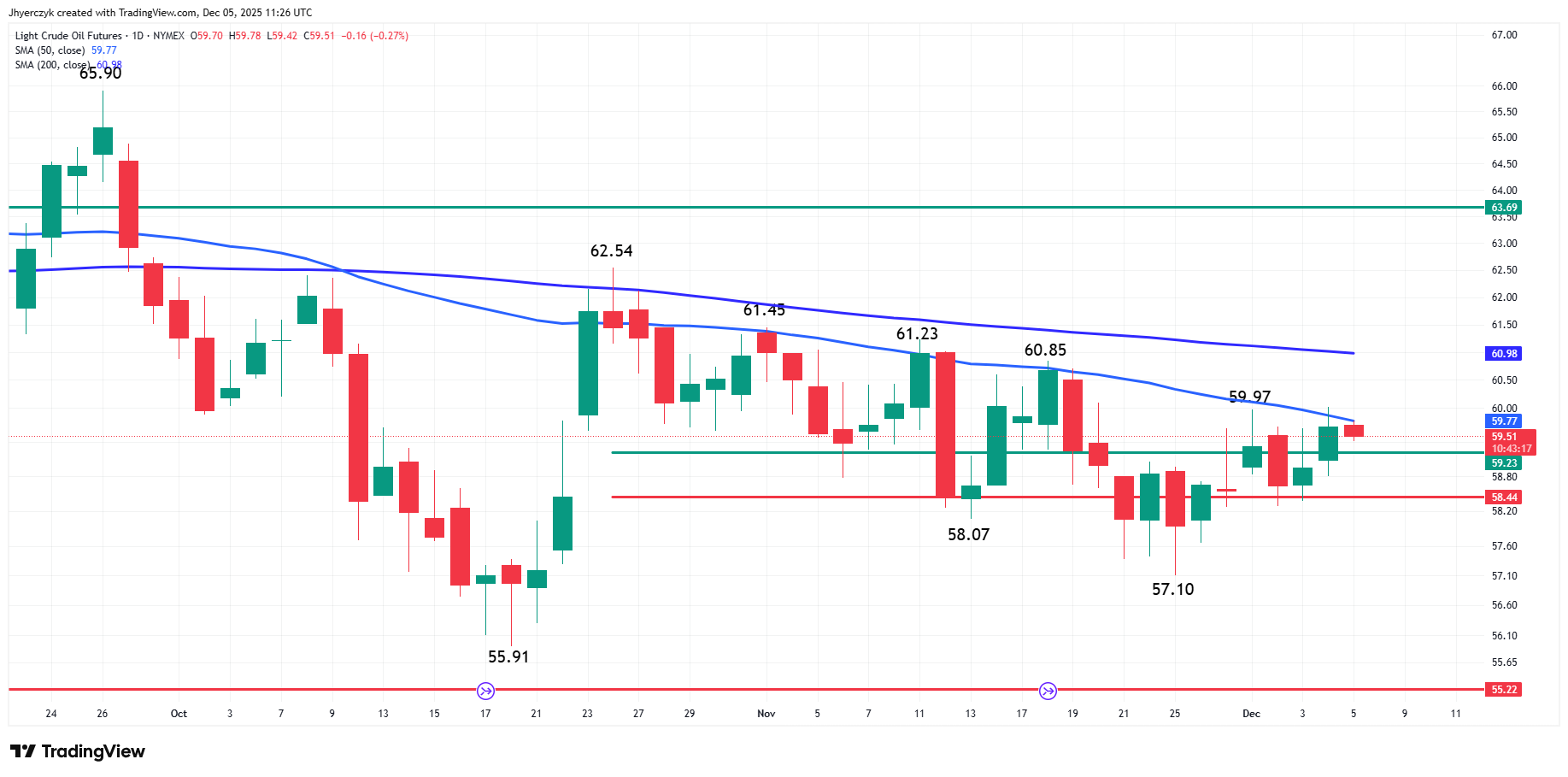
Light crude futures traded slightly lower on Friday but continued to hold above the short-term retracement zone at $59.23 to $58.44. Traders remain focused on whether prices can press through the 50-day moving average at $59.77, which would open the door for a run at the 200-day moving average at $60.98.
At 11:42 GMT, Light Crude Oil Futures are trading $59.59, down $0.08 or -0.13%.
A sustained move requires genuine buying interest rather than stop-driven movement, with the 50% level at $59.23 acting as the first line of support and the 61.8% level at $58.44 below it.
Oil prices were steady through the session, supported by stalled Ukraine peace talks while capped by expectations of a widening supply surplus. Brent held in a tight range, while WTI was poised to close the week with a roughly 1.7% gain — its second weekly rise. Analysts noted that geopolitical uncertainty is offering support, while resilient OPEC output prevents stronger upside.
Can Geopolitical Risk Counter the Growing Supply Outlook?
The broader crude oil news today centers on geopolitical developments that traders continue to monitor closely. The lack of progress in Ukraine negotiations remains supportive, as any deal involving the return of Russian barrels would likely pressure prices lower.
At the same time, U.S. tensions with Venezuela add upward risk. Washington signaled it may soon initiate operations targeting drug traffickers, which Rystad Energy warned could threaten Venezuela’s 1.1 million barrels per day of production, most of which is supplied to China.
Brent Oil Price Forecast
Every new Brent Oil analysis as it publishes, today's technical signal and key levels, live price — on one page.
See all Brent Oil forecastsHow Much Weight Will the Federal Reserve Carry in Oil Prices Projections?
Expectations for a Federal Reserve rate cut are providing another piece of support for crude. A Reuters survey showed 82% of economists anticipate a 25-basis-point reduction at next week’s policy meeting. A cut would stimulate economic activity and energy demand at a time when traders are balancing supply concerns and geopolitical uncertainties.
OPEC+, Saudi Pricing, and the Emerging Surplus
On the supply front, OPEC+ has committed to holding production steady into early next year. Even so, the global surplus is becoming more visible. Saudi Arabia lowered its January Arab Light selling prices to Asia to a five-year low, reflecting oversupplied conditions and offering a bearish counterweight to geopolitical risk.
Short-Term Market Forecast
With prices holding above the retracement zone and pressing toward the 50-day moving average, the short-term outlook leans bullish. Support from stalled Ukraine talks, expectations for a Fed rate cut, and Venezuela-related supply risks outweigh the drag from expanding surplus conditions — as long as any breakout above the 50-day moving average is backed by real buying rather than stop-triggered activity.
More Information in our Economic Calendar.