



Why Are Oil Prices Dropping This Week?
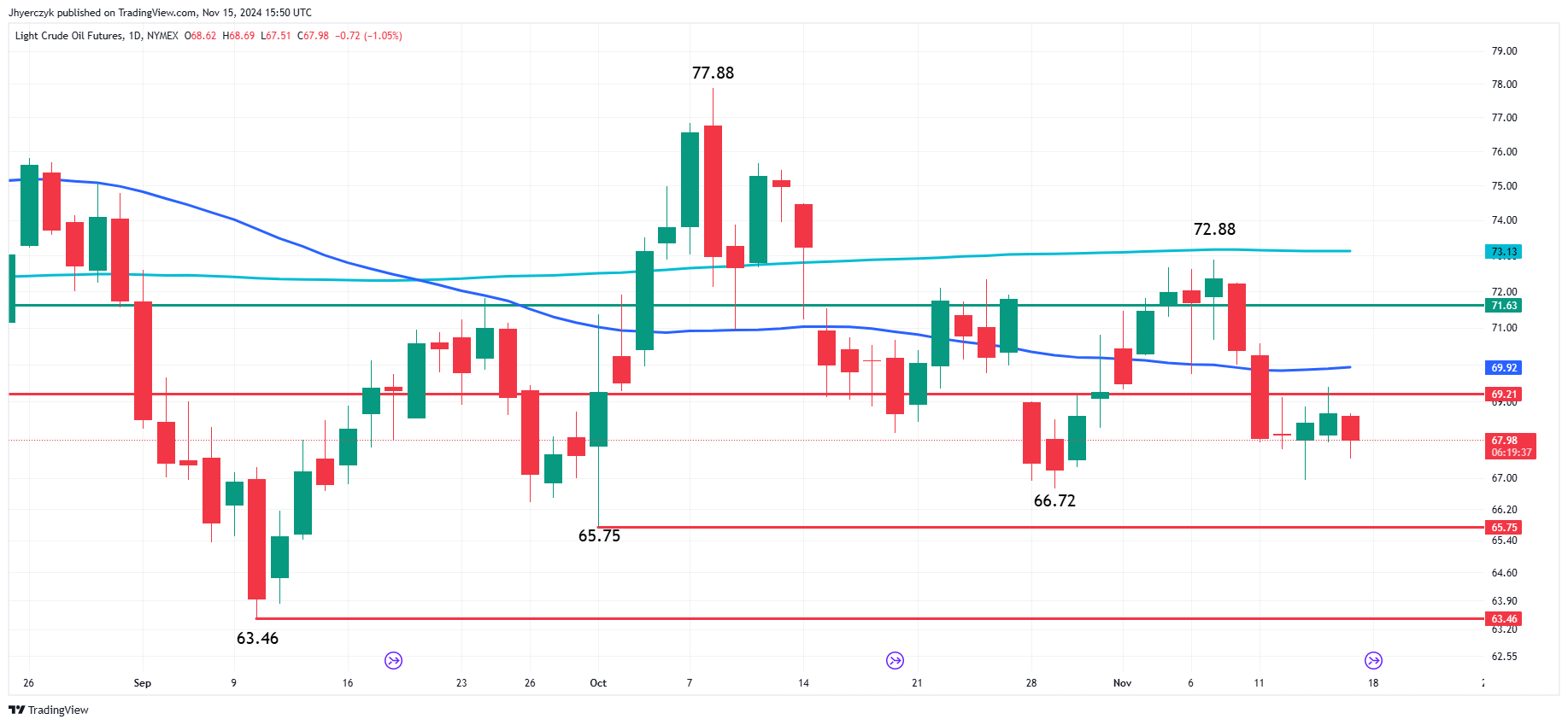
Light crude oil futures extended losses on Friday, solidifying a weekly decline as traders faced resistance from technical levels. With a long-term Fibonacci barrier at $69.21 and the 50-day moving average at $69.92, selling pressure persisted. West Texas Intermediate (WTI) is poised to drop 3.6% for the week, while Brent crude is down 2.9%, reflecting a bearish sentiment across the crude market.

Is China’s Demand Slump Dragging Down Global Oil?
China’s crude processing in October fell 4.6% year-on-year due to refinery closures and reduced operations at smaller independent plants, as per the National Bureau of Statistics. Sluggish factory output and an ailing real estate sector are further signs of weakening demand from the world’s largest crude importer.
International Energy Agency (IEA) Chief Fatih Birol flagged concerns about slowing global oil demand growth, primarily tied to China’s economic slowdown and the increasing adoption of electric vehicles. The IEA projects that global oil supply will exceed demand by over 1 million barrels per day by 2025, adding further pressure to prices.
Can U.S. Data Offset Bearish Oil Trends?
In the U.S., October retail sales beat expectations, while upward revisions to September data suggest a stronger economic start to the fourth quarter. Despite these promising indicators, Federal Reserve Chair Jerome Powell emphasized that there’s no urgency to cut interest rates, which dampens prospects of immediate economic stimulus driving fuel demand.
On the supply side, U.S. gasoline stocks dropped 4.4 million barrels last week, hitting their lowest levels since November 2022. Analysts noted this provided temporary support to the oil complex, even as crude inventories increased by 2.1 million barrels.
Brent Oil Price Forecast
Every new Brent Oil analysis as it publishes, today's technical signal and key levels, live price — on one page.
See all Brent Oil forecastsWill Russian Refinery Shutdowns Tighten Supplies?
Russia’s refining sector faces turmoil, with at least three facilities—including the Tuapse and Ilsky refineries—at risk of closure. Declining export revenues, high crude prices, and soaring interest rates have squeezed profit margins, especially for smaller operators. These closures, compounded by sanctions and weak domestic demand, could tighten regional supplies, though global markets appear unaffected for now.
What’s Next for Oil Prices?
Oil prices are likely to remain bearish in the near term, weighed down by technical resistance, sluggish Chinese demand, and robust U.S. supply. Traders should monitor developments in China’s economic policies and the Federal Reserve’s upcoming decisions, as these will significantly influence market sentiment. Expect prices to test lower technical levels, with little immediate upside momentum in sight.


