



Crude Ends Week Under Pressure as Oversupply Weighs on Sentiment
Light crude oil prices ended last week under sustained selling pressure, reinforcing a bearish tone that has defined recent trade. Futures settled at $57.44, marking a weekly decline of $2.64, or 4.39%, as traders continued to fade rallies and position defensively. The close near the lower end of the recent range reflects a market still dominated by oversupply concerns and cautious sentiment rather than demand optimism.
Supply Overhang Keeps Pressure on Crude Oil News Today
Fundamental conditions remain unfavorable for bulls. U.S. production continues to operate near record levels, while Russian export flows have shown resilience despite sanctions and logistical friction. Discounted Iranian and Venezuelan barrels remain accessible to Asian refiners, adding to global availability. Collectively, these factors reinforce the view that near-term supply exceeds consumption needs, limiting follow-through buying interest even after sharp selloffs.
Ukraine Developments Erode Risk Premium
Geopolitical risk has shifted from a source of support to a headwind for prices. Ongoing Ukraine-related discussions have increased market focus on the possibility of additional Russian supply returning to global channels. Traders do not require a finalized agreement to adjust positioning; the mere prospect of easing constraints has been sufficient to cap upside attempts. Intermittent disruptions tied to sanctions enforcement and regional strikes have provided only short-lived price responses.
Fed Policy Fails to Change Positioning
The Federal Reserve’s recent rate cut did little to alter crude market behavior. While lower rates can support demand over time, traders remain focused on physical balances rather than monetary policy. Product inventories, particularly gasoline and distillates, continue to build at a pace that raises concerns about end-user demand. As a result, rate policy has been treated as a secondary factor rather than a catalyst for sustained recovery.
Weekly Technical Structure Signals Downside Risk
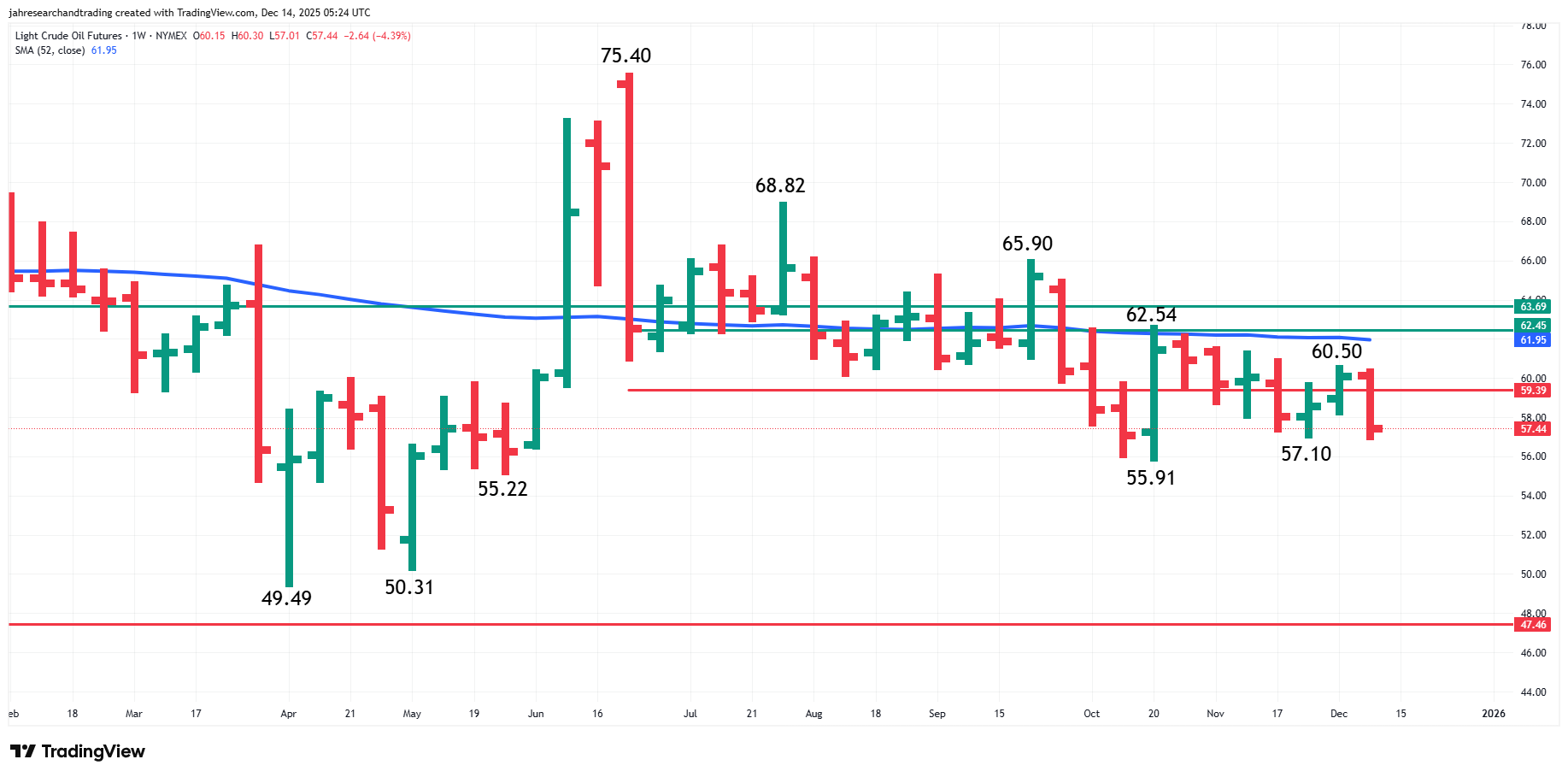
The weekly technical picture adds weight to the bearish narrative. Last week’s decline pushed prices through the prior main bottom at $57.10, placing the October bottom at $55.91 back into focus. Below that, a second main bottom at $55.22 represents a critical inflection point; a failure there would open the door to a deeper downside acceleration toward the $50.31 to $49.49 zone.
Brent Oil Price Forecast
Every new Brent Oil analysis as it publishes, today's technical signal and key levels, live price — on one page.
See all Brent Oil forecastsOn the upside, the 52-day moving average at $61.95 remains a significant barrier, with the long-term pivot at $63.69 required to generate any meaningful upside extension.
Market Forecast: Bearish Bias Remains Intact
The short-term oil prices forecast continues to lean bearish. With supply risks unresolved, geopolitical developments suppressing risk premium, and weekly technical signals pointing lower, crude lacks a convincing catalyst for reversal.
Until prices reclaim the 52-day moving average and fundamentals show tangible tightening, rallies are likely to attract selling interest, keeping downside risks firmly in play.
More Information in our Economic Calendar.