



Oil Prices Forecast: WTI Holds Above Key Lows as Supply Pressures Weigh
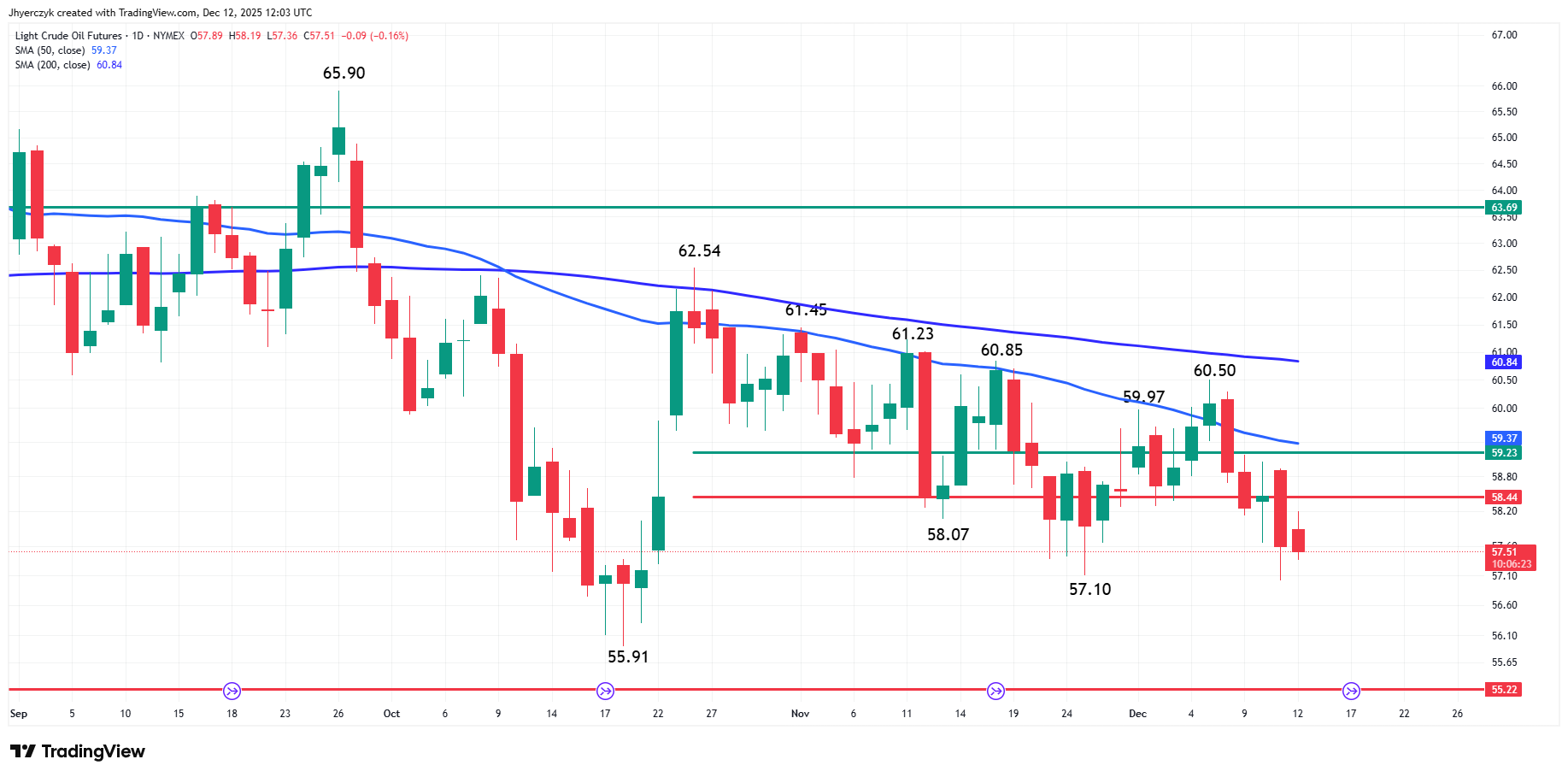
Light crude futures drifted lower on Friday but continued to trade above Thursday’s drop to $57.01, the weakest level since October 21. Prices briefly recovered to $58.19 earlier in the session, yet sellers remain active.
A move through $57.01 would expose the October 20 main bottom at $55.91. Resistance remains layered at $58.44, $59.23 and the 50-day moving average at $59.37, keeping the market contained ahead of the weekend.
At 12:33 GMT, Light crude oil futures are trading $57.51, down $0.09 or -0.165.
Crude Oil News Today: Oversupply Concerns Drive Weekly Loss
WTI and Brent are each on track for weekly declines of more than 4% as concerns over excess supply continue to dominate sentiment.
Traders assessing overall flow conditions see a market where available barrels exceed near-term demand, limiting enthusiasm for any recovery attempts.
Talk of progress toward a Russia-Ukraine peace arrangement is also reducing some of the risk premium that had been embedded in prices.
Geopolitical Tensions Provide Only Brief Support
Even with a heavy tone, several developments are helping prevent a sharper fall. Rystad Energy analyst Janiv Shah pointed to rising friction between the U.S. and Venezuela and Ukrainian drone strikes on a Russian Caspian Sea offshore installation as factors offering intermittent support.
Brent Oil Price Forecast
Every new Brent Oil analysis as it publishes, today's technical signal and key levels, live price — on one page.
See all Brent Oil forecastsThe U.S. is preparing to intercept additional vessels moving Venezuelan crude after a tanker seizure earlier this week, adding uncertainty to supply from the sanctioned producer.
Russia’s Export Flows Show Stability Despite Regional Constraints
Fresh figures from industry sources show Russia’s November seaborne oil product exports slipped only 0.8% from October. The completion of refinery maintenance offset reduced shipments from southern ports along the Black Sea and Azov Sea, highlighting the country’s ability to maintain export volumes.
PVM Oil Associates analyst Tamas Varga noted that while periodic supply disruptions could lift prices temporarily, overall behavior still points to supply exceeding demand, limiting the lifespan of any rebounds.
Oil Prices Projections: OPEC Signals Softer Long-Term Balance
New data from OPEC indicates global supply and demand will sit close to balance in 2026, a cooler assessment compared with earlier this year when it projected demand outpacing supply. This contrasts with the International Energy Agency’s expectations and reinforces a more restrained outlook for consumption growth.
Market Forecast: Short-Term Bias Remains Bearish
With WTI capped below layered resistance and sentiment anchored to concerns over oversupply, the short-term outlook leans bearish. Unless geopolitical events significantly restrict flows, rallies are likely to be brief, and a retest of $57.01 remains a clear risk.
More Information in our Economic Calendar.