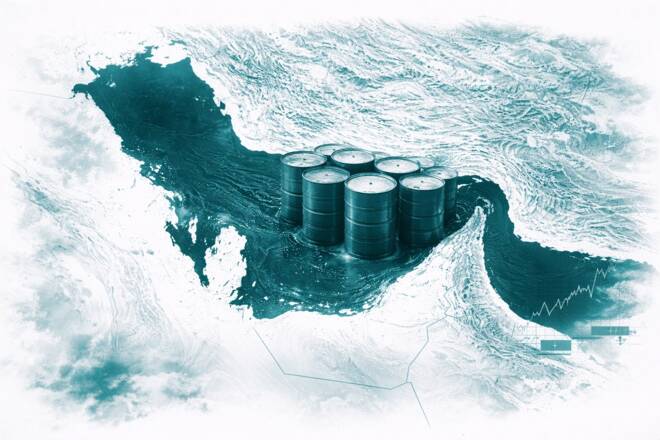
WTI Oil (CL) prices rose on Tuesday as fears of supply re-entered the market. Iran refused to engage in any negotiations with the United States to end the Gulf conflict. This went against comments by the President, Donald Trump, who said a deal could be near. The mixed signals generated uncertainty and sent prices higher after an earlier sharp drop in the week. In my view, the market is likely to remain volatile as geopolitical uncertainty continues to drive short term price swings.
Geopolitical Tensions Drive Supply Concerns Back into Oil Market
Oil prices rebound strongly after dropping over 10% on Monday. The previous decline followed delay of planned attacks on Iranian power infrastructure by the U.S. This move brought the war premium in oil down for a short time. However, it was quickly realized that the fundamental risk is the same. The Strait of Hormuz is still threatened and supply flows remain uncertain.
Brent Oil (BCO) was up around 3% to near $102 while WTI surged close to $92. Traders are responding to persistent disruptions in the region. Nearly 20% of world’s oil and LNG transits the Strait of Hormuz. Even though some tankers have passed through, situation is still fragile. Iran also refuted U.S. claims of negotiations and signaled continued resistance which created more tension in financial market.
Disruptions and Policy Moves Keep Oil Prices Supported
Attacks on energy infrastructure in Iran have put long term stability of supply into question. Reports of damage to gas facilities and pipelines point to the vulnerability of the region. At the same time, the U.S. has taken steps to relieve pressure on supply by permitting that oil already at sea and sanctioned by the U.S. to reach buyers.
Traders are even selling Iranian crude at a premium which indicates that demand is tight in the market. Global institutions are planning for more disruptions. The International Energy Agency is looking at releasing strategic reserves if necessary.
Brent Oil Price Forecast
Every new Brent Oil analysis as it publishes, today's technical signal and key levels, live price — on one page.
See all Brent Oil forecastsWTI Crude Oil Technical Analysis – Key Levels to Watch Next
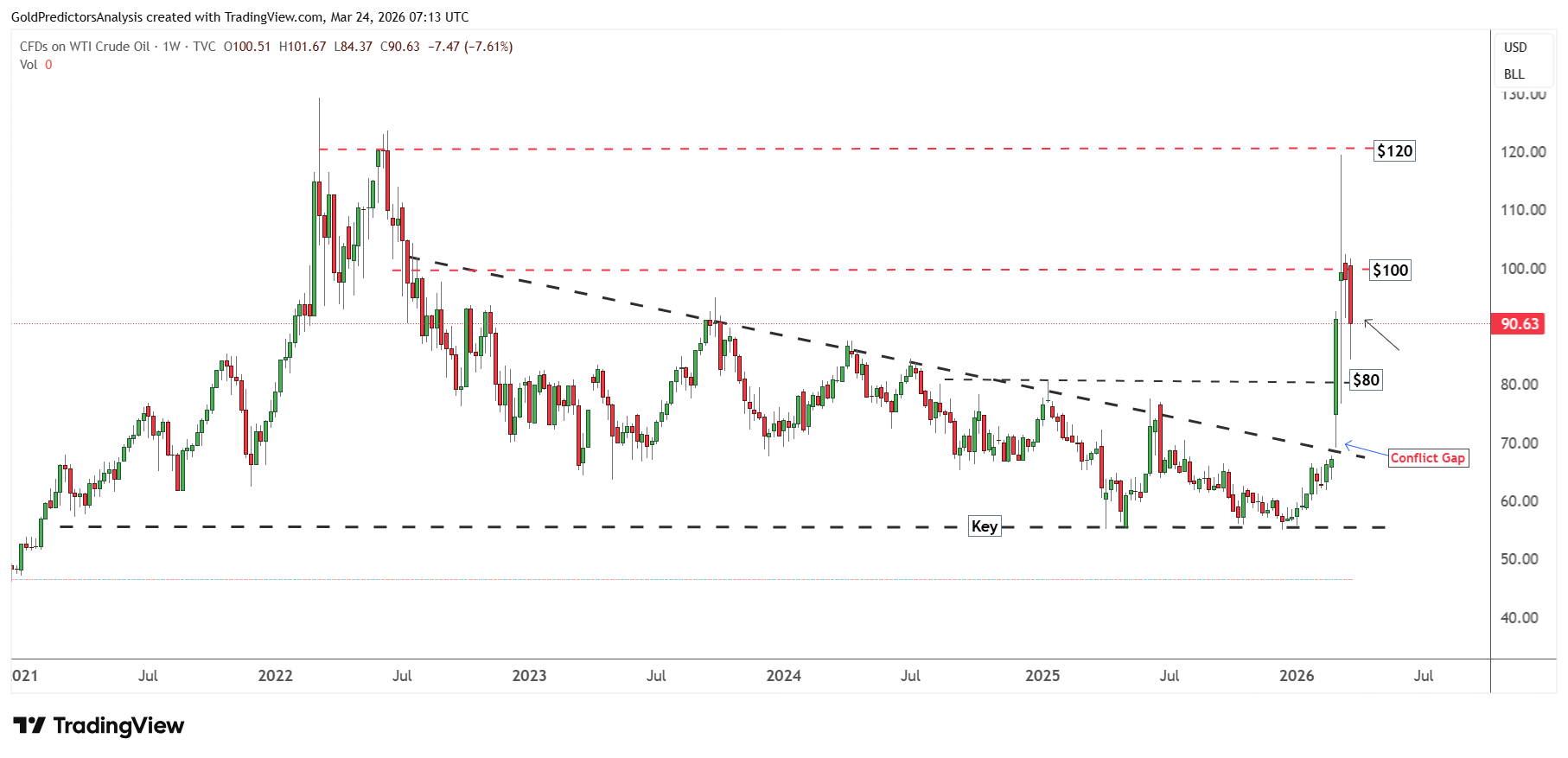
The weekly chart for WTI crude oil shows that the price spiked to $120 in March, which is a strong long term resistance zone. After hitting this resistance, the price corrected back below the psychological level of $100. The price is now consolidating around this level to prepare for the next move. If the crisis around the Strait of Hormuz builds, the price will likely trade higher to break $120.
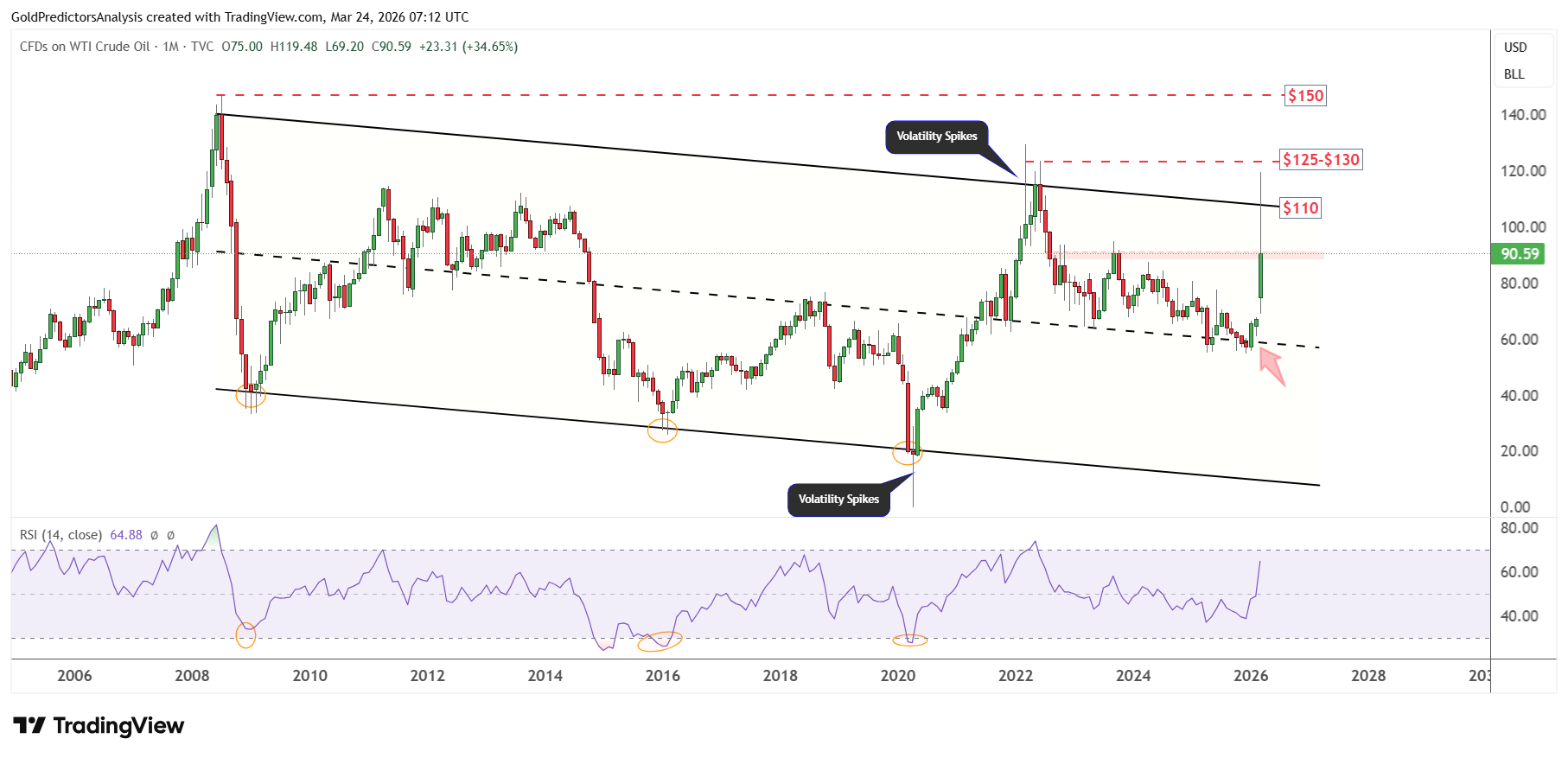
The importance of the $120 is also observed on the monthly chart, which shows that $125–$130 remains the key level in WTI crude oil. The price is still below $110 which is the resistance of the descending channel. A break above $125–$130 will open the door for spike to $150. However, $80 remains strong support. A failure of talks between the U.S. and Iran will likely lead to higher oil prices.
Bottom Line
Oil prices are still driven by geopolitical risks and supply uncertainty. The temporary halt in conflict did nothing to remove the fundamental threat. The Strait of Hormuz remains a factor in shaping the direction of the markets. Supply still remains tight and demand firm. Policy actions may help relieve pressure but cannot address the root cause of the problem. Price action is now dependent on the evolution of the conflict. A long term disruption could drive prices up, but any actual progress in talks could provide short term relief.
If you’d like to know more about how to trade crude oil, please visit our educational area.