



U.S. West Texas Intermediate and internationally-favored Brent crude oil fell on Tuesday after a report from the International Energy Agency (IEA) raised doubts over a key part of the story that had been driving prices higher over the past few months.
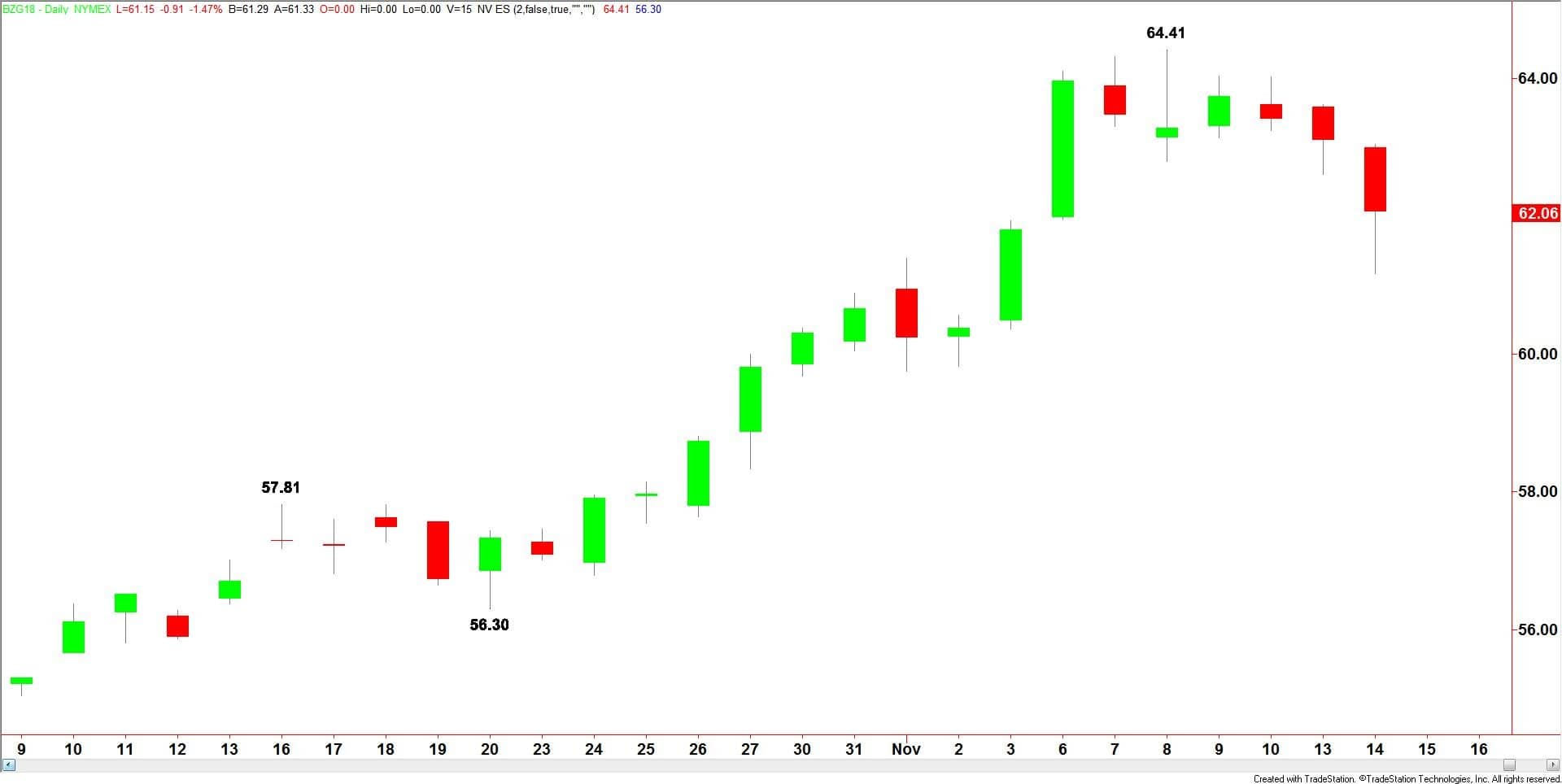
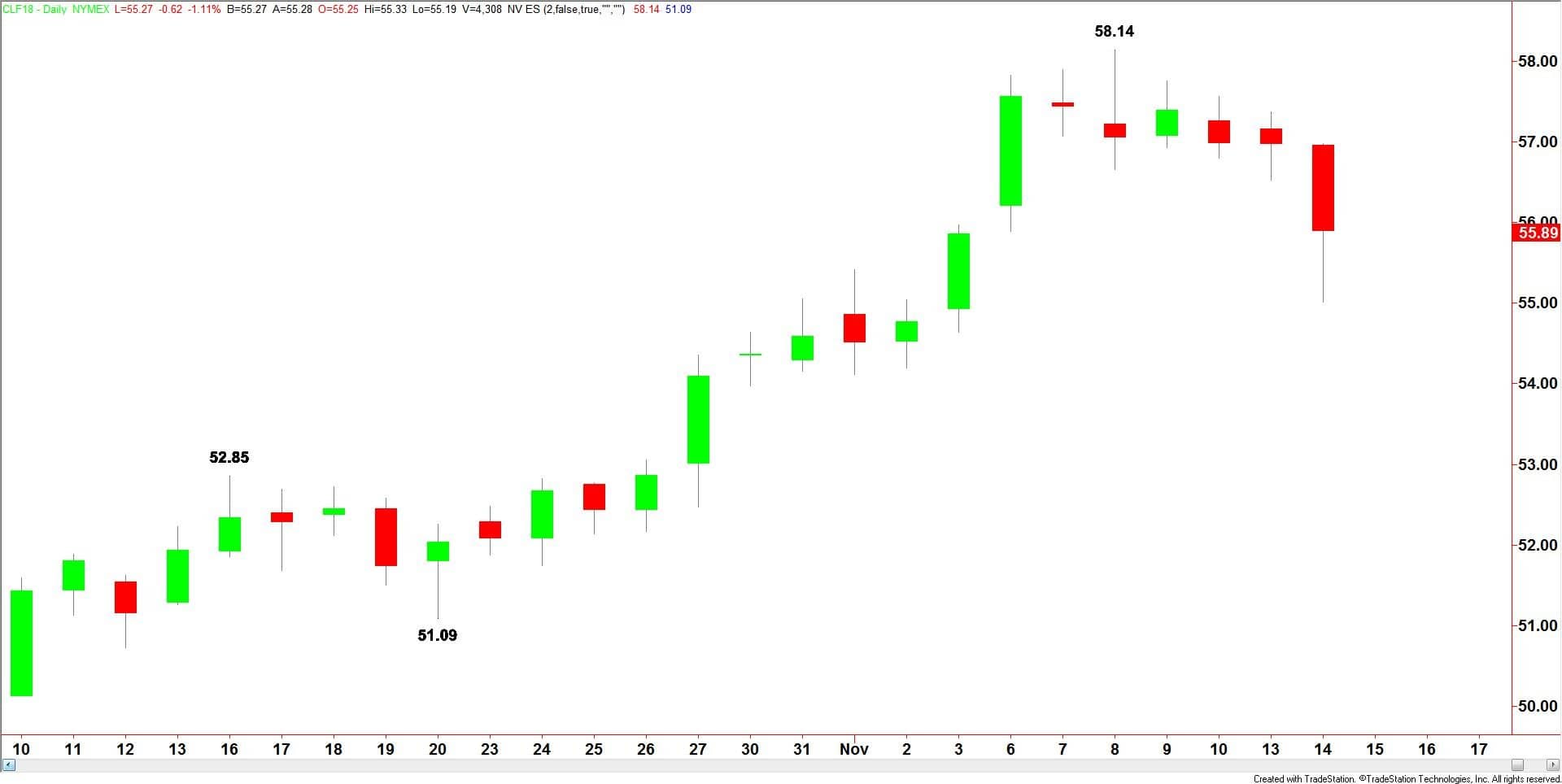
January WTI Crude Oil settled at $55.89, down $1.08 or -1.90% and February Brent Crude Oil finished the session at $62.06, down 1.04 or -1.65%.
The IEA on Tuesday cut its oil demand growth forecast by 100,000 barrels per day (bpd) for this year and next, to an estimated 1.5 million bpd in 2017 and 1.3 million bpd in 2018.
The demand slowdown could mean world oil consumption may not, as may expect, breach 100 million bpd next year, while supplies are likely to exceed that level.
We could see volatility over the near-term because the IEA report differs from a similar report from OPEC which said 2018 would see a strong rise in oil demand.
Adding to the bearish tone, the IEA said, “The oil market faces a difficult challenge in 1Q18 with supply expected to exceed demand by 600,000 bpd followed by another, smaller, surplus of 200,000 bpd in 2Q18.”
Given the IEA report, the market is likely to continue to fall until it finds buyers. Furthermore, the size of the long position built by the hedge funds and commodity funds means we could see a sizable break with a strong possibility of a panic sell at some point.
The market is still pricing in an extension of the OPEC production cuts, but with demand expected to fall, it’s going to take longer for the market to rebalance.
Forecast
WTI and Brent crude oil futures are trading lower early Wednesday after yesterday’s steep sell-off. I expect the selling pressure to continue with the initial target for WTI crude at $54.62 to $53.78. Brent crude should test the $60.36 to $59.40 area.
Helping to drive prices sharply lower late Tuesday was a report from the American Petroleum Institute (API) which reported a huge build of 6.513 million barrels of U.S. crude oil inventories. Analysts were looking for a draw of about 1.4 million barrels for the week-ending November 10.
Gasoline inventories, according to the API, also saw a build this week, of 2.399 million barrels for the week-ending November 10, against an expected draw of 1.1 million barrels.
Distillate inventories saw a decline this week, down 2.527 million barrels. Analysts had expected a drop of 500,000 barrels.
On Wednesday, the U.S. Energy Information Administration’s weekly inventories report is expected to show a draw of 2.1 million barrels, but this estimate is likely to change because of the results of the API report.