



U.S. West Texas Intermediate and international-benchmark Brent Crude Oil settled lower on Wednesday after a U.S. government report showed a jump in crude inventories. At the same time, geopolitical tensions eased and the dollar rose, making dollar-denominated crude oil a less-desirable asset.
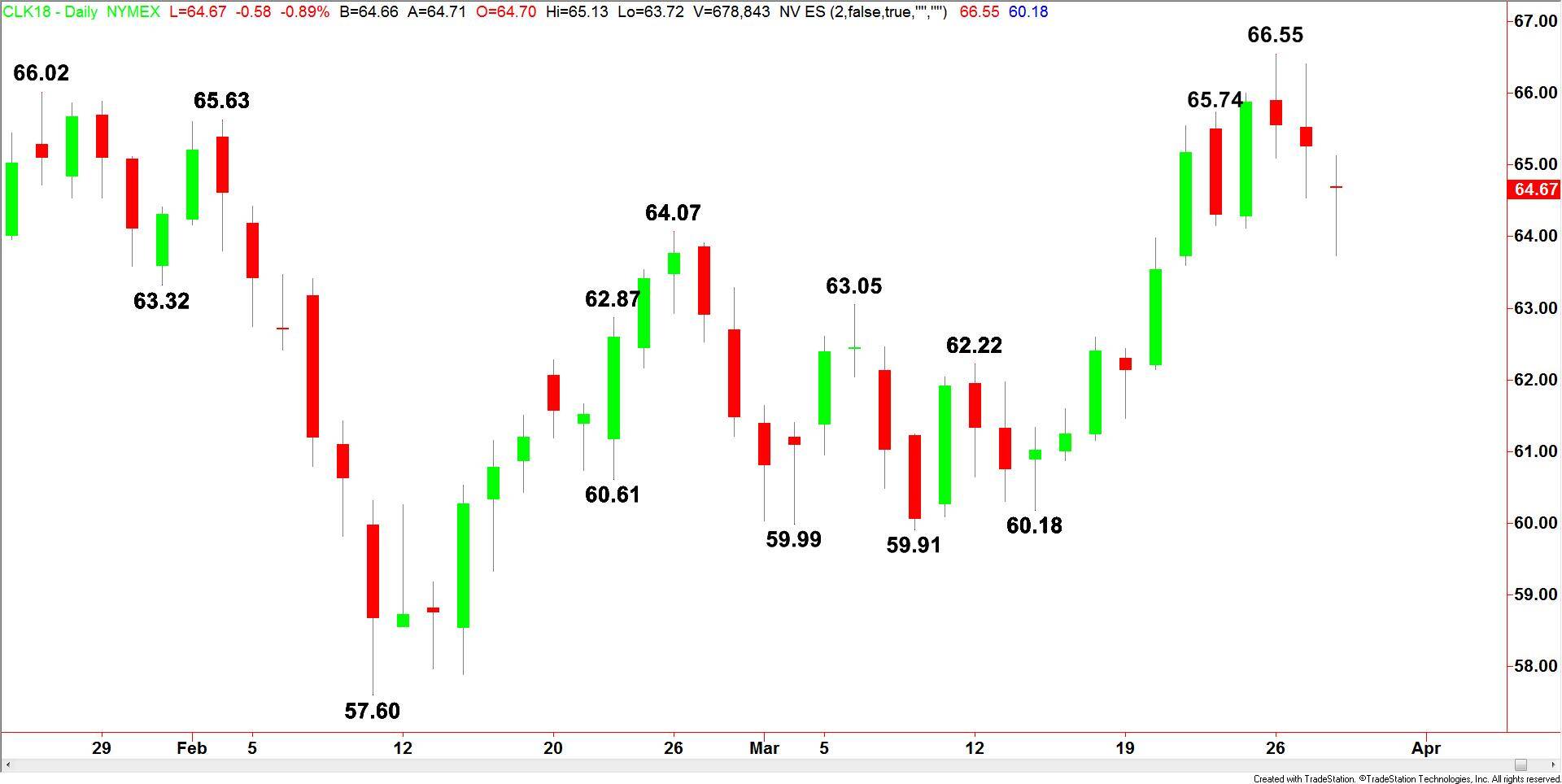
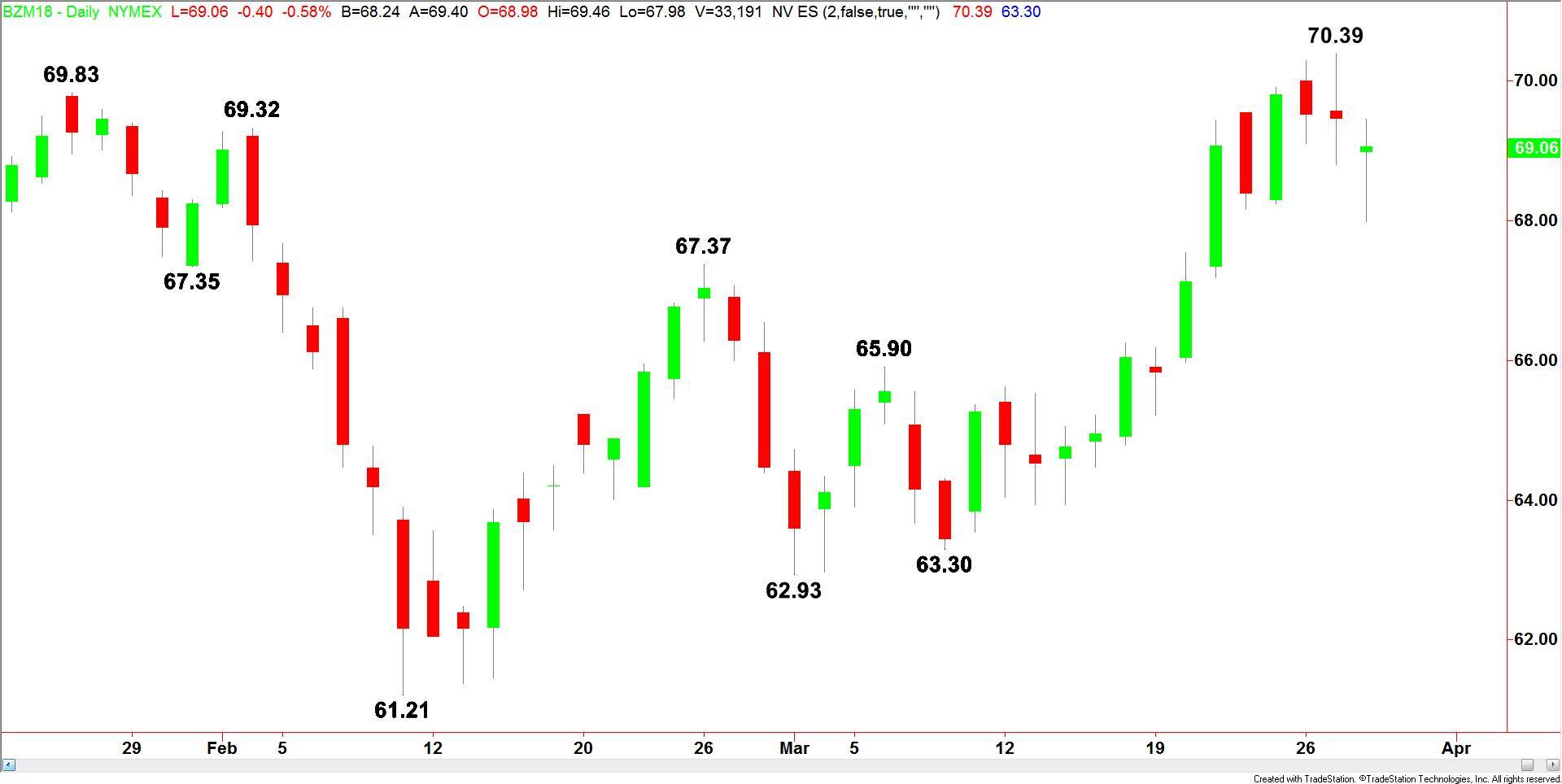
May WTI Crude Oil settled on Wednesday at $64.67, down $0.58 or -0.89% and June Brent Crude Oil closed the session at $69.06, down $0.40 or -0.58%.
According to the U.S. Energy Information Administration, U.S. crude oil inventories rose 1.6 million barrels in the week-ending March 23. Stocks were also up by 1.8 million barrels at the closely watched futures delivery hub in Cushing, Oklahoma. Traders had price in a 500,000 barrel increase.
The government said refineries processed 16.8 million bpd of crude in the reporting period, unchanged from a week earlier. Gasoline production averaged 10.3 million bpd, compared with 9.9 million bpd a week earlier, and distillate output averaged 4.8 million bpd last week, versus 4.5 million bpd a week earlier.
The EIA also reported that gasoline inventories fell by 3.5 million barrels in the week to March 23. In the week before that, gasoline inventories marked a decline of 1.7 million barrels. Distillate inventories fell by 2.1 million barrels, compared with a decline of 2 million barrels in the prior week.
Forecast
WTI and Brent crude oil futures are rebounding early Thursday in reaction to the news that the OPEC-led program to cut production, trim inventories and stabilize prices is likely to continue into the end of the year and may even extend into 2019.
At 0708 GMT, May West Texas Intermediate Crude Oil is trading $64.74, up $0.36 or +0.56% and June Brent Crude Oil is at $68.98, up $0.22 or +0.32%.
With the inventories data out of the way, investors will continue to focus on potentially bullish factors such as the extension of the program to cut production although OPEC doesn’t seem to be in any hurry to re-evaluate the strategy at its June meeting, and may wait until its meeting in November to make a decision.
Geopolitical tension in the Middle East especially between Iran and Saudi Arabia is also likely to underpin prices.
Keeping a lid on prices will be concerns over increasing U.S. production. This week’s EIA report showed that U.S. crude oil production hit a fresh record, at 10.43 million barrels per day (bpd). That puts the U.S. ahead in output of top exporter Saudi Arabia. Only Russia pumps out more, at 11 million bpd.
The nearest support for WTI crude is $63.37. Brent’s first downside target is $66.85.