



WTI crude oil is trying to stabilize above key support after big revisions to US jobs data, with CPI and the Employment Situation report shaping near-term demand expectations. Supply risk remains tied to Iran headlines and the EIA Short-Term Energy Outlook (STEO).
Key Stats: WTI Weekly Performance and Key Levels
Key Drivers This Week
- Massive US Jobs Revisions Undermine Demand Narrative
2025 payrolls revised down by 862k, with 403k “gamed” jobs. Less jobs growth = less productivity = weak oil demand. Equities pulled back — oil followed. - Iran Sanctions Risk Still In Play (1.6 mb/d Swing Factor)
Roughly 1.6 mb/d of Iranian exports remain sanctioned. A full sanctions lift could return 0.8–1.3 mb/d within 12 months, pushing output toward 4.0 mb/d. Risk premium cannot be fully priced out. - Specs Building Length While Price Waits at $60.91
Non-commercial longs up 23.86% since Jan 6. Shorts at 91st percentile. Market less crowded but fragile. Trade remains: waiting to buy $60.91 WTI.
There are 3 things that I see important from last week and going forward through this week and beyond.
US Jobs Data: Payroll Revisions and CPI Keep Demand Risks in Focus
Oil is a great barometer of economics obviously as it is the dominant fuel that underpins shipping, logistics, petrochemical production, transport and pharma. I titled a report 2 weeks ago as ‘There will be inflation’. This was because oil was up 9% on the year. With a forthcoming CPI that would be heavily influential to a fresh incoming Kevin Warsh at The Fed. CPI came out a miss YOY and MOM. So no inflation yet………
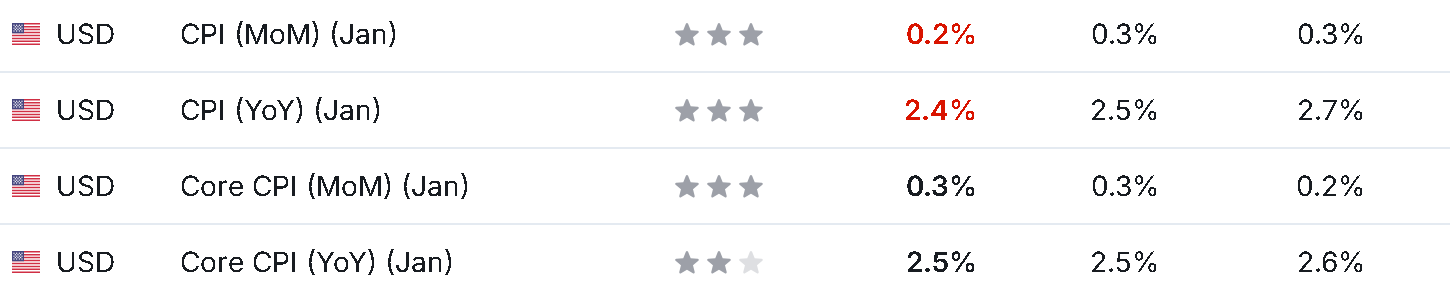
US Consumer Price Index (CPI) snapshot. Source: BLS.
WTI Crude Oil Price Forecast
Every new WTI Crude Oil analysis as it publishes, today's technical signal and key levels, live price — on one page.
See all WTI Crude Oil forecastsBack to August last year, (See ‘Game of numbers’) I have believed that The US administration has been wildly gaming the NFP, Initial jobless and continuing jobless count data. In Q4 2025, the jobs revisions from the BLS was -892k jobs. A massive downward revision, which at the time, sparked a firing of the BLS head by Trump.
Last Wednesday we got the late NFP for January 2026 and revisions for 2025. January was a beat of 130k on 70k. A positive number, signalling less expectations for cuts in 2026. However, the 2025 revisions were significant. There was a massive downward revision total nonfarm employment level by 862,000. Total 2025 revised down to +181,000 from the previously estimated +584,000, which is a major reduction in the reported pace of hiring. So they gamed in 403,000 more jobs than actual.
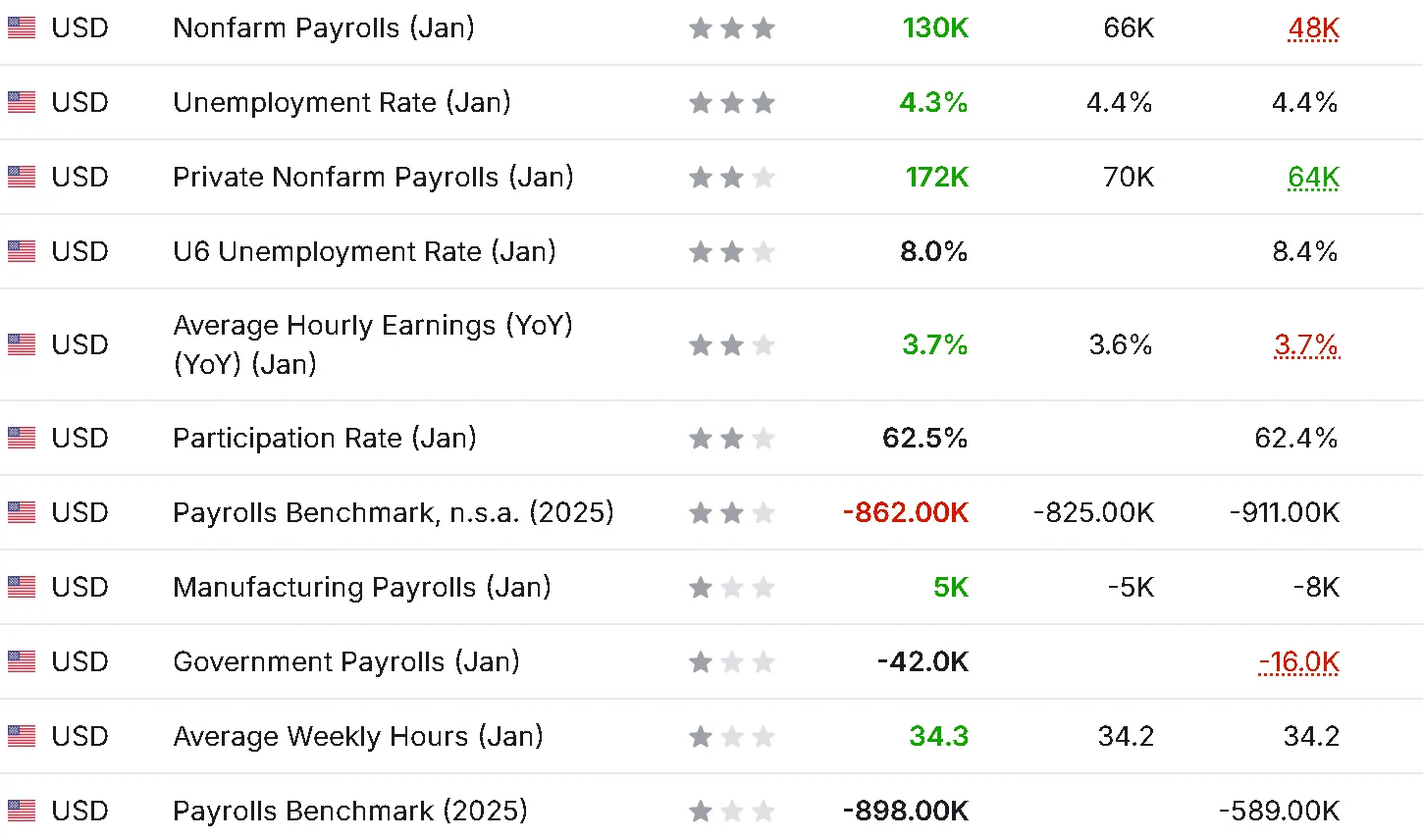
US Employment Situation highlights (NFP, unemployment rate, earnings). Source: BLS.
Explain to me how you can be wrong by a figure of 403,000 and still be taken seriously?
My point here is that this caused a pullback on the US equities markets that infected oil on Thursday and Fridays trade.
Why is this important for oil? Less jobs growth = less productivity = weak oil demand.
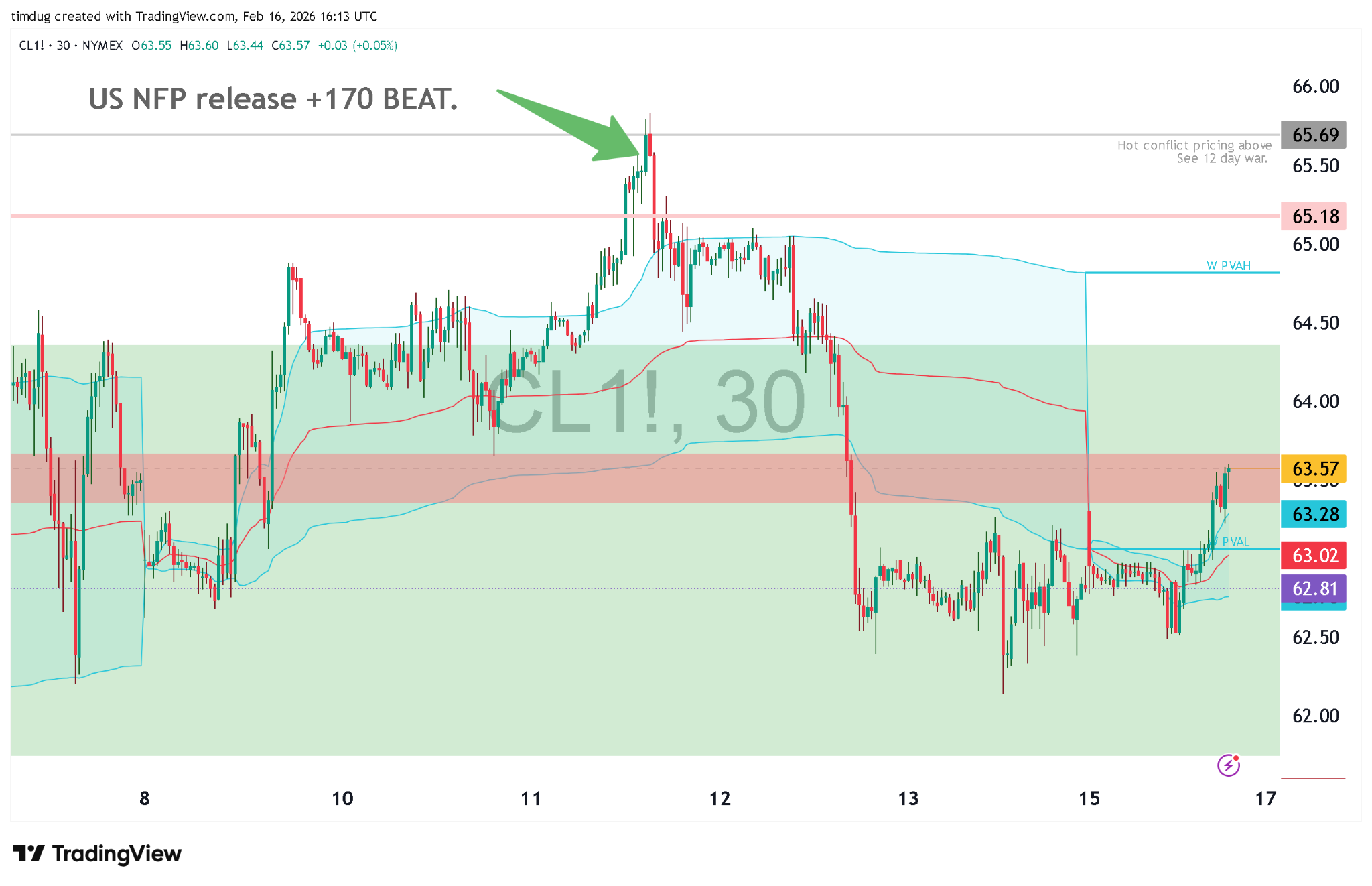
WTI crude oil (CL) 30-minute chart after the US NFP release. Source: TradingView.
Middle East Tensions Keep Iran Supply Risk in Play
It comes as no surprise that Netanyahu is continuing to push for big brother USA into full confrontation against Iran. This was flagged by The Iranian security secretary 2 weeks ago.
Price action has been interesting. We started last week holding on to Iranian risk premium, about $64.50. After Wednesdays mixed US labour data (headline good, revisions bad) equities moved lower, dragging oil lower.
I am not convinced that oil should be as cheap as it is at these spot levels on Monday $62.50 (WTI 10am Monday 16th Feb). Despite my stated desire to buy a pullback at $60.91 – basically too cheap given the macro picture.
Conflict risk premium can not be fully priced out. America is sending a second battle group of ships to the region.
This time, Iran are offering to soften on Nuclear talks, should The US soften on oil sanctions. This is extremely unlikely given that US/Israeli talks last week focused on increasing economic sanctions on Iran.
Should that change however, here are the numbers:
Roughly 1.6 mb/d of Iranian crude and condensate exports are currently sanctioned, though much of it still moves primarily to China via a shadow fleet.
Iran is producing around 3.2 mb/d of crude, below its technical capacity.
If sanctions were fully lifted, Iran could likely return 0.8–1.3 mb/d of additional supply within 12 months, potentially pushing output back toward 4.0 mb/d.
So the real risk to additional supply would be a moderate addition of 1.6 to 2 mbpd.
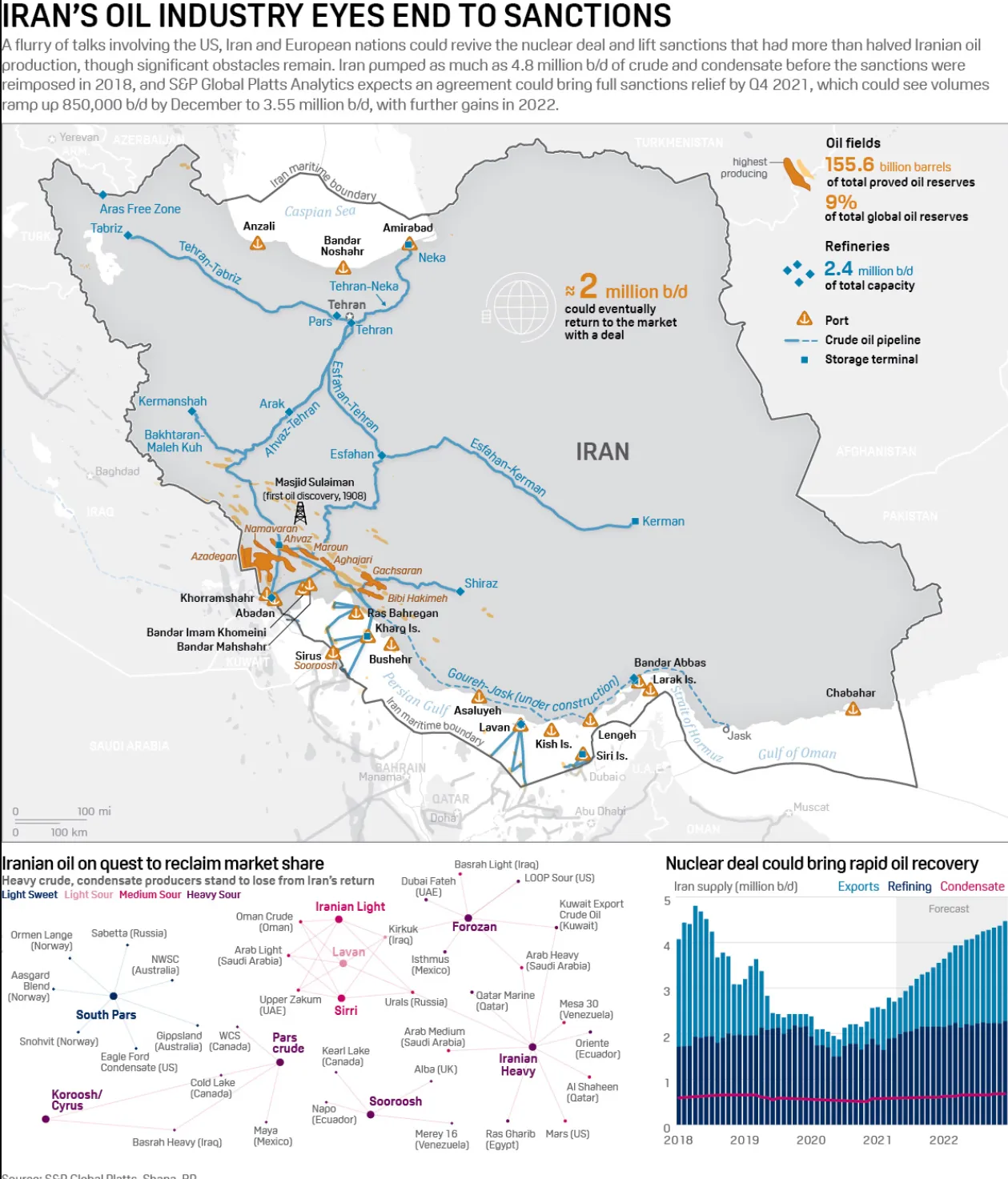
Iran oil infrastructure and sanctions risk. Source: S&P Global.
US Oil Production Outlook: EIA Sees Slower Growth in 2026
US Oil production from the lower 48 state has been closely watched since moving into the lofty level of 13.84mbpd last September. In the latest STEO report, it is worth noting that there is a shift in geography taking place for exploration and production. Rest of US production outside of The Gulf/Permian is set to drop completely and move to Alaska. According to The EIA, U.S. crude oil production will average 13.5 million barrels per day (b/d) in 2026, about 100,000 b/d less than in 2025 after a strong 4 years of expanding production.
The only thing that can take production even lower, is lower prices. A few years ago, I invested in an Australian wildcatter 88 energy $88E. I unfortunately did not pull the ripcord fast enough when the market was extremely focused on well logs from an Alaskan site the company was prospecting next door to a Conoco site. I had to average into the gap down and work out on the next pop to minimize losses. Not at all optimal.
There was some oil there, but it was tight and not within their budget to extract. I had to take a haircut on the position. So I’ll be watching this picture from the sidelines because, if 88 cannot get a bid through 26/27, they will NEVER catch a bid.
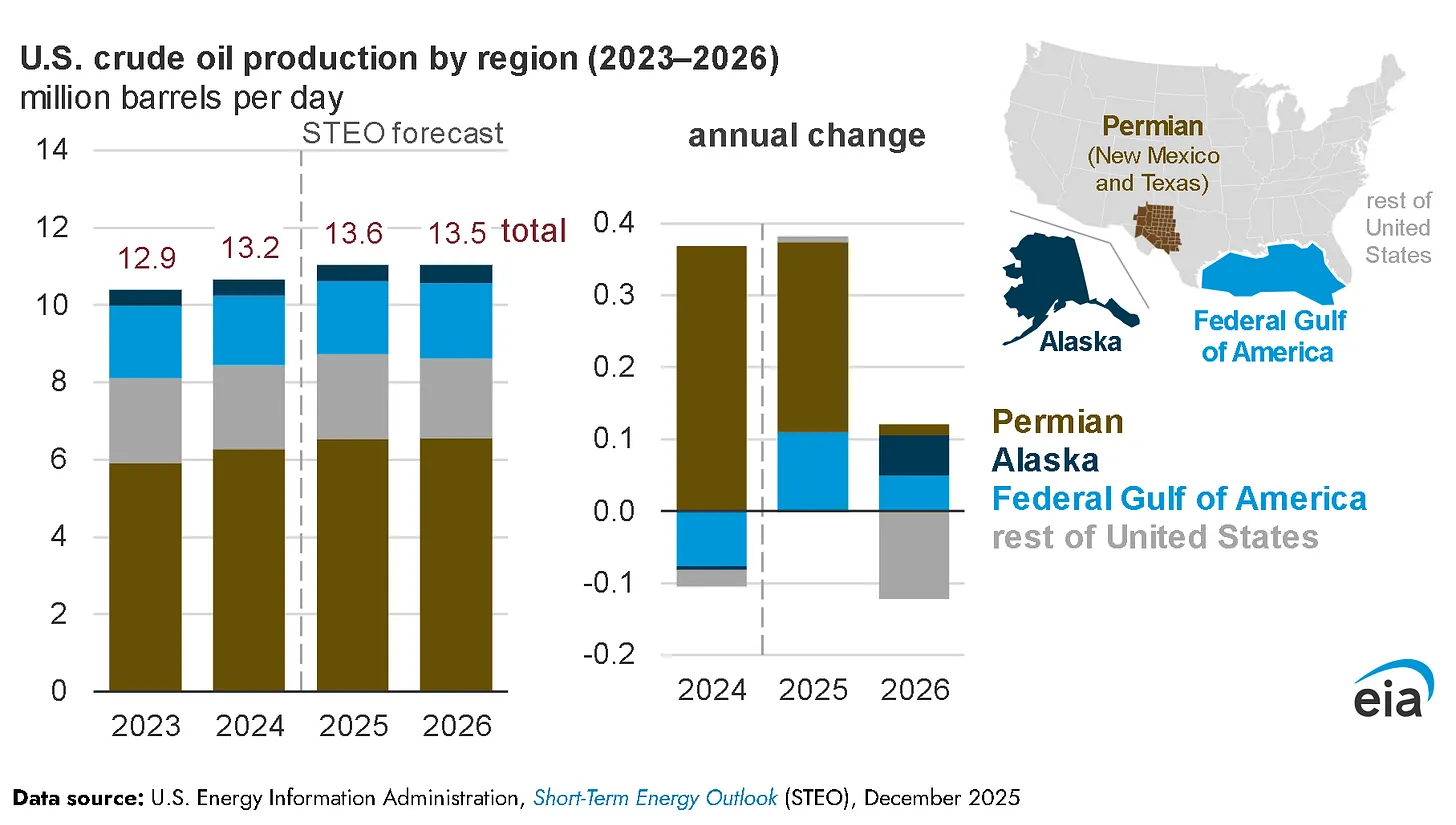
US crude oil production by region (actual and forecast). Source: EIA (STEO).
CFTC Commitment of Traders: Positioning Shifts in Crude Futures
The latest Commitment of Traders (COT) report helps frame whether the crude market is still crowded on the short side or starting to rebalance.
- Open interest -20,776. Total 2,070,538.
- Commercials Long -32,984. Total 846,948
- Commercial Short -29,617. Total 1,002,814
- Non Comm Long +5,213. Total 320,742
- Non Comm Short +11,964. Total 202,928
Specs (Non-comms) are building length. Since Jan 6th, Spec longs have increased from 258,956 to 320,742. This is a 23.86% increase.
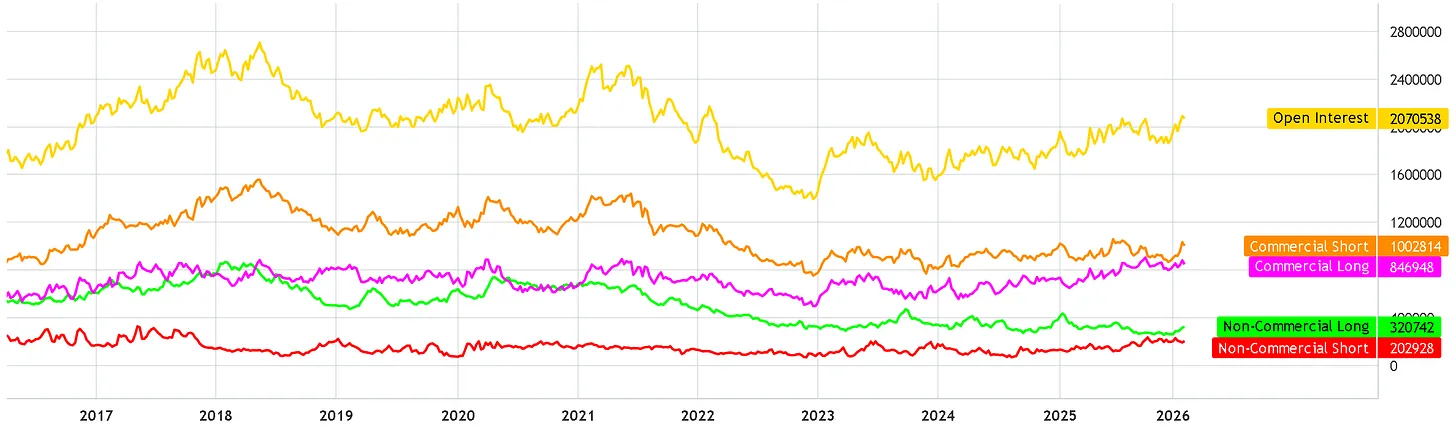
Crude oil futures positioning (open interest and trader categories). Source: CFTC.
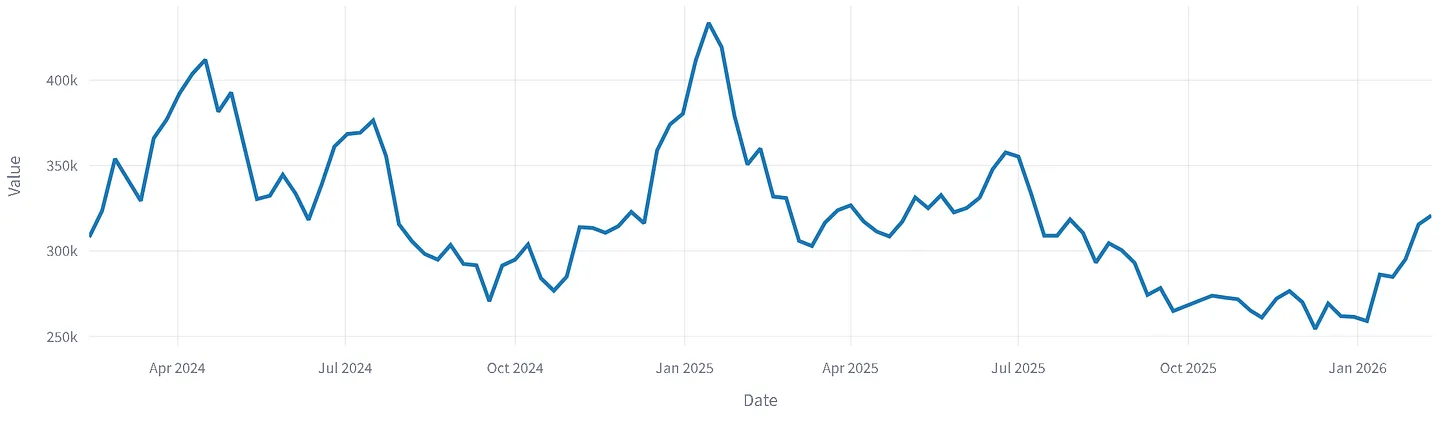
Non-commercial long positioning in crude oil (2-year lookback). Source: CFTC.
Non comm Longs – 55th percentile.
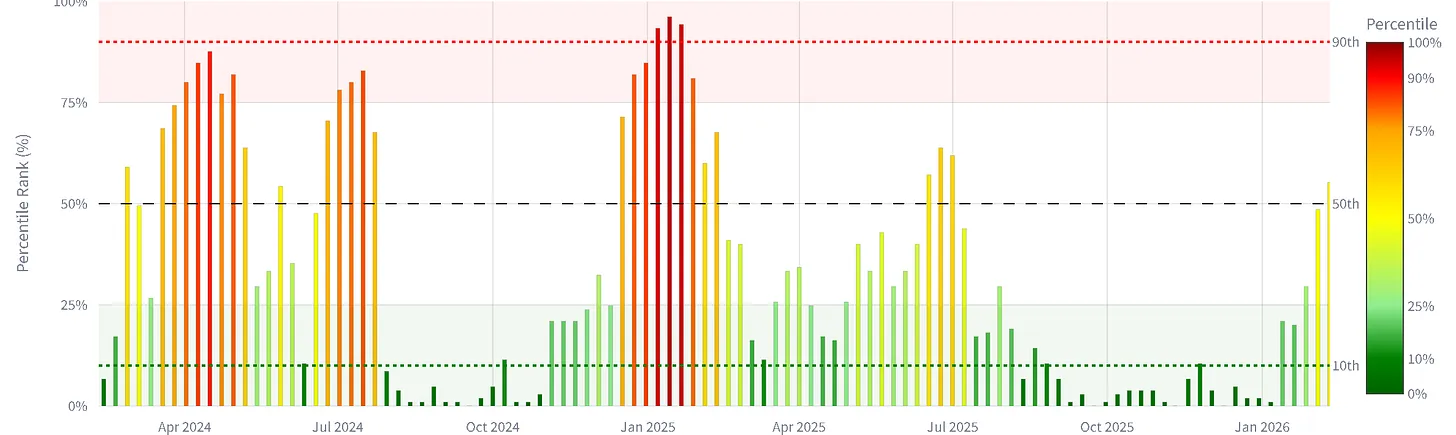
Non-commercial longs as share of open interest and percentile. Source: CFTC.
Non comm Shorts – 91st percentile.
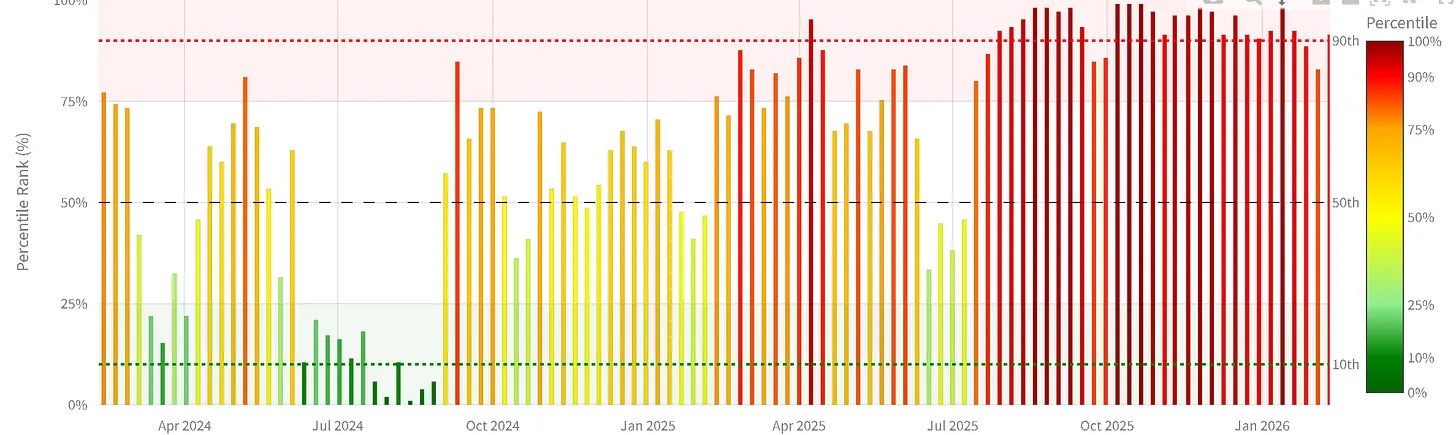
Non-commercial short crowding (percentile and %). Source: CFTC.
Net-net, this has led to a more democratic market and less directional focus than seen last week.
Equity Market Concentration: When Stocks Drag Oil
We see that Non-Comm longs number of traders increased +20, while their average position dropped slightly. On the Non-Comm short side however, where we saw a net increase of +11k contracts while19 traders exited. This tells me that there were still some sellers to get squeezed out, however those that remained saw the highs of the past 2 weeks as a good price to add in more.
Net-net, this has led to a more democratic market and less directional focus than seen last week. I see commercial shorts as being a passive passenger more than a driving influence while we wait for the Iranian situation to take a more defined shape.
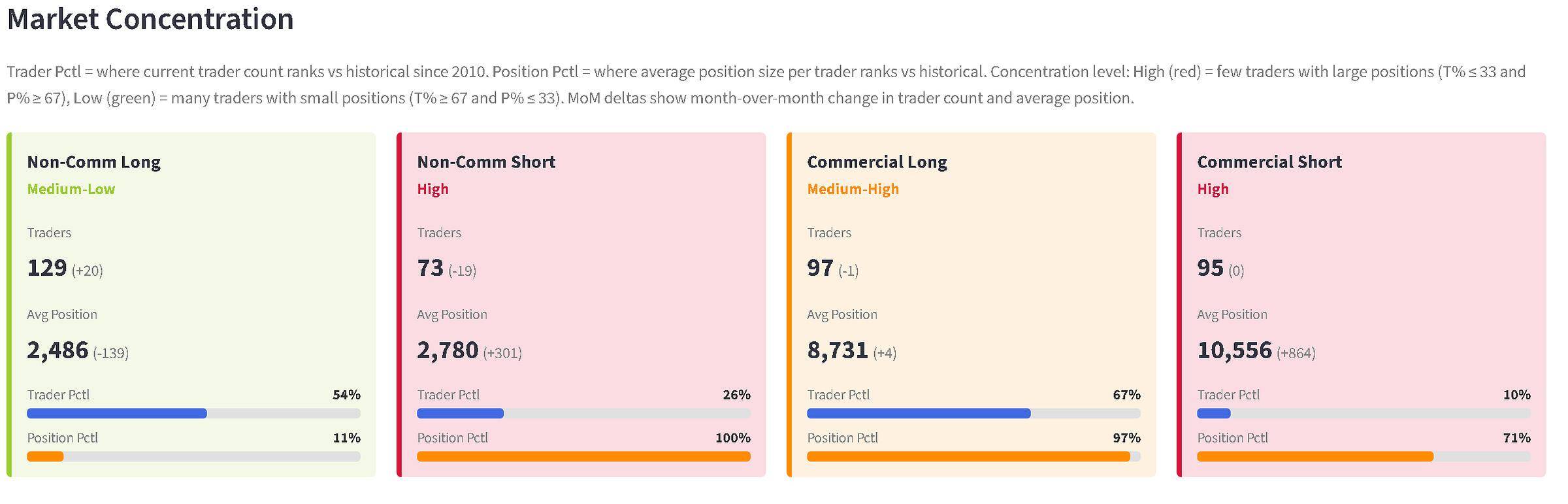
Equity market concentration indicators used to assess cross-asset risk.
Market Regime: Positioning and Volatility Signals
The regime shifted from last week’s score of 50 back to a more balanced 34.6. This was driven by essentially more Non-comm traders coming in to the market on the long side, balancing out the crowded spec shorts.
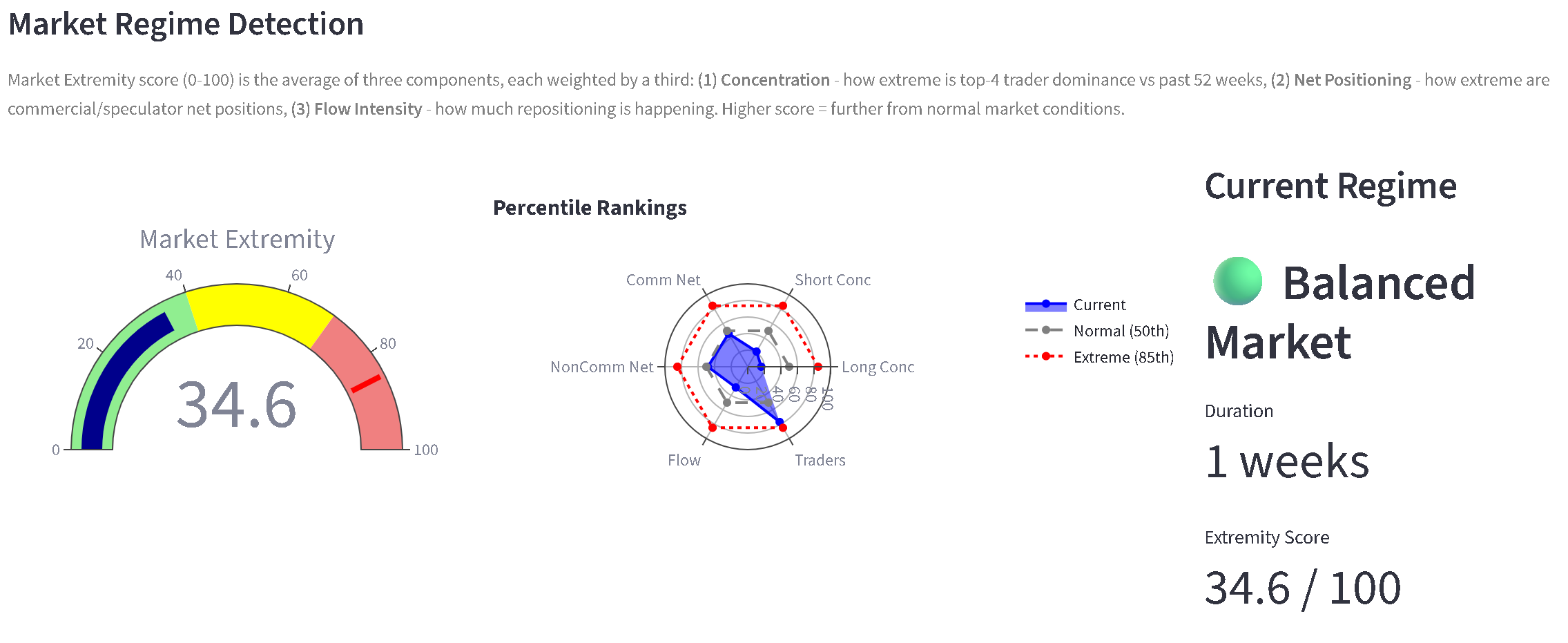
Market regime detection signal.
WTI Technical Outlook: $60.91 Support and $65.70 Resistance
No surprises here, I’m still waiting for $60.91 WTI to buy. As mentioned above, I see Iran escalation/de-escalation as the obvious price driver. Failing any material chance of stance anywhere there, the market is subject to equities market correlation drag.
Should The S&P500 drop 5%, oil would not be able to see refuge from such a deleveraging situation. It is not a comfortable place being a bull in such an environment as the front risks can be wipe-out events if you are over risked.
So net net, there is a lot of sitting on hands.
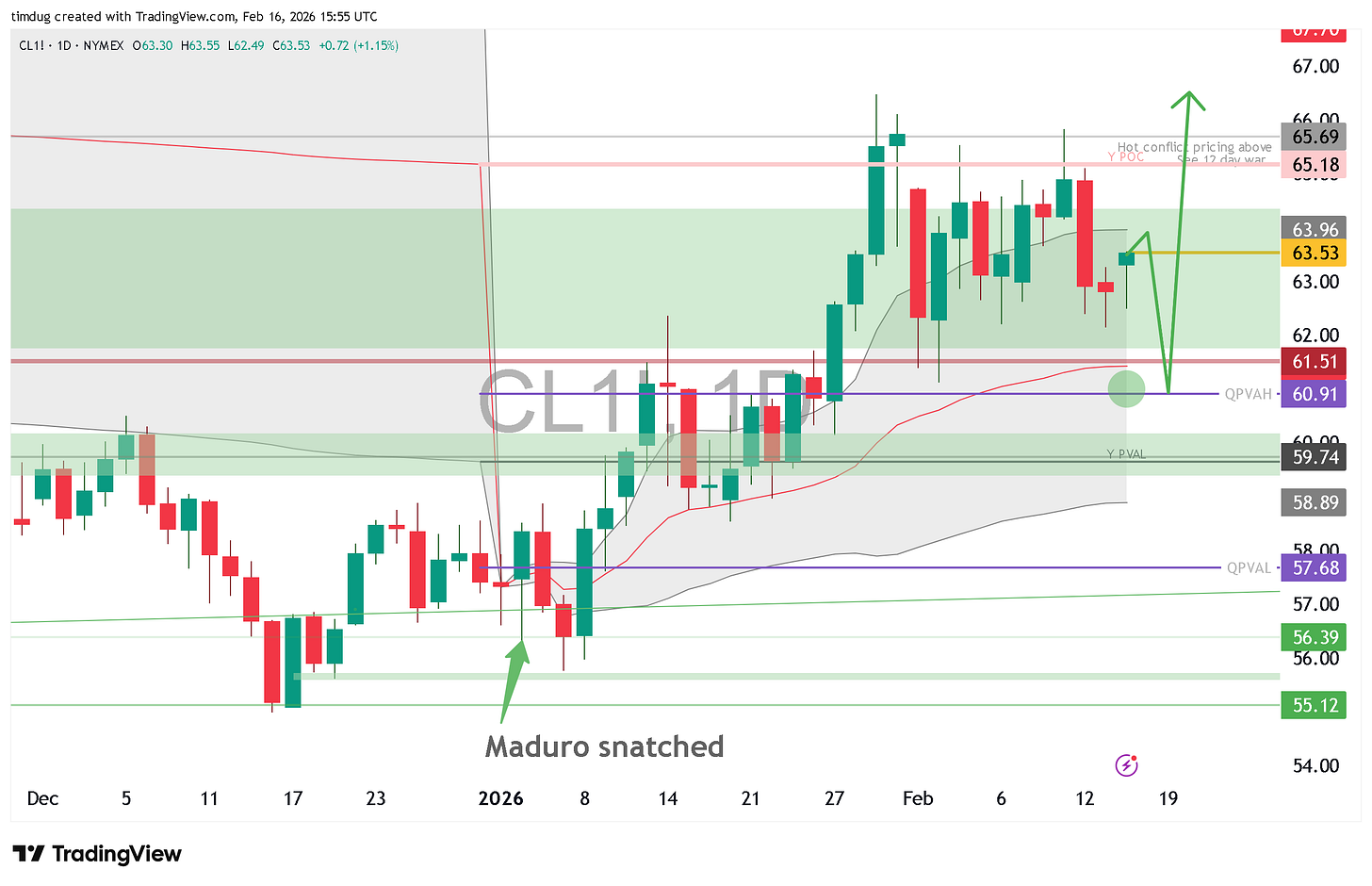
WTI crude oil daily chart with yearly VWAP. Source: TradingView.
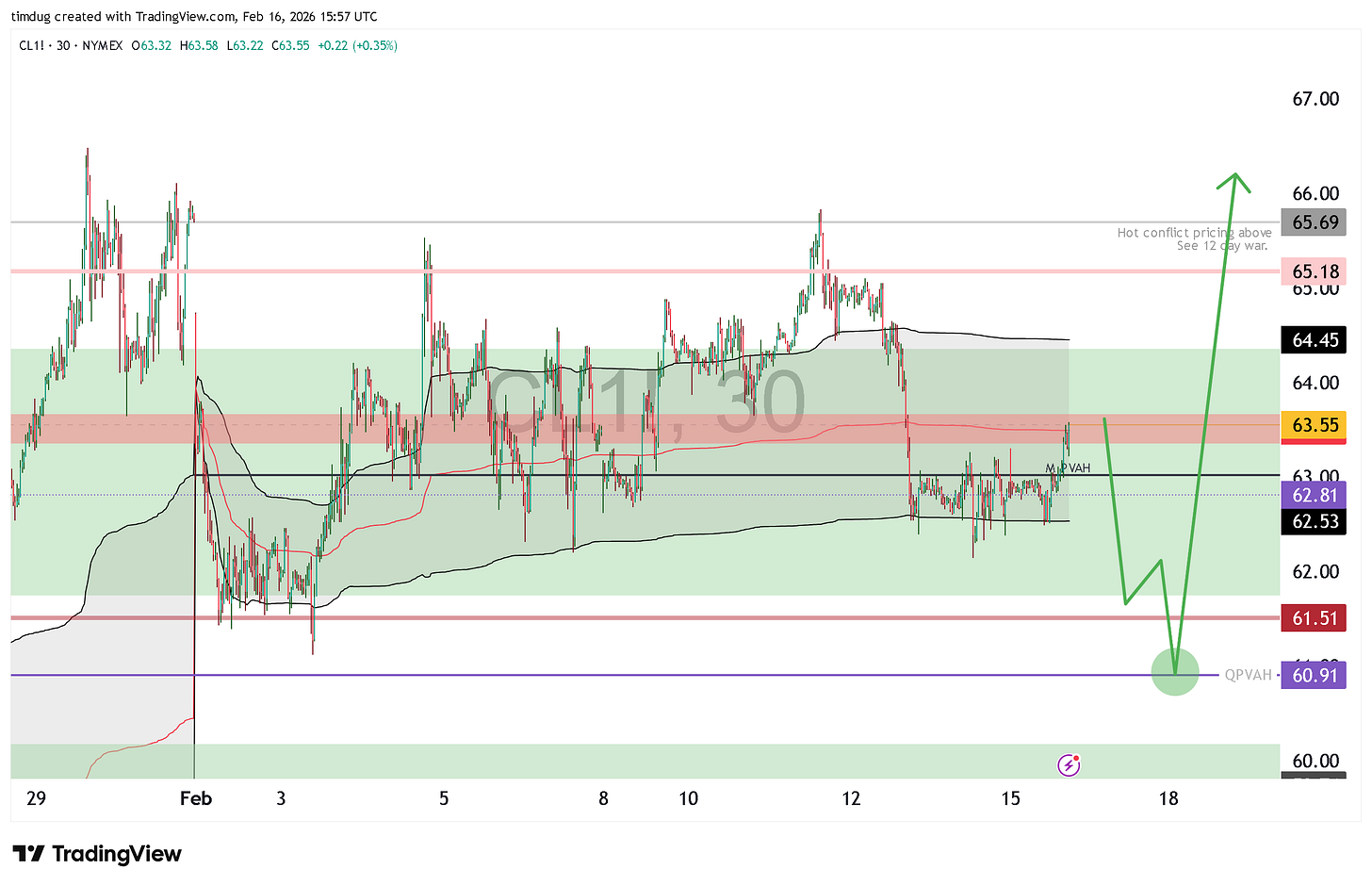
WTI crude oil 30-minute chart with monthly VWAP. Source: TradingView.
Trading is waiting. Waiting is trading.