


WTI Crude Oil
The light sweet crude oil market on Wednesday still has major factors influencing pricing. The latest U.S. inventory report still points to a tighter product balance, while crude supply itself remains well supported.
The Raw Numbers of Supply
The EIA’s November 4 Weekly Petroleum Status Report, for the week ending October, estimated commercial crude inventories at 409.8 million barrels, a weekly decline of 0.9 million. The Strategic Petroleum Reserve fell 0.4 million barrels to 282.2 million. Gasoline inventories declined 0.2 million barrels to 209 million, while distillate stocks dropped 3.6 million to 99.3 million barrels. The big glaring issue here would be distillate inventories, which are 11% below their inventories a year ago.
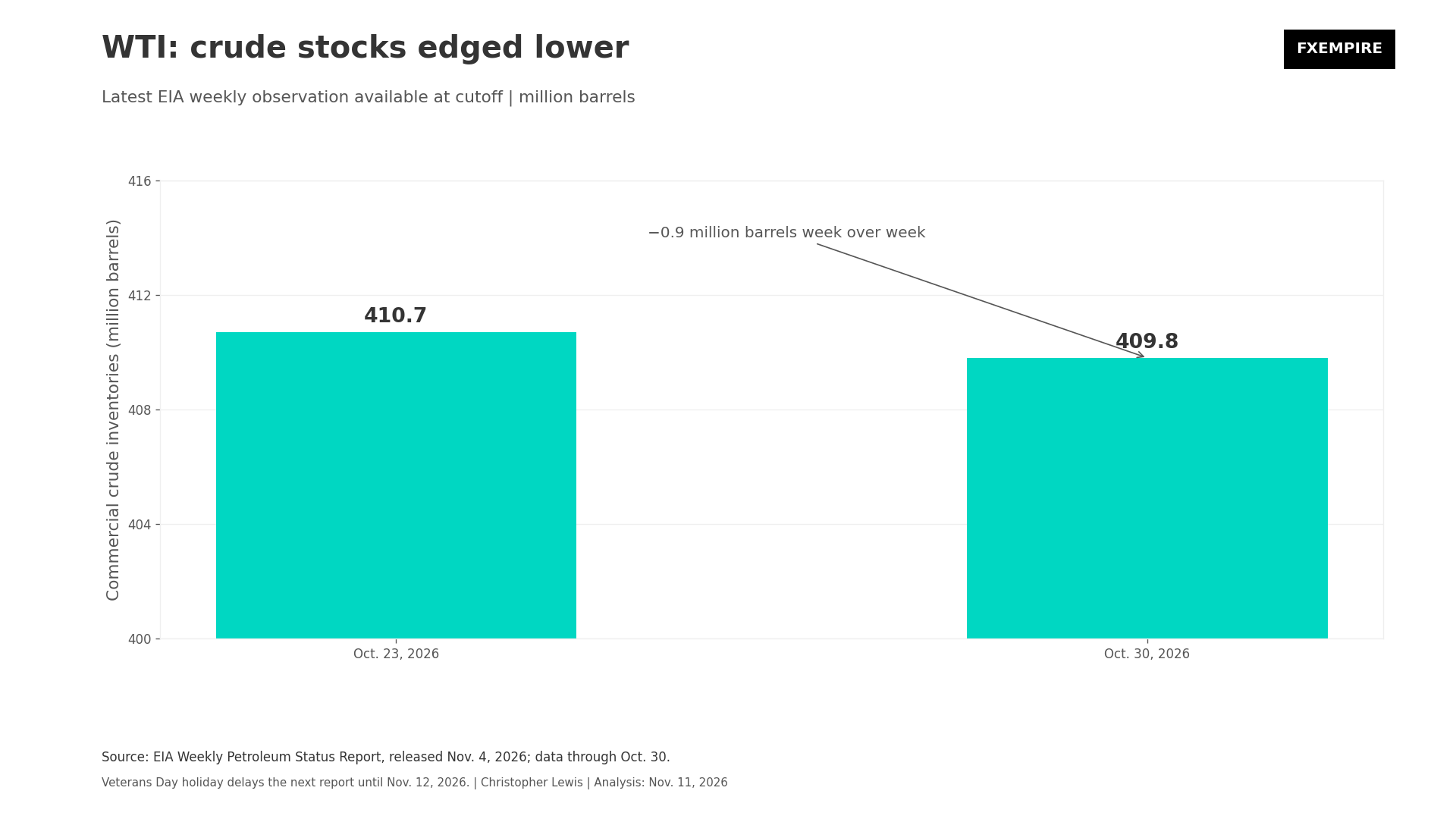
The weekly flow picture cuts both ways. U.S. crude production was estimated at 14.003 million barrels per day, up 11,000 barrels a day, but refinery crude inputs rose 199,000 barrels a day to 16.725 million. The higher demand coming out of refineries helps explain why crude inventories declined despite steady production.
However, crude exports fell 1.179 million barrels a day to 3.675 million, while imports were at 6.374 million, which was essentially unchanged. The export decline reduced the overseas call on U.S. barrels. Because of this, the crude draw cannot be treated as proof of some type of structural supply deficit in the United States.
Inventory Picture
The EIA’s November 10 Short-Term Energy Outlook adds a broader inventory context. It estimates that commercial crude stocks fell to about 410 million barrels at the end of October, the lowest level for the end of October since 2014. The agency attributes the draw to a wide Brent-WTI spread that encouraged exports and discouraged imports, alongside high refinery throughput. The report stated that the EIA expects inventories to remain below the 5-year average through mid-2027 before rebuilding as the spread narrows and domestic production rises. These inputs for the report were finalized on November 5.
Brent Oil Price Forecast
Every new Brent Oil analysis as it publishes, today's technical signal and key levels, live price — on one page.
See all Brent Oil forecastsThe fundamental view is mildly supportive while distillates remain scarce, but it is somewhat conditional, as high domestic production and uncertain export flows can quickly soften the balance.
Technical Picture
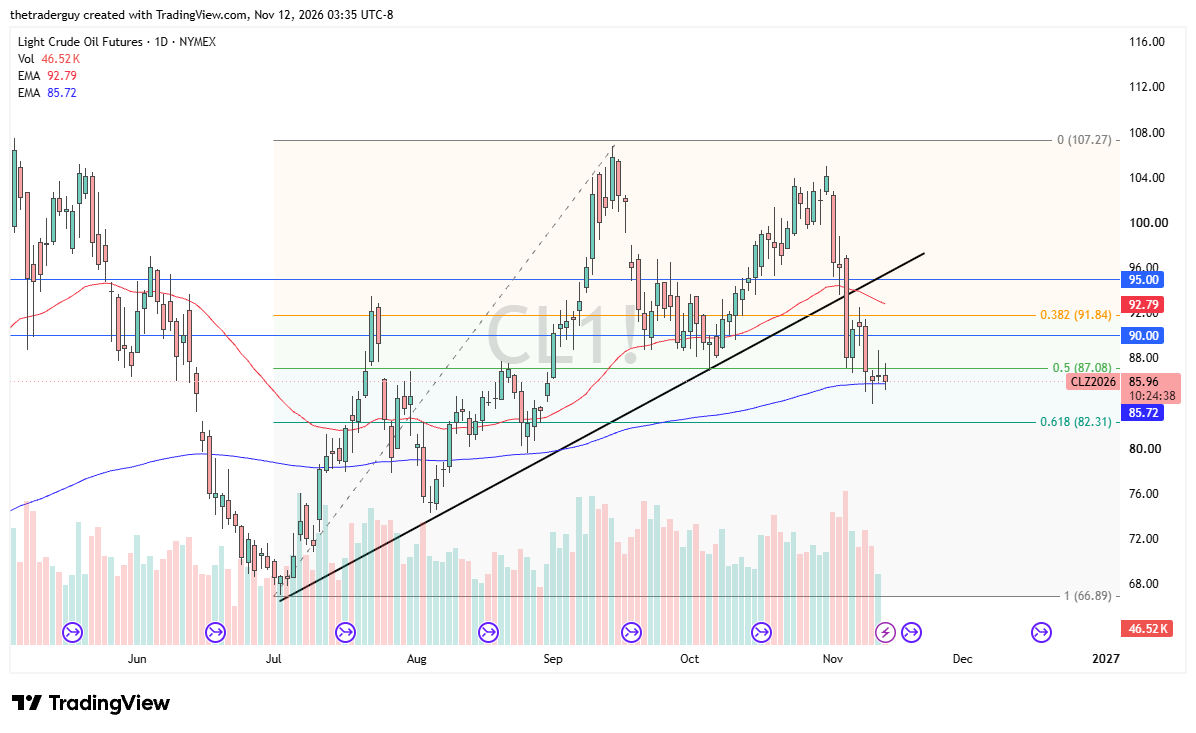
The technical analysis looks fairly neutral as we sit on top of the 200-day EMA, an indicator that a lot of traders will use to determine the trend. At this point, it does look like we are trying to form some type of bottoming pattern, so I am anticipating choppy and somewhat sideways action.
Brent
Brent will face a broader premium internationally, as it is exposed to so many different places. The seaborne market is exposed to shipping capacity, tanker security, and flows coming out of the Middle East. The latest EIA outlook, released on November 10, says crude oil prices rose for the third consecutive month in October as inventories fell. Tanker attacks continued in the Persian Gulf, and shipping capacity is constrained, with transportation costs increasing.
EIA Thinks $100 a Barrel Incoming
The EIA anticipates Brent near $100 per barrel for the remainder of 2026 while assuming most Middle Eastern production outside of Iran returns to pre-conflict averages by the middle of next year. Using that same assumption, it expects Brent at an average of $77 per barrel in the fourth quarter of next year.
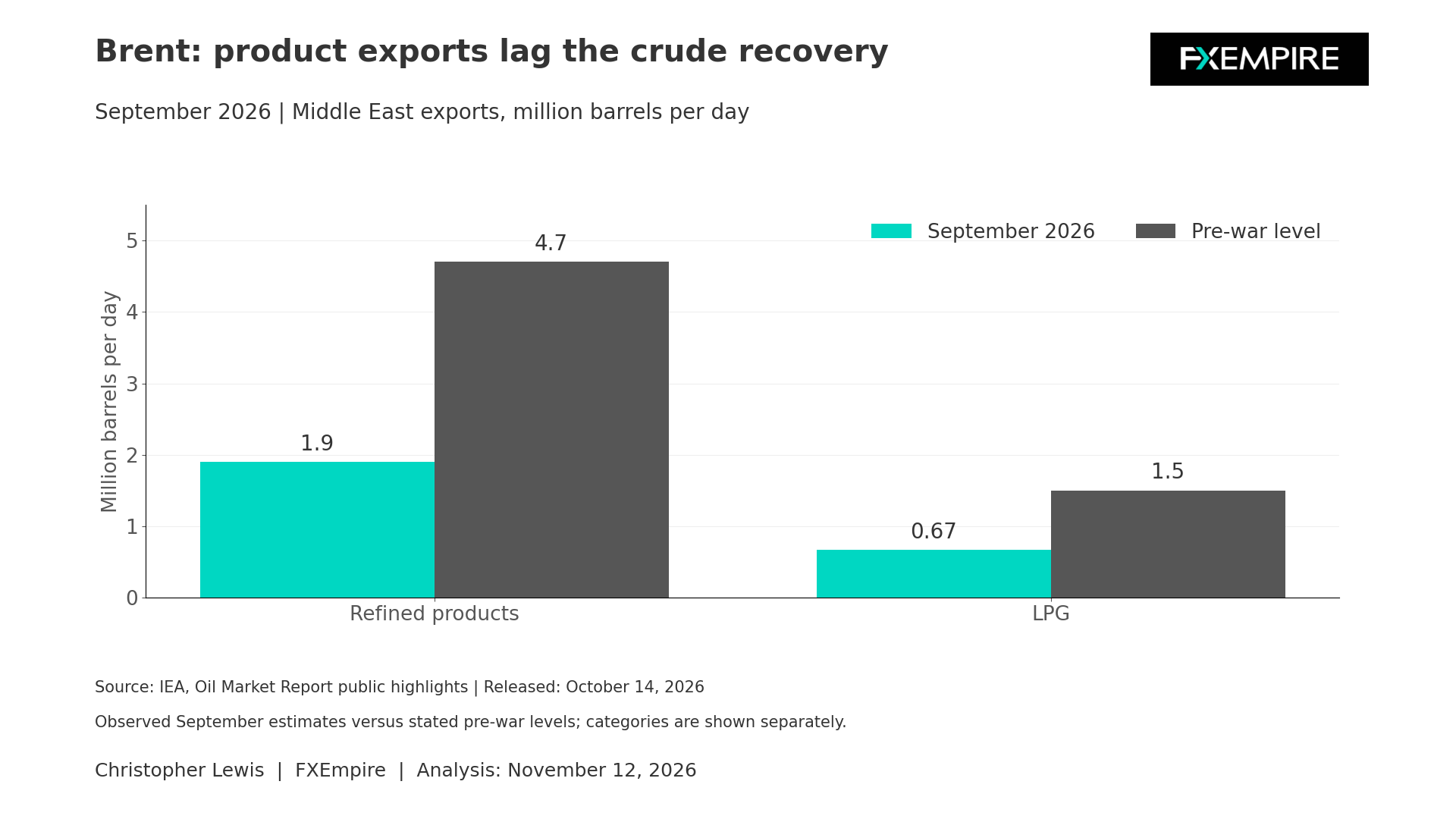
This all, of course, depends on a gradual return of supply and easing transport constraints. Any renewed disruption or longer recovery could keep available supply tighter and therefore prices higher than the EIA forecast. On the other hand, successful restoration of production, improved shipping ability, or weaker consumption could help reduce some of the premium.
The outlook’s caveat matters, as the EIA finalized its model inputs on November 5 before publication, and any developments that occur beyond that date have to be taken into account. Perhaps adjusting pricing targets will be necessary. The next official announcement will be tomorrow’s petroleum data and subsequent updates on shipping and production.
My assessment at this point is that Brent remains a stronger geopolitical- and freight-sensitive market than WTI. Although the EIA forecasts that the premium will eventually fade as supply normalizes, the question, of course, will be the latest headlines coming out and what they do for the market.
The Charts
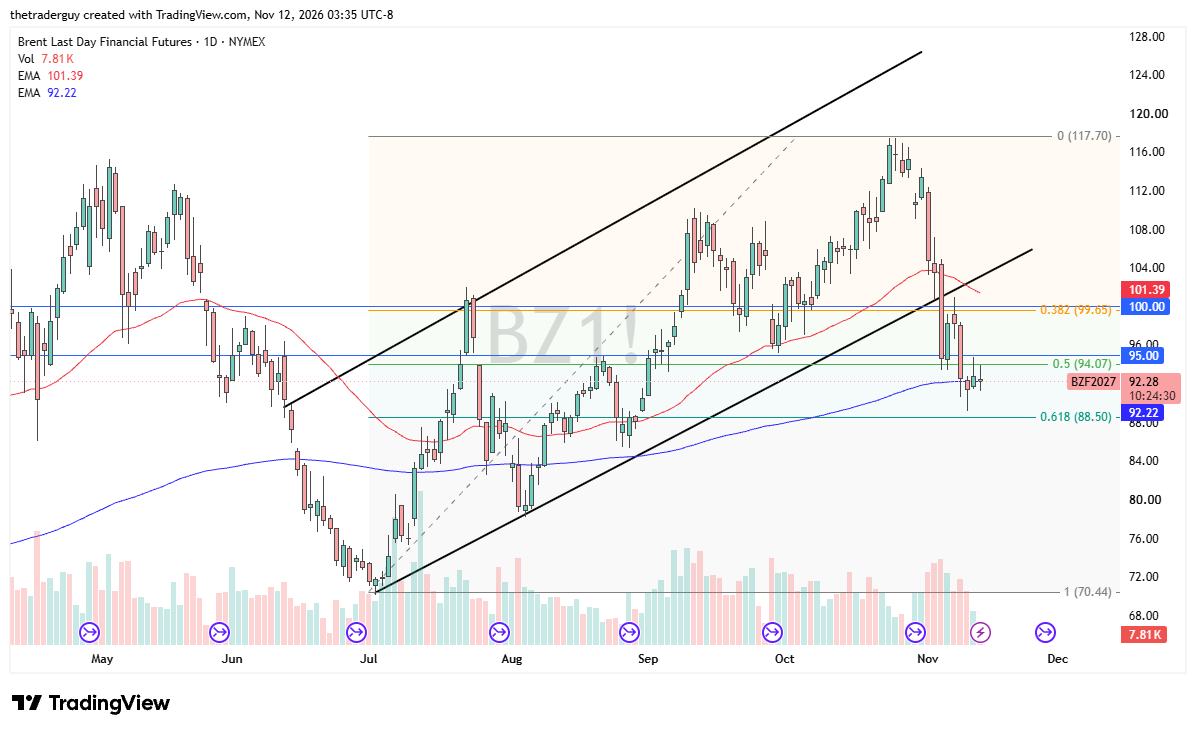
From a technical analysis standpoint, it’s very much like the WTI market, where we are just simply hanging around the 200-day EMA and looking for the next move. At this point, I’m waiting to see where the next surge is before I get involved in this market. I anticipate a potential bounce, but I will let the market make that decision before putting money to work.