


Gold (XAU) remains under pressure after the strong correction from $5,600, but the long term price structure is still bullish. In my view, this correction is setting the stage for another strong surge in gold towards the $8,000. This article discusses the latest inflation data, interest rate outlook and key technical levels to understand the next move in the gold price.
Cooling US Inflation Supports the Gold Price Outlook
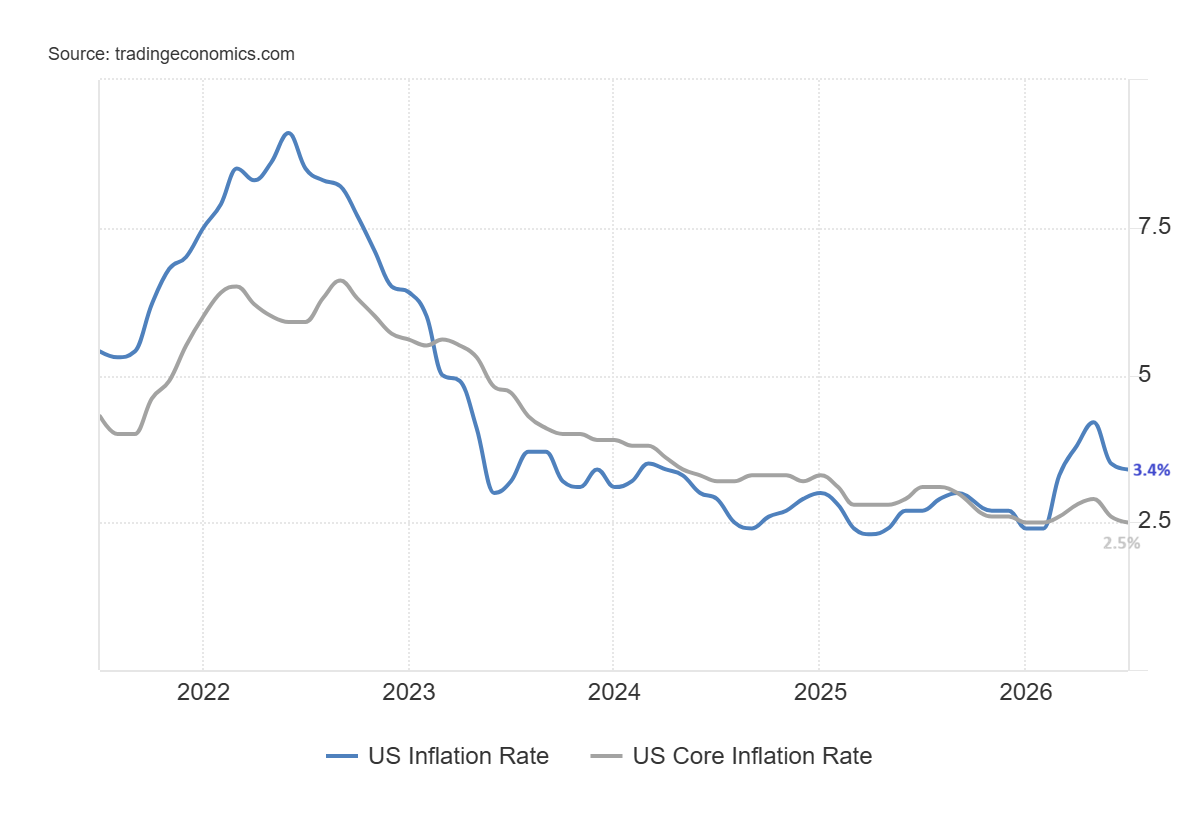
U.S. inflation continued to cool in July. The headline inflation dipped from 3.5% in June to 3.4% according to the Bureau of Labor Statistics. Consumer prices were up just 0.1% in the month following a 0.4% drop in June. The numbers were in line with market expectations and eased fears of a short term rate hike.
The core inflation also improved in the right direction. The annual core rate cooled to 2.5%, which is down from 2.6%, and core prices increased 0.2% in July.
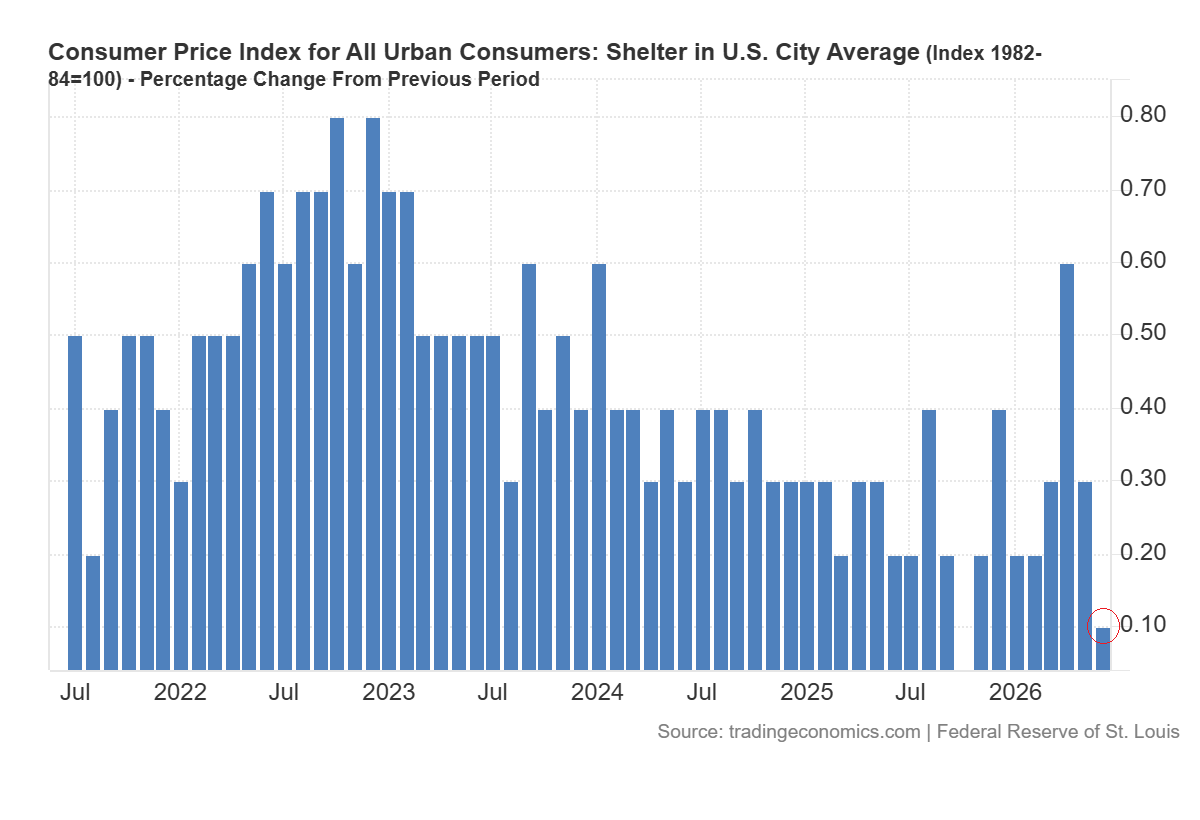
Shelter prices were up 0.1% but contributed roughly two-thirds to the monthly change in the headline inflation. This indicates that the price pressures are easing but they have not disappeared.
This relief in inflation was due to the lower energy prices. Energy prices decreased 1.5% in July following a 5.7% decrease in June. But the energy inflation is still up 14.7% in July.
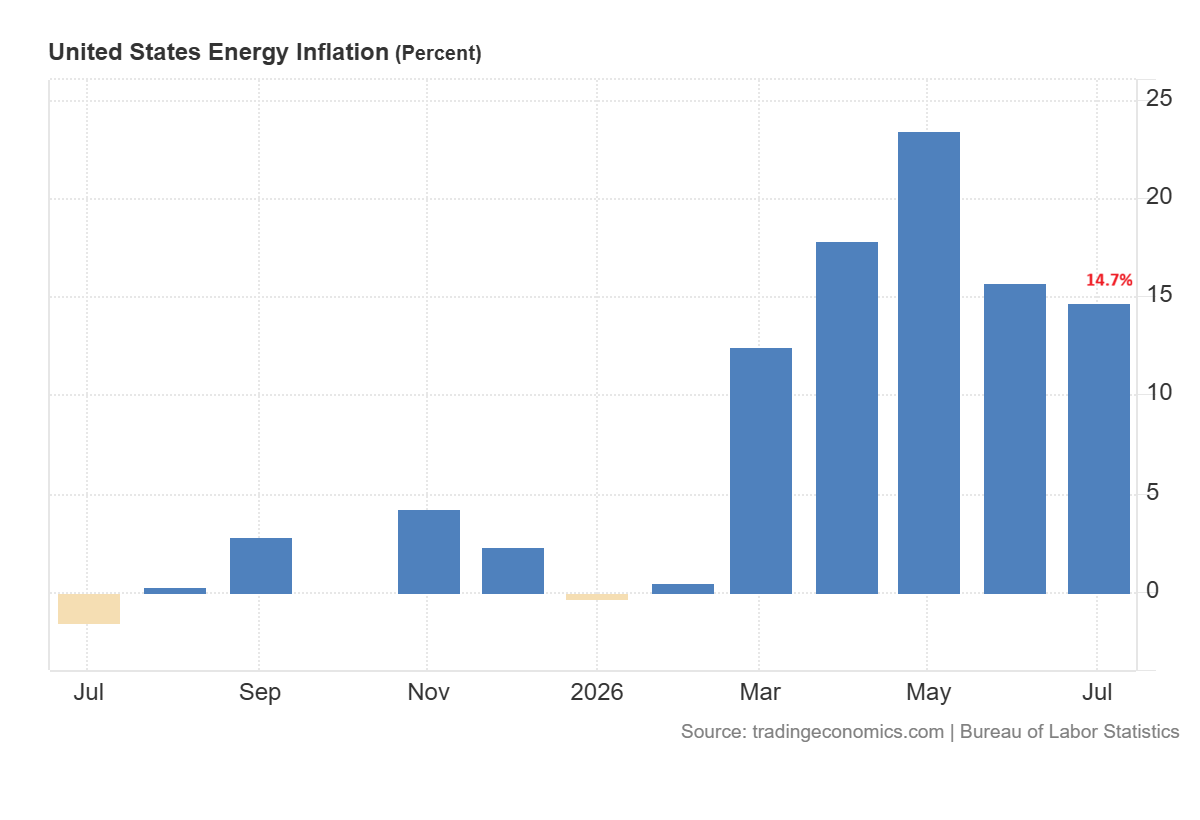
The price of gasoline increased 25%, while the price of fuel oil increased 39%. This means that another oil price spike could easily turn the recent improvement in the headline inflation.
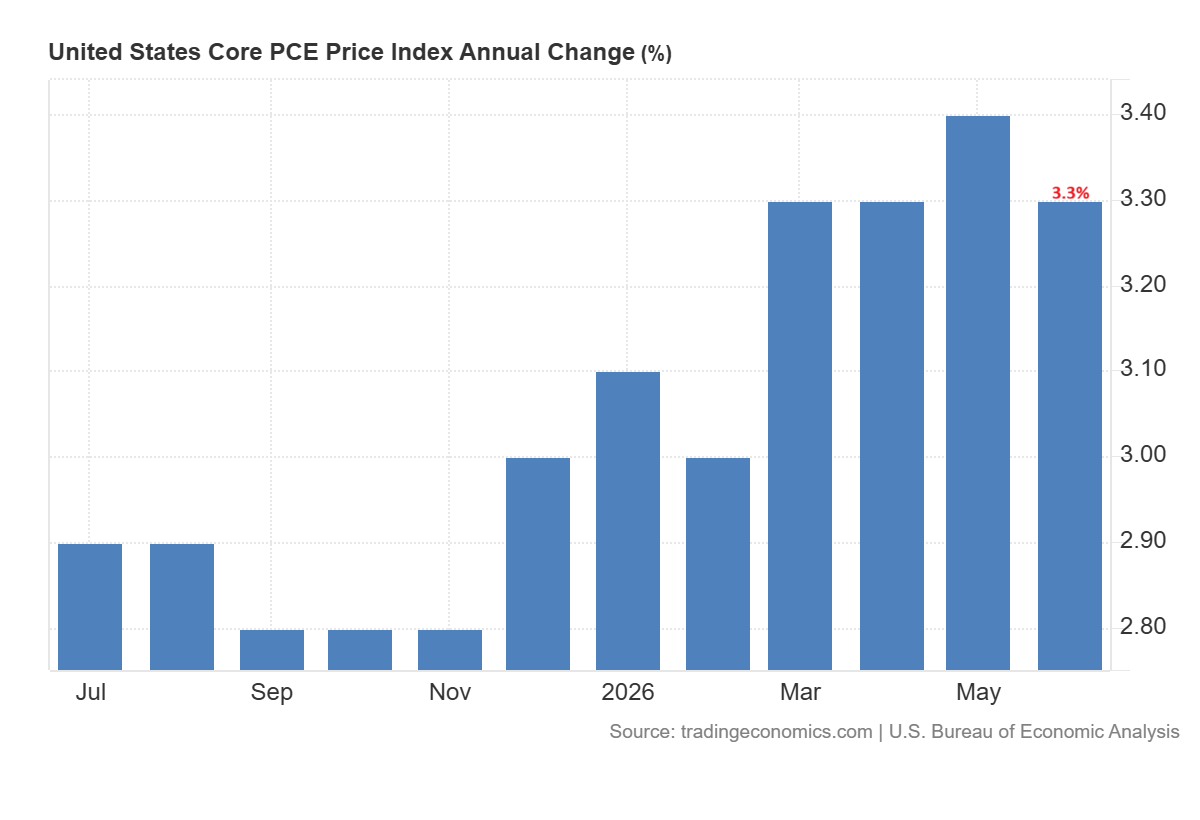
The Fed’s preferred gauge of inflation also showed gradual progress. The core PCE inflation rate eased to 3.3% in June from 3.4% in May. But it was still high for the Fed’s 2% target.
The Fed maintained the policy rate at 3.50%-3.75% in July but three officials voted for a 25 basis point hike. The probability of a Fed rate hike in September further dropped to 36% after the CPI data release. This is positive for the gold price as it takes some pressure off the U.S. dollar and interest rates.
Gold Price Forecast
Every new Gold analysis as it publishes, today's technical signal and key levels, live price — on one page.
See all Gold forecastsGDP Price Gap Keeps Long-Term Inflation Risks Alive
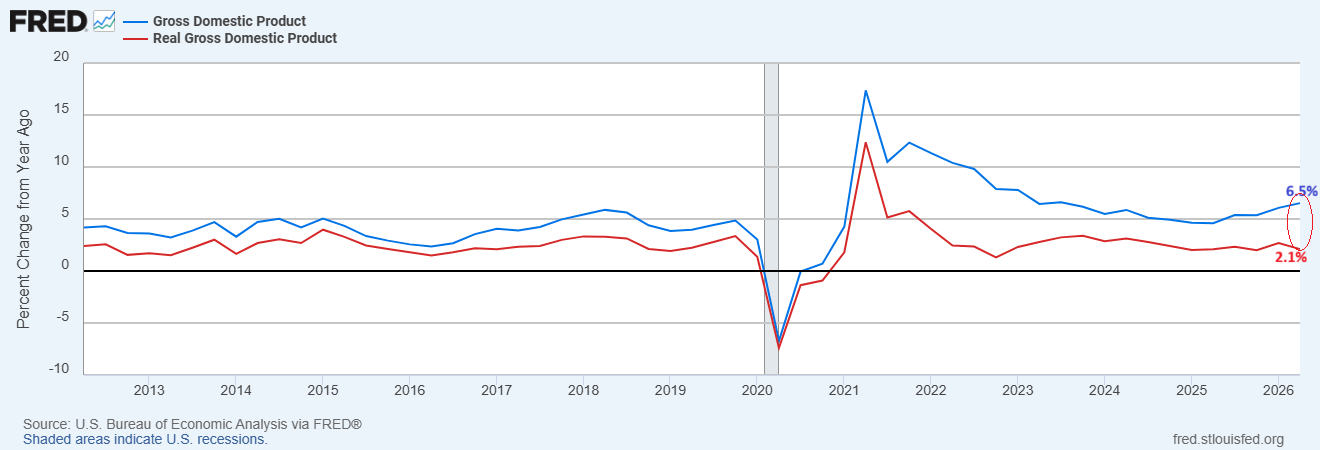
The overall economic data suggest the persistent inflation problem despite the slight improvement in inflation numbers in July. The chart below shows that the GDP grew by 6.5% year over year while the real GDP grew by 2.1% year over year. The difference between nominal GDP and real GDP is increasing, which indicates greater price effect on economic growth. This shows that price increases accounted for larger share of nominal growth, while the inflation adjusted output grew at a much slower pace.
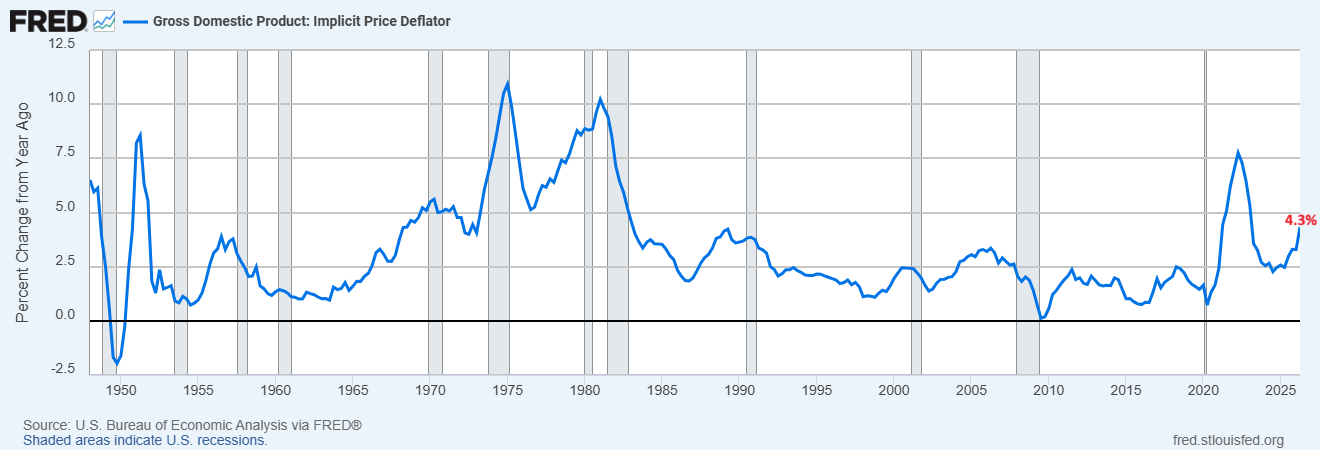
This pressure is also reflected by the growth of the GDP implicit price deflator. This is 4.3% higher from year earlier in Q2. This is the biggest year over year increase since early 2023. The price index for gross domestic purchases also increased at an annualized rate of 5.7%. These numbers indicate that inflation across the economy was still stronger than the recent CPI report indicated.
This difference is important for the bond market. Inflation will reduce the real value of bond payments over time. The U.S. 10-year Treasury yield was unchanged at around 4.69% and the 10-year real was at 2.43%. The persistent inflation and higher inflation expectations can keep long term borrowing costs elevated.
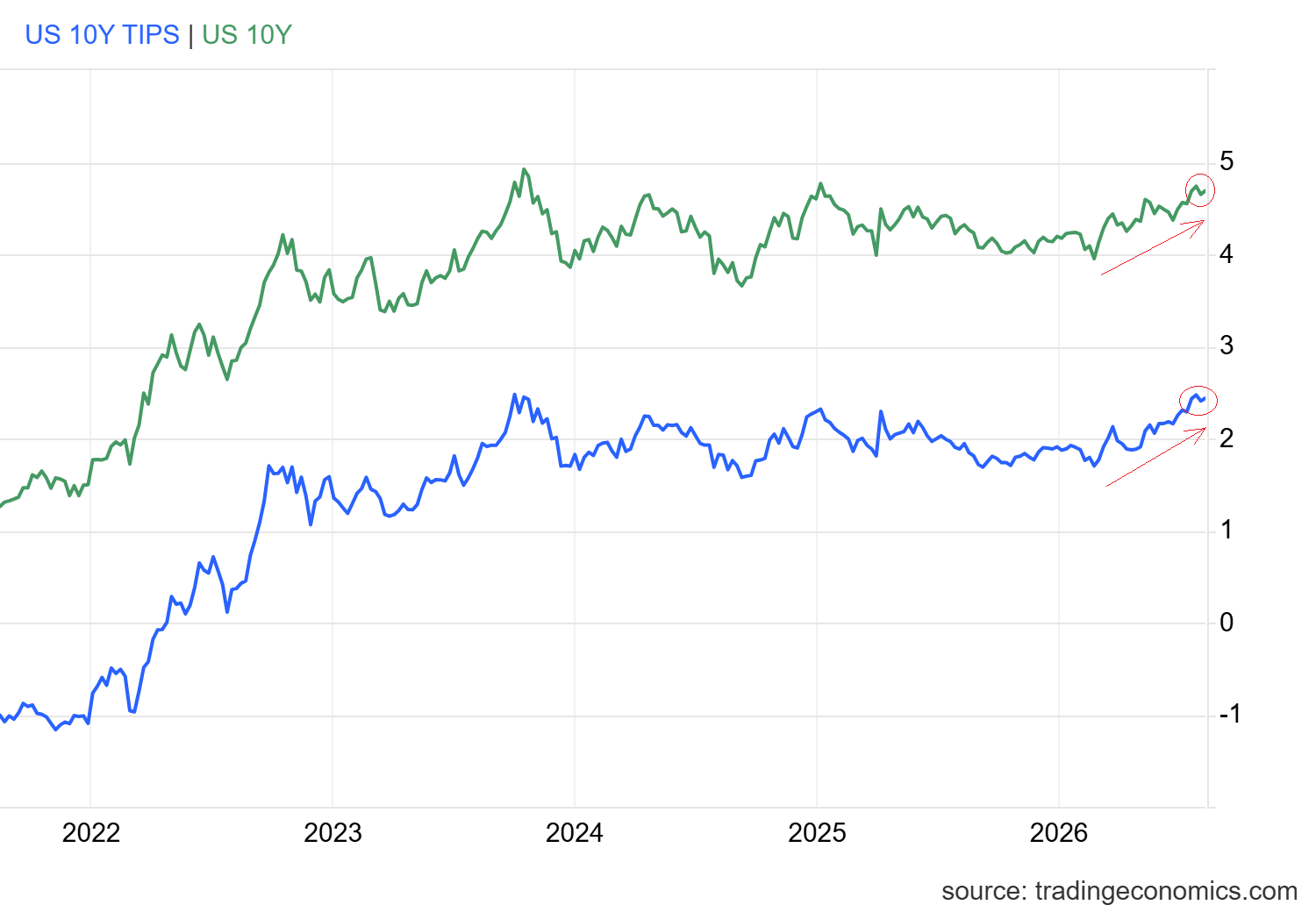
Higher real yields can limit the rally in gold in the short term as investors could earn an inflation adjusted return on government bonds. But the increasing GDP deflator also reinforces the longer-term case for gold as a hedge against declining purchasing power.
If the CPI and core PCE continue to slow and Treasury yields drop, that should provide better support for gold. If the inflation remains high, then the Fed may keep rates higher for longer. That result could create some short term volatility, but continued inflation may support the long term demand for gold.
Gold Price Forecast: $3,900 Support Keeps the Bullish Outlook Intact
Despite the strong correction in the gold market from $5,600 in 2026, the overall price structure for gold remains strongly bullish. It looks like gold is just retesting the breakout level that was triggered in 2025 around the $3,900 region.
The corrections in the gold market are healthy signs and provide further strength to the long-term bull phases. The gold price has remained in a strong bull phase since 2020. A break above $5,000 would confirm that the correction is over and the price could rally higher.
If the gold price fails to break below $3,900, then the next move in gold will likely be stronger towards $8,000. However, if the price fails to hold the $3,900 area and drops lower, it will likely trigger a strong decline before the next strong surge.
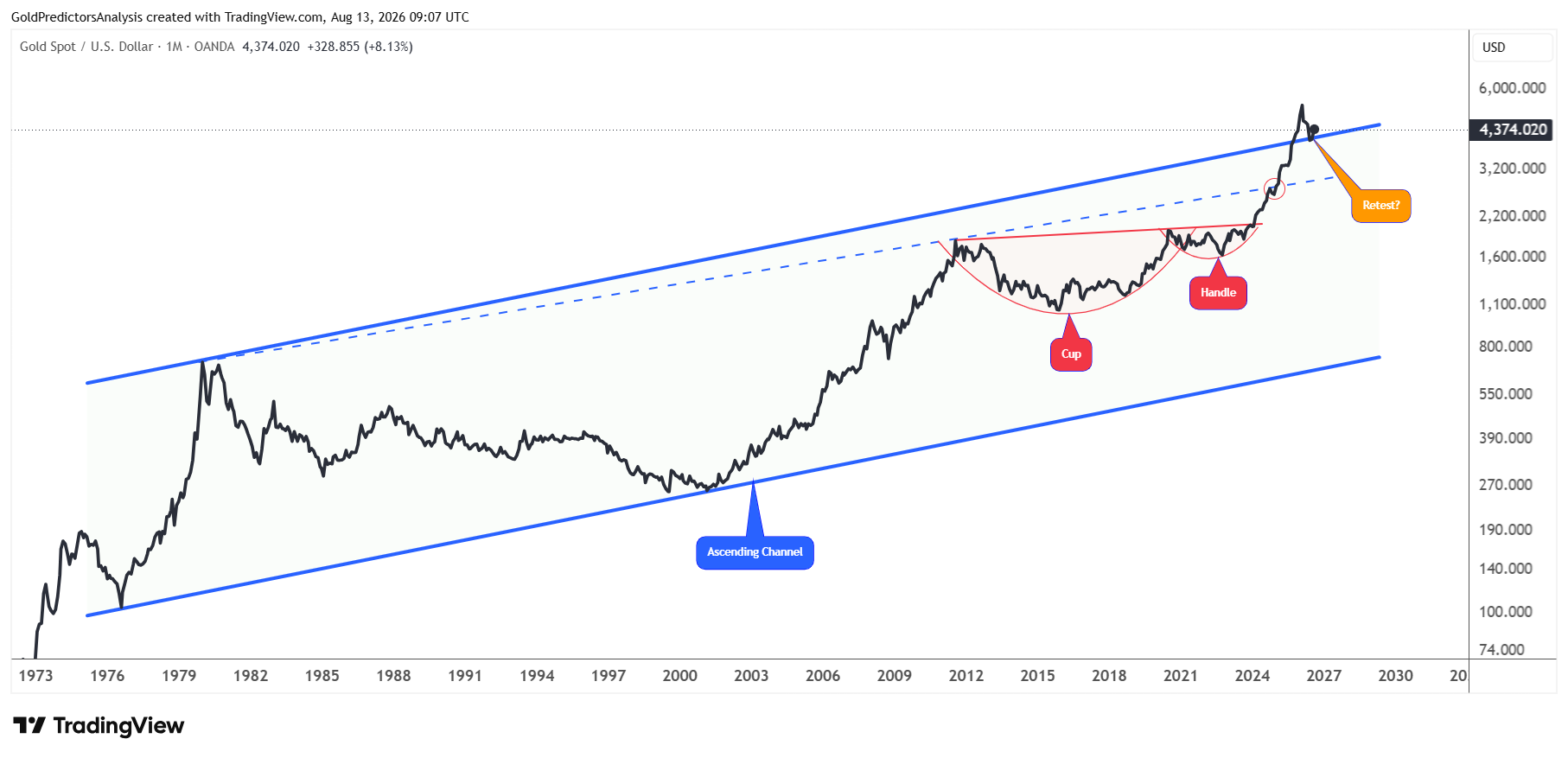
The formation of an ascending channel pattern from the 1976 lows toward the 2025 breakout suggests a long term positive trend. The formation of cup and handle pattern within this structure from 2011 to 2023 indicates constructive bullish price action.
A break above $5,000 will confirm that the correction is over and the price will likely rally higher. As discussed above, inflation is good for gold in the long term. But the short term correction from $5,600 is driven by higher interest rate expectations. When the U.S.-Iran war crisis is resolved and the market realizes the impact of higher inflation, gold prices will likely resume their broader long term bullish rally.
Gold Price Risks from Higher Rates and Geopolitical Tensions
The main risk to gold comes from another rise in inflation. The positive momentum in the oil prices may push the headline inflation higher. This higher inflation may force the Fed to keep the interest rates higher for longer. If price pressures spread across the economy, the Fed might also proceed to raise rates. This would support the U.S. dollar and add pressure to gold in the short term.
The gold price also faces the technical risk. The price must hold the $3,900 support zone in order to maintain the long term bullish trend. A break below the level may push the gold price lower towards the $3,500. The gold price has been consolidating for six months which indicates that the price must break above $5,000 to confirm that the correction is over.
The volatility might increase due to the geopolitical developments in the Middle East. The financial markets also depend on the resolution of the conflict between the US and Iran, which is creating high risk. Therefore, the gold price may remain choppy until inflation, interest rates and geopolitical tensions give more clarity to the market.
Bottom Line
Cooling consumer inflation has reduced the pressure on the Fed to raise interest rates in September. But the widening gap between nominal and real GDP shows that broader price pressures remain strong. The higher energy prices could also keep inflation elevated. This may create short term volatility but persistent inflation continues to support the long term demand for gold.
The long term price structure for gold remains bullish despite the correction from $5,600. Gold must hold the $3,900 support zone to maintain this bullish outlook. A break below this level could push the price toward $3,500. The price has already reached the first resistance of $4,400-$4,500 after marking the bottom at $3,900. The spot gold price must break $4,500 to open the door for a rally to $5,000. But a break above $5,000 would confirm the end of the correction and strengthen the long term path toward $8,000.
Read more: US CPI Puts $4,500 and $72 in Focus