
The US interest rate outlook changed after the weak jobs report reduced expectations for Fed rate hike in September. The job losses and downward revisions showed that demand for workers is slowing even though the unemployment rate fell. But the inflation remains above the Fed’s target and makes the upcoming CPI report important for the next policy decision. The changing expectations for the Fed and ECB have also weakened the US dollar and supported EUR/USD. This article discusses the jobs data, inflation outlook, the interest rate expectations and technical levels that may shape the next move in EUR/USD.

Weak US Jobs Report Reduces September Fed Rate Hike Risk
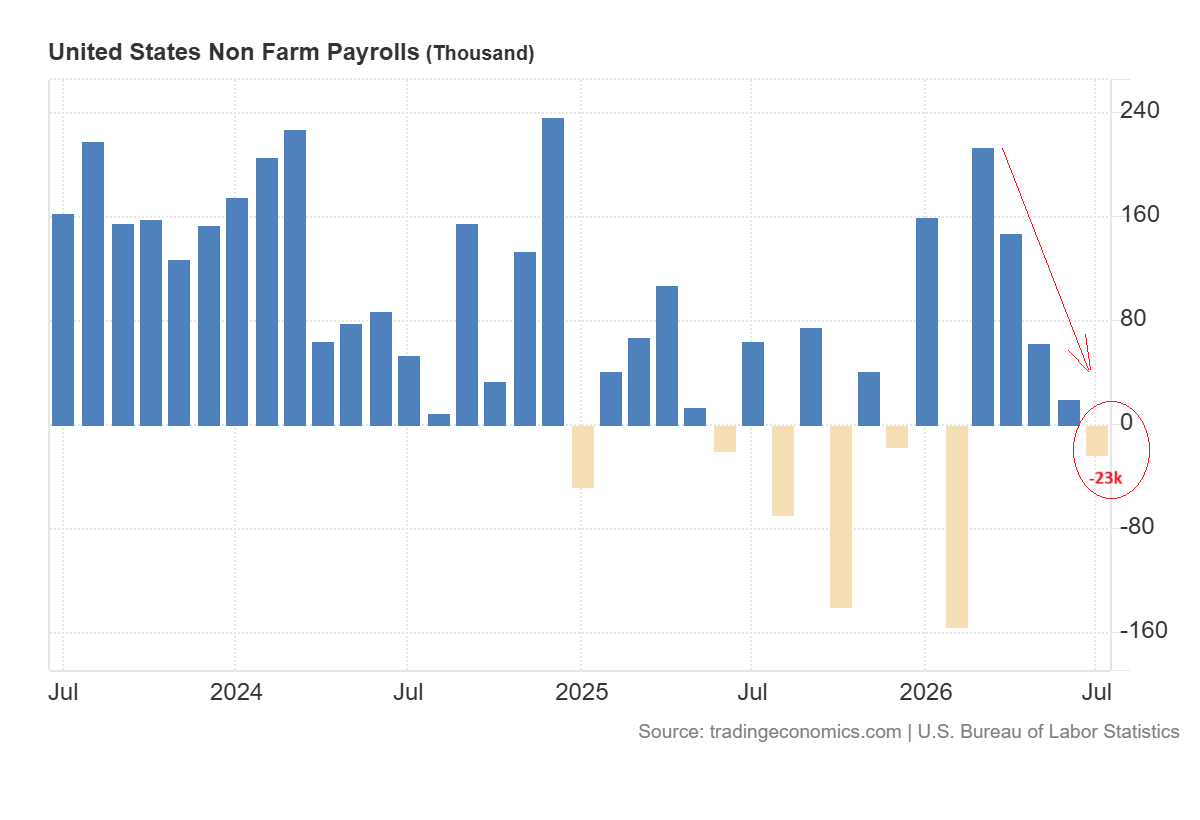
The US economy lost 23,000 jobs in July. The chart below shows a decline in jobs during the past three months. The May job growth was revised to 63,000 from 129,000. The June figure was also reduced to 20,000 from 57,000. These revisions decreased the number of jobs by 103,000 from the previous estimates.
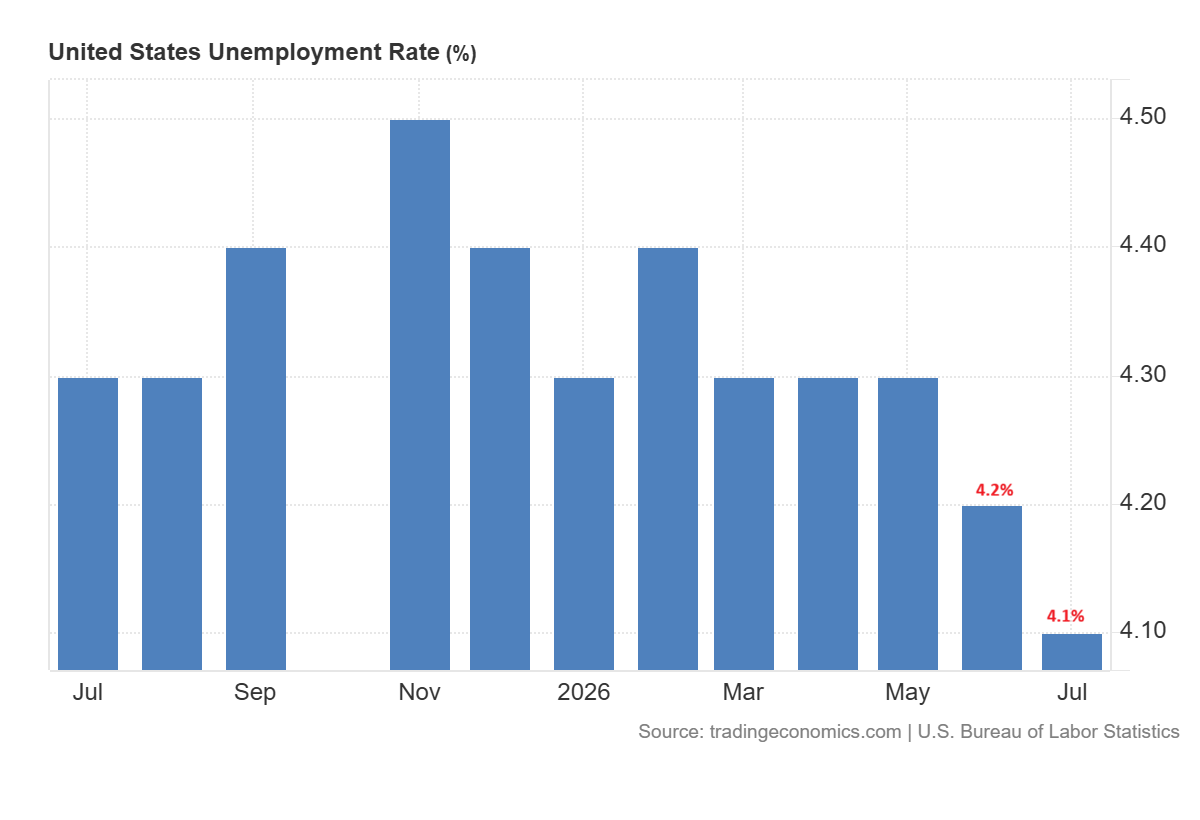
The rate of unemployment fell from 4.2% to 4.1% but that wasn’t a sign of broader improvement.
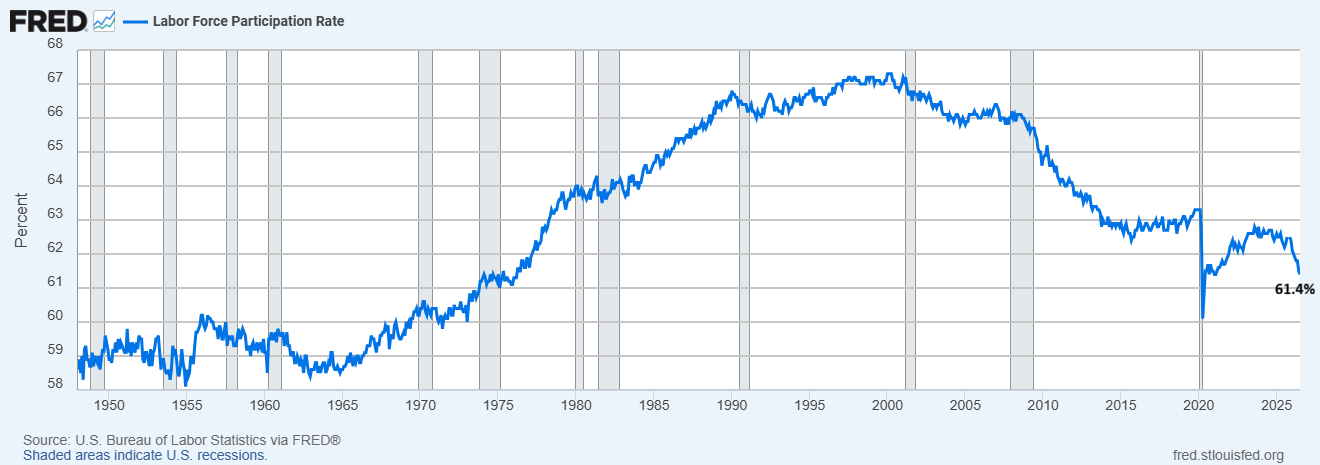
The number of people in the labour force fell as more people stopped looking for work. The participation rate dropped to 61.4% which is the lowest rate for more than five years. This weakness indicates that the momentum in the labour market is lower than given by the unemployment rate.
Several other areas of the labour market indicated weaker demand for workers. The local government education job losses were 50,000 and there were 19,000 job losses in the retail sector. Moreover, the healthcare sector also received the increase of 22,000 jobs, which was lower than its average monthly increase from the year ago.
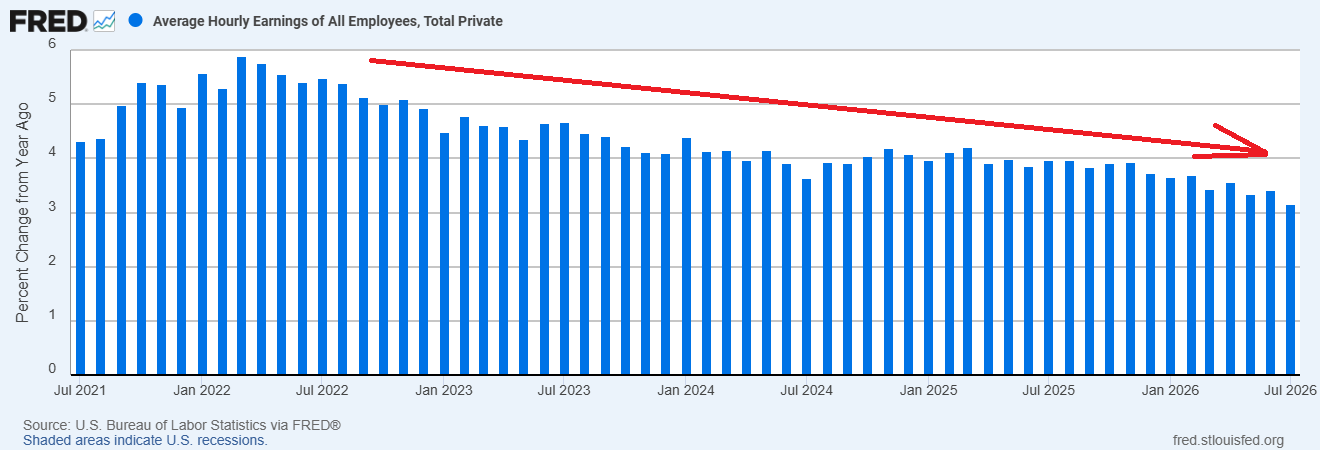
The average hourly earnings grew just two cents and the annual wage growth also eased to 3.2%. These numbers provide the Fed with justification to not apply pressure on the employment side using the immediate rate hike.
Brent Oil Price Forecast
Every new Brent Oil analysis as it publishes, today's technical signal and key levels, live price — on one page.
See all Brent Oil forecastsUS Inflation Data Becomes the Next Test for the Fed
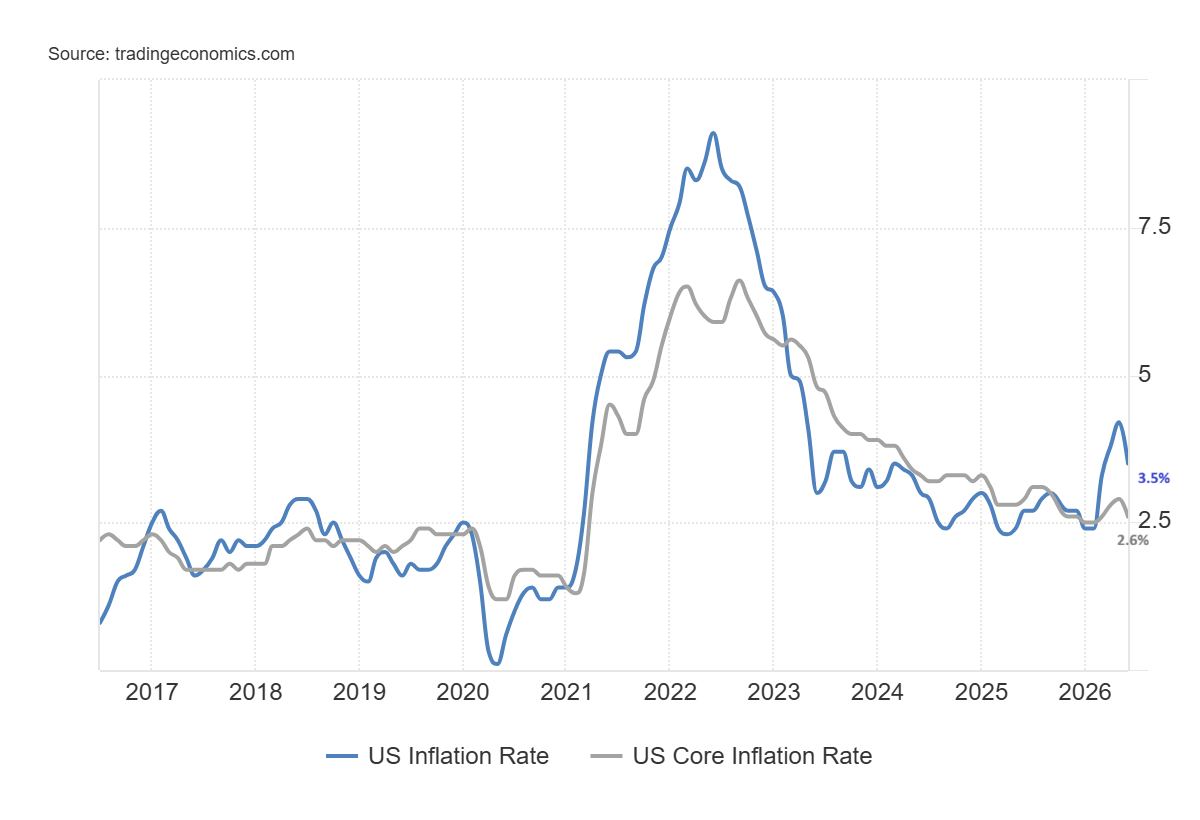
The inflation rate dropped to 3.5% in June as compared to 4.2% in May. The core inflation also dropped to 2.6% from 2.9%.
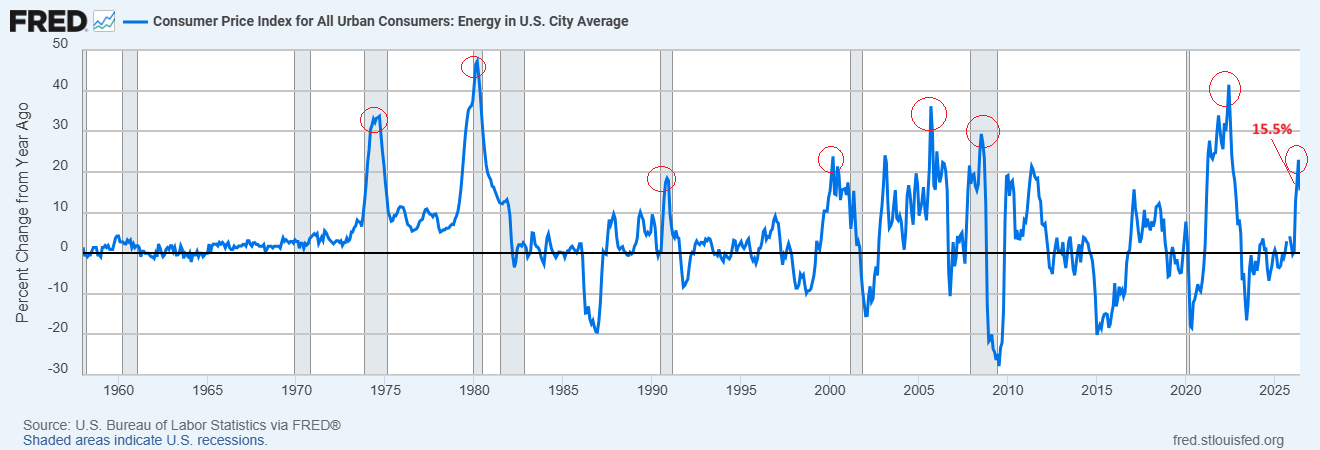
The energy inflation also eased slightly but still remains elevated at 15.5% in June. The drop in energy inflation in June was due to the lower oil and gasoline prices on easing optimism from the US-Iran war. The previous inflation report eased fears that the energy shock would bring about a permanent price increase.
The July CPI report will be released on Wednesday, August 12. The annual inflation is expected to slow to 3.4% while the core inflation is expected to fall to 2.5%. The Cleveland Fed’s model also calls for headline and core inflation rates of about 3.42% and 2.52% respectively for July. These estimates indicate that inflationary pressures are easing, but that inflation remains too high for the Fed to consider an immediate rate cut.
The biggest uncertainty remains energy prices. Brent crude oil closed Friday at $85.29 per barrel. The price remains volatile due to the unresolved tensions between the US and Iran. The signs of an eventual deal between Iran and Oman in shipping routes emerged over the weekend. But Iran stated that this agreement may not automatically reopen the Strait of Hormuz. This uncertainty could keep oil prices unpredictable and keep the energy prices volatile.
US Interest Rate Forecast Points to a September Hold
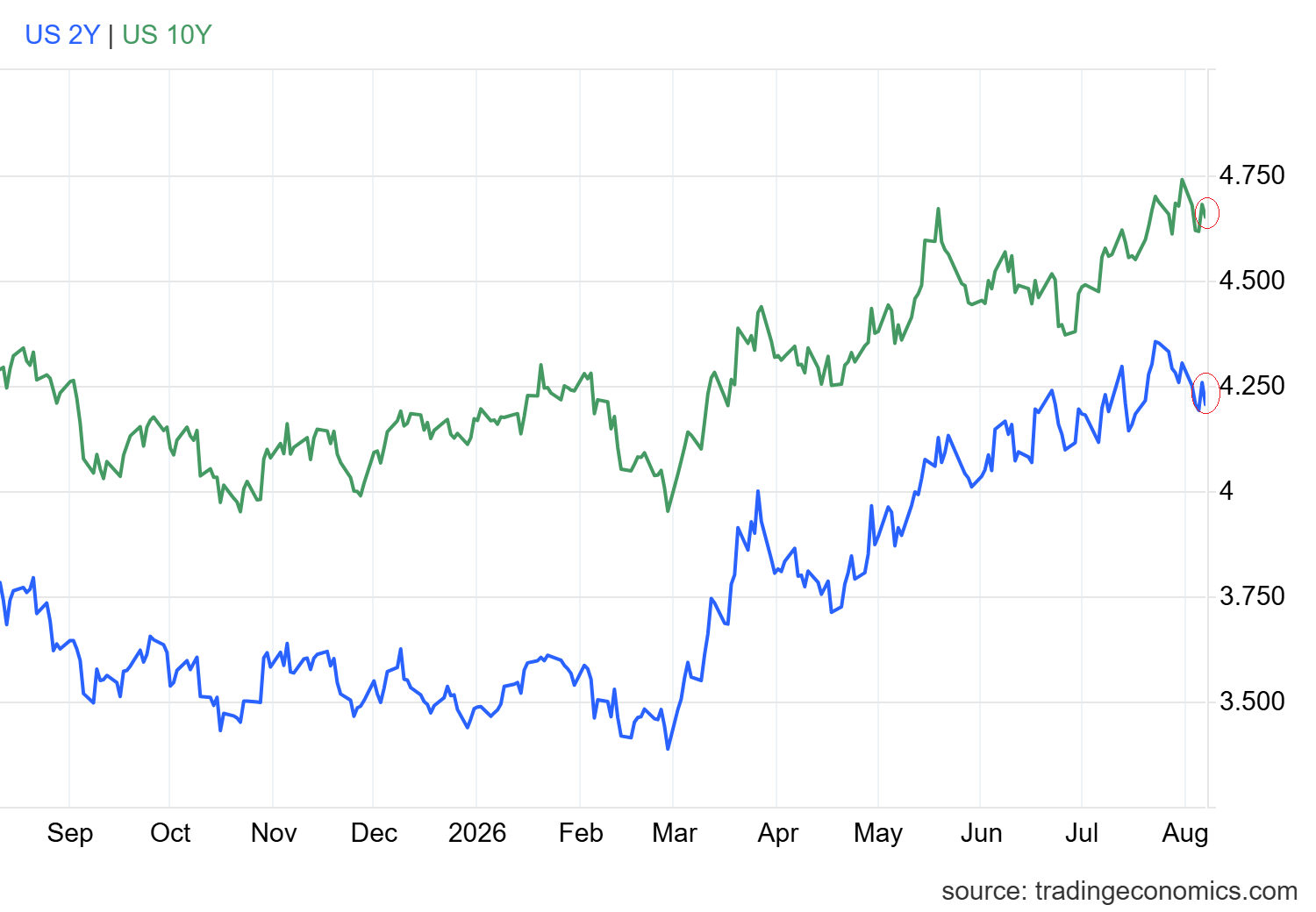
The latest US jobs data changed the market expectations for the September rate hike. The market expected the Fed rate hike odds by 55% before the jobs data release. However, these expectations dropped to 44% after the report. The Treasury yields also dropped after the report. The two-year yield dropped to approximately 4.20% while the 10-year yield dropped to around 4.65%.
In my view, the Fed will likely keep the interest rates at current levels in September. The poor job market has reduced the risk of a rate hike sooner. But the upcoming inflation data will provide more evidence. The Fed would be able to see the July and August inflation data if they could maintain the interest rates at 3.50%-3.75%.
But a September rate increase is not out of the question. Three Fed officials were in favor of a rate hike at the July meeting. A more robust CPI report could bring back support to their cause. A further oil price increase may have the same impact. If core inflation picks up and the labour market stabilises, a hike would become more likely. However, if inflation continues to soften and jobs continue to lag, the Fed may keep the interest rates unchanged for longer period.
Fed and ECB Policy Expectations Shape EUR/USD
The outlook for interest rates in the eurozone is not the same. The ECB deposit rate was increased to 2.25% in June and remained unchanged in July.
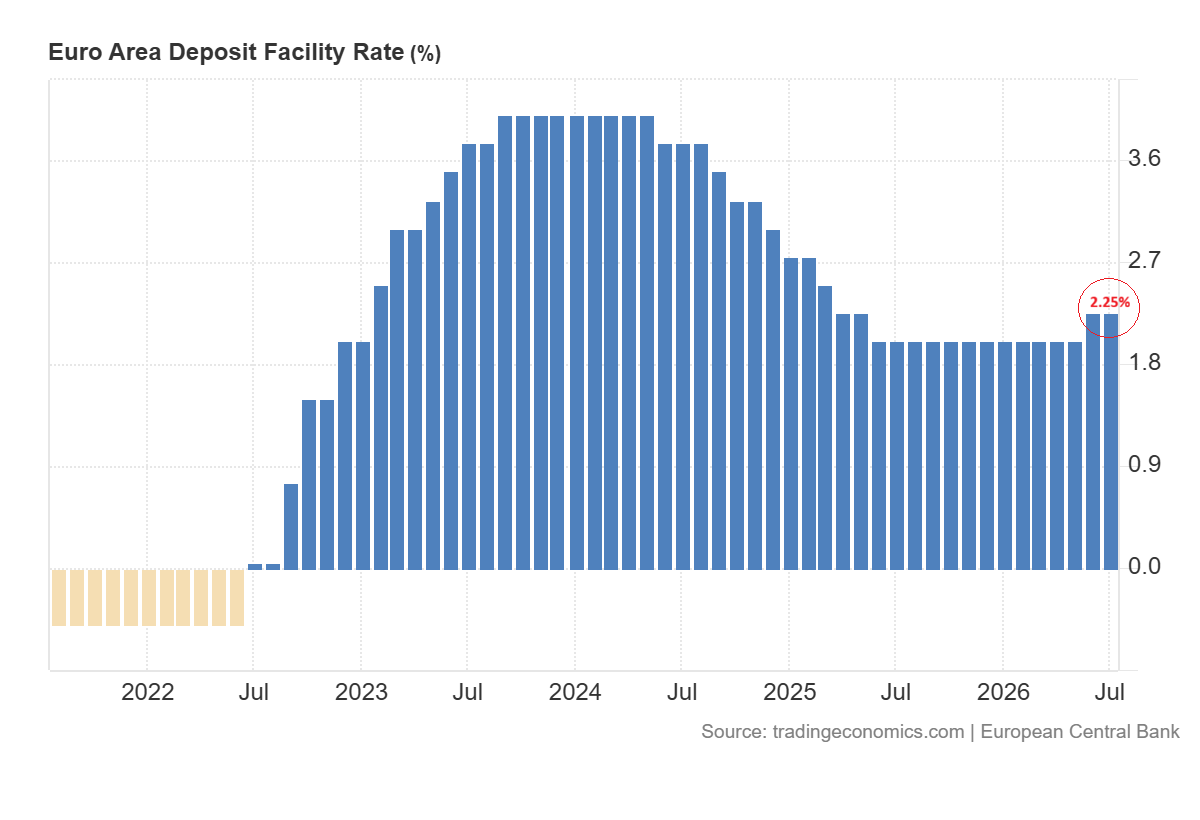
The key interest rate remains unchanged at 2.4% in July.
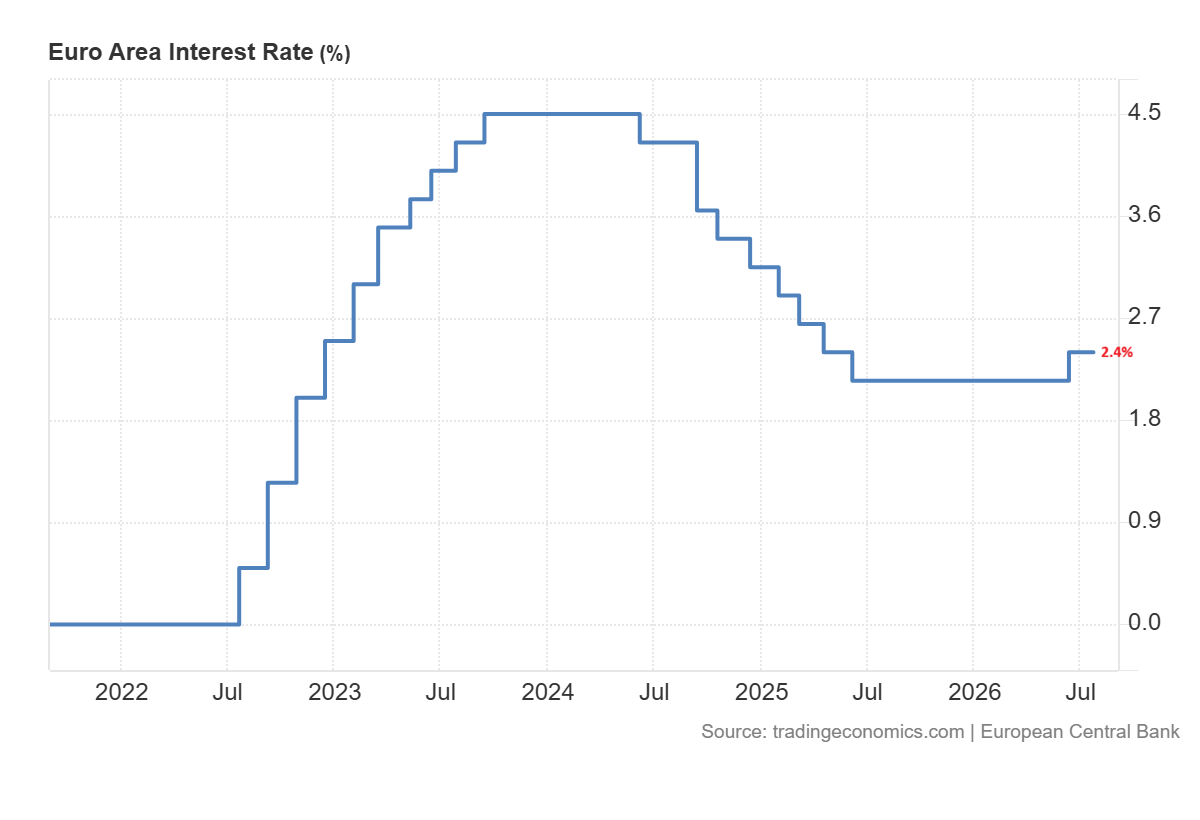
There is still a high chance of another ECB rate hike in September. So expectations for a Fed hike are low, while the expectations for an ECB hike remain unchanged. This adjustment may help reduce the interest rate spread between United States and the eurozone.
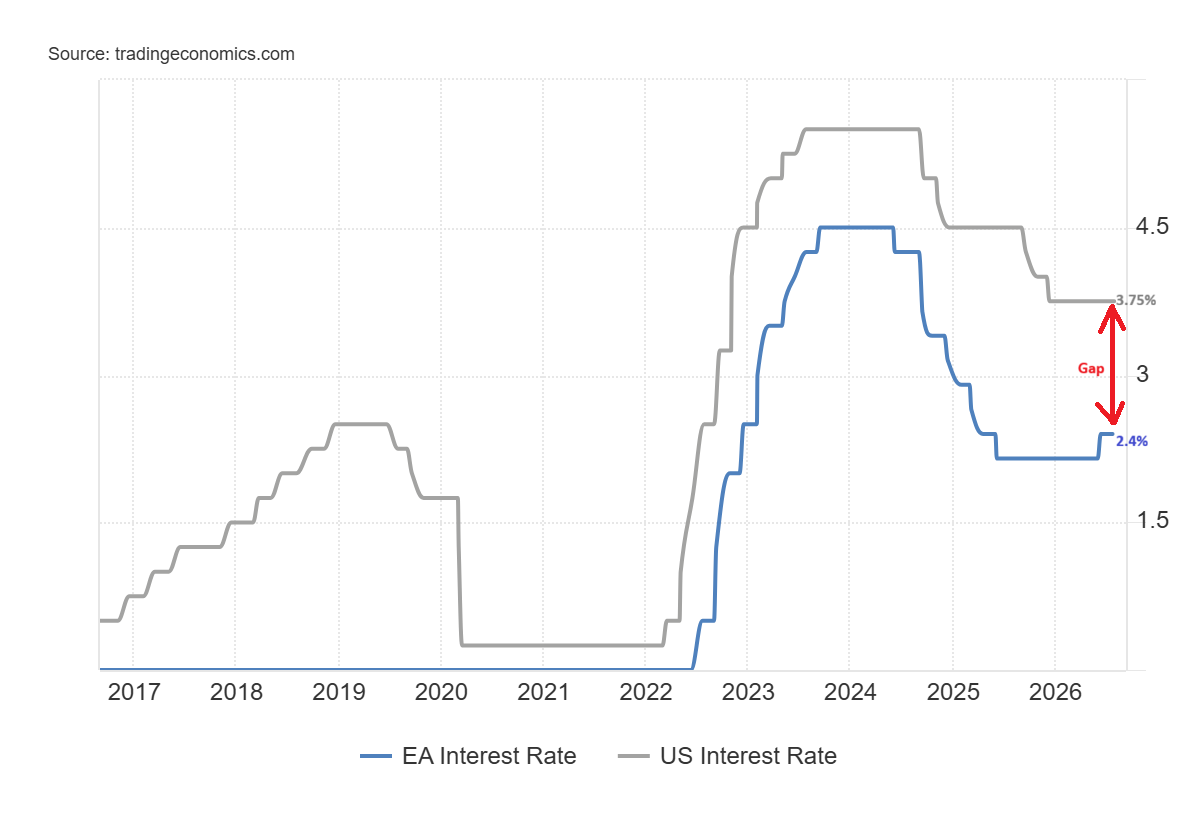
The latest market reaction also reflected this change. The US dollar index dropped to 99.50 after the employment report. Currently, the US dollar index is testing the key support level at the 200-day SMA. A break below this level will further boost the EURSUD. The EUR/USD increased to $1.1570 as the US dollar index dropped. The interest rate advantage of US dollar over the euro was also reduced by lower U.S. Treasury yields.
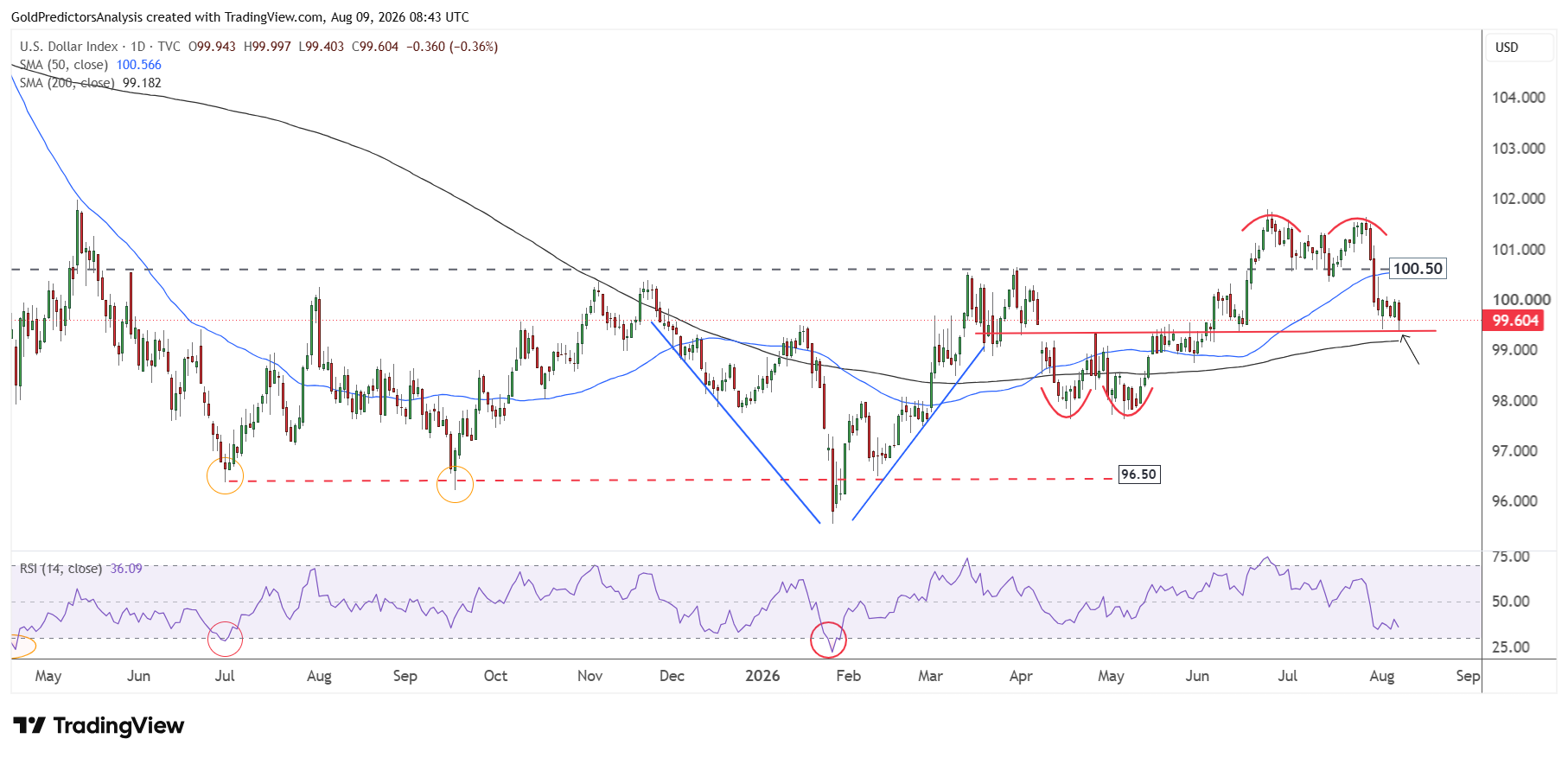
Whether this change will persist may depend on the next CPI report. If inflation moves closer to or below expectations, it will further support the argument for a pause by the Fed in September. In this case, EUR/USD may be boosted by the prospect of another ECB rate increase. But higher rates of inflation in the United States would add to expectations of Fed rate increases and be positive for the dollar. So, the next move in EUR/USD will partly be a function of the anticipated divergence between the Fed and the ECB.
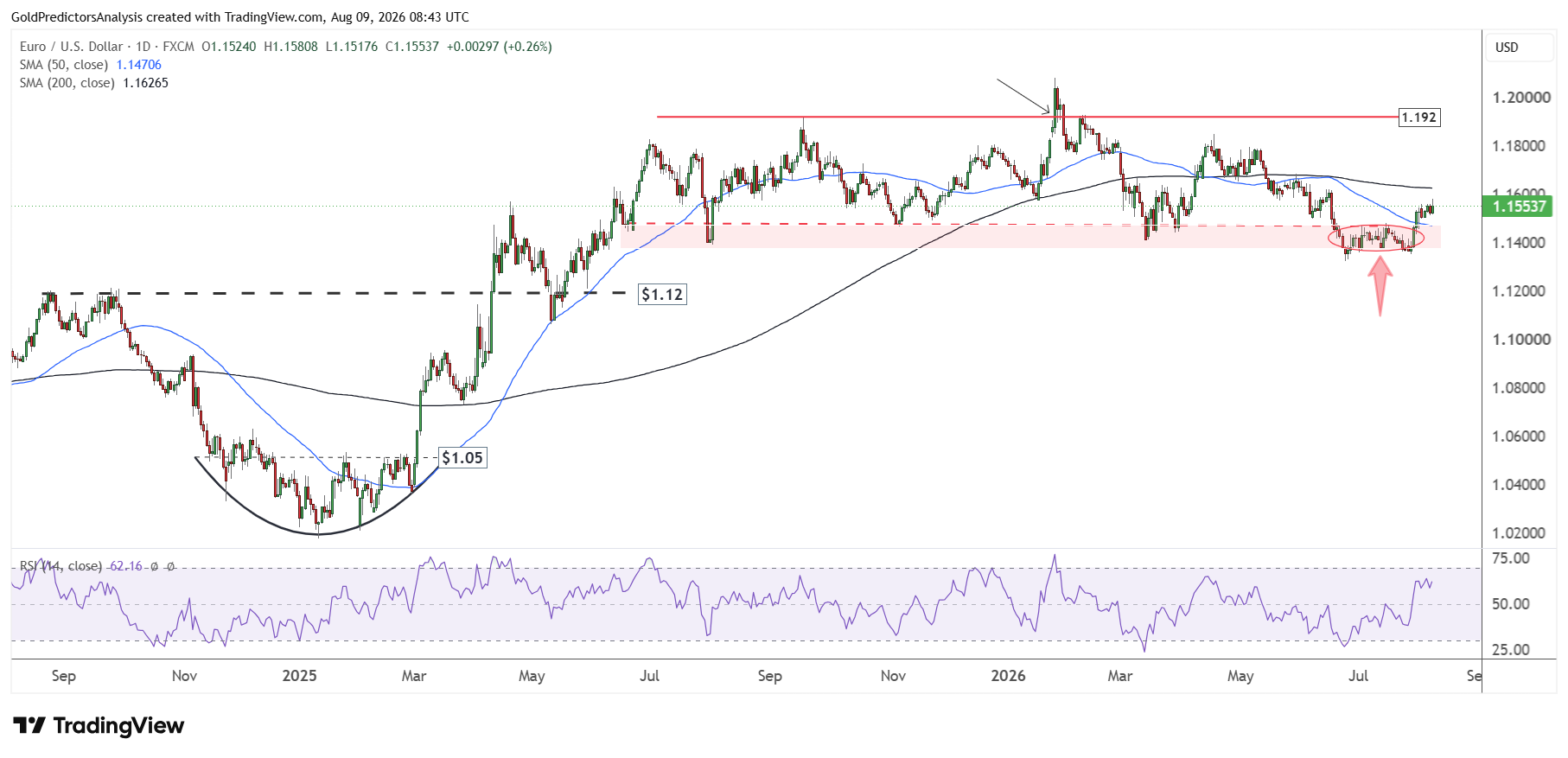
EUR/USD Maintains Bullish Structure Above 1.1360
EUR/USD holds a long term bullish structure, while the US dollar index holds a long term bearish structure. But the recent consolidation in the US dollar index in 2025 has produced strong consolidation in EUR/USD. These consolidations in EUR/USD have formed a broadening wedge pattern from June 2025 toward the recent highs in January 2026.
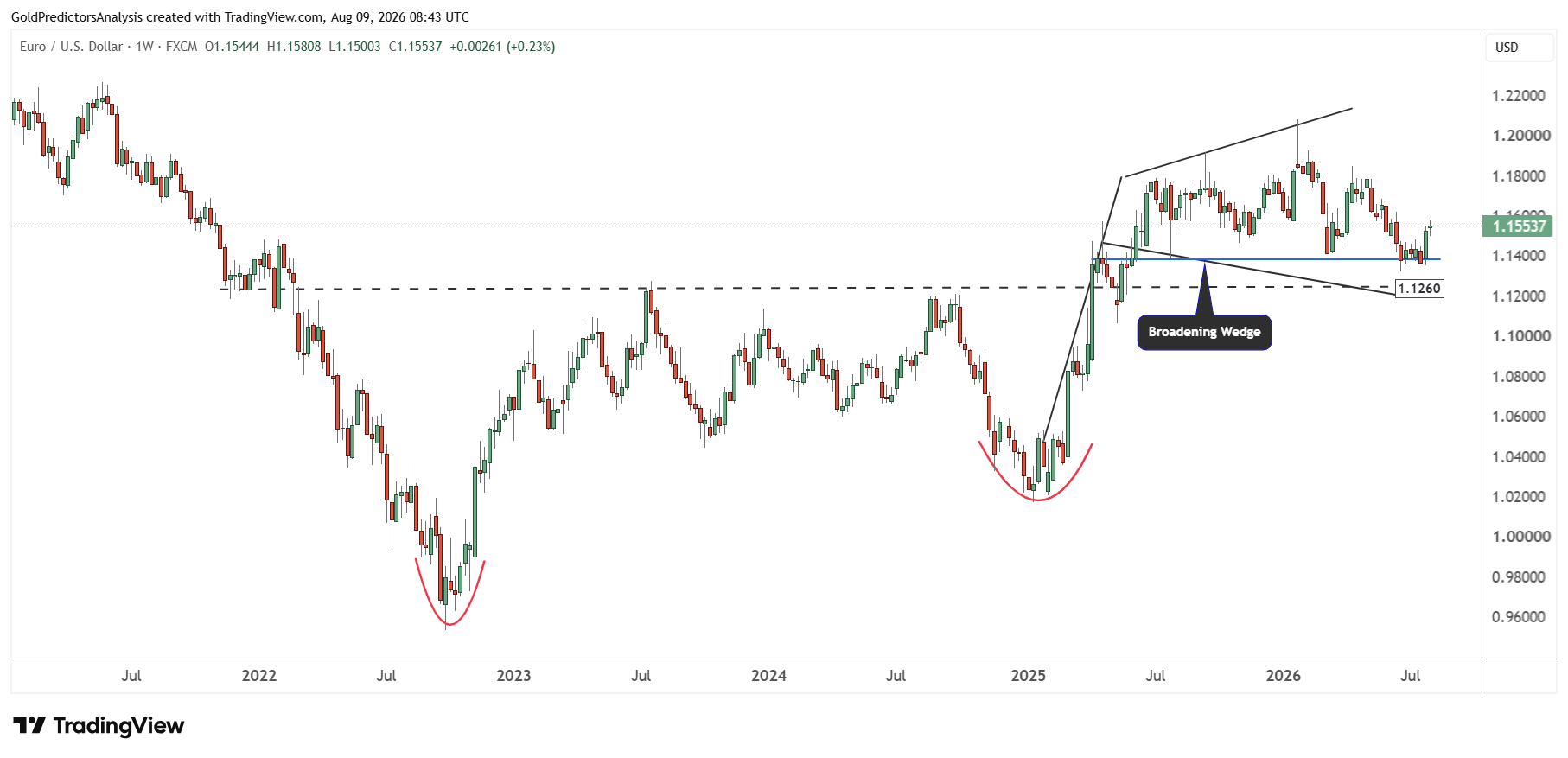
This broadening wedge pattern shows that 1.1260 remains the long term support for EUR/USD, as 106 to 107 remains strong resistance for the US dollar index.
However, the strong resistance in the US dollar index at 102 has produced strong support for EUR/USD at 1.1390. The EUR/USD pair rebounded strongly from this support and produced a strong bullish hammer candle in last week of July.
This indicates that EUR/USD may remain stronger in the short term and move toward the 1.1780 resistance as long as the 1.1360 support holds. However, the US dollar index also failed to break above the 102 level and continues to trend lower. This is adding further strength to the pair.
The short term outlook for EUR/USD also shows strength above the red highlighted zone, which is the strong short term support. This zone remains between 1.1380 and 1.1470.
The pair has recovered above the 50-day SMA and now has strong resistance around 1.1626. A break above this level will introduce another rally toward 1.192. However, the upcoming US inflation data will likely define the next move in EUR/USD.
Final Words
The weak jobs report has reduced the expectations of Fed rate hike in September. But it has not completely removed the risk. The Fed will likely keep rates at 3.50%-3.75% if the upcoming CPI report confirms that inflation is easing. But stronger inflation or another increase in energy prices could revive the expectations for rate hike. Therefore, the July CPI report will be the next major test for US interest rate outlook.
The lower Fed rate hike expectations and the possibility of another ECB increase may continue to support EUR/USD. The pair remains strong as long as the 1.1360 support holds. A break above 1.1626 could open the way toward 1.1780 and 1.192. However, stronger US inflation could support the dollar and limit the EUR/USD recovery.
Read more: BOJ Eyes September Hike as Yen Intervention Pressures USDJPY