



Big Headline, Muted Reaction
Natural gas traders are getting a big geopolitical headline today but the price action isn’t backing it up. Strikes on key LNG infrastructure, an escalating war between the U.S., Israel and Iran, and yet the market is barely moving. In my opinion that tells you something. If this were a true supply shock, you’d know it by now.
The Failed Rally Is Still in the Rearview Mirror
The market already had its chance to break higher earlier this month. It ran up and got sold hard. That kind of failure sticks in traders’ minds. The next time bullish news hits, they’re slower to chase it. Right now the market is waiting for something stronger before it commits to a new direction. That something hasn’t shown up yet.
This Looks Like Short Covering Not New Buying
This looks like short covering to me. Traders who were positioned for lower prices are stepping aside. That’s not the same as new money coming in. Short covering can push prices higher temporarily, but it does not usually lead to a lasting move unless new buyers step in behind it.
Europe Is Feeling This More Than the U.S.
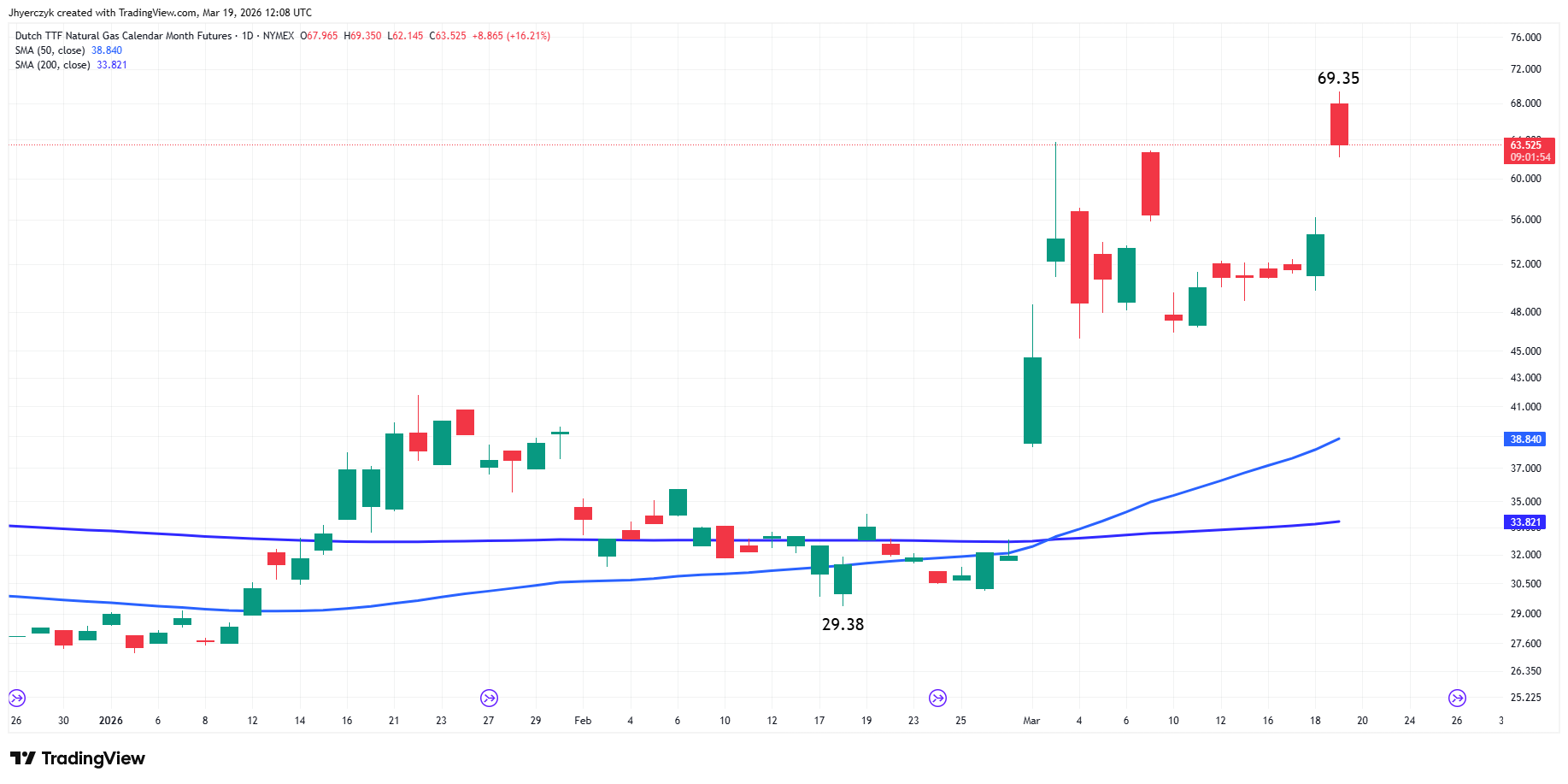
Europe is in trouble and the numbers show it. TTF prices doubled since the war started February 28 and jumped another 24 percent overnight. In my opinion, that is not a war premium, but a market that’s genuinely worried about running short of LNG. Qatar sends a huge chunk of its LNG to Europe and Asia and Ras Laffan just took a direct hit. Wood Mackenzie thinks the outage runs more than two months. Europe was already below normal on storage before any of this started. They don’t have the cushion to ride this out if the damage is as bad as early reports suggest.
The U.S. Has Supply but Can’t Export Fast Enough
U.S. prices aren’t moving like Europe because this isn’t a U.S. supply problem. We have plenty of gas. The issue is the terminals are already maxed out. You can’t ship what you can’t liquefy and there’s no extra capacity sitting idle. Global demand can spike all it wants but the U.S. can only send so much. That ceiling isn’t moving anytime soon.
Natural Gas Price Forecast
Every new Natural Gas analysis as it publishes, today's technical signal and key levels, live price — on one page.
See all Natural Gas forecastsStorage tells the same story. The market is looking for a moderate injection this week. That’s not a tight market. When your own numbers are balanced it takes more than bad overseas headlines to get a real rally going here.
Watch the Storage Numbers
The number I’m watching most closely is LNG export activity. If global buyers keep drawing on American supply and export nominations stay high, the domestic market starts to feel it over time. That shows up in the storage numbers first. A draw that comes in bigger than expected or an injection that disappoints would be the signal bulls are waiting for. Until that happens this market has no domestic reason to run.
A ceasefire or even a partial reopening of the Strait of Hormuz could take the air out of this rally fast. Iran has been threatening further strikes across the region so nobody knows how this plays out.
My base case for the next few weeks is sideways to slightly higher. Short covering will test resistance but without fresh buyers those tests get sold. If the disruptions last as long as Wood Mackenzie projects, the story gets more bullish over the next couple of months. Eventually the global squeeze starts showing up in American export demand and domestic fundamentals have to adjust.
The worst case is more strikes on Gulf infrastructure. That removes whatever buffer is left and forces a sharp move higher in U.S. natural gas. I don’t think that’s where we’re headed right now but I’m not ruling it out either.
Bottom line, this is real damage to real infrastructure. But until the storage data confirms the global crisis is actually pulling on American supply, this market is going to keep grinding. Right now it still looks more like short covering than the start of something bigger.
The 50-Day Is the Line to Watch
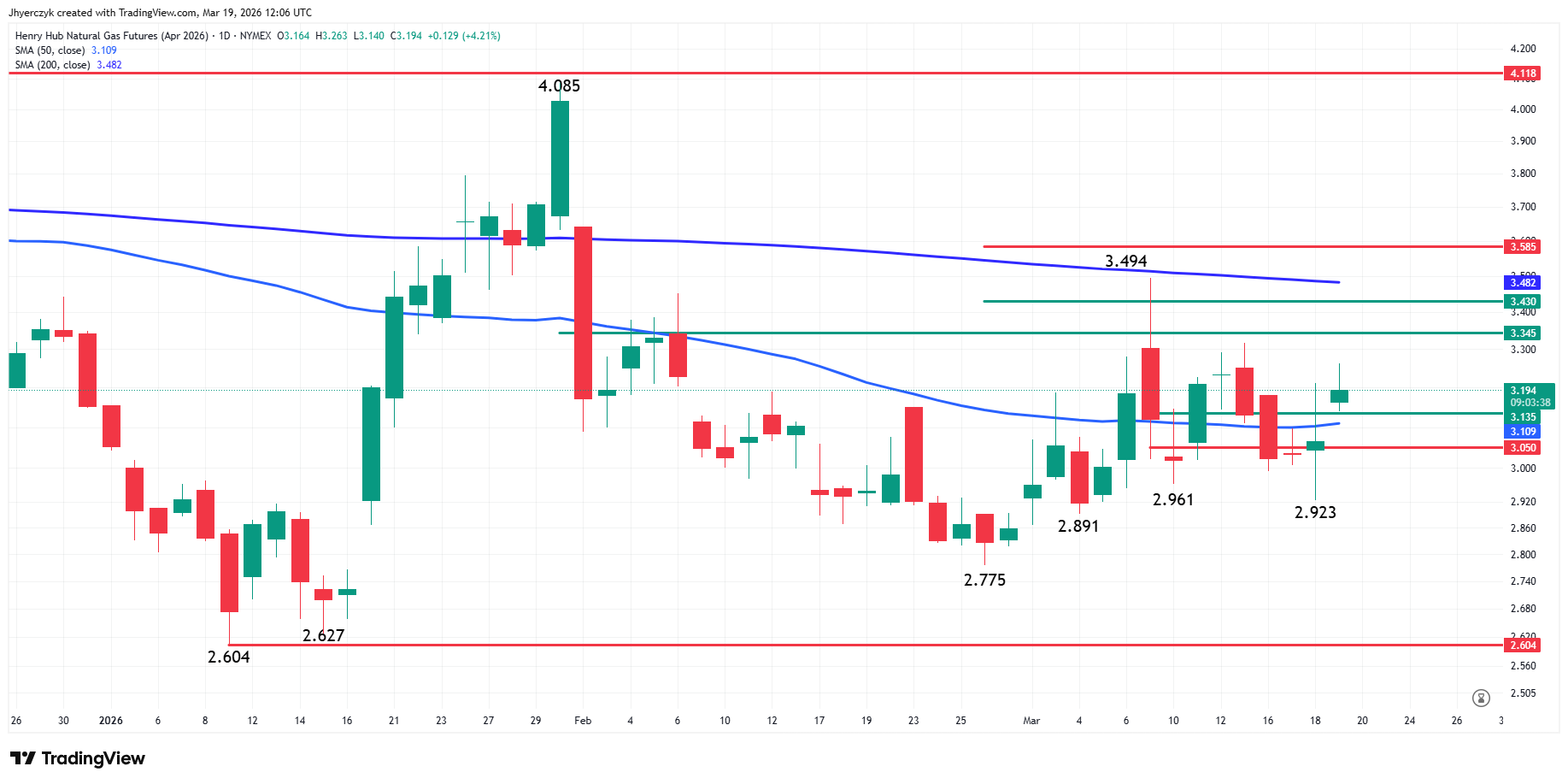
Technically, the series of higher bottoms and today’s jump over the 50-day moving average at $3.109 suggest a short-covering reaction to overnight news. If traders start to take out offers then we could say there are buyers present. Instead, we’re seeing some traders fading the rally, which was not expected initially.
If this market is going to move higher then it has to attract buyers on a pullback into a short-term retracement zone at $3.135 to $3.050 and the 50-day moving average.
On the upside, the market is still facing several headwinds including a long-term pivot at $3.345 and a retracement zone at $3.430 to $3.585. Inside this zone is the 200-day moving average at $3.482.
Essentially it breaks down this way: Bullish long-term on a sustained move over $3.482. Bullish short-term over $3.109. Neutral to strong in between those two levels which are the 200-day and 50-day moving averages, respectively.
For more information how to trade natural gas, check out our educational section.