


As we start trading on Wednesday, silver faces a two-sided fundamental backdrop. The metal has monetary sensitivity similar to gold, but it also relies on industrial demand in electrical equipment, machinery manufacturing, and other fabrication uses.
CPI Still Hot in the USA
Tuesday’s U.S. inflation release and the latest real yield move are new information on the monetary side, while the latest Federal Reserve manufacturing data remain the most official industrial reading available at the moment. BLS reported October CPI up 0.4% month-over-month, compared with a 0.6% increase in September. Core CPI rose 0.3%, the same monthly pace as in August and September, showing that core CPI remains sticky. Energy prices increased 0.7% in October, while natural gas components declined 0.8%.
For silver, softer headline inflation could ease some pressure on rate expectations, but steady core inflation does not ensure that the Federal Reserve will turn more accommodative. In fact, the Federal Reserve is still expected to raise rates in December.
Real Yields in America
The Treasury’s November 10 par real yield data show the 5-year rate at 2.56% and the 10-year at 2.78%, up from 2.35% and 2.63% on November 6. Higher real yields continue to raise the opportunity cost of holding silver, although industrial expectations and investment demand can change that relationship over shorter periods of time.
The industrial picture hasn’t been updated since the Federal Reserve’s October 16 G.17 report, which covered the month of September. Total industrial production rose 0.7% in September, edging up 0.1% in August. Manufacturing output increased 0.3% in September, with primary metals, machinery, and electrical equipment, appliances, and components all gaining over 1%, while the automotive sector saw motor vehicles and parts fall 3%.
Silver Price Forecast
Every new Silver analysis as it publishes, today's technical signal and key levels, live price — on one page.
See all Silver forecasts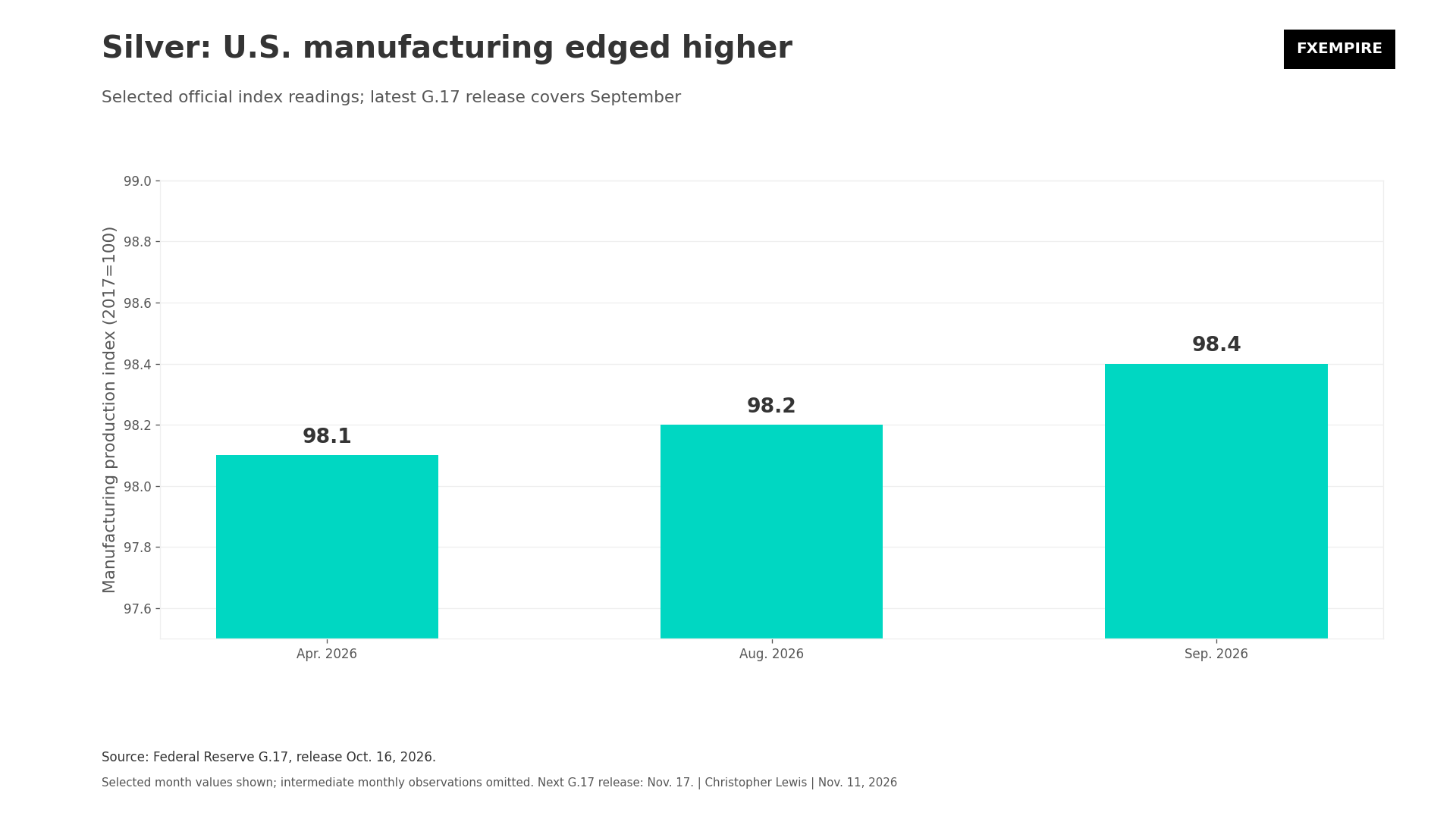
The report is somewhat constructive in several silver-relevant segments, but uneven overall. This doesn’t measure the direct use of silver, but it gives you a background idea of what could be going on with industry itself. The next scheduled G.17 release is November 17 at 9:15 a.m. Eastern Standard Time. It should show whether September’s production gains persisted or if they were an anomaly.
Until then, industrial production data are somewhat stale relative to the CPI release and cannot confirm present-day silver consumption. Wednesday is Veterans Day in the United States, so that leaves U.S. market liquidity and official price references different from an ordinary session.
The Latest Data Was a Mixed Outlook
Silver’s near-term fundamental balance will hinge on whether yields settle after the CPI release and whether the upcoming industrial report confirms broader factory strength. A decline in real yields combined with stronger electrical equipment and machinery could improve the bullish case. Persistent high yields and renewed weakness in manufacturing could challenge that scenario.
Technical Setup Still Looks Lackluster for Bulls
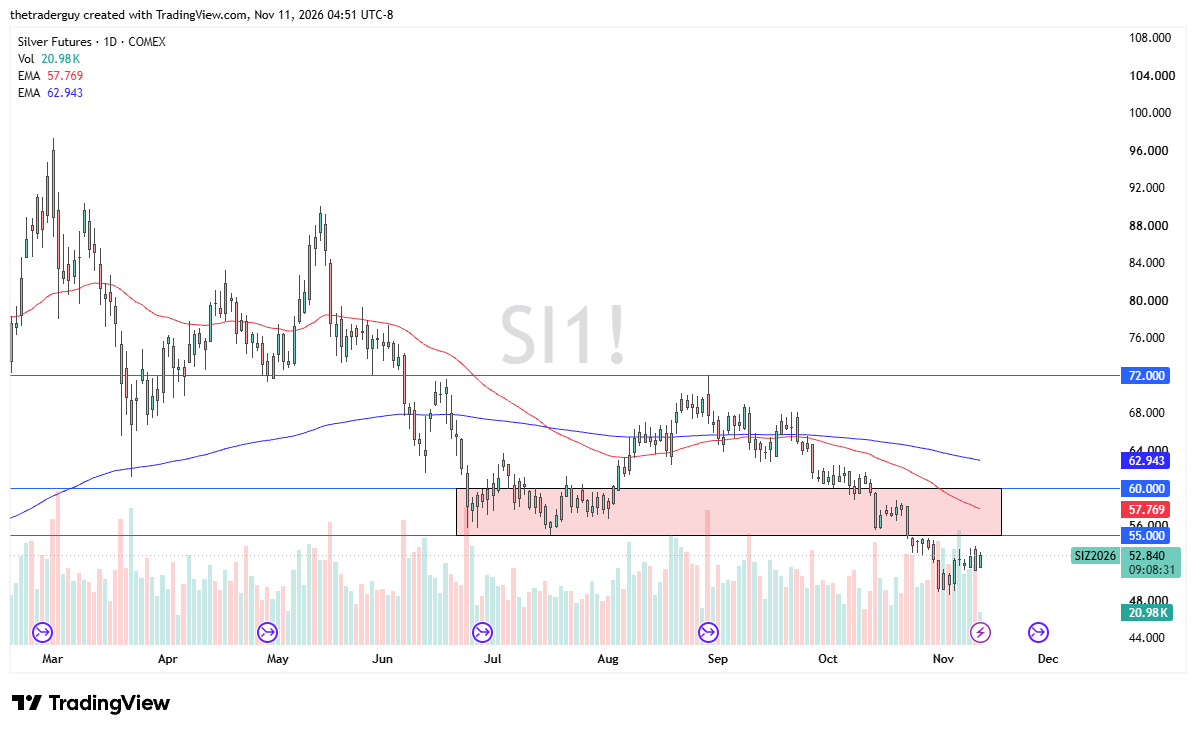
Industrial production has improved in some sectors, while the real rate problem has persisted. On the charts, the silver market has rallied a little bit during the session, but it’s still well within the range of the Tuesday candlestick. It still appears as if the $55 level above is a significant barrier to overcome and could end up remaining a bit of a ceiling. Fading rallies is how I’ll be looking at this chart, at least until something fundamentally changes.
If you’d like to know more about how to trade gold and silver, please visit our educational area.