


Silver has a basic fundamental challenge at the moment: reconciling an improving but modest industrial backdrop with the opportunity costs created by positive real yields coming out of government debt.
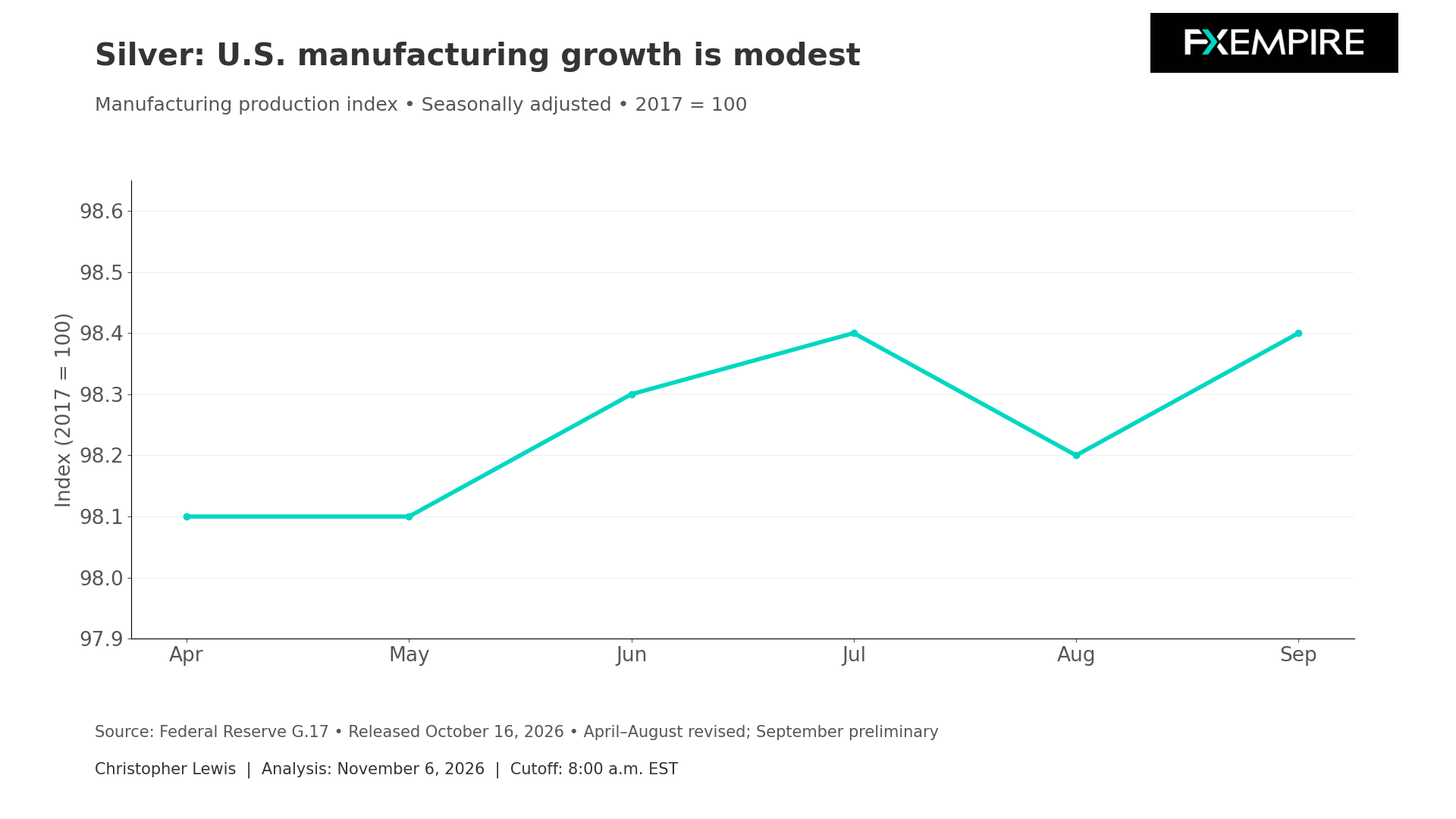
The latest Federal Reserve industrial production release, published October 16, showed manufacturing output increased 0.3% in September, following a revised 0.2% decline in August. Manufacturing was 1.1% above its year-earlier level. This supports a measured industrial demand argument rather than evidence of a massive acceleration in consumption.
Monthly Improvement of Industrial Activities
The chart below shows the monthly improvement in context. The manufacturing index moved from 98.1 in April to 98.4 in September, with an August setback along the way. All 6 public monthly observations are shown on the chart, with September being preliminary. The small change across the period argues against describing manufacturing in the United States as booming on the strength of 1 positive month.
This is a particularly important distinction for the silver market. Broad factory output is a useful indicator of the economic setting, but it does not measure how many ounces manufacturers are purchasing. The composition of production, material efficiency, existing inventories, and the timing of procurement can change the relationship completely.
The same Federal Reserve release showed industrial production increased 0.7% in September, with utilities up 3.5%. Manufacturing capacity utilization was 75.9%, below its reported long-run average of 78.2%. The stronger headline industrial reading includes developments outside manufacturing as well, while the utilization figures indicate remaining spare capacity across factories in America.
Industrial Numbers Are Good, but Not Definitive
The industrial side provides some support for silver, but it is not sufficient evidence for a larger demand squeeze. For a stronger bullish case, we would need to see successive releases and sustained manufacturing expansion, preferably accompanied by direct evidence from silver-using industries. This confirmation will matter because improving output can coexist with cautious purchasing.
Silver Price Forecast
Every new Silver analysis as it publishes, today's technical signal and key levels, live price — on one page.
See all Silver forecastsMonetary Policy Side Is Less Accommodating for Silver
The November 5 Federal Reserve H.15 release recorded a 5-year inflation-indexed Treasury yield of 2.39% for November 4. Positive real yields continue to compete for investment capital against non-bearing assets such as silver. Silver’s industrial role does not eliminate that financial influence, particularly when investors are reassessing the likelihood of policy direction.
The October 28 FOMC statement described resilient spending and elevated inflation while leaving the policy rate unchanged. For silver, the significant tension is between growth and financing conditions. Resilience in the economy can help industrial demand, but it can also reduce the urgency of monetary easing.
Consumer Spending
Consumer data shows why nominal spending needs careful interpretation. The BEA reported September personal consumption expenditures of 0.5%, while real spending increased less than 0.1%. Real disposable income fell 0.3%. These figures do not establish a recession, but they do caution against treating dollar spending growth as an equivalent because the volumes of goods and services can vary.
Rising nominal sales of silver can reflect higher prices rather than stronger physical demand. Conversely, improved production efficiency can allow industrial activity to grow without a proportional increase in silver. Neither relationship can be resolved using aggregate numbers.
US Employment Surprises
The employment report during the trading session on Friday, released at 8:30 a.m., showed that the United States added 165,000 jobs last month, a massive outperformance in comparison to the expected 65,000 jobs. Furthermore, the previous month was revised upward. The unemployment rate now sits at 4.1%, with average hourly earnings of 0.4%.
Charts Still Look Weak
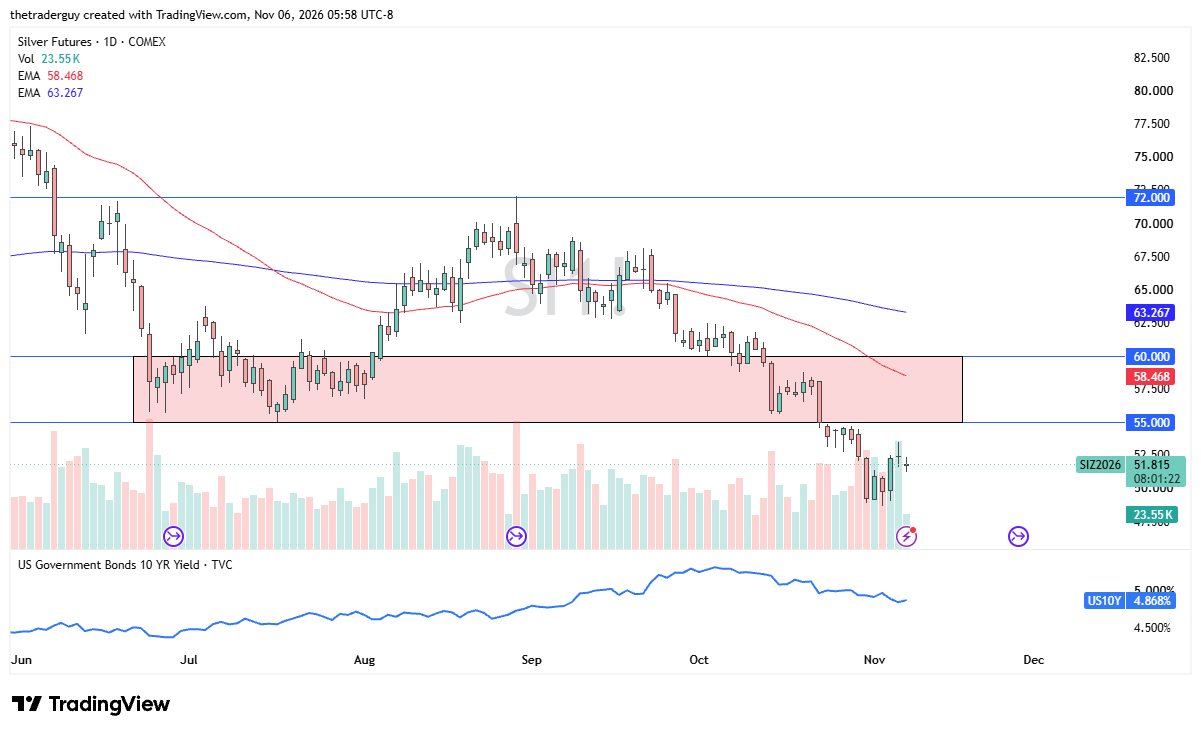
This is a situation that will probably continue to put pressure on the Federal Reserve to keep yields higher and remain vigilant for inflationary problems arising. Because of this, it is not a surprise that the technical outlook for silver is rather weak, and it has, in fact, shown signs of hesitation to hang on to any type of rally early during the session.
At this point, it is not until we break above $55 that I would be impressed with a rally. I remain bearish.
If you’d like to know more about how to trade gold and silver, please visit our educational area.