


Silver has two different things pushing the market around this morning: a modestly supportive retreat in U.S. real yields and a mixed signal from industrial activity.
Treasury data show the real yield at 2.59% yesterday, up from 2.53% last Friday, while the 10-year real yield increased from 2.77% to 2.79%. The modest rebound in real yields is a headwind for precious metals at the margin, but it does not necessarily guarantee losses.
Silver is more exposed than gold to manufacturing demand, so that must be kept in the back of our mind as well. Yields, of course, are part of the fundamental picture, but not the entire story.
Production Data in the U.S.
The most recent U.S. production data offer evidence of a small manufacturing improvement rather than a broad acceleration of industrial activity. In its G.17 release published November 17, the Federal Reserve reported that manufacturing output rose 0.3% in October, matching the previous month’s increase. The manufacturing production index moved from 98.1% in May to 98.7% in October.
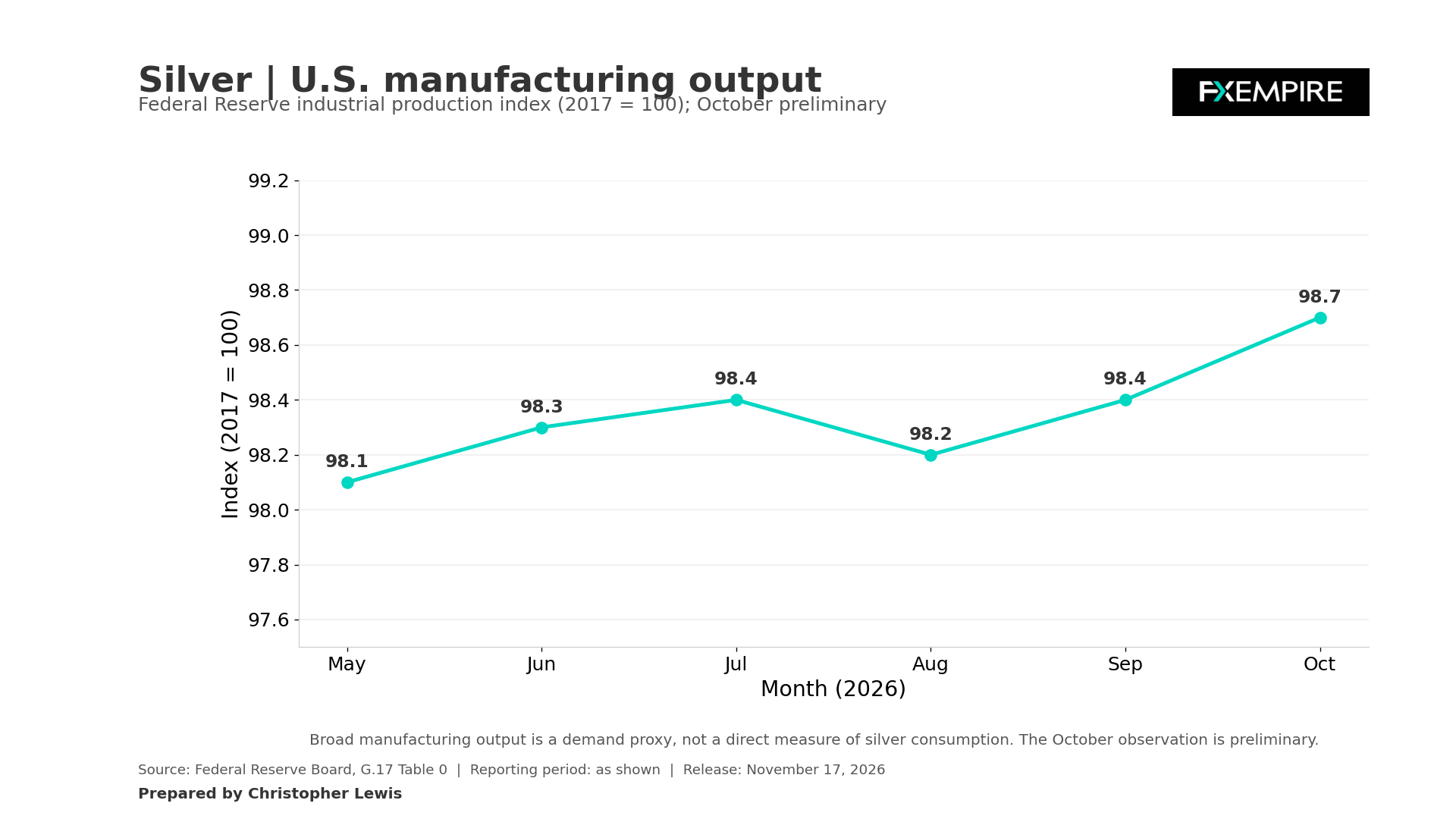
Total industrial production declined 0.4% in October, however, after rising 0.7% in September. Mining output fell 0.8%, and utilities output dropped 4.3%.
The contrast matters for silver, though. A better manufacturing component is constructive for industrial use, while the broader monthly fall cautions against describing the entire industrial economy as being strong. This is a preliminary set of figures and can be revised.
The data are broad indicators, not direct measurements of silver consumption, and this should be kept in the back of our mind. The Federal Reserve release does not say that manufacturers bought more silver, and it cannot establish a same-month change in solar panel electrical contact or brazing demand. Silver’s industrial end uses can benefit from activity in electronic and electrical equipment, but the link from broad manufacturing readings to the physical silver balance is only an inference.
Silver Price Forecast
Every new Silver analysis as it publishes, today's technical signal and key levels, live price — on one page.
See all Silver forecastsCFTC Positioning
Positioning remains positive but has eased slightly. CFTC futures-only data dated November 17 showed non-commercial traders with 35,995 long and 17,704 short COMEX silver contracts, a net long of 18,291. The prior week’s net long was 19,364, meaning the speculative net position narrowed by 1,073 contracts. This is a modest reduction, not a wholesale exit.
The data measured Tuesday and released later in the week, so they describe positioning before the weekend and do not capture Monday or early Tuesday’s trading.
Gold remains relevant because silver often responds to the same real-rate and currency forces while carrying a larger industrial-demand component. The decline in real yields is therefore supportive for both metals in principle, but silver can underperform if growth-sensitive demand expectations deteriorate. Conversely, stable-to-improving manufacturing alongside lower yields would create a more balanced tailwind than a monetary catalyst alone.
Data Revision
A data revision is also due this week. The Federal Reserve says it plans to publish an annual revision to industrial production indexes at noon, using a new 2022 base year and incorporating additional benchmark information. That revision may alter historical levels and comparisons, so readers should distinguish the November 17 preliminary October estimate from the revised historical series that follows. It will update measurement, but it will not itself represent a new production event.
Silver’s Near-Term Outlook Is Balanced, with Macro Tailwinds
Real yields remain high, and despite the fact that manufacturing grew for a second month, total industrial output contracted, with futures positioning remaining net long but reducing. All of this suggests that the situation is still deteriorating over the longer term.
The bullish case does improve if real yields persist lower and subsequent industrial data confirm wider-based growth. It weakens if yields rebound or output softens again.
Technical Outlook for Silver
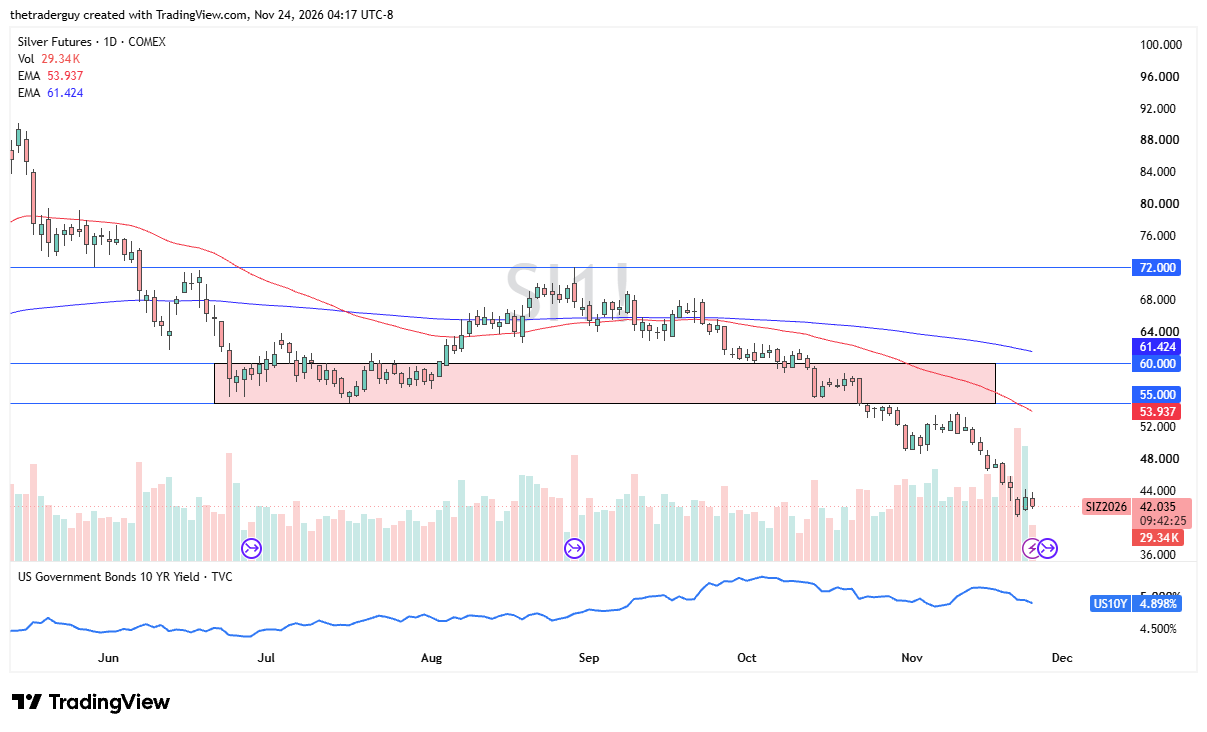
Looking at the chart, any short-term rally at this point in time ends up being a selling opportunity from what I can see, with the $45 level offering a bit of a barrier and the $40 level underneath being a potential support level.
All things being equal, this is a market that I think continues to see a lot of questions asked about demand. Longer term, I do like silver, but as things stand right now, this is extraordinarily negative, and fading rallies at the first signs of exhaustion is how I plan on trading this market.
If you’d like to know more about how to trade gold and silver, please visit our educational area.