Silver Holds Near Record Highs After Fed-Driven Breakout
Silver ended the week of December 12 near historic territory after one of the most aggressive advances in modern precious metals trading. Spot silver (XAGUSD) printed a record high at $64.67 before settling at $61.92, up $3.56 or 6.09% on the week. Even with late-week profit-taking, prices remain firmly elevated after decisively clearing the long-standing $60 threshold.
The rally reinforces silver’s position as both a monetary hedge and a critical industrial input, with participation expanding well beyond short-term momentum accounts.

Federal Reserve Policy Remains the Primary Catalyst
The Federal Reserve delivered the core fundamental driver. The FOMC voted 9–3 to cut rates by 25 basis points, bringing the fed funds range to 3.5%–3.75%. Chair Jerome Powell explicitly removed rate hikes from consideration, a message markets interpreted as supportive for non-yielding assets.
In parallel, the Fed announced roughly $40 billion in Reserve Management Purchases of Treasury bills beginning December 12. While labeled a technical liquidity operation, traders viewed the move as balance-sheet expansion. Lower rates combined with increased liquidity reinforced demand for precious metals as currency hedges.
Structural Deficits and Industrial Demand Tighten Supply
Silver fundamentals remain restrictive. The World Silver Survey 2025 projects a fifth consecutive annual supply deficit, estimated near 117 million ounces. Global mine production remains flat near 813 million ounces, while recycling continues to lag demand growth.
Industrial fabrication reached record levels this year. Solar panel manufacturing, electric vehicles, AI infrastructure, and data centers all rely heavily on silver, providing steady consumption that is largely insensitive to short-term price swings.
Silver Price Forecast
Every new Silver analysis as it publishes, today's technical signal and key levels, live price — on one page.
See all Silver forecastsDollar Weakness and Gold Strength Add Fuel
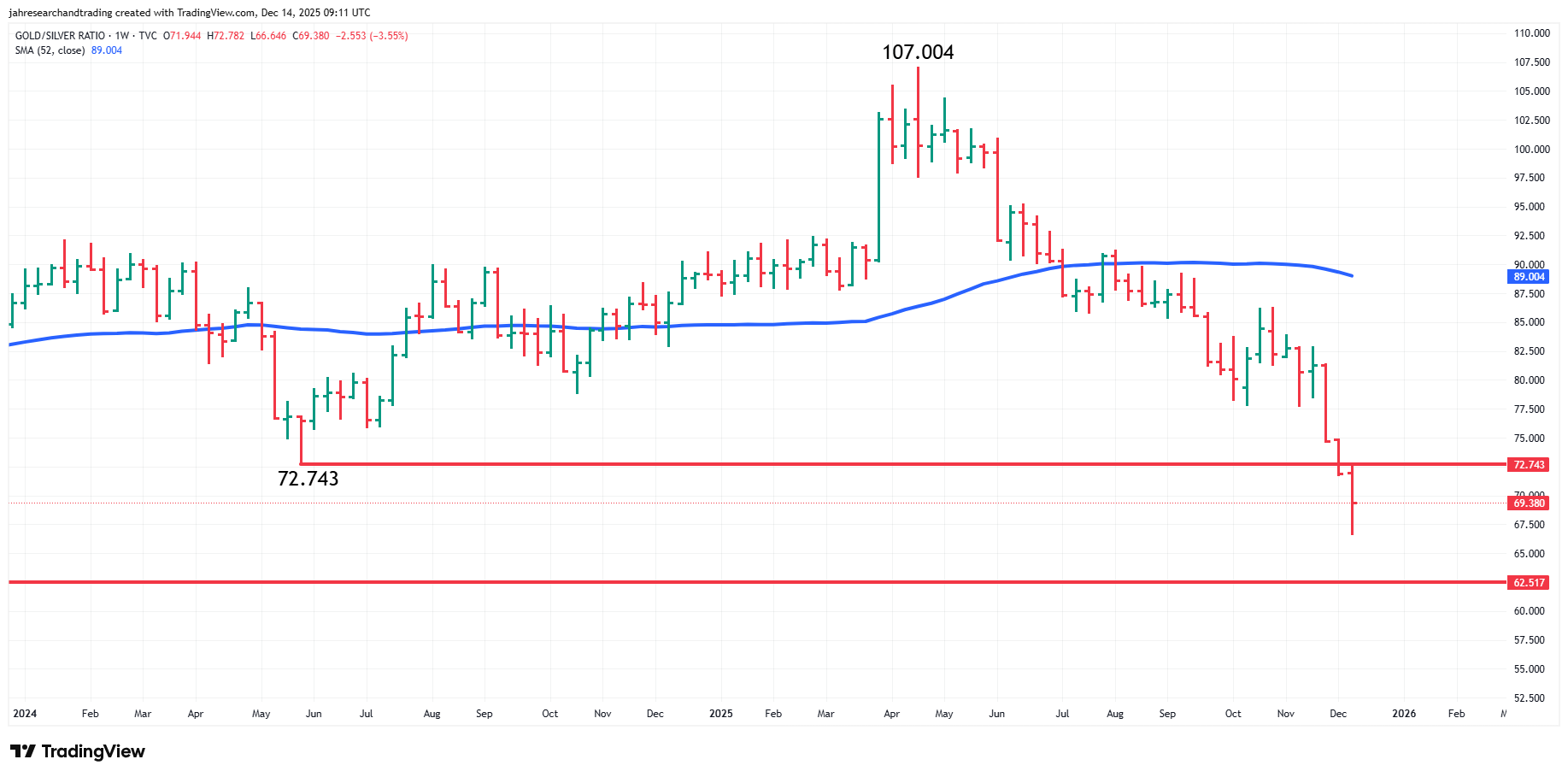
The U.S. Dollar Index slipped to 98.134 following the Fed decision, supporting dollar-denominated commodities. Gold’s strength also reinforced silver’s move, with gold holding near its own record territory. The gold-silver ratio compressed into the high-60s, confirming silver’s relative outperformance.
Market Structure and Weekly Technical Context
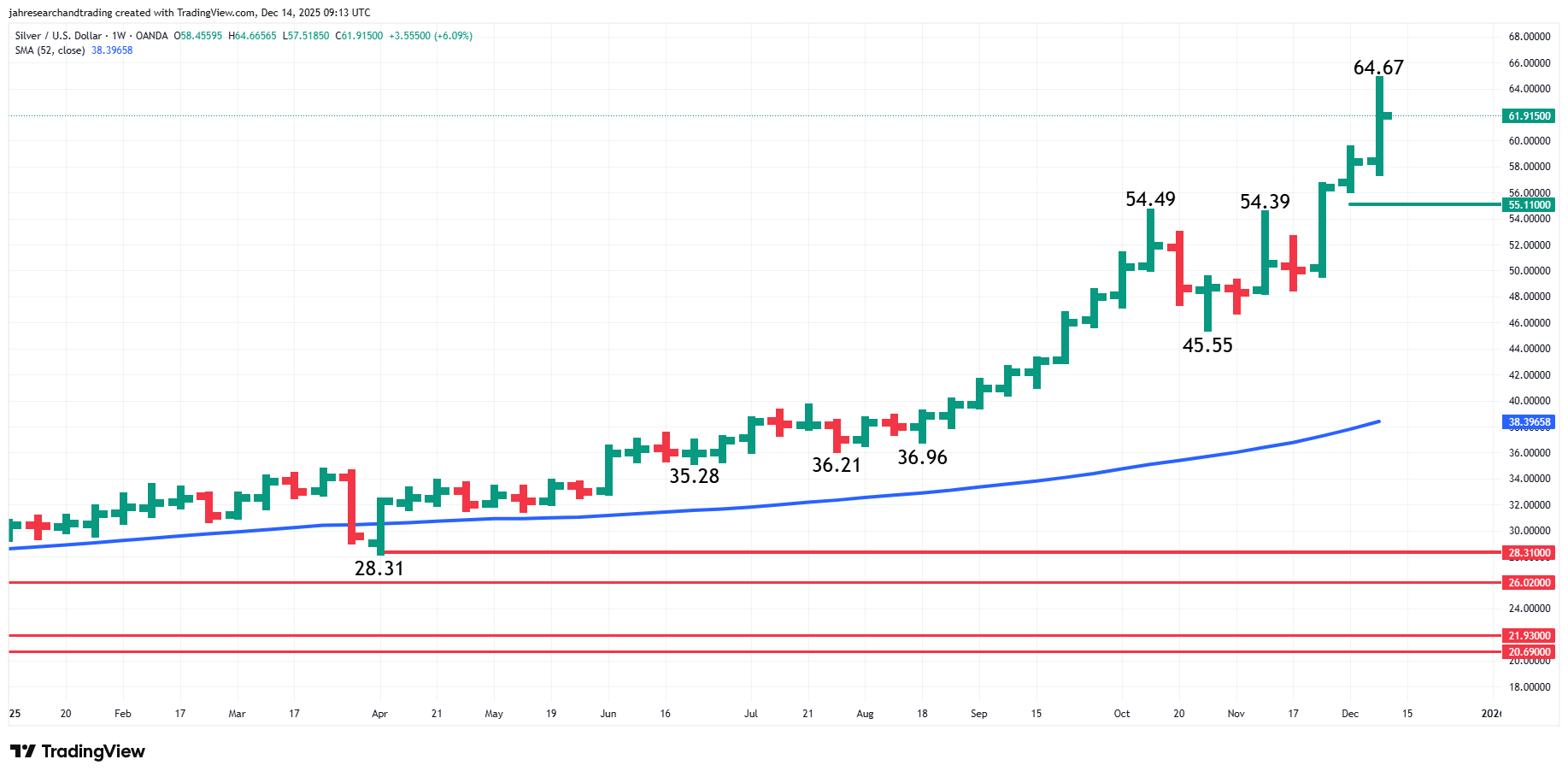
From a structural standpoint, the weekly chart shows no overhead resistance following the breakout to $64.67. The current short-term range spans $45.55 to $64.67, placing prices firmly in the upper end of the range. The trailing 50% level at $55.10 remains well below current trade, while the 52-week moving average at $38.40 continues to confirm the dominant long-term uptrend rather than acting as a near-term reference.
Short-Term Forecast: Bullish Bias with Event Risk
For the week ahead, silver is likely to remain sensitive to U.S. employment data and CPI. Any sign of labor market softness or inflation holding near 3% would reinforce expectations for additional easing in 2026, supporting higher prices. Strong data could extend consolidation, but the absence of weekly resistance and persistent supply tightness keep the near-term bias bullish, with pullbacks likely to attract renewed buying interest.
More Information in our Economic Calendar.