


The major U.S. stock indexes finished slightly lower last week with all three stock gauges posting volatile two-sided moves. The selling pressure early in the week was fueled by a surge through a key psychological level by the benchmark U.S. Treasury note. The buying was driven by another week of strong earnings from bellwether stocks.
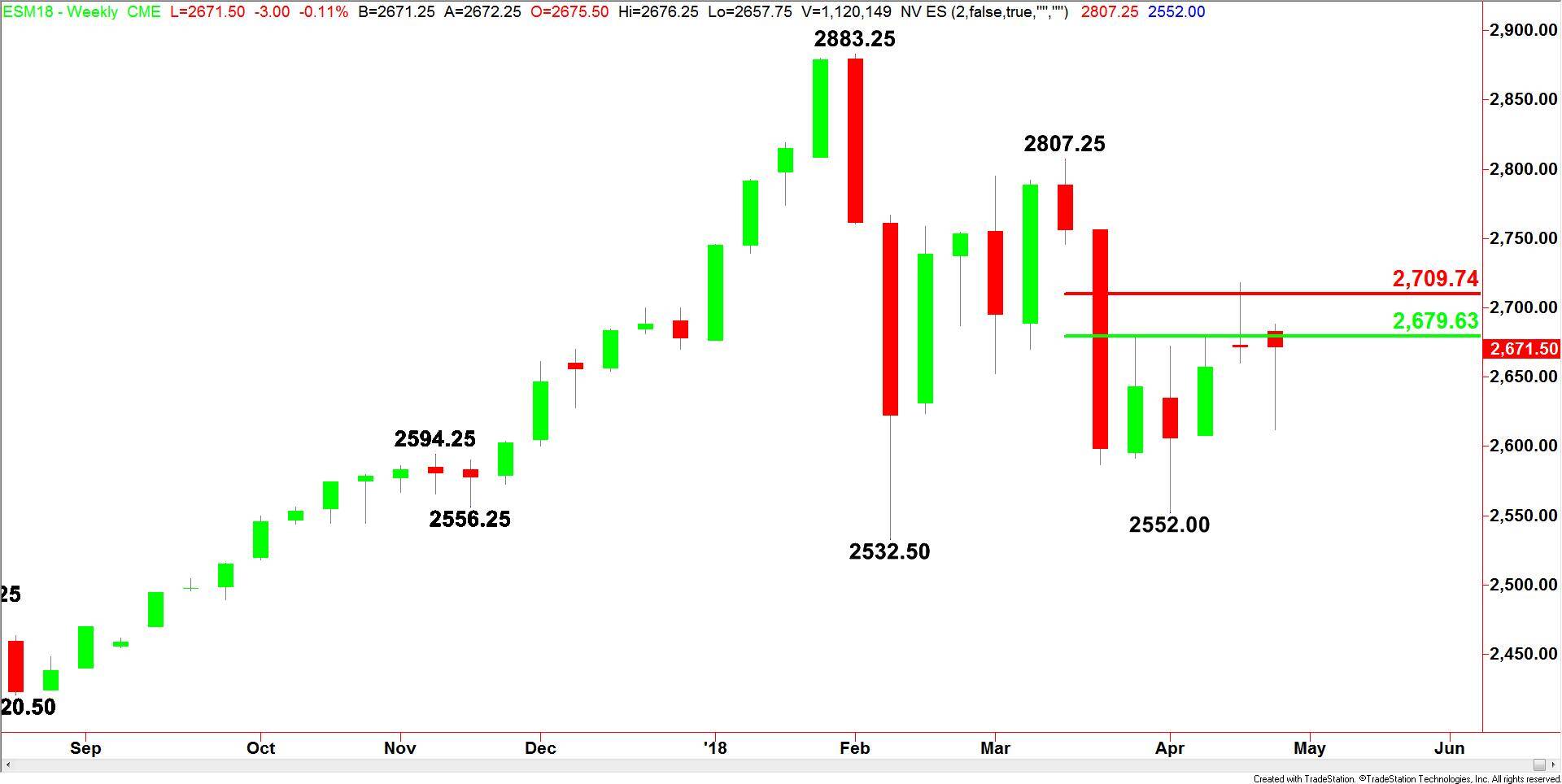
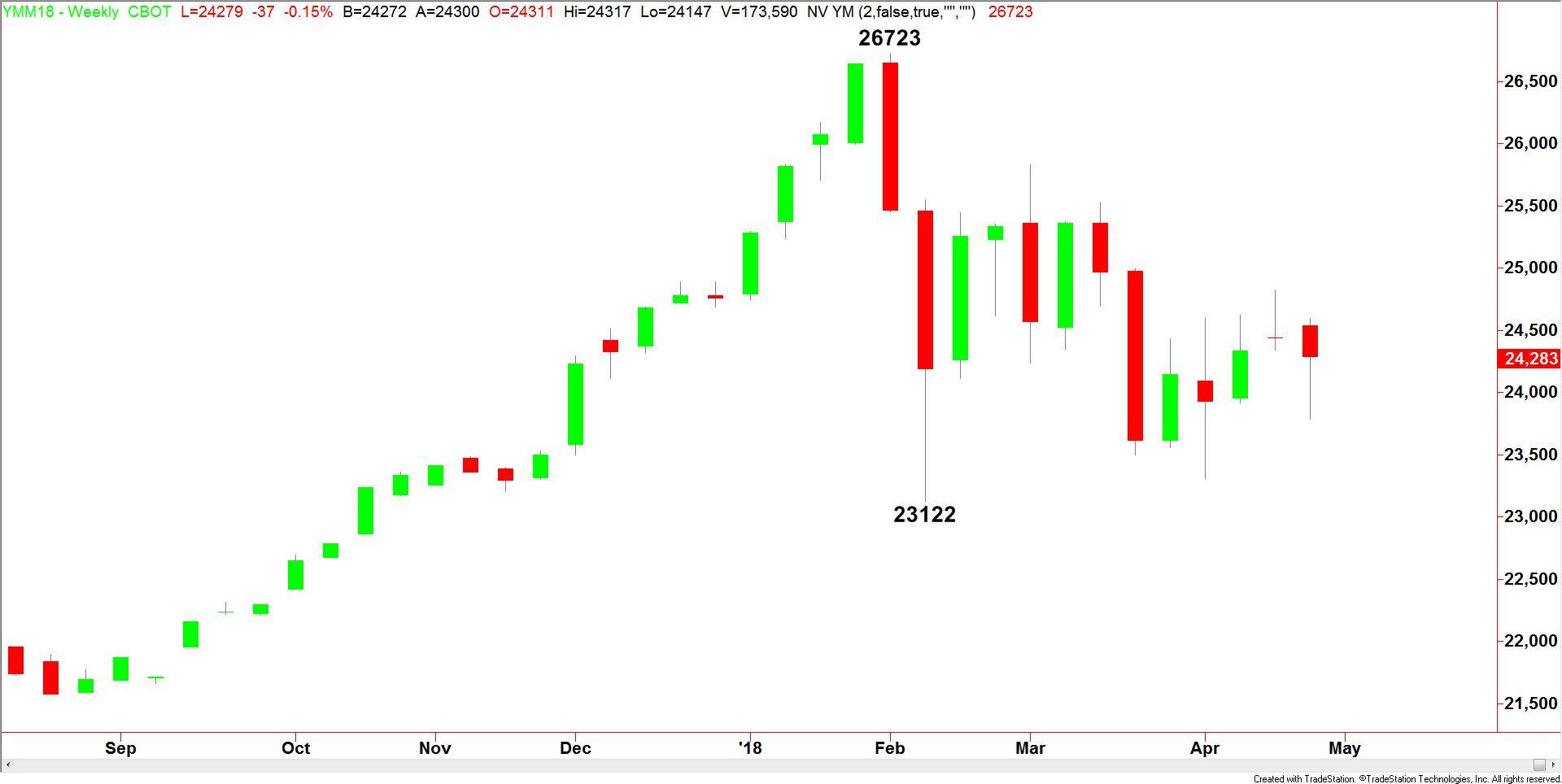
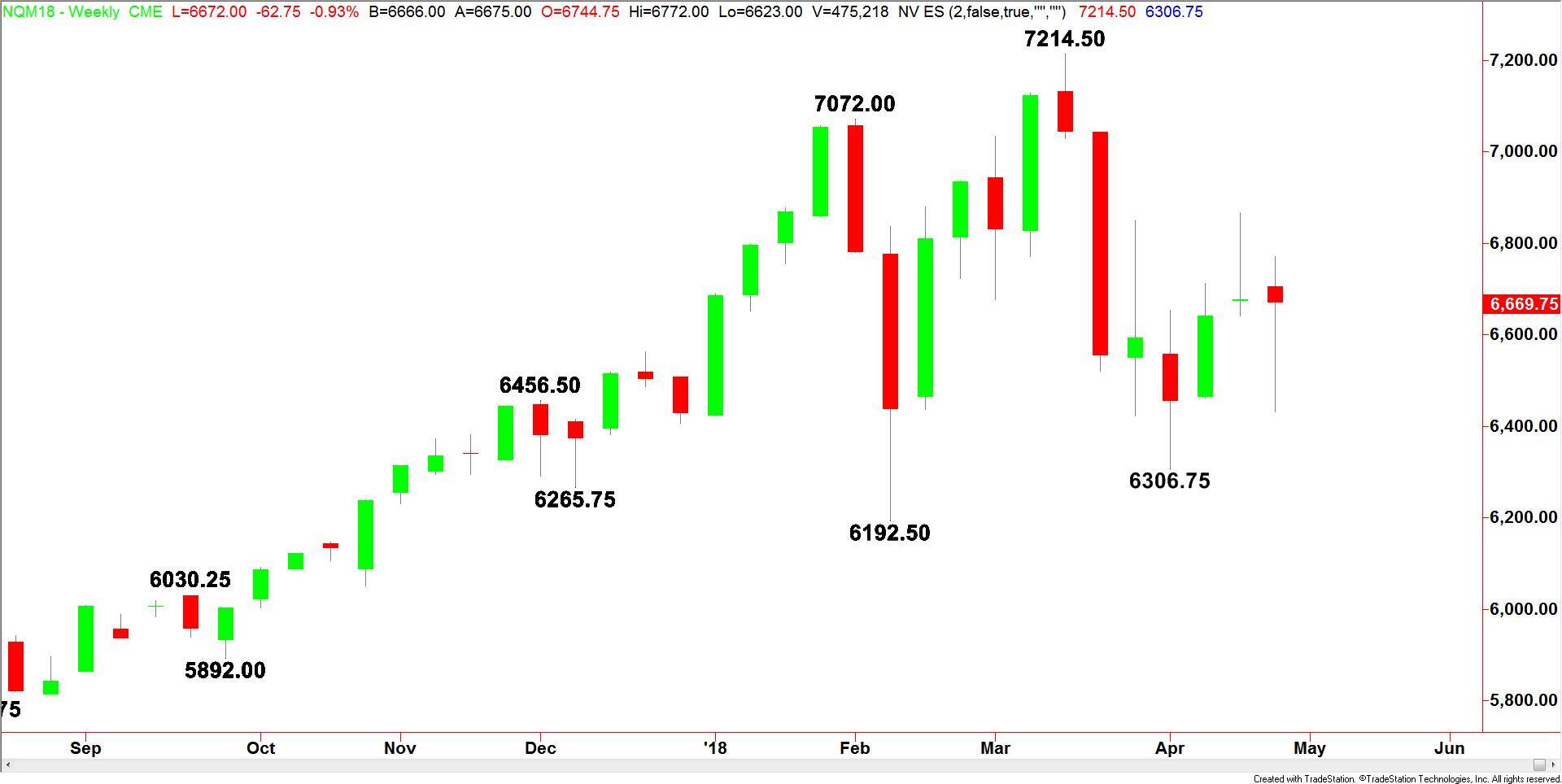
For the week, the benchmark S&P 500 Index settled at 2669.91, unchanged. The blue chip Dow Jones Industrial Average finished at 24311.19, down 0.06% and the tech-driven NASDAQ Composite ended the week at 7122.29, down 0.4%.
The bearish news early in the week was a sharp rise in U.S. Treasury yields. On Tuesday, the U.S. benchmark 10-year U.S. Treasury note yield broke through the psychologically significant 3-percent level for the first time in more than four years as investors reduced their U.S. bond holdings on worries about rising inflation and growing government debt supply.
Additionally, the economic data was strong enough to support at least two additional rate hikes by the Fed later this year.
In other news, according to the Conference Board, Consumer Confidence rose to 128.7, beating expectations. Durable Goods Orders came in at 2.6%, below the previous read, but better than the estimate. Core Durable Goods Orders came in flat at 0.0%, below the estimate. Advance GDP also beat the forecast with a 2.3% read. However, economists were still concerned about low consumer spending.
On bullish factor was the easing of tensions over a potential trade war between the United States and China. The markets were also underpinned by the news of a possible peace agreement between North Korea and South Korea.
Better-than-expected earnings results also underpinned the indexes especially the NASDAQ Composite, which was underpinned by a surge in shares of Facebook and Advanced Micro Devices.
Facebook shares surged 9.1 percent after the company posted better-than-expected earnings and revenue for the first quarter. American Micro Devices also posted earnings that topped expectations, sending its stock up about 14 percent.
Forecast
The choppy two-sided trade the markets experienced last week could become the norm over the near-term as long as rising U.S. Treasury yields continue to be the prime catalyst. The price action suggests that investors are trying to balance their optimism about strong first-quarter earnings and improving economic growth with worries about rising interest rates and skepticism about whether there can be better earnings or economic growth ahead.
In other words, earnings represent the past. Investors are trying to justify current price levels with data from last quarter.
Rising rates could hurt future earnings and limit stock buybacks. This is helping to put a lid on stock prices.
Taking the two factors into consideration, investors are trying to find a new balance point in the market or a value zone. This is causing periodic swings from optimism to pessimism.
Over the near-term, I expect the upside to be limited and the downside to be more volatile as investors try to find a solid value zone at which to attempt to build a solid base to support higher stock prices over time.