The Trump trade war changed the U.S. economy in 2025 by enforcing aggressive tariff policies and creating uncertainty. This article focuses on the impacts of tariffs, economic stress levels and the response of the S&P 500 to changing expectations of the trade. The S&P 500 has approached record levels in 2025 and trades in the overbought state. Despite the overbought market conditions, the index is showing positive price action.

Trump Tariffs Trigger Economic Shock Across the U.S. in 2025
The Trump trade war was growing rapidly when he returned to the White House. In April, the administration declared a 10% tariff on all imports. The rate has continued to increase in July. According to Bloomberg Economics, if these rates were applied, they would raise the average tariffs on major trading partners to 15.2%. However, Bloomberg Economics projected that the average tariff rate in the U.S. increased to 14%, as compared to only 2% prior to the second term of Trump.
This steep increase was far-reaching and impacted many industries. There were spikes in the prices of the basic goods, such as Christmas trees. Moreover, the small business felt the pressure even more. The changes in trade policy affected planning, hiring, and investment.
De-Escalation in Focus as Moynihan Predicts Trade Stability
A turnaround is expected by Bank of America CEO Brian Moynihan. In the last interview with CBS News, he claimed that it has changed to de-escalation rather than escalation. Moynihan believes that the median tariff rate will be set at approximately 15% where there will be higher rates only on nations that are unable to conform to U.S. requirements on trade.
Moynihan emphasised the fact that the strategic tensions between the U.S. and China are not going to disappear in the near future. These unsolved problems restrict the extent of relief that international markets can provide.
S&P 500 Price Forecast
Every new S&P 500 analysis as it publishes, today's technical signal and key levels, live price — on one page.
See all S&P 500 forecastsThe trade war affected small businesses. During the second quarter, there were numerous difficulties as the costs of inputs increased. An increase in tariffs drove margins down. The tariffs have eased, but there is another issue of increasing labour availability. The immigration policies by Trump have presented new bottlenecks. These limits are yet to be fixed, straining already constrained labour markets.
This labour uncertainty can now be a greater drag on the sentiment of small businesses than tariffs themselves.
Truck Sales Collapse Points to Recession-Level Slowdown
The story about the slowdown is supported by the broader economic data. As seen in the chart below, sales of heavy trucks have dramatically dropped in October and November 2025. Moreover, the 12-month moving average also dropped considerably.
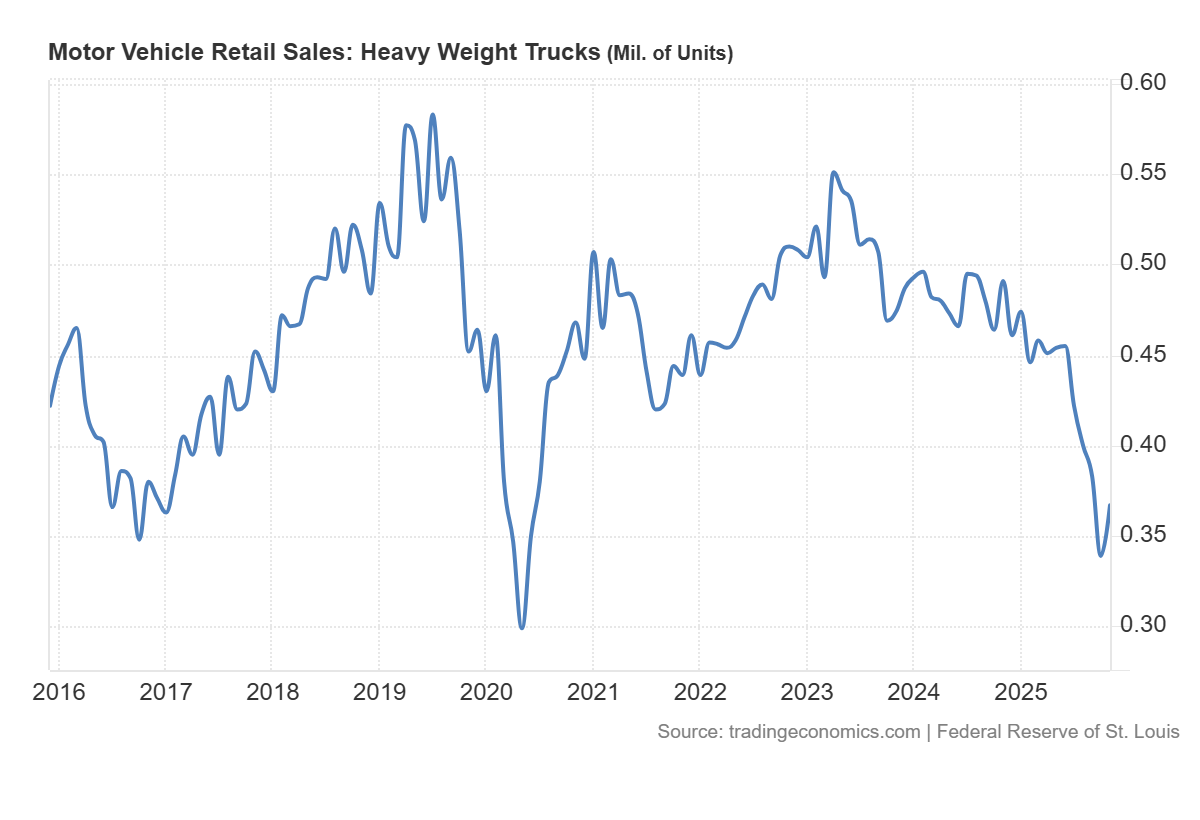
These levels of heavy truck sales are related to the recession. The rate of sales of heavy trucks is an indicator of the circulation of products, goods, construction and industrial demand. The recent drop shows that there is a loss of economic push, even though tariffs have stabilised.
S&P 500 Breaks Out Despite Trade Tensions and Volatility
As the chart below illustrates, the S&P 500 dropped considerably when Trump came out with his new tariff plan in April. This drop was a result of increased volatility, whereby businesses rushed to determine its consequences.
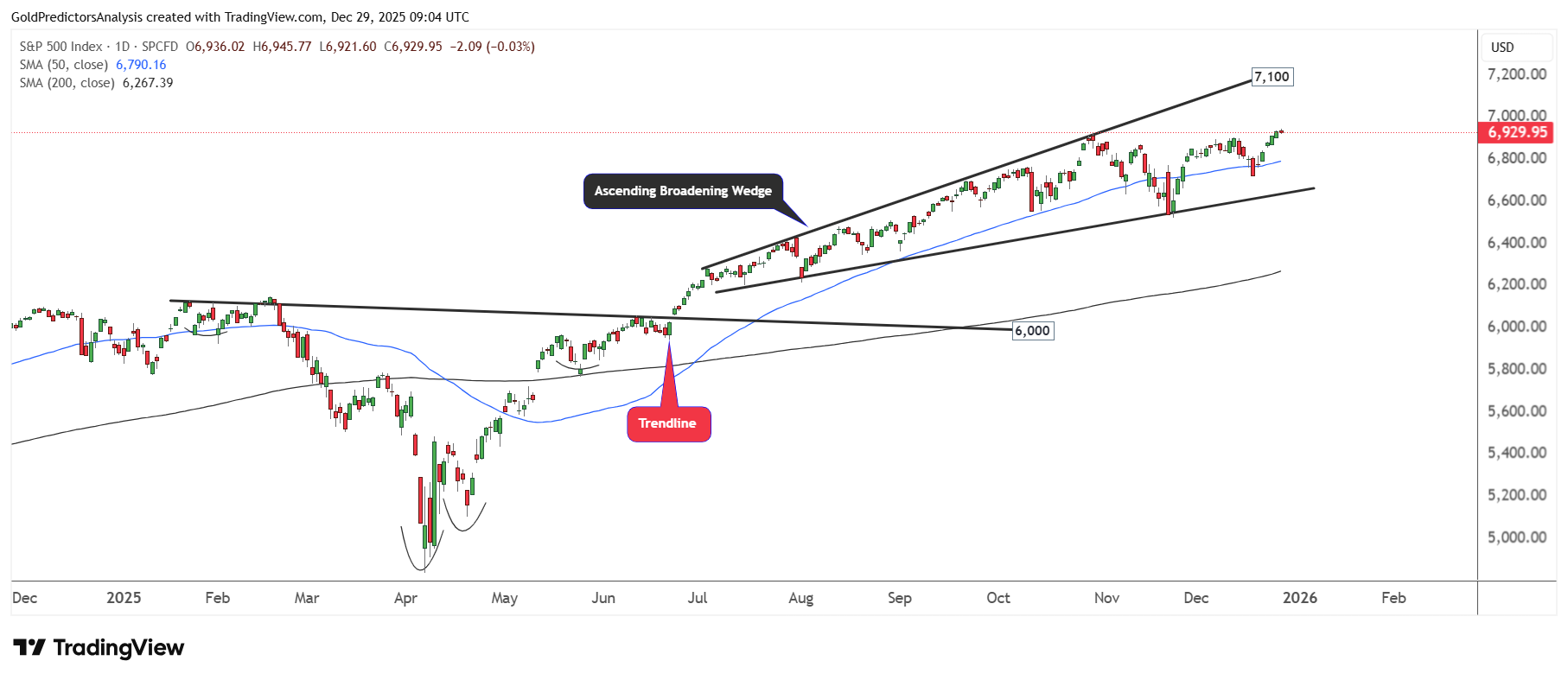
Nevertheless, the index found support at the lower levels and rebounded sharply higher. The index is currently trading within the ascending broadening wedge pattern, which reflects high volatility. This wedge pattern sets the target of the S&P 500 at approximately the level of $7200.
Conclusion: Can Markets Rally While the Economy Cools?
The Trump trade war had very far reaching economic implications. Tariffs were higher, costs of doing business were higher, and small firms had lost. Despite the recent tendencies, which show the de-escalation, major sectors of the economy, such as transportation and manufacturing, have already decelerated under the impact of destruction.
The S&P 500 has responded positively to the signs of stabilisation, with the index coming out of the prominent technical points. In case the trade tensions are lower and the growth stabilises, then the index can hit the target of $7,200.